Korean Mentaiko Butter Grilled Cod Roe
Quick answer
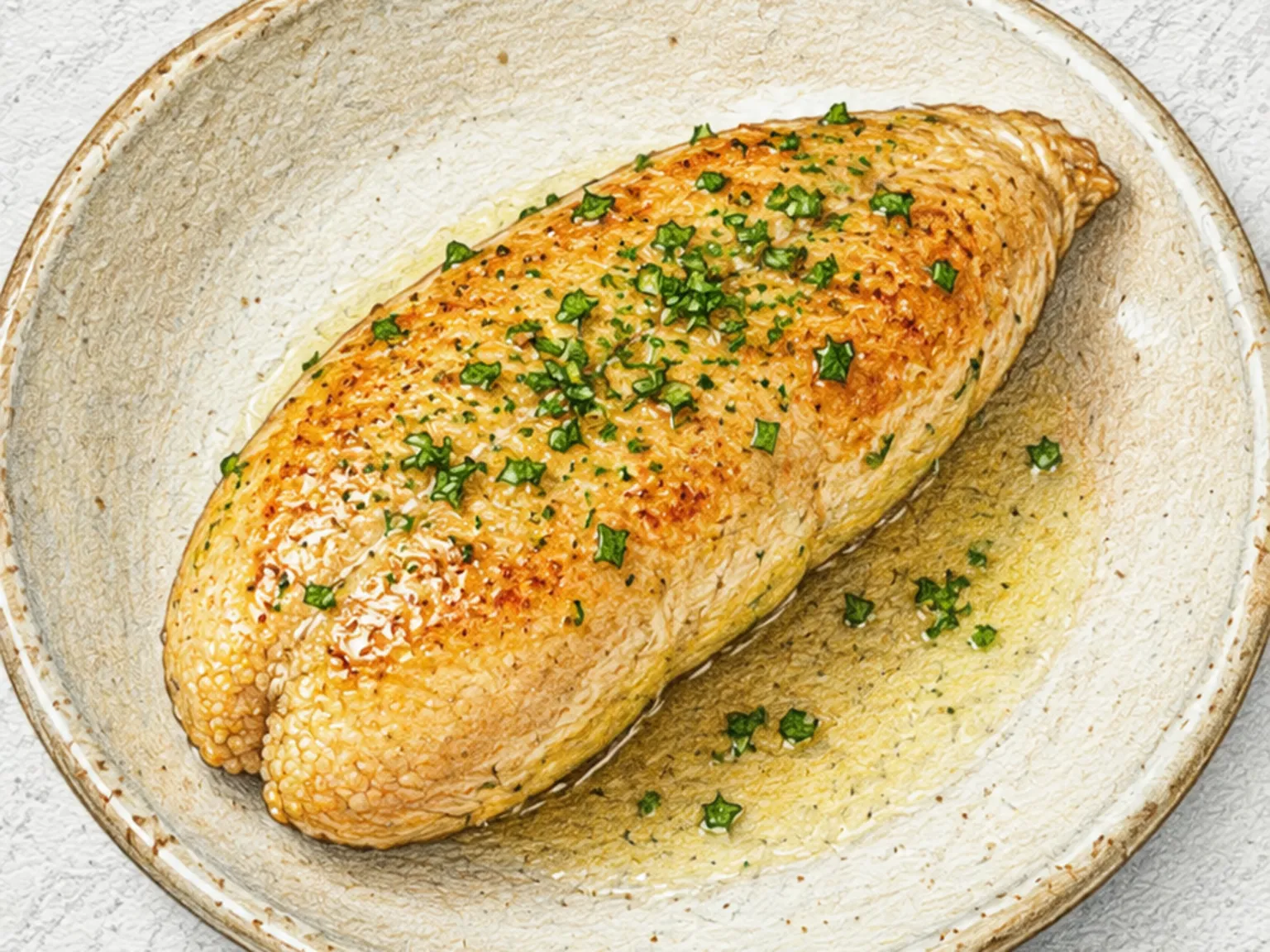
Myeongnan-butter-gui is a Korean pan-grilled dish where whole salted pollock roe sacs are cooked slowly in melted butter over low heat.
What makes this special
- Myeongnan-butter-gui requires low heat to prevent the delicate cod roe membranes from bursting.
- Thin membrane packed with roe bursts easily over high heat; low flame is non-negotiable
- Butter's milky fat blends with salted roe's umami to create complete flavor without seasoning
Key ingredients
Core cooking flow
- 1 Check 200 g salted pollock roe for any torn spots, then gently press away ex...
- 2 Set a small pan over low heat and add 20 g butter.
- 3 Place the roe on the melted butter and leave it undisturbed for the first 2 minutes.
Myeongnan-butter-gui is a Korean pan-grilled dish where whole salted pollock roe sacs are cooked slowly in melted butter over low heat. The thin membrane surrounding the roe holds thousands of tiny eggs that rupture easily under strong heat, so maintaining a gentle, patient flame throughout is the single most important part of the technique. As the butter melts and pools around the roe, it forms a continuous, fatty coating that melds with the inherent saltiness of the cured roe, building an intensely savory flavor without any additional seasoning required. Once one side turns a pale golden color, the roe is carefully turned over and the process repeated on the other side, aiming for a surface that is lightly set and golden while the interior remains soft and warm. A generous scattering of finely chopped parsley over the finished dish introduces a bright, herbal freshness that cuts cleanly through the rich, salty butter and balances the overall profile.
Instructions
Read the steps as a cooking flow: prep, heat, seasoning, doneness control, and finish.
- 1Finish
Check 200 g salted pollock roe for any torn spots, then gently press away excess surface moisture with a paper towel.
Leave the sacs whole for a neater finish, or cut them in half for easier serving.
- 2Control
Set a small pan over low heat and add 20 g butter.
Let it melt slowly, without browning hard, then tilt the pan so the foaming butter spreads evenly across the bottom.
- 3Step
Place the roe on the melted butter and leave it undisturbed for the first 2 minutes.
Keep the heat low the whole time, because stronger heat can split the thin membrane and spill the eggs.
- 4Heat
When the underside looks lightly golden and set, roll the roe carefully with a spoon or tongs.
Spoon the butter over the top as it cooks, and continue for about 3 minutes more.
- 5Season
Turn off the heat once the outside is lightly cooked all around and the inside still feels moist, before it becomes firm.
Do not leave it sitting in the hot pan, or residual heat will make it saltier and dry.
- 6Finish
Transfer the roe to a plate, spoon over a little of the butter from the pan, and scatter 5 g finely chopped parsley on top.
Serve warm, when the buttery aroma is clear and the salty roe tastes balanced.
After the steps
Pick a recipe that fits this dish.
Continue with shared ingredients, meal pairings, or a similar method.
Recipes That Go Well With This
More Grilled →Based on shared ingredients and meal pairing
Korean Grilled Corn with Soy Butter
Corn-gui is Korean grilled corn on the cob brushed with a glaze of soy sauce, melted butter, sugar, and minced garlic, then turned slowly over medium heat until the kernels develop a caramelized, salty-sweet crust. The corn is pre-cooked by boiling or microwaving before grilling, so time on the grill is dedicated entirely to building flavor through caramelization and char. Grilling over too-high heat burns the sugar before the corn colors evenly, so patience and repeated thin coats of glaze at every turn are essential. The result layers the corn natural starch sweetness with the richness of butter and the deep savoriness of fermented soy sauce, all in one bite.
Korean Kimchi Rice Bowl (Stir-Fried Aged Kimchi over Steamed Rice)
Stir-frying aged kimchi in a hot pan drives off moisture and triggers caramelization, mellowing the sharpness into a deeper, sweeter intensity that raw kimchi cannot replicate. Cooking the kimchi over medium-high heat for five to seven minutes transforms its texture from wet and tangy to slightly charred and richly savory. A splash of soy sauce and a drizzle of sesame oil finish the seasoning with a salty, nutty note. Spooned over a bowl of steamed rice and topped with a single sunny-side-up egg, the dish is deceptively simple in construction. Using well-fermented kimchi like mukeunji introduces complex layers of lactic sourness and umami depth that more than compensate for the minimal ingredient list. Adding thin slices of pork shoulder or a can of tuna to the pan alongside the kimchi turns it into a more substantial meal with added protein. The whole dish comes together in under fifteen minutes, making it the first choice Korean rice bowl when the pantry is almost bare.
Korean Boiled Seafood Broth
Haemul suyuk-tang is a clear Korean seafood soup where clams, shrimp, and squid are simmered together in lightly seasoned water with garlic and green onion. The defining quality of this dish is its restraint: no gochujang, no doenjang, no complex spice paste, just salt and the natural briny liquor each ingredient contributes to the pot. The clams open first and release their saline juice into the water, establishing the initial salinity of the broth. As the shrimp cook they turn pink and contribute a sweet current beneath the salt. The squid firms and curls into rings, adding a chewy textural counterpoint to the soft clam meat and the tender shrimp. Each of these three seafoods produces a different form of marine umami, and together they layer into a broth that reads as remarkably full despite being completely transparent. There is no competition from fermented paste or chili, so the ocean flavor comes through cleanly and directly. The visual effect of the finished bowl is also appealing: open clam shells scattered through the pot, curved pink shrimp, and white squid rings give the bowl a sense of abundance without heaviness. The soup works well as a light meal alongside rice, and it is the dish to reach for when the goal is to taste the seafood itself without interference from heavier seasonings.
Korean Grilled Octopus
Nakji-gui is a traditional Korean preparation of grilled small octopus that requires specific cleaning techniques and precise timing. The preparation begins by cleaning the small octopus through a process of vigorous rubbing with salt to remove impurities from the skin. Once cleaned, the octopus is coated in a marinade that includes gochujang, soy sauce, sesame oil, minced garlic, and corn syrup. This small octopus possesses significantly finer muscle fibers compared to a full-sized octopus, a physical trait that results in a very narrow window between a desirable springy texture and an undesirable rubbery one. A cooking time of only two minutes is frequently sufficient to push the protein past the point of no return, so the person cooking must stay attentive and remove the tentacles from the heat as soon as they firm up and take on color. The gochujang and corn syrup within the marinade undergo rapid caramelization when they come into contact with the hot surface of the pan or grill. This reaction forms a red, lacquered shell around each tentacle that provides a combination of fermented heat and sweetness in every bite. Using a direct flame for cooking introduces smoky and charred notes that increase the complexity of the flavor profile. If the dish is prepared in a pan rather than on a grill, the octopus must be dried thoroughly first. Any moisture remaining on the surface will generate steam and cause the octopus to braise instead of grill, which prevents the formation of the caramelized exterior. After the cooking process is complete, the octopus is usually snipped into bite-sized pieces with kitchen scissors. It can be served as a wrap with perilla or lettuce leaves, or it can be laid over a bowl of steamed rice.
Serve with this
Korean Zucchini Pancakes (Egg-Battered Pan-Fried Slices)
Hobak-jeon is a Korean pan-fried zucchini pancake made by dredging thin slices in flour then coating them in beaten egg before cooking in oil. The technique is the foundational jeon method used across Korean cuisine: a dry flour coat first to help the egg adhere, then the egg layer that fries into a golden, slightly spongy crust. Cutting the zucchini to an even 0.5 cm thickness matters for consistent cooking, and salting the slices briefly then patting them dry ensures the flour sticks uniformly. Low heat is important: a gentle pan allows the egg coating to set gradually and turn evenly golden while the zucchini inside softens and becomes almost creamy. High heat sets the egg too fast and leaves the interior undercooked. Dipped in cho-ganjang, a simple mix of soy sauce and vinegar, the acidity provides contrast to the oiliness of the fried coating. During Chuseok and Seollal, households prepare assorted stacks of jeon for the ritual offering table and subsequent family meal, and hobak-jeon is reliably present among them. With only zucchini, flour, eggs, and salt required, this is one of the most straightforward Korean recipes to attempt.
Chicken Mu (Korean Fried Chicken Radish Pickle)
The crunchy, sweet-sour radish pickle served with every order of Korean fried chicken - now easy to make at home in under 15 minutes. Cubed radish is submerged in a cooled brine of vinegar, sugar, salt, and whole black peppercorns. Using fully cooled brine rather than hot is critical for maintaining the radish's firm, snapping crunch. Ready to eat after one day of refrigeration, its bright acidity cleanses the palate between bites of crispy chicken. Stored in a glass jar, this pickle keeps for over a week.
Similar recipes
Korean Salted Mackerel Grill
Gan-godeungeo-gui is grilled salt-cured mackerel, one of the most dependable side dishes on a Korean home table. The mackerel is sold already salted at the market, so it goes straight onto heat without any additional seasoning preparation. During the curing process, the salt draws out excess moisture and firms the flesh, which makes the fish easier to handle than fresh mackerel and far less prone to falling apart in the pan. Cooking skin-side down over medium heat for seven minutes allows the fat embedded under the skin to render slowly outward, crisping the skin until it becomes paper-thin and shatters with the first touch of a spoon. Flipping the fish for just four more minutes finishes the flesh through without drying it out. The mackerel's oily richness is substantial enough to carry a bowl of rice on its own, but a wedge of lemon on the side adds a bright acidity that cuts cleanly through the fat, and a small mound of shredded daikon provides a palate-cleansing contrast that removes any lingering fishiness from the aftertaste. Frozen gan-godeungeo should be moved to the refrigerator the night before to thaw slowly, preventing the fish from weeping water all at once when it hits the hot pan.
Korean Grilled Flounder (Salted Whole Flatfish Pan-Fry)
Gajami-gui is a Korean grilled flounder preparation in which a whole flat fish is salted for twenty minutes before being pan-fried or grilled over a wire rack until both sides develop an even golden-brown crust. Flounder has thinner flesh and a lower moisture content than most flatfish, which means it carries almost no fishy odor and needs only salt to taste genuinely clean on the palate. Splashing a small measure of rice wine over the fish before cooking neutralizes any remaining off-notes, and pressing the surface completely dry with kitchen paper afterward is what separates a flounder with truly crisp, caramelized skin from one that steams, sticks, and falls apart. Flipping must be done once and decisively with a wide spatula, because the flesh is delicate enough that repeated contact breaks it apart before serving. Resisting the urge to move the fish once it is in the pan is equally important: undisturbed contact with the hot surface is what drives the browning on each side. A garnish of shredded daikon with soy sauce or a sharp chili-soy dipping sauce provides a clean contrast that sharpens the perception of the fish's mild, natural flavor.
Korean Pollack Roe Tofu Stew
Myeongnan-dubu-jjigae is a Korean stew built around whole pollack roe simmered in anchovy and kelp stock. As the broth comes to a boil, the roe gradually loosens and disperses into the liquid, releasing a briny, concentrated umami that permeates every ingredient in the pot. Using anchovy-kelp stock rather than plain water lets the oceanic character of the roe come through without competition. Firm tofu cut into one-centimeter slices absorbs the savory broth while holding its shape throughout cooking, unlike soft tofu which breaks apart. Red pepper flakes, minced garlic, and sliced green onion finish the stew with a clean, spicy edge. The grainy, textured bite of the intact roe kernels is what sets this stew apart from other Korean jjigae. Cooking time should be kept short: once the broth reaches a full boil, the heat is reduced immediately, because prolonged boiling dissolves the roe completely and erases the textural contrast. Spooning the broth and roe together over steamed rice and mixing it in is the most satisfying way to eat it.
Gamjaguk (Potato Doenjang Anchovy Soup)
Gamjaguk is a clear, mild Korean soup built on a foundation of anchovy stock with potatoes as the main ingredient, seasoned with either doenjang or plain salt. As the potatoes cook through, they release starch gradually into the broth, giving it a subtle body that makes each spoonful feel substantial without turning the liquid cloudy. When doenjang is used, the fermented paste contributes a layered, earthy savoriness that wraps around the gentle sweetness of the potato. Seasoning with salt alone lets the potato's natural, unadorned flavor stand at the center without competition. Garlic and green onion are added as the aromatic base, providing a mild, savory fragrance that keeps the broth from tasting flat. A handful of zucchini slices added midway through cooking introduces a soft, yielding texture and a touch of pale green color. The potatoes need to be pulled from heat at the point when a chopstick slides through without resistance, because overcooking breaks them apart and muddies the broth. With only a few ingredients required, this soup comes together quickly even when the refrigerator is nearly empty, which is part of why it appears on Korean tables more consistently than almost any other soup.