Pollock Roe Butter Udon

Pollock Roe Butter Udon

Quick answer

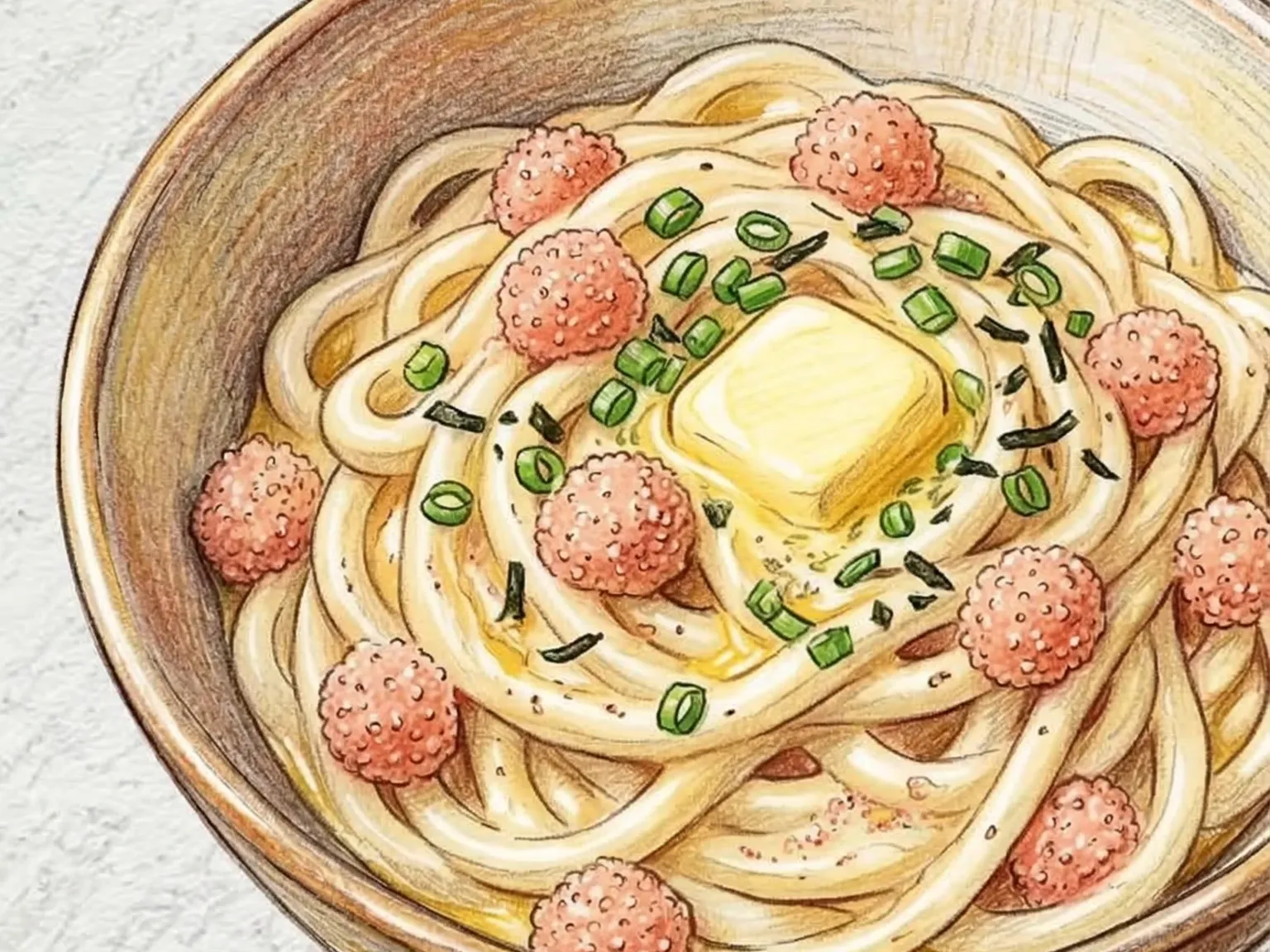
Myeongran butter udon is a Japanese-inspired cream udon in which salted pollock roe is folded into a butter and heavy cream sauce over chewy udon noodles.

What makes this special

  • Salted pollock roe folded into a garlic butter and cream sauce over chewy udon noodles.
  • Mentaiko stirred in off heat so eggs stay intact and soft
  • One spoon of soy sauce balances cream's richness with fermented salinity
Total time
22 min
Level
Easy
Servings
2 servings
Ingredients
8
Calories
610 kcal
Protein
24 g

Key ingredients

Udon noodlesSalted pollock roeUnsalted butterHeavy creamSoy sauce

Core cooking flow

  1. 1 Blanch 400 g udon noodles in boiling water for 2 to 3 minutes, just until th...
  2. 2 Split 80 g salted pollock roe lengthwise and scrape out only the loose eggs with the back of a knife.
  3. 3 Set a pan over low heat and melt 25 g unsalted butter.

Myeongran butter udon is a Japanese-inspired cream udon in which salted pollock roe is folded into a butter and heavy cream sauce over chewy udon noodles. Garlic is gently cooked in melted butter first to build an aromatic base, then cream and soy sauce are added to create a sauce that is rich without being one-dimensional. The roe membrane is removed so only the loose, individual eggs enter the sauce, and they are stirred in after the heat is lowered to prevent the roe from turning dry, grainy, or unevenly cooked. As each tiny egg bursts against the palate, it releases a briny, oceanic intensity that cuts through the silky cream coating and creates a recurring contrast in every mouthful. The soy sauce performs double duty: it adjusts the salt level and introduces a layer of fermented umami depth that would otherwise be absent. If the sauce tightens too much as it reduces, a few tablespoons of noodle cooking water loosen it while adding a hint of starch that helps the sauce cling more evenly to each strand. Finishing with roasted seaweed flakes and chopped chives brings oceanic aroma and a clean, green freshness that lifts the overall heaviness of the dish.

Prep 10min Cook 12min 2 servings

Instructions

Read the steps as a cooking flow: prep, heat, seasoning, doneness control, and finish.

6 steps
  1. 1
    Finish

    Blanch 400 g udon noodles in boiling water for 2 to 3 minutes, just until the strands loosen and turn flexible.

    Reserve about 3 tablespoons of noodle water, then drain the noodles well so the sauce does not become watery.

  2. 2
    Season

    Split 80 g salted pollock roe lengthwise and scrape out only the loose eggs with the back of a knife.

    Remove any large membrane pieces because they can clump in the cream sauce instead of dispersing evenly.

  3. 3
    Control

    Set a pan over low heat and melt 25 g unsalted butter.

    When the bubbling calms, add 1 teaspoon minced garlic and cook for only about 30 seconds, stirring so it smells fragrant but does not brown.

  4. 4
    Control

    Add 80 ml heavy cream and 1 tablespoon soy sauce, then simmer over medium low heat for about 1 minute.

    Once small bubbles appear around the edge, lower the heat so the cream stays smooth and does not split.

  5. 5
    Finish

    Add the drained udon and turn it with tongs until every strand is coated.

    If the sauce looks too tight or pasty, add the reserved noodle water 1 tablespoon at a time, using 2 to 3 tablespoons as needed.

  6. 6
    Finish

    Turn the heat to very low, add the pollock roe, and toss quickly for 20 to 30 seconds.

    When the eggs disperse and cling to the noodles, plate immediately and finish with seaweed flakes and chopped chives.

After the steps

Pick a recipe that fits this dish.

Continue with shared ingredients, meal pairings, or a similar method.

Recipes That Go Well With This

More Noodles →

Based on shared ingredients and meal pairing

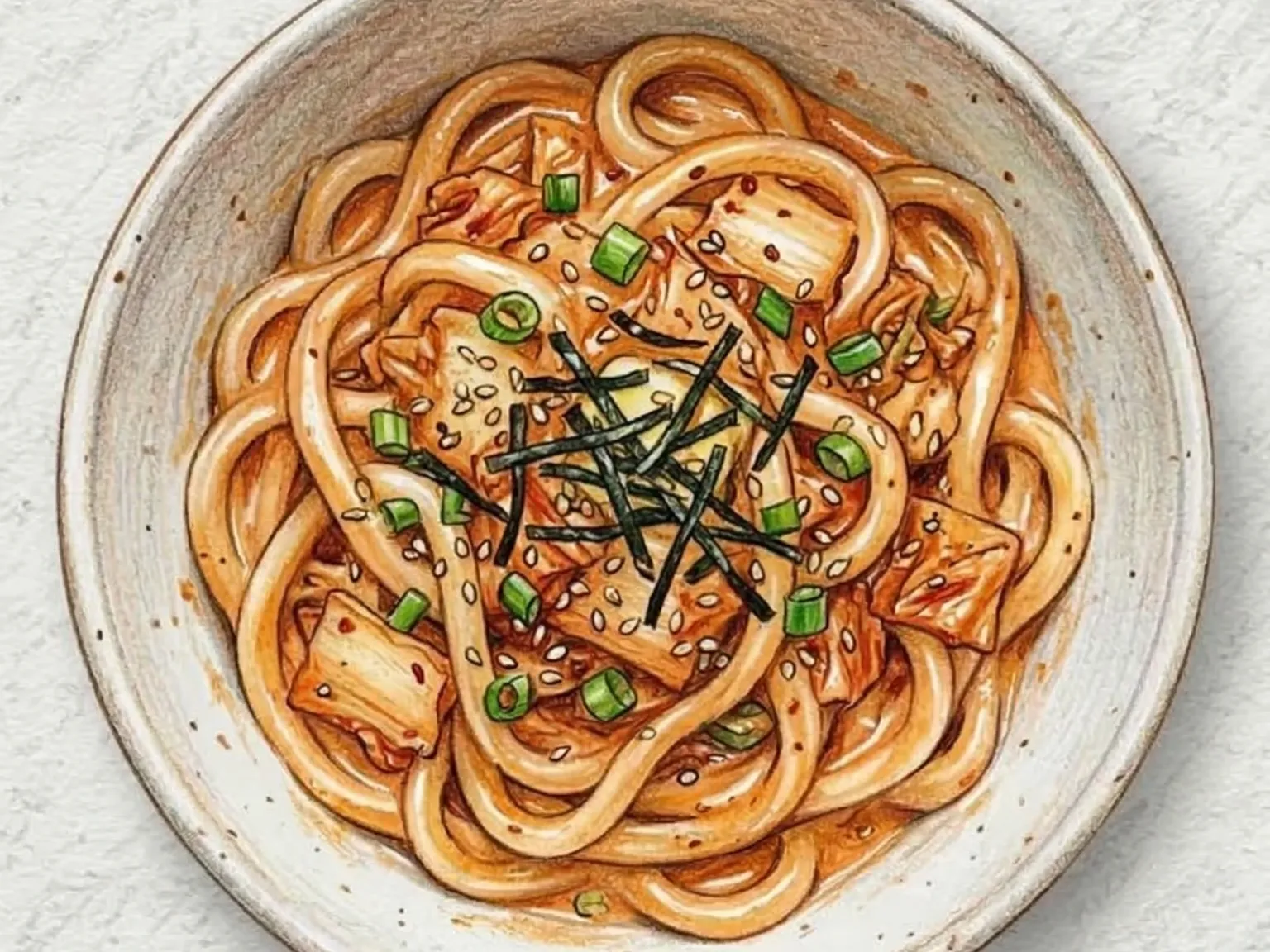
Kimchi Butter Udon (Tangy Kimchi Stir-Fried in Butter)
Shared ingredient: udon noodles Noodles

Kimchi Butter Udon (Tangy Kimchi Stir-Fried in Butter)

Kimchi butter udon is a fusion stir-fried noodle that pairs the tangy, spicy acidity of well-fermented kimchi with the deep richness of butter. The first half of the butter goes into the pan to saute onion and garlic until they release their sweetness, then chopped kimchi is added and stir-fried for two minutes to cook off the moisture, which concentrates the flavor and mellows the sharp sourness. Blanched udon noodles and soy sauce are tossed in over high heat so the seasoning coats every strand evenly, and the remaining butter is added off-heat immediately after, keeping its aroma intact while lending a glossy sheen and fuller depth to the noodles. A soft-cooked egg placed on top breaks into a creamy sauce when stirred in, while seaweed flakes and sliced scallion contribute crunch and a fresh herbal lift. If the kimchi leans salty, reducing the soy sauce to one tablespoon keeps the balance in check. The whole dish, including prep, comes together in about twelve minutes.

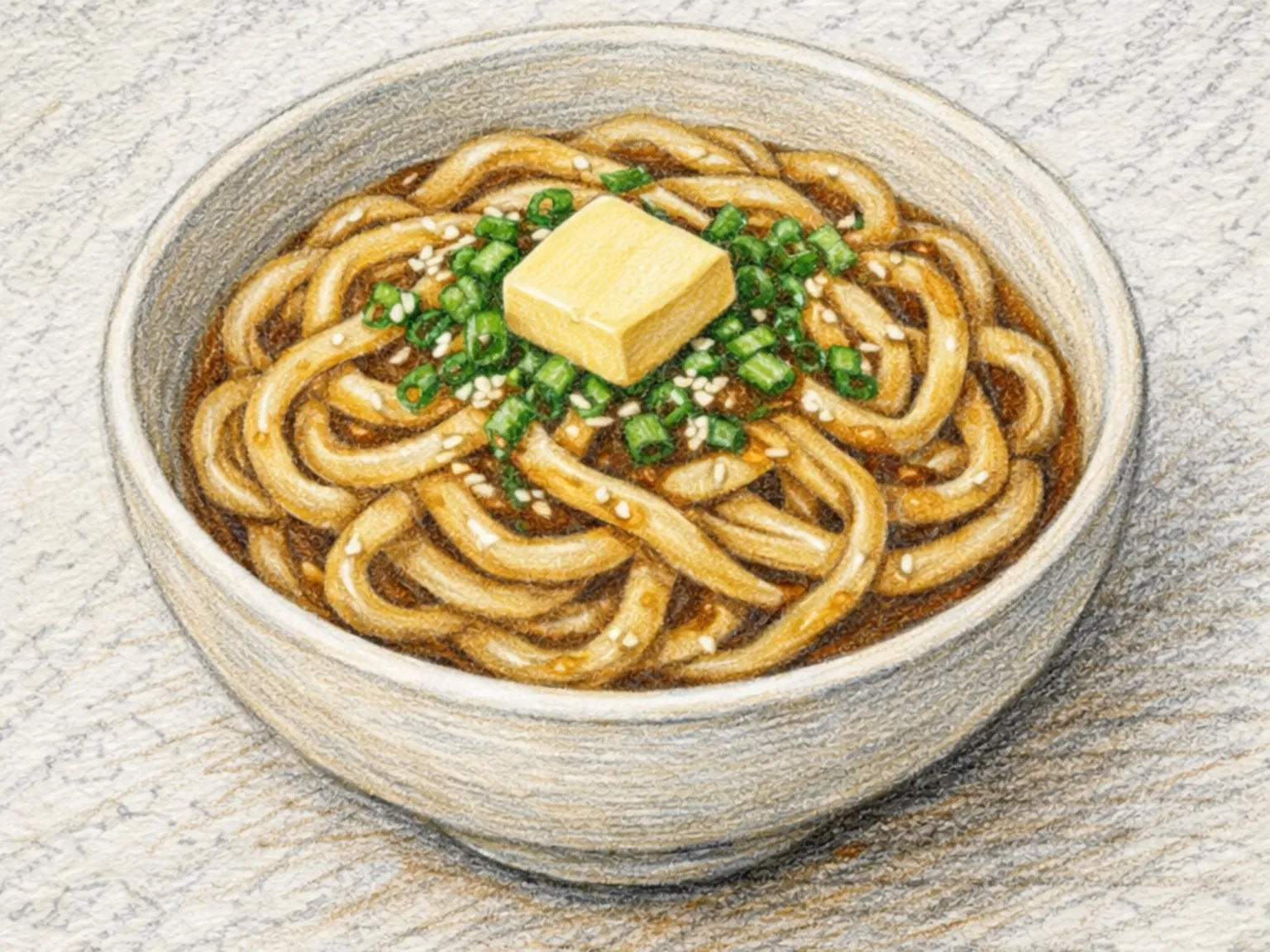
Soy Butter Udon (Pan-Tossed Udon in Caramelized Soy Butter)
Shared ingredient: udon noodles Noodles

Soy Butter Udon (Pan-Tossed Udon in Caramelized Soy Butter)

Ganjang butter udon is a quick pan-fried noodle dish that delivers deep, satisfying flavor in roughly ten minutes. Boiled udon noodles go into a pan with melted butter, and as soon as they hit the hot surface the butter releases a toasted, nutty fragrance. Soy sauce added to the pan caramelizes almost immediately against the heat, forming a savory-sweet glaze that coats every strand of the thick, springy noodles. The fat from the butter helps the glaze adhere evenly and rounds out the soy's saltiness with richness. Katsuobushi piled on top at the finish adds a layer of smoky umami that deepens the overall flavor, and an egg yolk placed in the center and stirred through transforms the dish with a creamy, silky texture. It is an ideal solution for a late-night craving or a satisfying solo meal when time is short.

Wafu Daikon Salad (Shredded Radish with Japanese Soy Dressing)
Serve together Salads

Wafu Daikon Salad (Shredded Radish with Japanese Soy Dressing)

Wafu daikon salad shreds daikon radish into very fine julienne strips and dresses them with a Japanese wafu dressing made from soy sauce, rice vinegar, and sesame oil, finished with bonito flakes and torn nori. Soaking the shredded daikon in cold water for five minutes draws out excess starch and maximizes its crisp, snappy texture - draining and drying thoroughly afterward prevents the dressing from becoming diluted. The dressing layers soy salt over the gentle acidity of rice vinegar and the nuttiness of sesame oil, giving depth to the otherwise neutral radish. Bonito flakes placed on top wave gently in the residual heat and release a smoky umami that permeates the salad. Shredded nori adds a briny crunch that creates textural contrast throughout the bowl.

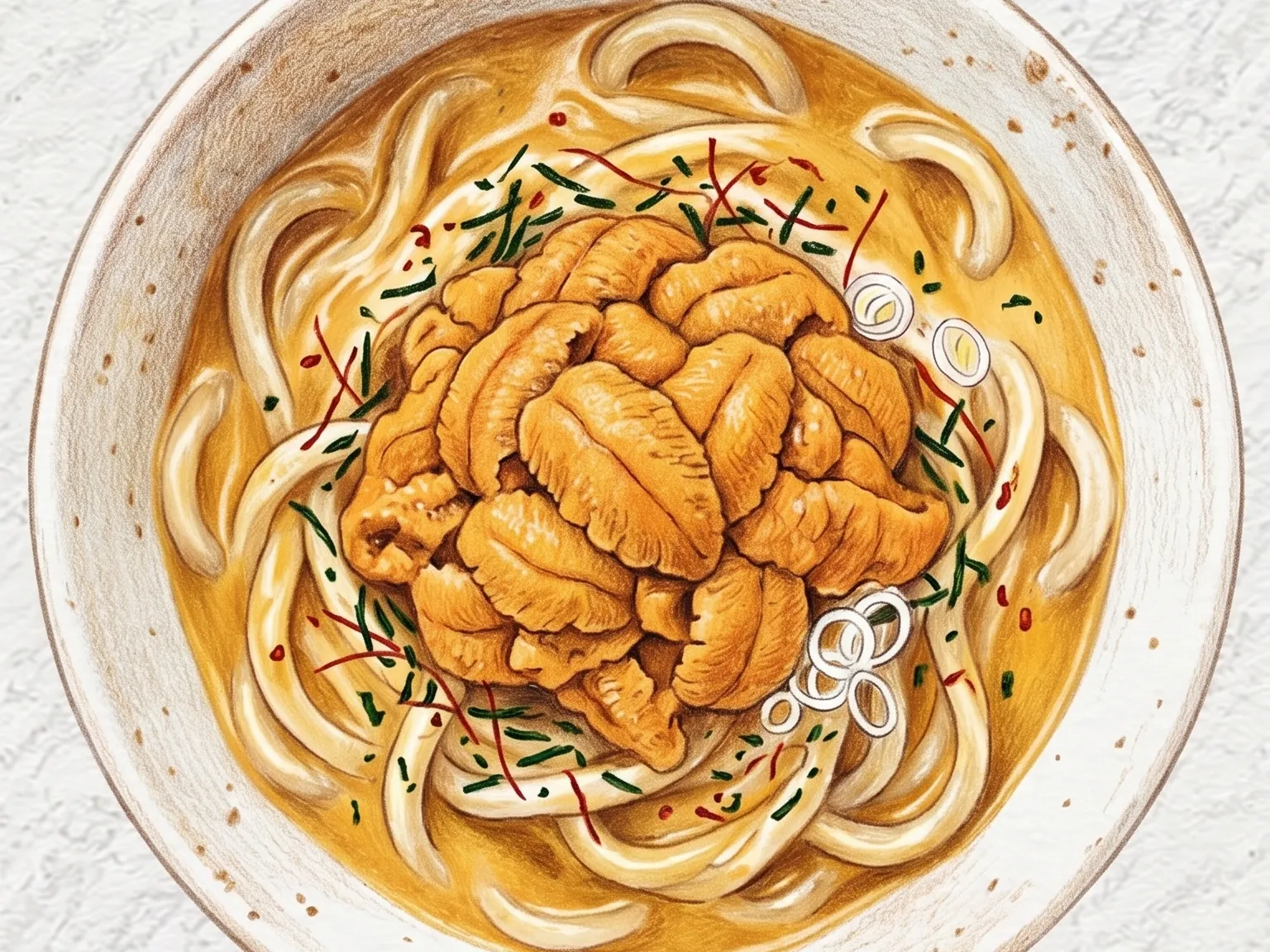
Mentaiko Yuzu Cream Udon
Similar recipe Noodles

Mentaiko Yuzu Cream Udon

Myeongran yuja cream udon is a Japanese-style noodle dish that features a sauce made from a combination of salted pollock roe and yuzu marmalade. The base of the liquid consists of heavy cream and milk, which are enriched with butter to create a dense and smooth texture. The preparation begins by melting butter in a pan and sauteing minced garlic until the aroma is released. Once the garlic is fragrant, the cream and milk are poured in. This mixture needs to simmer over low heat for approximately two to three minutes until it thickens enough to coat the back of a spoon. Instead of adding the yuzu marmalade all at once, the cook incorporates it in small amounts. This gradual process allows for precise control over the citrus acidity so that it complements rather than overshadows the richness of the heavy cream. After removing the pan from the heat, two-thirds of the salted pollock roe is stirred in. The residual warmth of the sauce is sufficient to gently cook these eggs, ensuring they remain tender. The remaining third of the roe is reserved to be placed raw on top of the finished bowl, providing a distinct briny flavor and a grainy texture in every bite. To finish the dish, freshly cracked black pepper is added for a subtle sharpness, and shredded nori is scattered over the top to provide a roasted, oceanic scent that works well with the yuzu fragrance. The thick udon noodles provide a substantial chew that allows them to carry the heavy sauce and stand up to the combination of salty, creamy, and acidic elements without the flavors becoming lost.

Serve with this

Korean Kohlrabi Fresh Salad (Saengchae)
Side dishes Easy

Korean Kohlrabi Fresh Salad (Saengchae)

Kolabi-saengchae is a fresh Korean salad made from julienned kohlrabi dressed in gochugaru, vinegar, and fish sauce. Though it resembles mu-saengchae made with radish, the two diverge clearly in texture and flavor. Kohlrabi is a brassica, but instead of leaves or roots, the rounded swollen stem base is the edible part. Its exterior is firm and waxy, while the flesh inside is juicy, light, and gently sweet in a way that resembles a crisp pear rather than the earthy sharpness of radish. The thick outer rind must be generously peeled to strip away the fibrous layer just beneath the skin, and the kohlrabi is then cut into matchstick strips about 4 to 5 centimeters long and a few millimeters wide. Cutting too thin causes the strips to wilt quickly as they draw moisture under the dressing. Fish sauce contributes marine umami to kohlrabi's quiet sweetness, while vinegar slows moisture loss and extends the window of crispness after seasoning. Gochugaru adds heat and the brick-red color associated with most saengchae. Served beside grilled fatty meats, the tangy, crunchy salad functions as a palate cleanser between bites. Kohlrabi is at its sweetest and most firm during peak seasons in spring and fall, which is when this banchan appears most frequently at Korean tables.

🏠 Everyday 🍱 Lunchbox
Prep 15min Cook 5min 4 servings
Korean Dried Radish Greens Pancake
Pancakes Easy

Korean Dried Radish Greens Pancake

Boiled dried radish greens are combined with doenjang and pan-fried into a dense, rustic jeon with deep fermented character. The fibrous texture of the radish greens gives the pancake a satisfying chew, and the soybean paste saturates the batter so thoroughly that no dipping sauce is necessary. Buckwheat flour adds an earthy coarseness that suits the greens well. Cheongyang chili provides a spicy accent throughout. Minced garlic benefits from a brief saute in oil before being mixed into the batter-the raw edge cooks off and the garlic's savory depth integrates fully into the finished pancake. Cooking over low heat lets the inside set without burning the outside, producing a crisp surface and a tender, flavorful center.

🍺 Bar Snacks ⚡ Quick
Prep 18min Cook 10min 2 servings
Korean Wild Chive Kimchi (Spring Quick Gochugaru)
Kimchi Easy

Korean Wild Chive Kimchi (Spring Quick Gochugaru)

Dallae kimchi is a quick spring kimchi made by salting wild chives for just eight minutes to barely soften them, then dressing them in gochugaru, sand lance fish sauce, plum extract, and Korean pear juice. The bulb-end roots carry the most concentrated aroma, so they should not be trimmed too short, and the seasoning should be applied starting from the roots so the flavor penetrates evenly along the entire stalk. Pear juice adds natural sweetness and a little moisture that softens the heat from the chili, while sand lance fish sauce provides a lighter, more delicate umami than standard anchovy sauce. This kimchi smells fresh and bright immediately after preparation, but one day in the refrigerator allows a mild fermented depth to develop that rounds out the flavors considerably. Wild chives are best purchased between early March and mid-April, when the roots are fat and the aroma is fully developed. Salting beyond eight minutes causes the grassy fragrance to dissipate rapidly, so timing matters. The finished kimchi pairs naturally with namul side dishes and fresh vegetable salads at a spring table.

🏠 Everyday 🍱 Lunchbox
Prep 20min Cook 5min 4 servings

Similar recipes

Cold Udon (Chilled Noodles with Mentsuyu Dipping Broth)
Noodles Easy

Cold Udon (Chilled Noodles with Mentsuyu Dipping Broth)

Naeng udon is a Japanese cold noodle dish where thick udon is cooked, drained, and then cooled aggressively in ice water before being served in chilled mentsuyu broth. The broth is prepared by diluting concentrated mentsuyu with cold water at a ratio of one to two, then refrigerating it until well chilled, which produces a clean liquid dense with soy-based umami. Cooling the noodles completely in ice water is not optional: the cold firms the starch back up, restoring the springy, slightly resistant chew that defines good udon. Freshly grated daikon stirred into the broth contributes a mild peppery heat and a cooling edge that lightens the overall flavor. Thinly sliced scallion adds a bright green freshness, and a sheet of nori brings oceanic depth to what might otherwise be a simple dipping liquid. A small amount of wasabi dissolved into the broth delivers a sharp nasal sting that contrasts directly with the cold temperature, leaving a clean, bracing finish on the palate. The dish is best eaten quickly while everything stays cold, and it comes together from pantry staples in minutes, making it one of the most practical summer meals.

🌙 Late Night ⚡ Quick
Prep 12min Cook 8min 2 servings
Korean Pollock Roe Butter Rice Bowl
Rice Easy

Korean Pollock Roe Butter Rice Bowl

Myeongran butter deopbap puts lightly seared pollock roe and a knob of butter on steaming white rice, then lets the diner mix everything together at the table. Each ingredient plays a clear role. The roe brings concentrated, briny umami. The butter melts into the hot rice and coats every grain with a rich, creamy backdrop. Soy sauce adds salty depth and deepens the color slightly. Cooking the roe in butter for only about a minute is critical: at that point the eggs still pop on the tongue as the roe breaks apart, but any longer and the texture turns dry and grainy. The moment the hot rice meets the butter and soy sauce and the whole thing is stirred together, the flavors merge into something more unified than the individual parts. Shredded dried seaweed, sliced chives, and sesame seeds scattered on top add fragrance, color, and a gentle crunch that keep the bowl from feeling too rich.

🏠 Everyday ⚡ Quick
Prep 10min Cook 10min 2 servings
Korean Gochujang Bibim Udon Cup (Spicy Mixed Udon Cup)
Street food Easy

Korean Gochujang Bibim Udon Cup (Spicy Mixed Udon Cup)

Gochujang bibim udon cup is a cold-tossed udon noodle dish served in a cup, dressed with a sauce built from gochujang, soy sauce, oligosaccharide syrup, vinegar, and sesame oil. The fermented heat of gochujang meets the acidity of vinegar to create a bright, tangy-spicy flavor profile that avoids sharpness, and the viscous syrup gives the sauce enough body to cling evenly to the thick udon strands. Raw julienned cabbage and carrot are folded in without cooking, adding a snappy crunch that contrasts the soft noodles. Cooling the noodles completely before tossing is a key step that prevents the sauce from clumping and ensures even distribution throughout the cup. The handheld cup format suits street food settings, and additional toppings such as a soft-boiled egg or seasoned seaweed can elevate it into a fuller meal.

🌙 Late Night ⚡ Quick
Prep 12min Cook 8min 2 servings

Tips

Add roe near the end; high heat for too long makes it dry.
If sauce is too thick, loosen it with 2-3 tablespoons of noodle water.

Nutrition (per serving)

Calories
610
kcal
Protein
24
g
Carbs
68
g
Fat
27
g