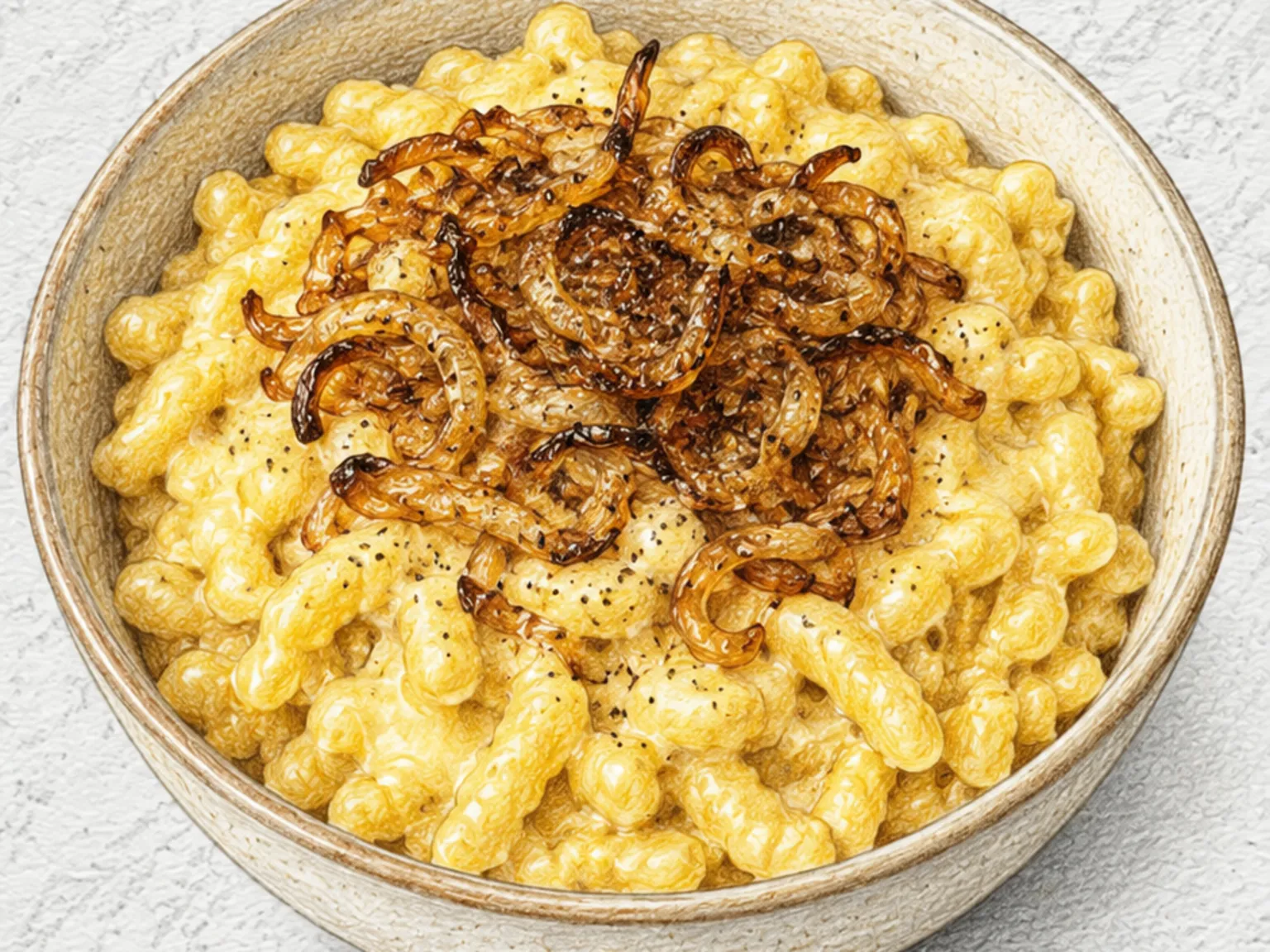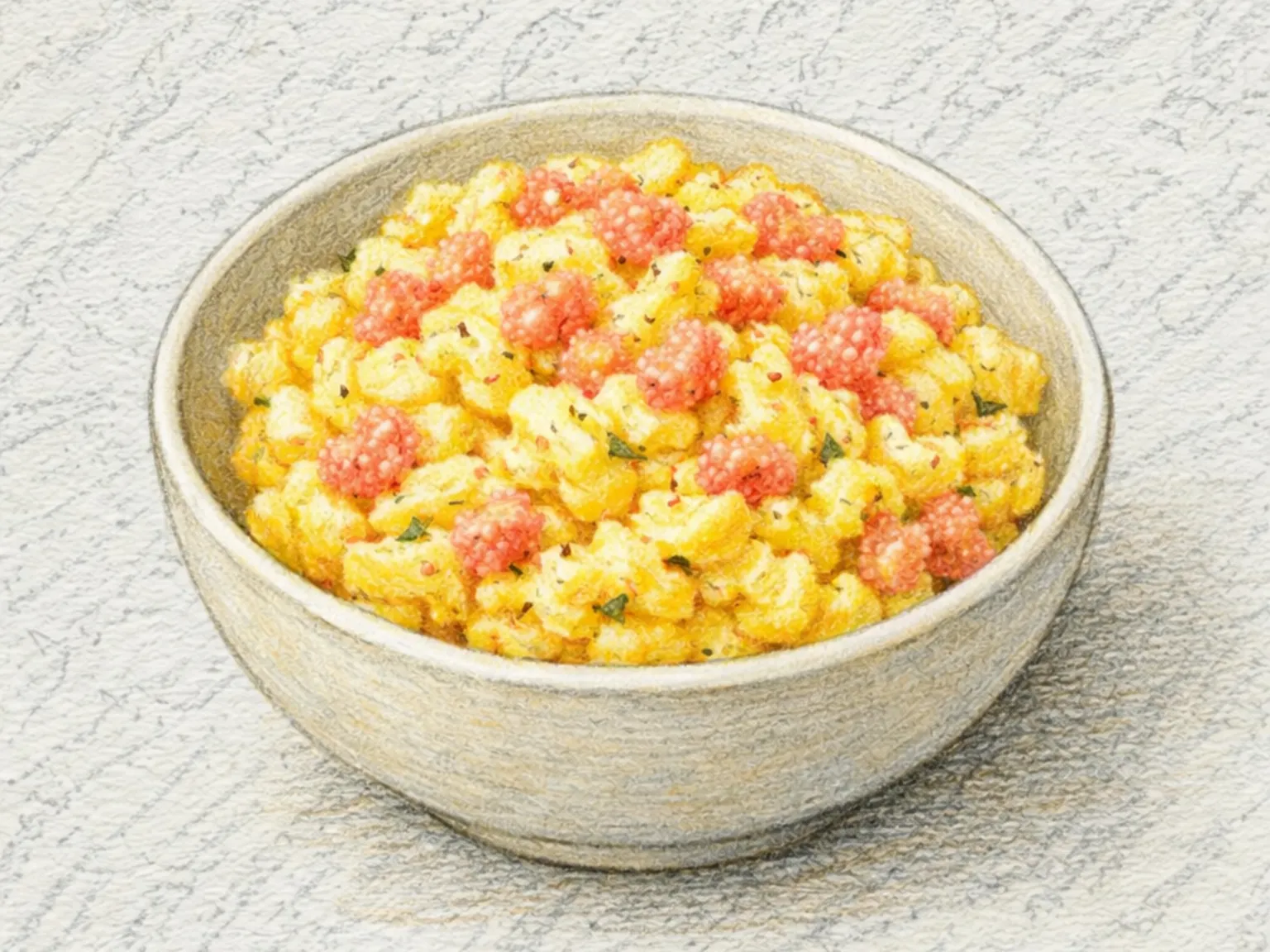
Korean Pollock Roe Egg Butter Stir-fry
Myeongran-dalgyal-butter-bokkeum gently cooks pollock roe and eggs in butter with diced onion, producing soft, creamy curds studded with tiny pops of briny roe. The roe sacs are split open and the eggs are scraped out, then stir-fried for just 30 seconds before the milk-enriched egg mixture is poured in and slowly folded into large, pillowy curds. Half the butter goes in at the start for cooking, and the remaining half is stirred in off-heat for richness. Chopped chives and black pepper finish the dish, which goes from pan to plate in under eight minutes.
Adjust Servings
Instructions
- 1
Split the roe sacs and scrape out the roe; whisk eggs with milk.
- 2
Finely dice onion and chop chives.
- 3
Heat oil and half the butter, then sauté onion over medium-low heat for 2 minutes.
- 4
Add pollock roe and stir for 30 seconds to reduce fishiness.
- 5
Pour in egg mixture and gently fold for 1–2 minutes into soft curds.
- 6
Turn off heat and finish with remaining butter, chives, and pepper using residual heat.
As an Amazon Associate, we may earn from qualifying purchases.
Tips
Nutrition (per serving)
More Recipes

Korean Tomato Dalgyal Bokkeum (Tomato Egg Stir-fry)
Tomato-dalgyal-bokkeum uses a two-stage cooking method: eggs are scrambled to about 70% doneness and set aside, then returned to the pan with seared tomatoes for a final quick toss. The tomatoes release a small amount of juice when cooked briefly with oyster sauce and sugar, and the partially set eggs absorb this liquid to stay soft and moist. Bright tomato acidity, mild egg richness, and oyster sauce umami layer together without any single flavor dominating. Sharing roots with Chinese tomato egg stir-fry (xihongshi chaodan), it crosses easily into Korean home cooking.

Korean Abalone & Garlic Stem Stir-fry
Jeonbok-maneuljong-butter-bokkeum quickly stir-fries sliced abalone and garlic scapes in butter, maximizing a rich, nutty aroma. The abalone is cut thin and seared briefly over high heat to keep its firm, bouncy texture, while the garlic scapes stay crisp. Butter provides a creamy base, soy sauce adds a subtle savory note, and black pepper rounds out the fragrance. It is an elegant yet simple way to prepare abalone, well-suited for dinner guests or special occasions.

Korean Garlic Scape Bacon Stir-fry
Maneuljjong bacon bokkeum is a side dish built on rendered bacon fat, in which garlic scapes and onion are stir-fried and finished with soy sauce and oligosaccharide syrup for a glossy coat. The bacon's smoky saltiness provides a deep flavor base that requires no additional complex seasoning, and the garlic scapes counter it with a sharp, crisp bite. The syrup creates a thin lacquer on the surface that balances the salt with gentle sweetness. Sesame seeds top the finished dish, and reducing the soy sauce compensates if the bacon runs particularly salty.

Korean Garlic Chive & Clam Stir-fry
Clams purged in salt water are steamed with rice wine until their shells open, then stir-fried with garlic chives, soy sauce, and oyster sauce. The rice wine strips away any briny off-notes while amplifying the clean oceanic umami, and the liquid the clams release as they open becomes a built-in sauce. Garlic chives go in during the last 40 seconds only; longer exposure to heat wilts them into a stringy mass and disperses their aroma. Sliced red chili contributes more visual contrast than actual spice, and a final drizzle of sesame oil smooths out the flavors. Any clam that fails to open after steaming should be discarded for safety. The dish works equally well as a drinking snack alongside soju or as a protein-rich side at the dinner table.

Korean Yangbaechu Kkae Bokkeum (Sesame Cabbage Stir-fry)
Shredded cabbage, onion, and carrot are stir-fried over high heat with soup soy sauce and finished with sesame oil and a generous handful of toasted sesame seeds. Cabbage benefits from fast, hot cooking: the edges char lightly and caramelize while the interior retains its crisp bite, and the heat unlocks a gentle natural sweetness hidden in the raw leaves. Soup soy sauce seasons the vegetables with depth while keeping the finished dish pale and clean-looking, and minced garlic stirred in early fills the pan with fragrance. Carrot goes into the pan first to draw out its sugar, and as the onion softens, its moisture deglazes the surface and adds another layer of mellow sweetness. Sesame oil drizzled off-heat coats the vegetables in a nutty sheen, and the sesame seeds scattered on top provide a crunchy, aromatic punctuation with every bite. The dish is lean and uncomplicated, relying on the quality of fresh vegetables and precise timing rather than heavy seasoning, making it a banchan suited to daily meals.

Korean Pollock Roe Butter Rice Bowl
Lightly seared pollock roe and a knob of butter are placed on steaming rice and mixed together just before eating. The salty intensity of the roe meets the creamy richness of melted butter, creating a concentrated umami flavor that coats every grain. Cooking the roe for only about a minute in butter keeps its texture from turning dry and crumbly. A garnish of seaweed flakes, chopped chives, and sesame seeds rounds out the bowl with nutty fragrance and a touch of crunch.