Korean Pollock Roe Rolled Omelet
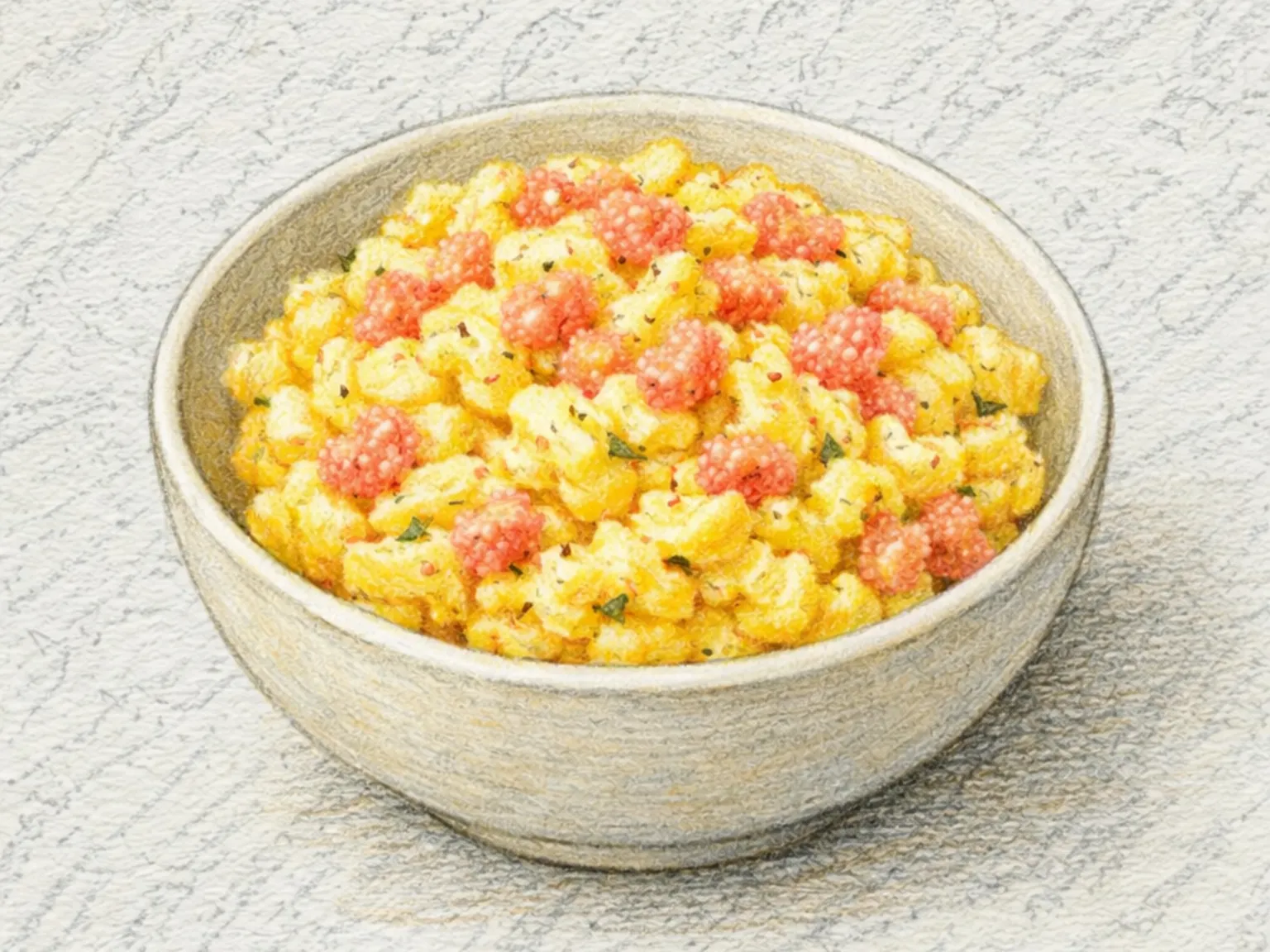
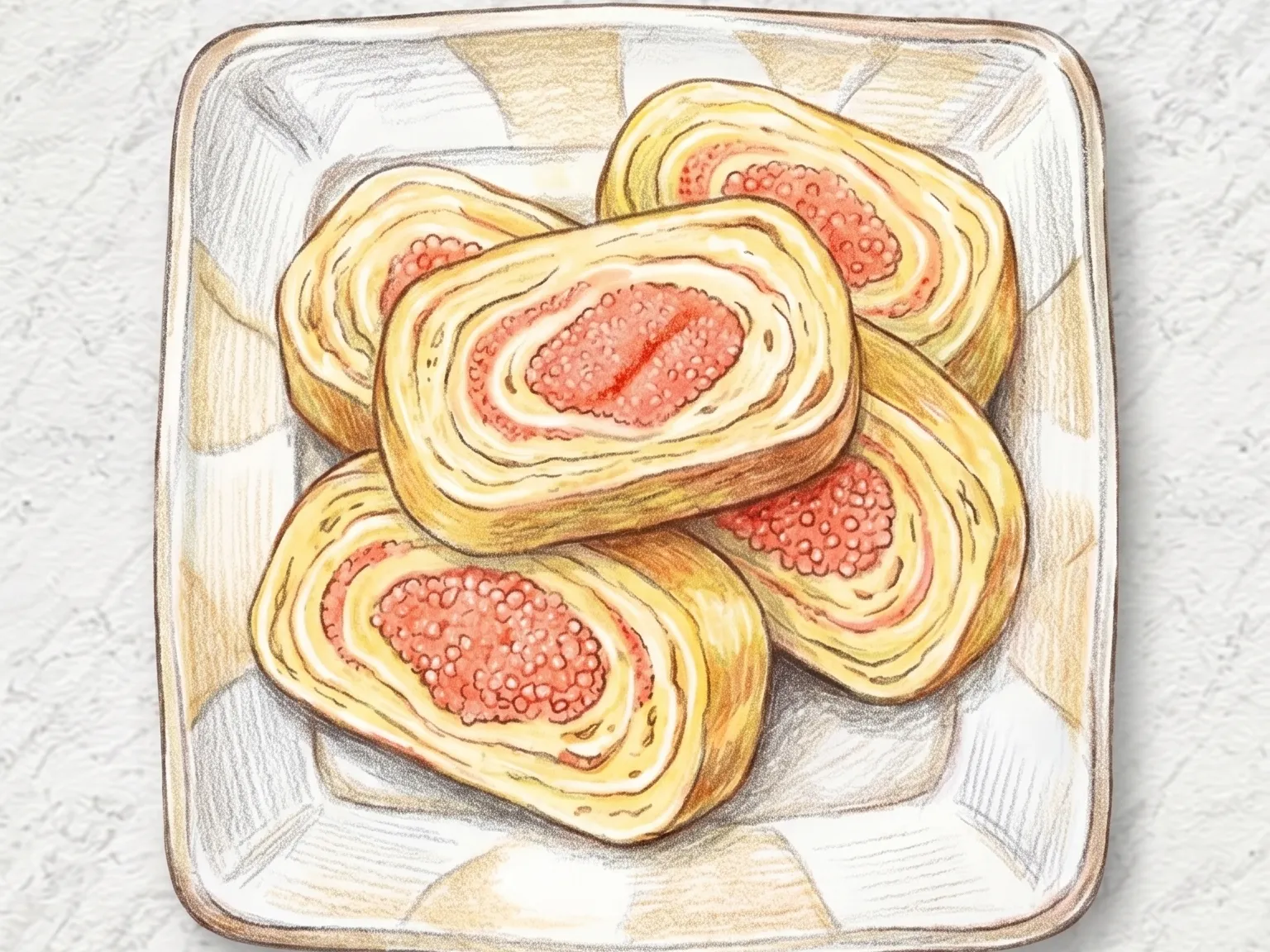
Myeongran gyeran-mari elevates the classic Korean rolled omelet by incorporating myeongranjeot - salted pollock roe - whose briny pop against the egg's gentle sweetness creates a two-layered flavor experience in every bite. The roe sac is split lengthwise with a knife and scraped clean with a spoon to separate the individual eggs from the membrane. Two techniques exist: mixing the roe directly into the beaten egg for even distribution, or laying a line of roe across each layer as the omelet is rolled, which produces a vivid orange stripe visible in the cross-section. Low to medium heat is mandatory during cooking - too hot and the egg browns, burying the roe's delicate salinity beneath a scorched note. When sliced, the contrast between the pale yellow egg and the pink-orange roe granules is visually striking, and biting into a piece delivers a soft egg cushion punctuated by tiny pops of salty roe. This banchan is popular in Korean lunchboxes and reflects the influence of Japanese tamagoyaki technique on modern Korean home cooking.
Adjust Servings
Instructions
- 1
Remove the membrane from pollock roe and scrape out the roe.
- 2
Beat eggs with milk, cooking wine, and pepper, then strain once for smooth texture.
- 3
Finely chop green onion and mix into the egg mixture.
- 4
Heat a pan on low, oil lightly, pour a thin layer of egg, and place roe in a line.
- 5
Roll from one end, adding remaining egg in 2-3 batches and rolling repeatedly.
- 6
Let it cool slightly, then slice and serve.
As an Amazon Associate, we may earn from qualifying purchases.
Tips
Nutrition (per serving)
More Recipes

Korean Rolled Omelette (Layered Vegetable Egg Roll)
Gyeran-mari - Korean rolled omelette - is a staple of Korean lunchboxes and dinner tables, a dish every Korean home cook masters early. Finely diced carrot, onion, and scallion are mixed into beaten eggs and poured in a thin stream across a lightly oiled rectangular pan. When the egg layer is half-set, it is rolled from one side to the other, then more egg mixture is poured beside the roll and the process repeats three to four times, building concentric yellow layers visible when sliced. Air trapped between the thin sheets gives the omelette its characteristic pillowy softness. Temperature control is critical - too hot and the egg browns; too cool and the layers will not bond. After cooking, wrapping the roll in a bamboo mat or kitchen towel for two minutes sets its shape into a clean cylinder. Found in school cafeterias, picnic bento boxes, and family dinners across Korea.

Korean Seasoned Pollock Roe Banchan
Myeongranjeot-muchim dresses raw salted pollock roe with a near-minimal seasoning - a paradoxical dish where less seasoning produces more flavor, because the roe's own brininess and umami are the point. Korean myeongranjeot differs from Japanese mentaiko in being less aggressively salted and not coated in chili marinade by default. The membrane is peeled away and the loose eggs are placed in a bowl with sesame oil, a pinch of gochugaru, and finely sliced scallion, then folded together gently - vigorous stirring crushes the individual eggs and destroys the pop-on-the-tongue texture that defines the dish. The gochugaru adds a whisper of warmth and color without masking the roe's marine depth. Spooned over hot rice and mixed through, this banchan is an intense rice-thief - a small portion can carry an entire bowl of steamed rice. Substituting perilla oil for sesame oil shifts the flavor profile toward a cleaner, more neutral nuttiness.

Korean Seasoned Carrot Namul
Carrot namul is one of the five-color banchan Koreans prepare for ancestral rites, where orange represents fire. Julienned thin, the carrots are salted briefly to shed water, then stir-fried with garlic for two to three minutes - just enough to soften the raw edge while keeping an audible crunch. No soy sauce or chili enters the pan; seasoning stays minimal to preserve natural sweetness. A final toss with sesame oil and seeds rounds out this clean, single-ingredient side.

Korean Steamed Eggplant Namul
Gaji namul strips eggplant down to its quietest expression - steamed until completely soft, then dressed with just soy sauce, garlic, and sesame oil. No chili, no vinegar, no fermented paste. The eggplant is halved and steamed for seven minutes until the flesh is uniformly tender, then torn into long shreds by hand along its natural fibers. This tearing technique creates rough surfaces that grip the minimal seasoning better than knife-cut pieces would. The dressed namul has a glossy, dark sheen from the sesame oil and soy sauce soaking into the porous flesh. Among Korean namul dishes, gaji namul stands out for its exceptionally soft, almost melting texture - it practically dissolves when mixed into warm rice. A traditional banchan in Korean Buddhist temple cuisine, where simplicity is a principle rather than a limitation.

Korean Salted Pollock Roe Jeotgal
Myeongran jeotgal is a Korean salted pollock roe ferment where fresh roe sacs are cleaned of blood spots and membranes, brushed with rice wine to suppress fishiness, then coated in a curing blend of sea salt, gochugaru, and minced garlic before being sealed in a container with a piece of kelp. Over three to five days of cold fermentation, the salt extracts moisture from each tiny egg, concentrating the pop-and-burst texture while enzymatic breakdown generates a deep, briny umami. The chili flakes add a gentle warmth that complements rather than overwhelms the roe's natural flavor. Sliced thin and placed on hot steamed rice, the eggs release their salty, oceanic intensity with each bite.

Korean Pollock Roe Egg Porridge
Rice is simmered in anchovy stock until the grains soften, then finished with pollock roe and beaten egg for a silky, umami-rich porridge. The roe dissolves into the broth and spreads its briny saltiness throughout, while the egg forms soft curds that thicken the texture. Because the roe is already quite salty, soup soy sauce is added sparingly at the end for fine-tuning. Streaming the egg in at a gentle simmer rather than a rolling boil produces delicate, smooth curds instead of tough clumps.