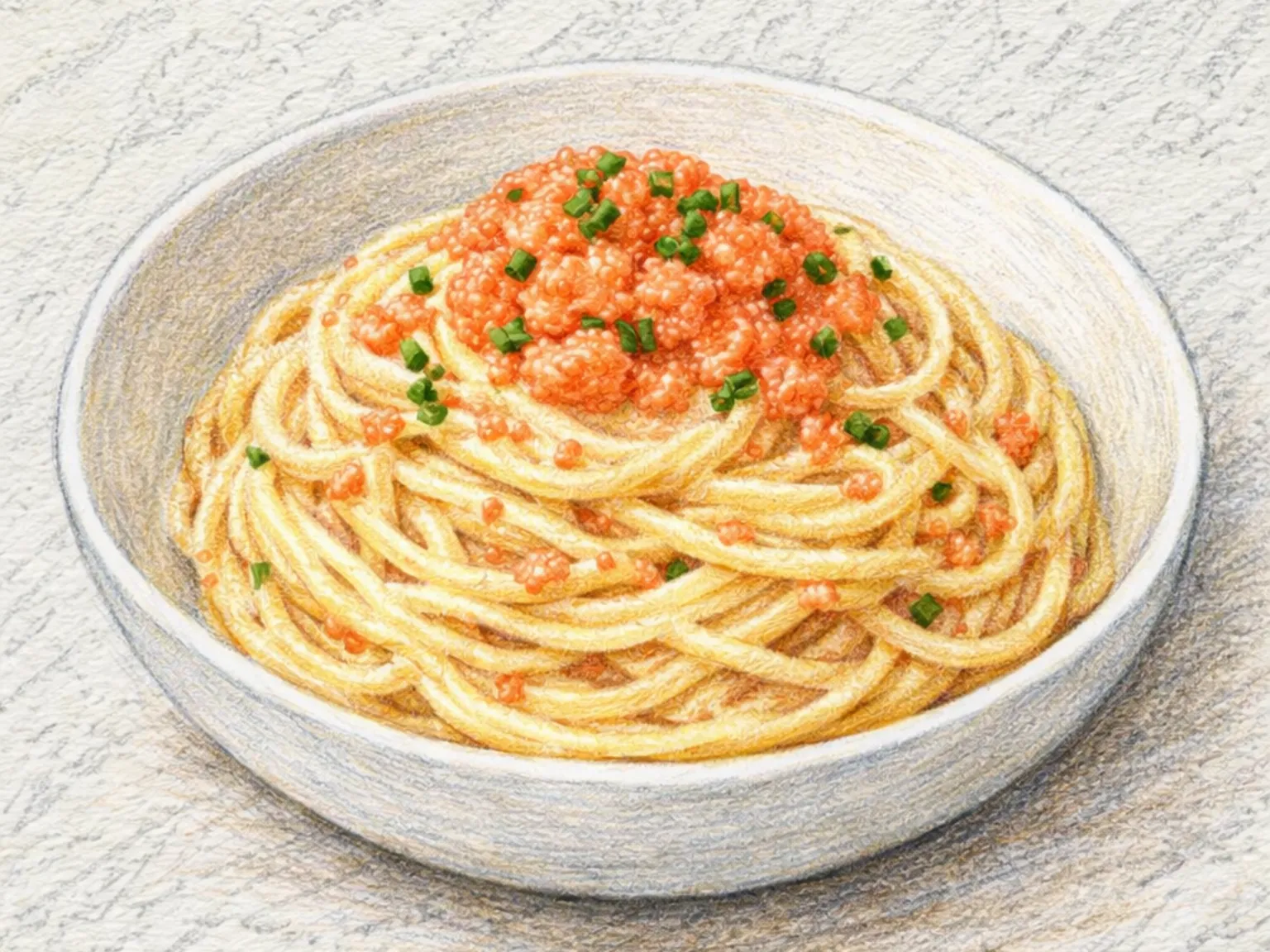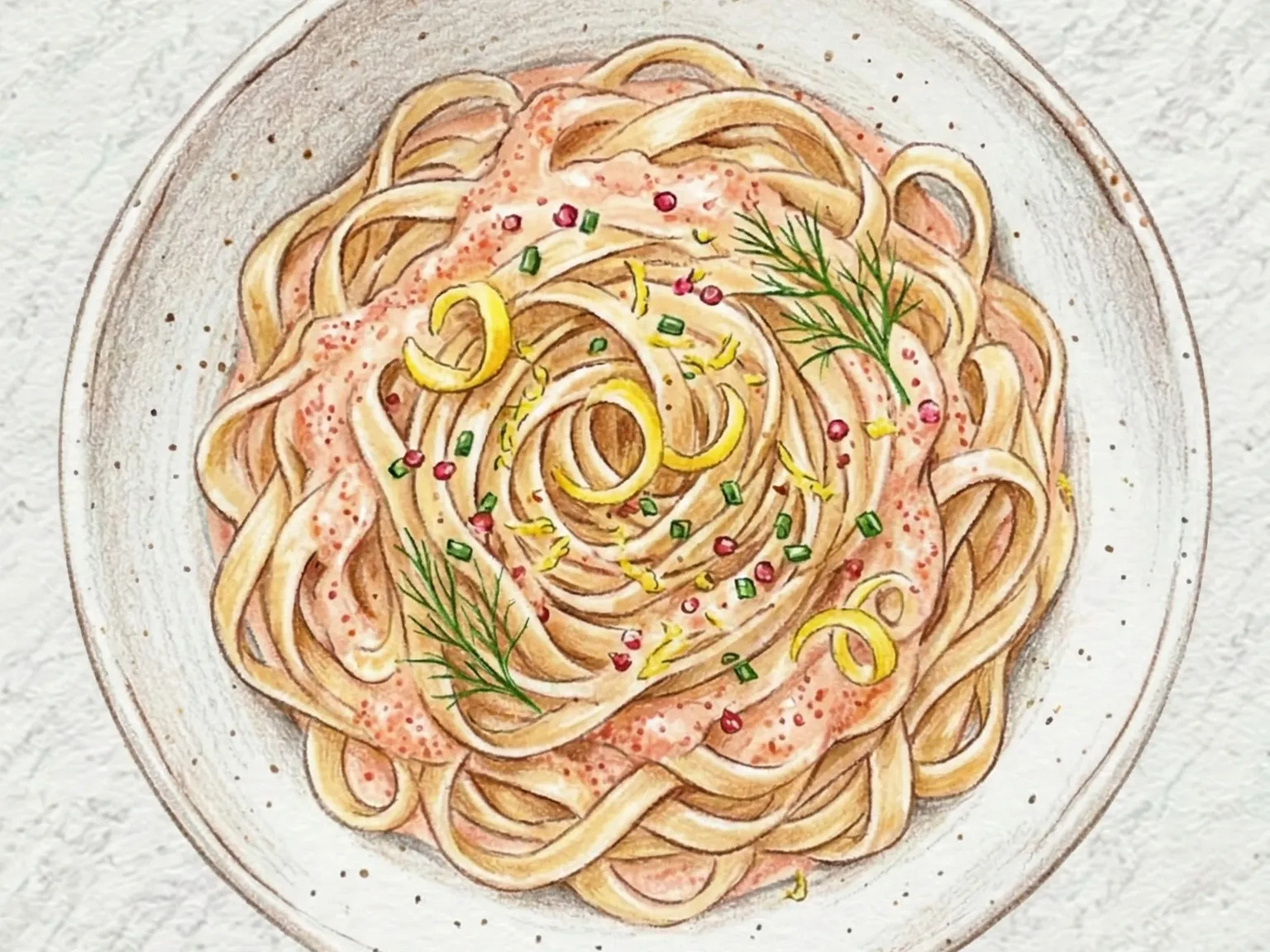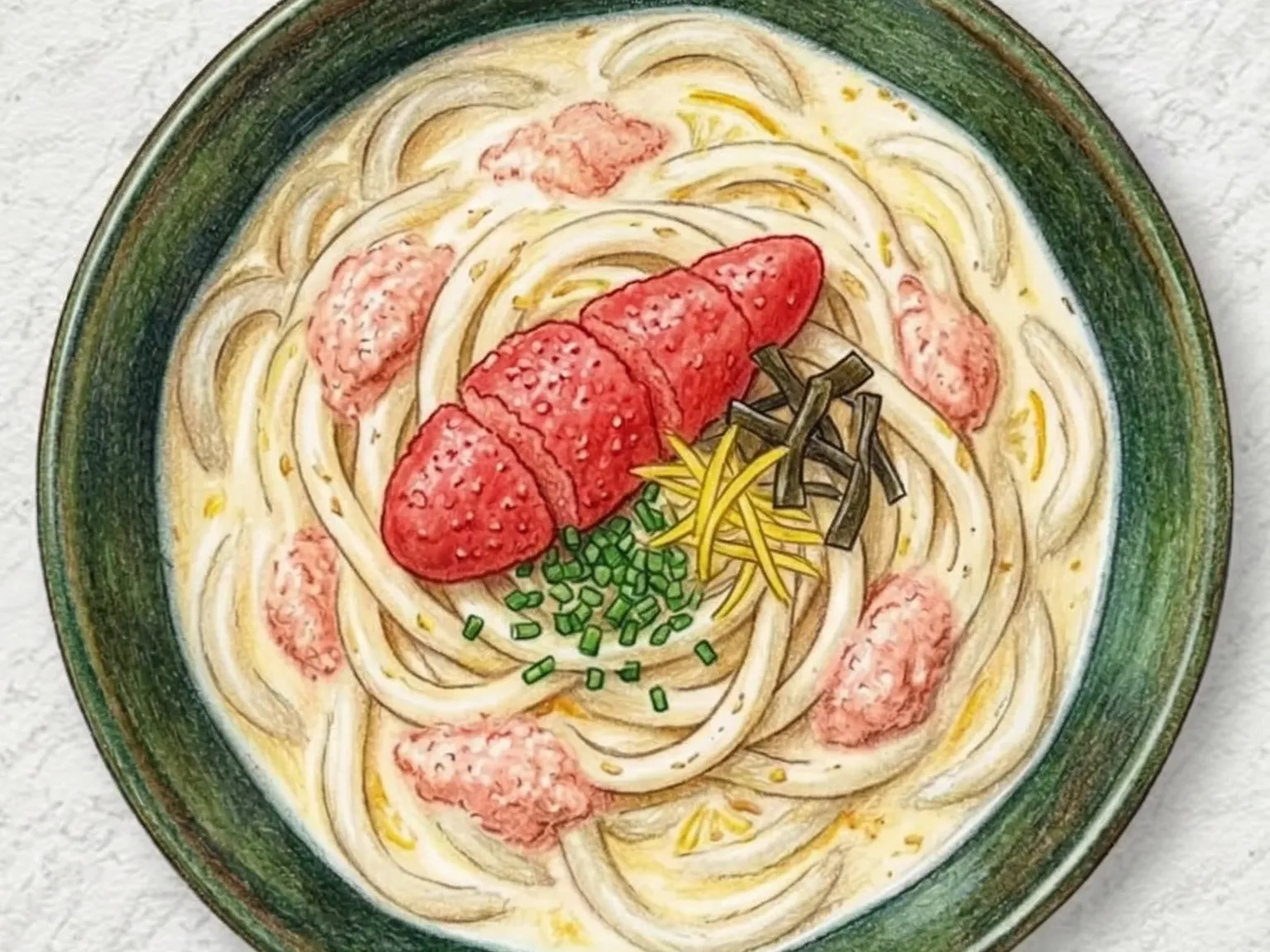
Mentaiko Yuzu Cream Udon
Quick answer
Myeongran yuja cream udon is a Japanese-style noodle dish that features a sauce made from a combination of salted pollock roe and yuzu marmalade.
What makes this special
- Mentaiko and yuzu marmalade form a citric, creamy Japanese-style noodle sauce.
- Yuja-cheong added gradually to tune the citric acidity to taste
- One-third of mentaiko placed raw on top for burst-in-mouth texture
Key ingredients
Core cooking flow
- 1 Split the 80 g salted pollock roe sacs and scrape out only the eggs.
- 2 Blanch the 2 packs of frozen udon in boiling water for about 1 minute, loose...
- 3 Set a pan over medium-low heat and melt the 15 g unsalted butter.
Myeongran yuja cream udon is a Japanese-style noodle dish that features a sauce made from a combination of salted pollock roe and yuzu marmalade. The base of the liquid consists of heavy cream and milk, which are enriched with butter to create a dense and smooth texture. The preparation begins by melting butter in a pan and sauteing minced garlic until the aroma is released. Once the garlic is fragrant, the cream and milk are poured in. This mixture needs to simmer over low heat for approximately two to three minutes until it thickens enough to coat the back of a spoon. Instead of adding the yuzu marmalade all at once, the cook incorporates it in small amounts. This gradual process allows for precise control over the citrus acidity so that it complements rather than overshadows the richness of the heavy cream. After removing the pan from the heat, two-thirds of the salted pollock roe is stirred in. The residual warmth of the sauce is sufficient to gently cook these eggs, ensuring they remain tender. The remaining third of the roe is reserved to be placed raw on top of the finished bowl, providing a distinct briny flavor and a grainy texture in every bite. To finish the dish, freshly cracked black pepper is added for a subtle sharpness, and shredded nori is scattered over the top to provide a roasted, oceanic scent that works well with the yuzu fragrance. The thick udon noodles provide a substantial chew that allows them to carry the heavy sauce and stand up to the combination of salty, creamy, and acidic elements without the flavors becoming lost.
Instructions
Read the steps as a cooking flow: prep, heat, seasoning, doneness control, and finish.
- 1Season
Split the 80 g salted pollock roe sacs and scrape out only the eggs.
Divide them into two portions, two-thirds for the warm sauce and one-third for topping, then finely mince the garlic clove.
- 2Season
Blanch the 2 packs of frozen udon in boiling water for about 1 minute, loosening the noodles with chopsticks as they soften.
Drain well so extra water does not thin the cream sauce later.
- 3Control
Set a pan over medium-low heat and melt the 15 g unsalted butter.
Add the minced garlic and saute for about 30 seconds, just until fragrant, keeping it pale so the sauce stays clean.
- 4Control
Pour in 160 ml heavy cream and 80 ml milk, then simmer over low heat for 2-3 minutes while stirring.
Stop reducing when the sauce lightly coats a spoon and still flows smoothly.
- 5Prep
Add the 1 tablespoon yuzu marmalade a little at a time, stirring before adding more so the acidity stays balanced.
Mix in 1/4 teaspoon black pepper, turn off the heat, and add two-thirds of the roe.
- 6Finish
Stir the roe gently in the residual heat until it disperses without turning dry, then add the udon and coat every strand.
Serve in bowls right away with the remaining raw roe and 2 tablespoons shredded nori on top.
After the steps
Pick a recipe that fits this dish.
Continue with shared ingredients, meal pairings, or a similar method.
Recipes That Go Well With This
More Noodles →Based on shared ingredients and meal pairing
Pollock Roe Butter Udon
Myeongran butter udon is a Japanese-inspired cream udon in which salted pollock roe is folded into a butter and heavy cream sauce over chewy udon noodles. Garlic is gently cooked in melted butter first to build an aromatic base, then cream and soy sauce are added to create a sauce that is rich without being one-dimensional. The roe membrane is removed so only the loose, individual eggs enter the sauce, and they are stirred in after the heat is lowered to prevent the roe from turning dry, grainy, or unevenly cooked. As each tiny egg bursts against the palate, it releases a briny, oceanic intensity that cuts through the silky cream coating and creates a recurring contrast in every mouthful. The soy sauce performs double duty: it adjusts the salt level and introduces a layer of fermented umami depth that would otherwise be absent. If the sauce tightens too much as it reduces, a few tablespoons of noodle cooking water loosen it while adding a hint of starch that helps the sauce cling more evenly to each strand. Finishing with roasted seaweed flakes and chopped chives brings oceanic aroma and a clean, green freshness that lifts the overall heaviness of the dish.
Rich Sea Urchin (Uni) Cream Udon
This noodle dish combines the rich flavor of fresh sea urchin with a smooth, savory cream sauce. Minced garlic and pollock roe are sautéed in oil, then heavy cream and tsuyu are added to create a savory base. Half of the sea urchin is dissolved directly into the warm cream to infuse it with a briny aroma, while the pollock roe replaces salt to provide depth and umami. Boiled udon noodles are tossed in the sauce over low heat, adding reserved noodle water if the mixture gets too thick. The dish is topped with the remaining raw sea urchin, chives, and seaweed strips. Because sea urchin is highly sensitive to heat, the garnish portion is kept raw and served immediately before the residual warmth of the noodles cooks it, preserving its delicate sweet flavor and soft texture.
Roasted Kabocha Miso Nut Salad
Kabocha squash is sliced into half-moons and roasted in a hot oven until the cut surfaces caramelize and the flesh turns chestnut-soft and dry in the best possible way. The dressing combines white miso, rice vinegar, and maple syrup into a mixture where salt, acid, and a restrained sweetness reinforce each other and amplify the roasted squash underneath. Arugula provides the peppery, slightly bitter base that keeps the salad from tipping too sweet. Chickpeas add lean protein and a firm, satisfying chew that holds up against the tender squash. Walnuts, crushed roughly rather than chopped fine, contribute crunch and a deep, roasted nuttiness that layers well with the soft squash in each forkful. The contrast between textures, tender squash against resistant walnut, is what makes this salad interesting across every bite. Autumn kabocha, at the peak of its natural sugar content, delivers the most pronounced sweetness, and the dish is filling enough to stand as a vegetarian main course with nothing else alongside it. If using refrigerated squash, adjust oven time and temperature to ensure even caramelization.
Japanese Stir-Fried Udon
Yaki udon is a Japanese stir-fried noodle dish where thick udon noodles are tossed in a soy-based sauce over high heat with sliced pork or seafood and vegetables such as cabbage, carrot, and scallion. The high heat gives the noodles lightly charred edges while keeping their chewy center intact. Bonito flakes (katsuobushi) are often scattered on top just before serving, where they wave from the residual heat. The recipe takes about 25 minutes and depends on maintaining strong heat throughout the stir-fry to avoid steaming the noodles.
Serve with this
Korean Seasoned Bracken Fern
Gosari, the Korean name for bracken fern, is one of the oldest foraged vegetables in Korean cooking, with consumption records tracing back to the Three Kingdoms period. It is a mandatory component of bibimbap and a required dish on jesa, the ancestral rite table set for ceremonies honoring the dead. Dried gosari must soak overnight in cold water and then boil until the tough, wiry fibers relax into a distinctively springy, almost elastic chew that no fresh vegetable can replicate. The rehydrated fern is stir-fried in perilla oil with minced garlic until fragrant, then a small amount of soup soy sauce and water goes in and the pan is covered to let the liquid absorb and the fern braise briefly. This short braising step is what rounds the flavor and ensures the seasoning penetrates the fibrous strands rather than sitting only on the surface. Perilla oil is the traditional fat of choice rather than sesame oil because its green, herbal quality pairs more naturally with the woodsy, forest-floor flavor of gosari, amplifying rather than competing with it. Large batches are typically made during Chuseok or Seollal and eaten over several days, as the flavor improves and deepens as the dish sits.
Korean Stuffed Perilla Leaf Pancakes
Kkae-ip-jeon are pan-fried perilla leaf parcels stuffed with a filling of ground pork and firm tofu, coated in flour and egg. The tofu must be squeezed dry in a cloth before mixing; excess moisture causes the filling to spread and stick to the pan. Garlic chives and onion add crunch and fragrance to the mix, and the filling seasoned with soy sauce and black pepper pairs cleanly with the perilla's strong herbal character. Dusting with flour first, then dipping in egg, produces an even coating, and frying covered over medium-low heat for two minutes per side ensures the filling is cooked through to the center. The bite-sized pieces work well as a packed lunch side or as bar food.
Korean Cheonggak Kimchi (Seaweed Kimchi)
Cheonggak kimchi uses cheonggak, a branching green seaweed, mixed with julienned radish and scallions in a paste of gochugaru, anchovy fish sauce, and sweet rice starch. The seaweed brings a firm, almost crunchy chew and a concentrated marine aroma absent from land-vegetable kimchi. Seasoning the radish first lets it absorb the brine, then the seaweed is tossed in briefly - prolonged handling toughens the strands. After one day of refrigeration, the seaweed's salinity merges with the fermented seasoning paste to produce a briny, sharp kimchi that sits naturally alongside seafood dishes and mild rice soups. Coastal households traditionally make this in autumn when fresh cheonggak comes into season.
Similar recipes
Cold Udon (Chilled Noodles with Mentsuyu Dipping Broth)
Naeng udon is a Japanese cold noodle dish where thick udon is cooked, drained, and then cooled aggressively in ice water before being served in chilled mentsuyu broth. The broth is prepared by diluting concentrated mentsuyu with cold water at a ratio of one to two, then refrigerating it until well chilled, which produces a clean liquid dense with soy-based umami. Cooling the noodles completely in ice water is not optional: the cold firms the starch back up, restoring the springy, slightly resistant chew that defines good udon. Freshly grated daikon stirred into the broth contributes a mild peppery heat and a cooling edge that lightens the overall flavor. Thinly sliced scallion adds a bright green freshness, and a sheet of nori brings oceanic depth to what might otherwise be a simple dipping liquid. A small amount of wasabi dissolved into the broth delivers a sharp nasal sting that contrasts directly with the cold temperature, leaving a clean, bracing finish on the palate. The dish is best eaten quickly while everything stays cold, and it comes together from pantry staples in minutes, making it one of the most practical summer meals.
Dipping Ramen (Japanese Thick Noodles with Concentrated Dipping Broth)
Tsukemen is a Japanese dipping ramen where thick noodles and a concentrated broth are served separately. The broth - typically tonkotsu or seafood-soy based - is reduced to roughly double the intensity of standard ramen soup. Noodles are rinsed in cold water after boiling, which firms their texture and creates a temperature contrast when dipped into the hot broth. Toppings such as chashu pork, soft-boiled egg, and nori are arranged alongside the noodles. The recipe takes about 50 minutes, with most time spent building and reducing the dipping broth.
Japanese Stir-Fried Noodles (Yakisoba)
Yakisoba is a classic Japanese stir-fried noodle dish made by tossing wheat noodles, pork, and vegetables in a tangy Worcestershire-based sauce. The preparation begins by stir-frying thinly sliced pork over high heat, followed by onions, carrots, and cabbage. Cooking the vegetables quickly at high heat keeps them crisp and prevents them from becoming soggy. The wheat noodles are briefly warmed to loosen them before being added to the pan. A savory-sweet yakisoba sauce is poured around the edges of the pan and quickly tossed to evenly coat every noodle strand. Once plated, hot noodles are topped with bonito flakes, which release a smoky aroma as they wave from the residual heat. Ensuring the noodles are not overcooked and adding the sauce near the end of the cooking process are key steps to maintaining the proper textures of both noodles and vegetables.