Charim

2686 Korean & World Recipes

2686+ Korean recipes, clean and organized. Ingredients to instructions, all at a glance.

Korean Water Kimchi (Chilled Radish Broth Kimchi)

Korean Water Kimchi (Chilled Radish Broth Kimchi)

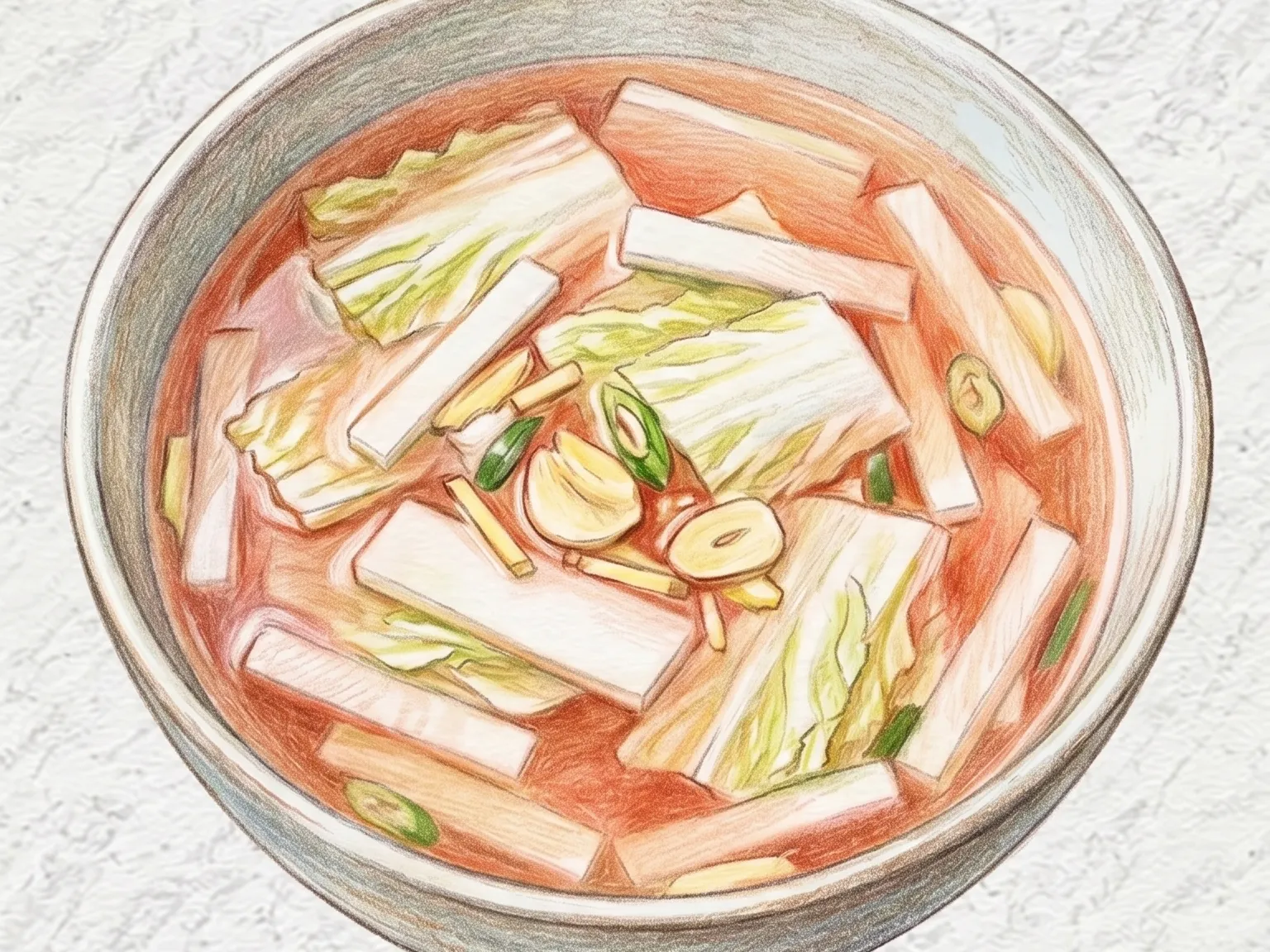
Nabak-kimchi is a Korean water kimchi made by submerging thinly sliced radish and napa cabbage in a clear, lightly reddened broth - fundamentally different from the dense, fermented intensity of baechu-kimchi. Here, the chilled broth is the centerpiece, meant to be sipped and spooned rather than merely eaten as a side. Radish and cabbage are cut into flat 2-to-3cm squares, salted briefly, then immersed in a liquid made by steeping gochugaru in water through cheesecloth - wrapping the powder prevents the particles from clouding the broth. Garlic, ginger, scallion, and fish sauce flavor the liquid. One day at room temperature initiates lactic fermentation, introducing a gentle tang, and refrigeration over two to three days deepens the complexity. A spoonful of nabak-kimchi broth alongside spicy food acts as a cooling palate cleanser. Served cold, this kimchi is particularly refreshing in summer - it is a drinking kimchi in the truest sense, closer in spirit to naengmyeon broth than to solid fermented kimchi.

Prep 20min 0 4 servings

Adjust Servings

2servings
servings

Instructions

  1. 1

    Slice radish and cabbage into thin squares and salt them briefly.

  2. 2

    Rinse and drain the vegetables, then place in a container.

  3. 3

    Dissolve pepper flakes in water, add garlic and salt to make the brine.

  4. 4

    Pour brine over vegetables, ferment at room temperature for one day, then refrigerate.

🛒Shop Ingredients on Amazon

As an Amazon Associate, we may earn from qualifying purchases.

Tips

A few slices of ginger add extra freshness to the brine.

Nutrition (per serving)

Calories
20
kcal
Protein
1
g
Carbs
4
g
Fat
0
g

More Recipes

Korean Young Radish Kimchi
Side dishesMedium

Korean Young Radish Kimchi

Young radish greens and their slender stems are salted briefly, dressed in a gochugaru-based paste, and fermented into a kimchi synonymous with Korean summer. The greens are more delicate than mature radish, absorbing the seasoning quickly while retaining a refreshing crunch that lasts well into fermentation. Gochugaru and anchovy fish sauce form the backbone of the paste, delivering heat and deep umami in equal measure, while garlic lends a pungent undercurrent that mellows as the fermentation progresses. Once dressed, the radish greens release their own moisture, creating a naturally occurring brine that becomes the hallmark of yeolmu kimchi: a tangy, chili-flecked liquid that can be spooned over cold noodles or rice. Even half a day at room temperature kicks off the fermentation, introducing a sharp, fizzy acidity that signals the kimchi is alive. Transferring it to the refrigerator slows the process and stabilizes the flavor at a bright, appetizing sourness. Draped over bibim-guksu or naengmyeon, it brings a cooling, spicy bite that defines the Korean summer table.

🏠 Everyday
Prep 30min4 servings
Korean Green Onion Kimchi
Side dishesEasy

Korean Green Onion Kimchi

Pa-kimchi uses whole large green onions, salted for 30 minutes to soften their sharp bite and loosen the fibers so the seasoning can penetrate deeply. The paste - red pepper flakes, fish sauce, and minced garlic - coats each stalk in a layer of spicy, briny flavor. One day of room-temperature fermentation allows the lactic acid bacteria to develop, blending the onion pungency with the umami of the fish sauce into a more rounded profile. After transferring to the refrigerator, the kimchi continues to mature over two to three days, gaining a mild tanginess that intensifies with each passing day.

🏠 Everyday🍱 Lunchbox
Prep 30min4 servings
Korean Chive Kimchi (Spicy Garlic Chive Quick Kimchi)
Side dishesEasy

Korean Chive Kimchi (Spicy Garlic Chive Quick Kimchi)

The fastest kimchi in the Korean repertoire - five ingredients, no salting, no fermentation. Garlic chives are cut to finger length and tossed with gochugaru, anchovy fish sauce, garlic, and sugar. The fish sauce supplies briny, fermented depth that normally develops over days of lacto-fermentation, compressing the flavor arc into an instant preparation. The chives' garlicky bite amplifies the red pepper heat. Popular in Gyeongsang-do, where chives grow abundantly in spring.

🏠 Everyday🍱 Lunchbox
Prep 15min4 servings
Korean Aged Kimchi Stew (Deep-Fermented Pork Belly Broth)
StewsEasy

Korean Aged Kimchi Stew (Deep-Fermented Pork Belly Broth)

Mugeunji jjigae uses deeply fermented, aged kimchi that delivers an intense sour tang and concentrated umami far beyond fresh kimchi. Pork belly renders its fat into the stew, mellowing the sharp acidity while enriching the broth. Tofu cubes absorb the bold flavors and provide a soft contrast. The longer the kimchi has aged, the more complex and punchy this stew becomes.

🍺 Bar Snacks🏠 Everyday
Prep 10minCook 30min2 servings
Korean Kimchi Rice Bowl (Stir-Fried Aged Kimchi over Steamed Rice)
RiceEasy

Korean Kimchi Rice Bowl (Stir-Fried Aged Kimchi over Steamed Rice)

Stir-frying aged kimchi drives off moisture and triggers caramelization, mellowing the sourness into a deeper, sweeter intensity. A splash of soy sauce and sesame oil adds salty nuttiness to the charred edges. Topped over plain rice with a single fried egg, this bowl is deceptively simple - yet using well-fermented kimchi (mukeunji) introduces layers of tangy complexity that elevate it beyond its minimal ingredient list. The entire dish comes together in under fifteen minutes, making it the go-to Korean rice bowl when the pantry is nearly bare.

Quick
Prep 5minCook 10min1 servings
Korean Aster Herb Namul (Blanched Mountain Greens Seasoned)
Side dishesEasy

Korean Aster Herb Namul (Blanched Mountain Greens Seasoned)

Chwinamul - aster scaber - is among Korea's most beloved mountain herbs, foraged from hillsides every spring. Its broad leaves carry a bitter, herbaceous edge that sets it apart from milder greens. A one-to-two minute blanch tames rawness while preserving the woodland scent. Dressed with garlic, salt, and perilla oil instead of sesame, the herb's wild character stays front and center. Sauteing in perilla oil deepens the fragrance. A staple of bibimbap and temple cuisine.

🏠 Everyday🍱 Lunchbox
Prep 10minCook 5min2 servings
More Side dishes →