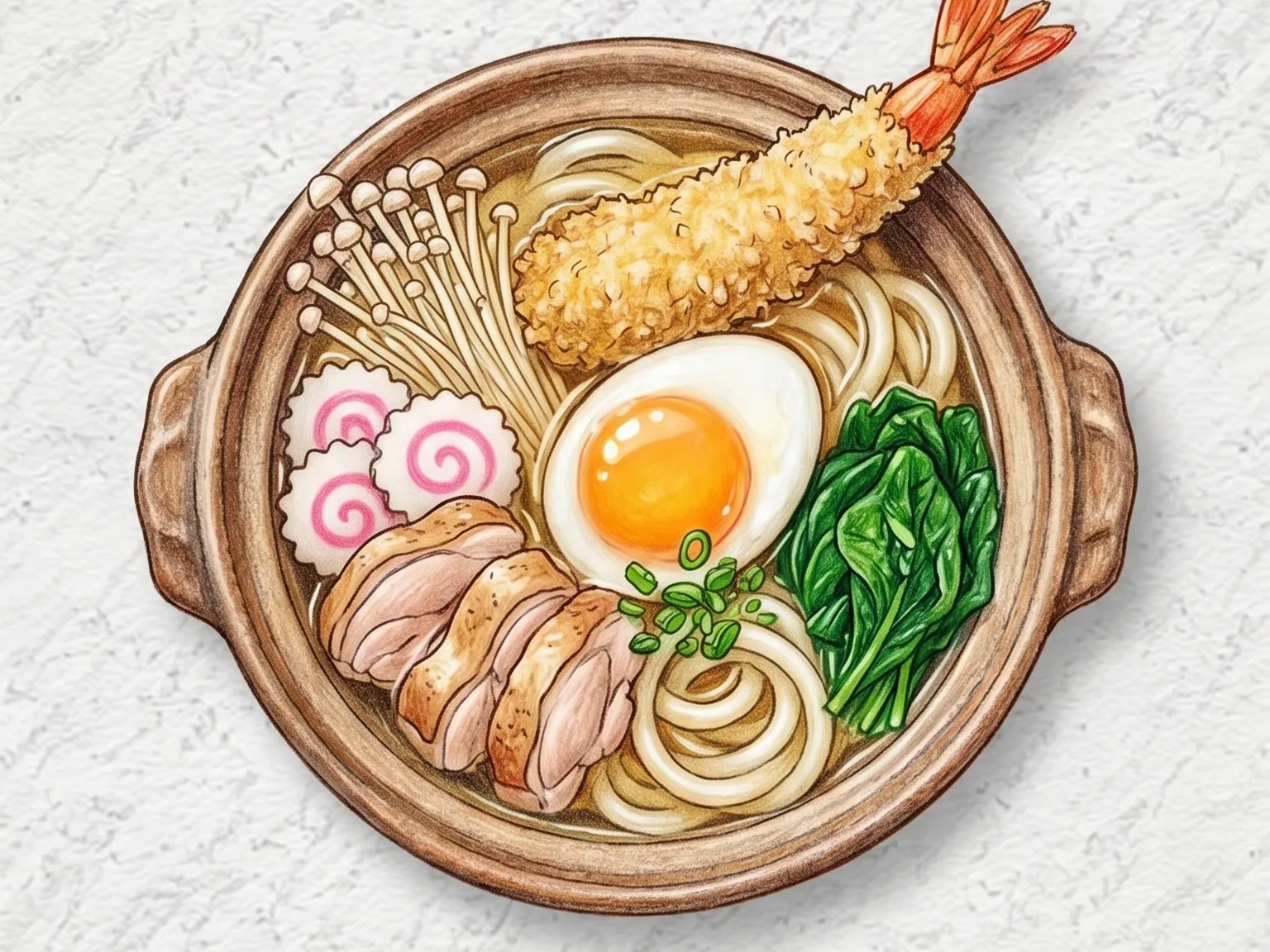
Hot Pot Udon (Japanese Earthenware Pot Noodle Soup)
Nabeyaki udon is a Japanese hot-pot noodle dish cooked and served in a small earthenware pot, keeping everything piping hot at the table. Dashi stock seasoned with soy sauce and mirin forms a clear yet deeply savory broth, and chicken thigh simmered directly in it releases fat that enriches the liquid. Narutomaki fish cake slices and enoki mushrooms add visual appeal and varied textures. An egg cracked into the center and covered with a lid cooks to a soft, runny stage that blends into the broth when broken. Shrimp tempura is placed on top just before serving so its coating stays crisp against the steaming soup. Spinach goes in during the last minute to retain its bright green color and tender bite.
Adjust Servings
Instructions
- 1
Season dashi stock with soy sauce and mirin.
- 2
Boil broth in a small pot; add udon, chicken, fish cake, and mushrooms.
- 3
Crack an egg into the center, cover and cook to desired doneness.
- 4
Add spinach and simmer 1 more minute.
- 5
Top with shrimp tempura and serve in the pot.
As an Amazon Associate, we may earn from qualifying purchases.
Tips
Nutrition (per serving)
More Recipes

Japanese Stir-Fried Udon
Yaki udon is a Japanese stir-fried noodle dish where thick udon noodles are tossed in a soy-based sauce over high heat with sliced pork or seafood and vegetables such as cabbage, carrot, and scallion. The high heat gives the noodles lightly charred edges while keeping their chewy center intact. Bonito flakes (katsuobushi) are often scattered on top just before serving, where they wave from the residual heat. The recipe takes about 25 minutes and depends on maintaining strong heat throughout the stir-fry to avoid steaming the noodles.

Mentaiko Yuzu Cream Udon
Myeongran yuja cream udon is a Japanese-style cream udon that layers salted pollock roe with yuzu marmalade in a sauce built from heavy cream, milk, and butter. Garlic is sauteed in butter first, then cream and milk simmer on low heat for two to three minutes to thicken before yuzu marmalade and black pepper are stirred in. Two-thirds of the roe goes in off heat so residual warmth cooks it gently without making it tough, while the remaining third is placed raw on top for bursts of briny texture. The yuzu is added gradually to control acidity, and its citrus fragrance lifts the heavy cream base, keeping the dish from feeling overly rich. Shredded nori on top provides a roasted, oceanic contrast.

Kake Udon (Plain Udon in Clear Dashi Broth)
Kake udon is the most elemental form of Japanese udon: chewy wheat noodles served in a clear, hot dashi broth seasoned simply with soy sauce, mirin, and a pinch of salt. The broth is built on katsuobushi and kelp, so its flavor is subtle but deeply savory. Toppings are kept to a minimum - typically a few slices of kamaboko fish cake and chopped scallion - letting the quality of the stock and the springy bite of the noodles take center stage. The dish is meant to be eaten quickly while the noodles still have their bounce, which is why it has long been a fast, affordable staple at standing noodle shops across Japan.

Shabu Shabu (Japanese Hot Pot with Thin-Sliced Beef in Kombu Broth)
Shabu-shabu is a Japanese hot pot built on simplicity: a pot of simmering kombu dashi, a plate of beef sliced so thin it is nearly translucent, and a selection of vegetables arranged on a separate platter. The name mimics the swishing sound made when a slice of beef is swept back and forth through the broth for just a few seconds until it turns from red to pale pink. Each piece is then dipped in either ponzu, a citrus-soy sauce, or a creamy sesame dipping sauce before eating. Napa cabbage, tofu, enoki mushrooms, shungiku greens, and rice cakes cook alongside the beef, each ingredient releasing its flavor into the broth and building complexity as the meal progresses. By the end, the enriched broth is used for a closing course of udon noodles or rice porridge, ensuring nothing is wasted.

Cold Udon (Chilled Noodles with Mentsuyu Dipping Broth)
Naeng udon is a Japanese chilled noodle dish where cooked udon is thoroughly cooled in ice water and served with cold mentsuyu dipping broth on the side. The broth is made by diluting concentrated mentsuyu with cold water at a one-to-two ratio and chilling it well, producing a clean, umami-dense liquid. Cooling the noodles completely in ice water firms up the starch and restores their characteristic bouncy chew. Freshly grated daikon adds a mild peppery edge and refreshing moisture to the broth, while thinly sliced scallion and a sheet of nori contribute green freshness and oceanic aroma. A small dab of wasabi dissolved into the broth delivers a sharp nasal heat that contrasts with the cold temperature.

Hakata Motsu Nabe (Offal Hot Pot)
Hakata motsu nabe is a hot pot from Fukuoka's Hakata district that features pork offal - specifically small intestines - simmered in a soy or miso-based broth with heaps of garlic, red chili, and a mountain of shredded cabbage and garlic chives. As the pot bubbles, the fat from the intestines renders into the broth, giving it a rich body, while the garlic and chili infuse everything with a punchy, aromatic warmth. The cabbage wilts down and soaks up the broth, becoming sweet and silky. Once the meat and vegetables are eaten, the standard finish is to add ramen noodles or rice to the remaining broth, absorbing every last bit of flavor. It is especially popular in the colder months and is considered a source of collagen, which adds to its appeal in Fukuoka's dining culture.