Korean Beef Tripe Hot Pot
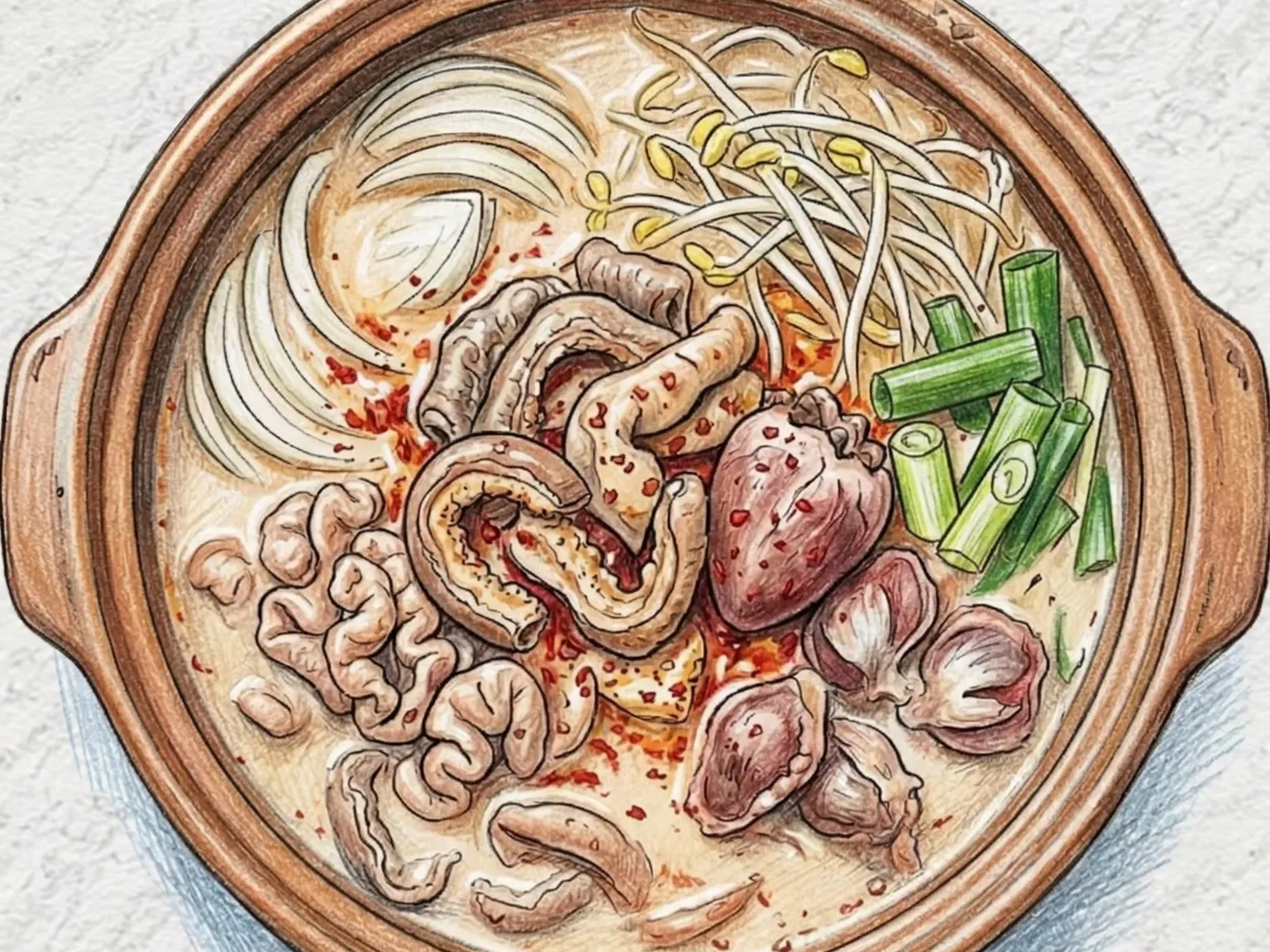
Naejang jeongol is a Korean tripe hot pot that simmers mixed beef offal in rich beef bone broth with onion, bean sprouts, and green onion. A touch of doenjang tames any gaminess, while gochugaru and garlic build a spicy, warming broth. The tripe offers a satisfyingly chewy bite against the milky, collagen-rich stock. This dish has long been a go-to accompaniment for soju and a popular hangover remedy.
Adjust Servings
Instructions
- 1
Clean and blanch tripe, then cut into bite-size pieces.
- 2
Slice onion and green onion; rinse and drain bean sprouts.
- 3
Mix chili flakes, doenjang, and garlic into a seasoning paste.
- 4
Add tripe, vegetables, seasoning paste, and broth to a pot.
- 5
Boil over high heat, then simmer on medium for 15 minutes.
- 6
Adjust seasoning and simmer another 5 minutes before serving.
As an Amazon Associate, we may earn from qualifying purchases.
Tips
Nutrition (per serving)
More Recipes

Korean Spicy Beef Tripe Hot Pot
This fiery hot pot simmers beef tripe in a beef bone stock seasoned with Korean chili flakes and gochujang. The tripe offers its signature chewy, springy texture that stands up well to the bold spice. Cabbage and oyster mushrooms soften in the broth, adding balance, while perilla leaves bring an herbal fragrance. A generous amount of green onion keeps the broth refreshing despite its heat. The beef bone stock base gives the entire dish a full-bodied richness.

Korean Beef Intestine Hot Pot
Gopchang jeongol is a hot pot built around beef intestines and tripe, simmered in a beef bone stock. The 500 grams of intestines and 200 grams of tripe provide a chewy, bouncy texture that defines the dish. Napa cabbage and oyster mushrooms balance the richness of the offal, while gochujang and gochugaru season the broth with a moderate heat. Served bubbling at the table, this communal dish is meant to be shared.

Korean Seoul-style Gopchang Jeongol
Seoul-style gopchang jeongol uses 600 grams of beef intestines in a beef bone broth, seasoned with soup soy sauce rather than the heavier gochujang found in other regional versions. This gives the broth a cleaner, lighter character. Cabbage and oyster mushrooms add bulk, while ten perilla leaves contribute their distinctive herbal scent. Gochugaru provides color and gentle heat. This preparation reflects the style served in Seoul's traditional gopchang alley restaurants.

Korean Blood Sausage Hot Pot
This spicy hot pot features Korean blood sausage with cabbage, perilla leaves, and onion in a chili-seasoned beef bone broth. The sundae absorbs the broth and becomes even chewier, while a touch of doenjang adds fermented depth. Cabbage releases sweetness as it wilts, and the perilla leaves provide an herbal accent. The combination of rich bone broth and fiery gochugaru makes this a communal dish suited for cold weather gatherings.

Naejang-tang (Spicy Mixed Beef Tripe Soup)
Naejang-tang is a Korean offal soup that simmers a medley of beef innards - tripe, large intestine, abomasum, and omasum - in a robust broth seasoned with gochugaru, gochujang or doenjang, garlic, and green onion. Each organ brings a different texture to the bowl: tripe is chewy and ridged, large intestine is fatty and tender, and the stomach linings offer a firm, almost crunchy bite. As the innards cook for an extended period, their rendered fat and natural gelatin melt into the broth, producing a thick, savory liquid with a distinctive richness that leaner soups cannot approach. Some versions include seonji, coagulated ox blood, which darkens the broth and adds a mineral, iron-forward depth. The soup is characteristically spicy and served at near-boiling temperature, often in a stone pot that keeps it bubbling at the table. In Korea, naejang-tang is strongly associated with early-morning hangover recovery - specialized restaurants near traditional markets and drinking districts begin serving it well before dawn. The combination of fat, heat, and protein makes it one of the most physically restorative soups in the Korean repertoire.

Korean Seafood Hot Pot Soup
Haemul-tang is a Korean seafood hot pot that throws together crab, shrimp, clams, and squid in a fiery, brick-red broth. The liquid starts with gochugaru and plenty of garlic, building a spicy base that the seafood then amplifies with its own briny juices. Radish chunks soften as the pot bubbles, thickening the broth slightly and adding a cool sweetness behind the heat. Green onions and cheongyang peppers go in toward the end for a sharp, vegetal bite. The magic of haemul-tang lies in the convergence of flavors: crab shells release a sweet, crustacean stock; clams open to spill their liquor; shrimp and squid contribute distinct textures from snappy to chewy. The pot is brought to the table still at a rolling boil, and diners pick through the shells and tentacles while the broth continues to concentrate.