Korean Cold Perilla Oil Buckwheat Noodles
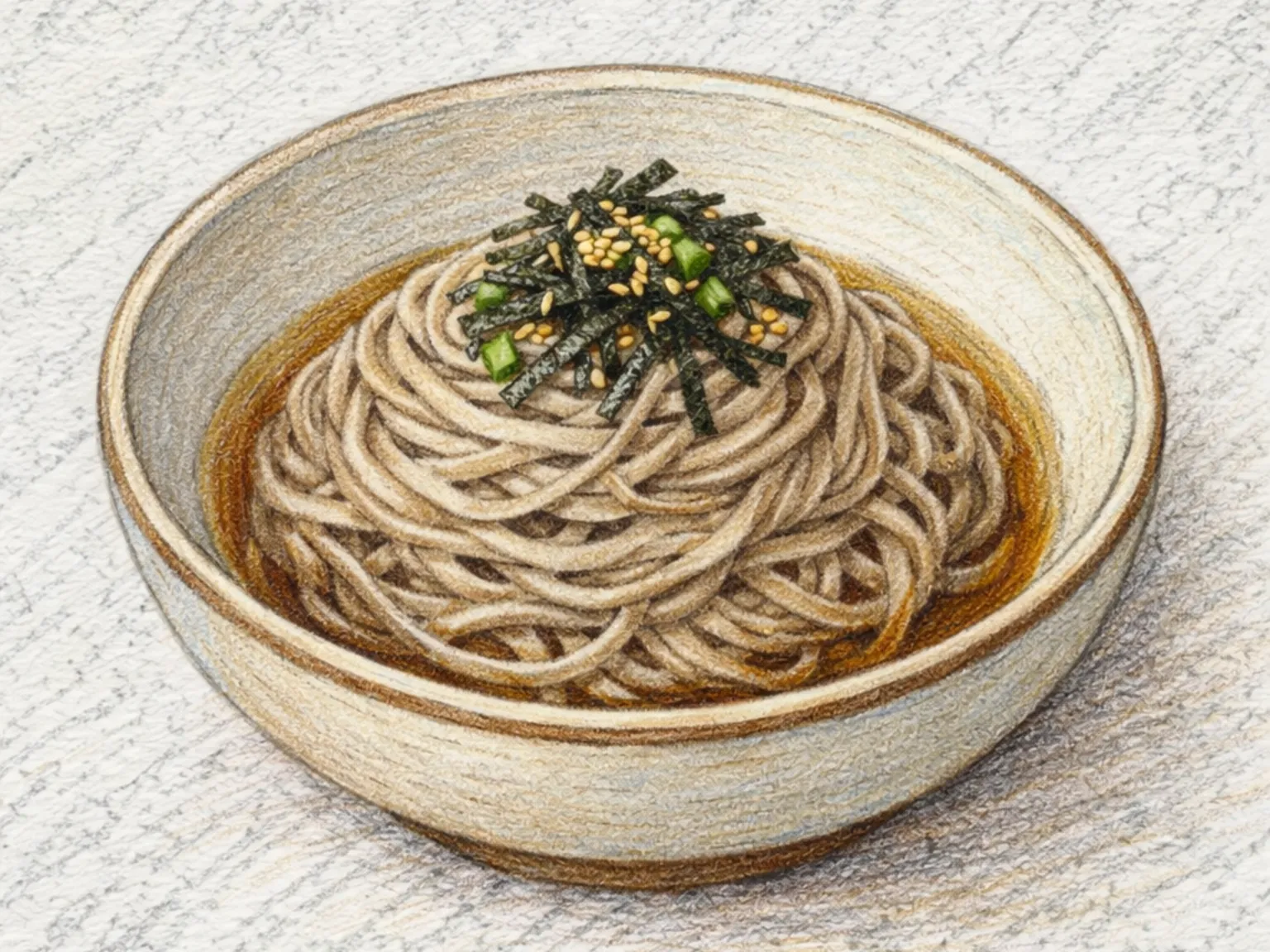
Naeng deulgireum memilmyeon is a Korean cold noodle dish where chilled buckwheat noodles are dressed with perilla oil, soy sauce, vinegar, and allulose syrup. The noodles are boiled for four to five minutes, rinsed multiple times in cold water, then briefly plunged into ice water to remove surface starch and firm up their texture. Thorough draining is essential so the dressing stays concentrated on the noodles rather than pooling at the bottom. Perilla oil provides a bold, nutty fragrance that pairs naturally with the earthy buckwheat, while soy sauce and vinegar add salt and acidity in balance. Thinly julienned cucumber contributes moisture and crunch, and roasted seaweed flakes with toasted sesame seeds bring oceanic and nutty finishing notes.
Adjust Servings
Instructions
- 1
Boil buckwheat noodles for 4-5 minutes, rinse several times in cold water, then chill briefly in ice water.
- 2
Julienne the cucumber thinly.
- 3
Mix perilla oil, soy sauce, vinegar, allulose, and garlic to make the cold dressing.
- 4
Drain chilled noodles thoroughly and place in a large bowl.
- 5
Toss noodles with dressing, then top with cucumber and seaweed flakes.
- 6
Sprinkle sesame seeds for aroma and serve immediately.
As an Amazon Associate, we may earn from qualifying purchases.
Tips
Nutrition (per serving)
More Recipes

Korean Dongchimi Buckwheat Noodles
Dongchimi makguksu is a Gangwon-do cold noodle dish of buckwheat noodles served in well-fermented dongchimi radish water kimchi broth. The broth is strained and chilled in the freezer until ice crystals begin to form, which sharpens its tangy, lactic acidity to its peak. The noodles must be rinsed several times in cold water after boiling to strip all surface starch and keep the broth clear. Julienned Korean pear adds a fruit sweetness, and Korean mustard delivers a nasal heat that punctuates the cold liquid. With no oil or fat anywhere in the bowl, this is an exceptionally clean and light dish, well suited to hot summers or as a palate cleanser after a meat-heavy meal.

Korean Cold Buckwheat Noodles
Mul naengmyeon is a Korean cold noodle dish where chewy buckwheat noodles are served in an icy, clear broth chilled to a near-slushy state. Placing the broth in the freezer for about an hour creates a thin layer of ice crystals that maximizes the first-sip chill. The noodles are boiled briefly and rubbed under cold running water to strip away excess buckwheat starch and its distinctive odor, then rinsed once more in ice water for a firm, springy bite. Julienned cucumber and pickled radish contribute crunch, while a halved boiled egg adds a creamy yolk richness to the otherwise lean broth. Vinegar and Korean mustard are added at the table to taste, sharpening the overall flavor with bright acidity and a nasal kick.

Korean Ssukgat Perilla Bibim Somyeon
This Korean cold noodle dish combines thin somyeon with a soy-perilla seed dressing that has a distinctly nutty, toasty flavor. Crown daisy (ssukgat) adds an herbal, slightly bitter note that pairs well with the richness of ground perilla. Julienned cucumber provides crunch against the smooth noodle texture. The entire dish comes together in about 25 minutes, including boiling and rinsing the noodles in cold water. It contains no significant heat, making it an approachable option among Korean noodle dishes.

Korean Perilla Oil Noodles
Deulgireum guksu is a Korean noodle dish where boiled somyeon are rinsed in cold water to strip away surface starch, tossed first in a soy sauce seasoning, then finished with a generous pour of perilla oil. The oil coats each strand in a roasted, nutty fragrance that is distinctly different from sesame - earthier and more aromatic. Shredded roasted seaweed adds a crisp, briny layer, and sesame seeds contribute a quiet crunch. The entire preparation takes under ten minutes, which makes it a practical late-night or solo meal. A fried egg on top is a common addition; the runny yolk breaks into the dressed noodles, enriching the texture with its own fat.

Korean Buckwheat Jelly Cold Broth Bowl
Memil-muksabal is a chilled Korean dish in which firm blocks of buckwheat jelly sit submerged in cold, seasoned broth. The broth is typically made from anchovy or beef stock, cooled to refrigerator temperature, and sharpened with soy sauce, rice vinegar, and a touch of sugar that balances the acidity. Buckwheat jelly has a neutral, slightly earthy flavor and a slippery, springy texture that absorbs the surrounding seasonings with each bite. Julienned cucumber adds crunch, crushed roasted sesame seeds contribute nuttiness, and shredded dried seaweed brings a gentle oceanic accent. The dish is almost calorie-free compared to noodle soups and digests easily, which is why it appears on Korean tables most frequently during the hottest weeks of summer. Making the jelly from scratch involves boiling buckwheat starch until thick and letting it set, but store-bought blocks simplify the process to little more than slicing and assembling. The cold broth hits the palate first, followed by the yielding texture of the jelly - a sequence that feels instantly cooling.

Kongguksu-Style Cold Linguine
Kongguksu-style cold linguine reinterprets Korea's chilled soy noodle soup using Italian linguine instead of wheat noodles. Unsweetened soy milk is blended with toasted sesame seeds and peanut butter into a thick, nutty broth that is served cold. The linguine is cooked al dente, then shocked in ice water to firm up its texture and chill it completely before the broth is poured over. Julienned cucumber and halved cherry tomatoes add fresh crunch and color on top. Salt and sugar are adjusted to balance the broth's natural bean flavor. The entire preparation takes about 10 minutes, with stovetop time limited to boiling the pasta.