Korean Shepherd's Purse Soybean Paste Noodles

Korean Shepherd's Purse Soybean Paste Noodles

Quick answer

Naengi doenjang kalguksu is a Korean knife-cut noodle soup simmered in anchovy-kelp stock with doenjang and fresh shepherd's purse, a springtime herb prized for its earth...

What makes this special

  • Spring shepherd's purse adds a peppery aroma to this Korean soybean paste noodle soup.
  • Shepherds purse added in the final minute so spring aroma stays vivid
  • Doenjang pressed through a sieve prevents cloudy broth
Total time
38 min
Level
Easy
Servings
2 servings
Ingredients
8
Calories
510 kcal
Protein
18 g

Key ingredients

fresh kalguksu noodlesshepherd's pursezucchinioniondoenjang (soybean paste)

Core cooking flow

  1. 1 Clean 120 g shepherd's purse by loosening soil around the roots, rinsing several times, and draining well.
  2. 2 Julienne 80 g zucchini and 70 g onion into thin, even pieces.
  3. 3 Bring 900 ml anchovy-kelp stock to a boil over medium heat.

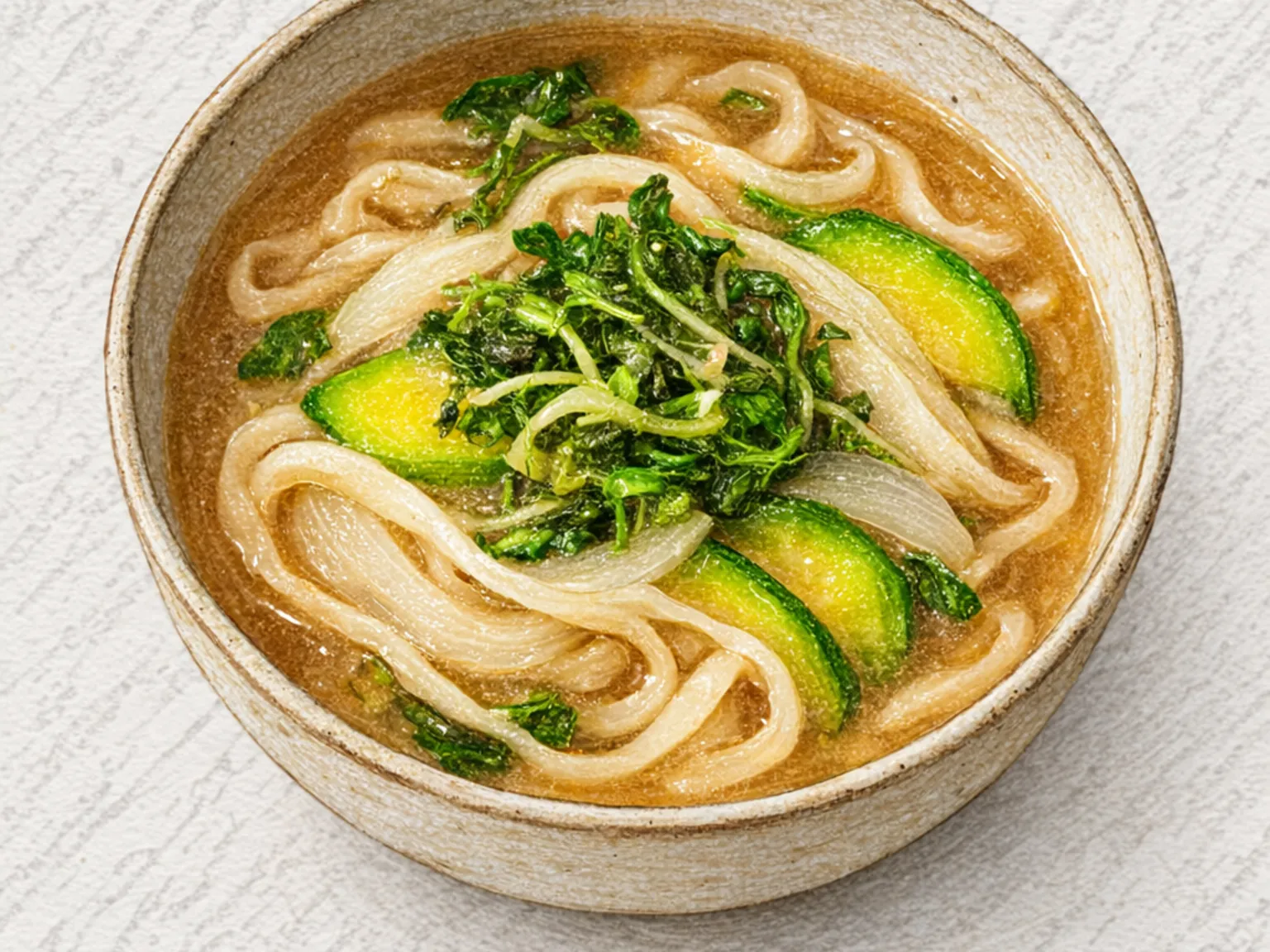
Naengi doenjang kalguksu is a Korean knife-cut noodle soup simmered in anchovy-kelp stock with doenjang and fresh shepherd's purse, a springtime herb prized for its earthy, peppery fragrance. Dissolving the doenjang through a fine strainer keeps the broth smooth and clear rather than cloudy. Soup soy sauce and minced garlic fine-tune the seasoning so the fermented soybean flavor stays rich without becoming overly salty. The noodles cook for four minutes before zucchini and onion are added for two more, allowing their gentle sweetness to dissolve into the broth. Shepherd's purse must go in only during the final minute with reduced heat, because its volatile aromatic compounds dissipate quickly at a rolling boil and the distinctive spring fragrance would be lost. Adjusting salt with soup soy sauce at the end compensates for the varying saltiness across different doenjang brands. The herb's aroma is most concentrated from mid-March to early April, making that narrow window the best time to prepare this soup for the fullest seasonal flavor.

Prep 20min Cook 18min 2 servings

Instructions

Read the steps as a cooking flow: prep, heat, seasoning, doneness control, and finish.

6 steps
  1. 1
    Prep

    Clean 120 g shepherd's purse by loosening soil around the roots, rinsing several times, and draining well.

    Trim only tough ends, cut into 4 cm lengths, and keep it aside so it can be added at the end.

  2. 2
    Heat

    Julienne 80 g zucchini and 70 g onion into thin, even pieces.

    Keeping the thickness similar helps them cook in about 2 minutes and release their mild sweetness evenly into the broth.

  3. 3
    Control

    Bring 900 ml anchovy-kelp stock to a boil over medium heat.

    Once it bubbles, place 2 tbsp doenjang in a fine strainer and dissolve it with hot broth so the soup stays smooth and clear.

  4. 4
    Control

    Add 1 tbsp soup soy sauce and 1 tsp minced garlic, then simmer over medium-low heat for 2 minutes.

    Taste the broth, but avoid making it strongly salty because doenjang brands vary in salinity.

  5. 5
    Heat

    Loosen 300 g fresh kalguksu noodles gently so they do not clump, then add them and boil for 4 minutes.

    When the noodles bend softly, add zucchini and onion and cook 2 more minutes.

  6. 6
    Finish

    Reduce the heat to low and add the shepherd's purse for only 1 minute.

    When its aroma rises and the stems just soften, check the final seasoning with soup soy sauce if needed and serve immediately.

After the steps

Pick a recipe that fits this dish.

Continue with shared ingredients, meal pairings, or a similar method.

Recipes That Go Well With This

More Noodles →

Based on shared ingredients and meal pairing

Korean Beef Brisket Soybean Paste Noodles
Shared ingredient: kalguksu noodles Noodles

Korean Beef Brisket Soybean Paste Noodles

Chadol doenjang kalguksu is a Korean noodle soup made by simmering thin slices of beef brisket in a soybean paste broth and adding hand-cut wheat noodles to finish the bowl. The doenjang gives the broth a fermented, earthy depth, and the marbled fat from the brisket slowly renders into the simmering liquid, adding body and a gentle richness that rounds out each spoonful. Kalguksu noodles are rolled thin by hand and cut with a knife, so they are naturally uneven in thickness. Thicker sections retain a satisfying chew while thinner edges go silky and absorb the broth more readily, which means a single bowl contains multiple textures without any deliberate effort. Zucchini, potato, and onion are added early and cook down into the broth, contributing natural sweetness that tempers the saltiness of the doenjang. Minced garlic and sliced scallion stirred in near the end lift the aroma and add a fresh, sharp note at the finish. Because doenjang concentrates as the broth reduces, starting with more water than seems necessary is a practical safeguard against the soup becoming too salty before the noodles are cooked through. Serving the noodles immediately after cooking prevents them from absorbing too much liquid and going soft.

Korean Spring Aralia Soybean Noodle Soup
Shared ingredient: kalguksu noodles Noodles

Korean Spring Aralia Soybean Noodle Soup

Durup doenjang kalguksu is a seasonal Korean noodle soup that layers blanched aralia shoots over a rich doenjang broth built with potato and zucchini. The potato breaks down partially during simmering, thickening the broth naturally and adding a mild, floury sweetness that works alongside the deep fermented character of the soybean paste. Zucchini softens into the liquid as it cooks, contributing its own gentle sweetness, and garlic reinforces the savory base. Knife-cut noodles hold up well in the dense broth, their chewy bite providing texture against the soft vegetables. The aralia shoots must be blanched separately and placed on top just before serving, because cooking them directly in the boiling broth drives off the bitter-herbal spring fragrance that makes them worth using in the first place. This dish comes together only during the brief aralia season in early spring, when the combination of fermented depth and fresh mountain herb aroma in a single bowl is at its most vivid.

Korean Shepherd's Purse & Napa Pancake
Serve together Pancakes

Korean Shepherd's Purse & Napa Pancake

Naengi Baechu Jeon is a seasonal Korean pancake that features wild shepherd's purse and sweet napa cabbage. To prepare this dish, the roots of the shepherd's purse are thoroughly scrubbed to remove soil and chopped into short lengths, while the cabbage is sliced, lightly salted to draw out moisture, and squeezed. The batter consists of Korean pancake mix, rice flour, an egg, cold water, and soup soy sauce, which provides a clean base that allows the flavors of the vegetables to stand out. Mixing rice flour into the batter ensures that the edges of the pancake turn crispy and remain tender even after cooling. The prepared greens are gently folded into the mixture, then pan-fried in oil over medium heat until both sides are golden brown. It is sliced on a board and served warm.

Korean Fermented Soybean Paste Noodle Soup
Similar recipe Noodles

Korean Fermented Soybean Paste Noodle Soup

Doenjang kalguksu is a Korean noodle soup of knife-cut wheat noodles in an anchovy broth enriched with fermented soybean paste. Straining the doenjang through a fine-mesh sieve before adding it to the broth serves a specific purpose: it prevents uneven lumps and ensures the paste dissolves uniformly, which keeps any bitter notes from concentrating in spots. The fermentation depth of the doenjang and the glutamate-rich anchovy stock reinforce each other without needing added seasoning. Zucchini cut into half-moons and sliced shiitake mushrooms contribute sweetness and aroma as the broth simmers; cubed tofu adds a soft, yielding contrast to the chewy noodles. Timing dictates quality here: the final salt adjustment goes in right before the noodles, because doenjang pushed through extended boiling develops a pronounced bitterness that is difficult to correct. Once the noodles go in, the soup should be finished within two minutes to preserve their elasticity.

Serve with this

Korean Pickled Celtuce Stems
Side dishes Medium

Korean Pickled Celtuce Stems

Gungchae is the dried stem of celtuce (Lactuca sativa var. asparagina), known in Chinese as wosun, and in Korea it carries the name meaning palace vegetable, reflecting its historical association with royal court cuisine. When rehydrated from its dried state, the stems regain a firm, almost cartilaginous crunch that is the defining quality of the ingredient and the entire reason to use it. Packed into sterilized glass jars, the stems are covered with a boiling brine of soy sauce, vinegar, sugar, and water poured in while still hot, which drives the seasoning into the outer layers while preserving the interior snap. The pickle is edible after a single day, but three days is when the balance of tangy, salty, and sweet flavors reaches its peak. Served alongside grilled meats or rich main dishes, the crisp texture and bright acidity cut through heaviness and refresh the palate between bites, making it a natural companion to oily or heavily seasoned Korean mains.

🏠 Everyday 🍱 Lunchbox
Prep 20min Cook 10min 4 servings
Korean Miyeok Julgi Jangajji (Seaweed Stem Pickles)
Kimchi Easy

Korean Miyeok Julgi Jangajji (Seaweed Stem Pickles)

Miyeok julgi jangajji is a Korean seaweed stem pickle made by soaking salted seaweed stems long enough to remove the excess salt, blanching them briefly, and submerging them with sliced onion and cheongyang chili in a brine of dark soy sauce, vinegar, and sugar brought to a boil. The stems' characteristic crunchy-chewy bite holds up even as they absorb the brine, and a faint oceanic quality lingers beneath the soy sauce's savory depth and the sharp brightness of the vinegar. Onion adds natural sweetness to the pickling liquid, and the chili delivers a clean, piercing heat at the finish. Reboiling the brine, cooling it fully, and pouring it over a second time significantly extends shelf life, keeping the banchan in good condition in the refrigerator for three to four weeks or longer. After the first pour, allowing twenty-four hours before eating gives the stems enough time to fully absorb the brine and develop their proper flavor.

🥗 Light & Healthy 🍱 Lunchbox
Prep 20min Cook 12min 4 servings
Grilled Squid & Bellflower Root Salad
Salads Medium

Grilled Squid & Bellflower Root Salad

Grilled squid and bellflower root citrus salad combines seared squid with soaked bellflower root, romaine, and orange segments in a yuzu-gochugaru dressing, drawing on classic Korean flavors to build a salad with genuine textural and flavor complexity. The squid tubes are scored in a crosshatch pattern before cooking, which ensures that heat penetrates evenly so the flesh cooks uniformly without curling into a tight coil; limiting each side to one to two minutes over high heat is equally important, as even a minute more will produce a rubbery result. Bellflower root is a traditional Korean ingredient with a pleasantly bitter edge that requires brief preparation: shredded into thin strips and soaked in lightly salted water for five minutes, it releases enough bitterness to become mild and yielding while retaining a satisfying crunch. The dressing is the component that unifies the dish: yuzu marmalade contributes a floral, layered acidity quite different from straightforward lemon or lime juice, while rice vinegar sharpens the finish, olive oil emulsifies and rounds the texture, and gochugaru adds a slow-building warmth that lingers after the citrus flavors fade. This combination bridges the savory, slightly smoky character of the squid and the subtle bitterness of the bellflower root. Fresh orange segments provide the final note, bursting with bright juice on each bite to lift the entire salad. The visual contrast between the ivory bellflower root, the charred squid, and the vivid orange makes the finished plate as attractive to look at as it is to eat.

🥗 Light & Healthy 🏠 Everyday
Prep 22min Cook 8min 4 servings

Similar recipes

Korean Doenjang Thin Noodle Soup
Noodles Easy

Korean Doenjang Thin Noodle Soup

Doenjang somyeon is a Korean noodle soup of thin wheat noodles in a fermented soybean paste broth built on anchovy stock. Potato, zucchini, and onion - or whatever vegetables are available - go into the broth first, simmering until they release their moisture and natural sugars into the liquid, which rounds out the earthy doenjang base. The somyeon noodles take only three to four minutes to cook, so they go in last to stay firm. Sliced green onion scattered on top adds a clean, bright note against the fermented broth. The ingredient list is short and adaptable, but the doenjang delivers enough layered depth to make this a satisfying weeknight dinner without any complex technique.

🏠 Everyday ⚡ Quick
Prep 10min Cook 15min 2 servings
Korean Shepherd's Purse Soup
Soups Easy

Korean Shepherd's Purse Soup

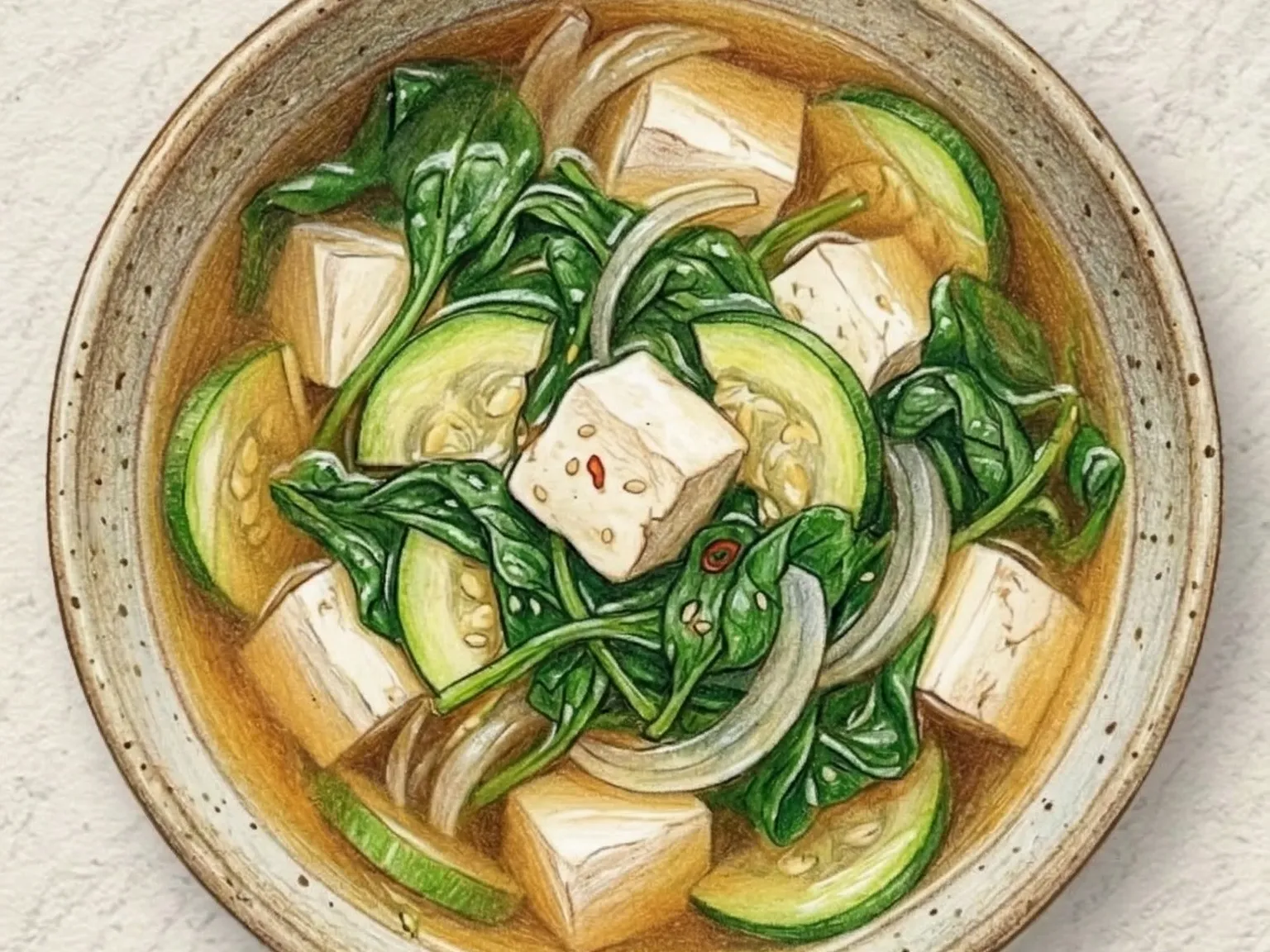
Naengi-guk is a Korean spring soup made with anchovy-kelp stock, doenjang, and fresh shepherd's purse (naengi). Naengi is a cruciferous plant gathered from paddies, field edges, and roadsides in early spring, and both the root and the leaves are used. The root contributes an earthy, mineral fragrance and the leaves carry a slightly bitter green quality that together define the soup's character. The stock is made from dried anchovies and kelp simmered and strained, providing a clean umami base. Doenjang is dissolved through a mesh strainer rather than stirred directly into the pot, which keeps the broth clear rather than murky while still delivering the fermented soybean depth. Diced tofu simmers in the seasoned broth until warmed through. Naengi goes in during the final two to three minutes of cooking: longer exposure to heat breaks down the aromatic compounds in the herb and erases the spring fragrance that makes the soup worth making in the first place. The pairing of naengi's earthy bitterness with the fermented depth of the doenjang and the clean mineral tone of the anchovy stock produces a flavor that is distinctly seasonal and difficult to replicate outside of spring. Soup soy sauce, salt, and a small amount of garlic complete the seasoning. In Korean food culture, naengi-guk on the table is understood as one of the clearest signs that winter is finished.

🏠 Everyday 🥗 Light & Healthy
Prep 15min Cook 20min 4 servings
Korean Wild Chive Soybean Paste Soup
Soups Easy

Korean Wild Chive Soybean Paste Soup

Dallae doenjang-guk is a springtime Korean soybean paste soup that showcases wild chives, a seasonal ingredient valued for its sharp, garlicky bite and short availability window. The anchovy-kelp stock is first simmered with potato and onion to build body and sweetness, then doenjang is dissolved in and tofu added for a soft, tender contrast against the broth. Wild chives go in only during the final minute of cooking, because their pungent aroma dissipates rapidly under sustained heat; cooking them too long makes them indistinguishable from ordinary green onion in both flavor and appearance. The bulb end of each chive stalk carries a stronger bite than the leaves, so mincing the bulbs finely distributes their flavor more evenly through the broth. A half teaspoon of gochugaru tints the soup a faint red that visually matches the chive's natural heat. Because dallae is in season for only a brief window, setting a few raw stalks aside to place at the table as a garnish amplifies the fresh spring character of the dish.

🏠 Everyday 🥗 Light & Healthy
Prep 12min Cook 15min 2 servings

Tips

Add shepherd's purse at the end to keep its fresh aroma.
Saltiness varies by doenjang brand, so adjust with soup soy sauce.

Nutrition (per serving)

Calories
510
kcal
Protein
18
g
Carbs
88
g
Fat
10
g