Korean Spicy Stir-fried Octopus
Stir-fry Medium

Korean Spicy Stir-fried Octopus

Quick answer

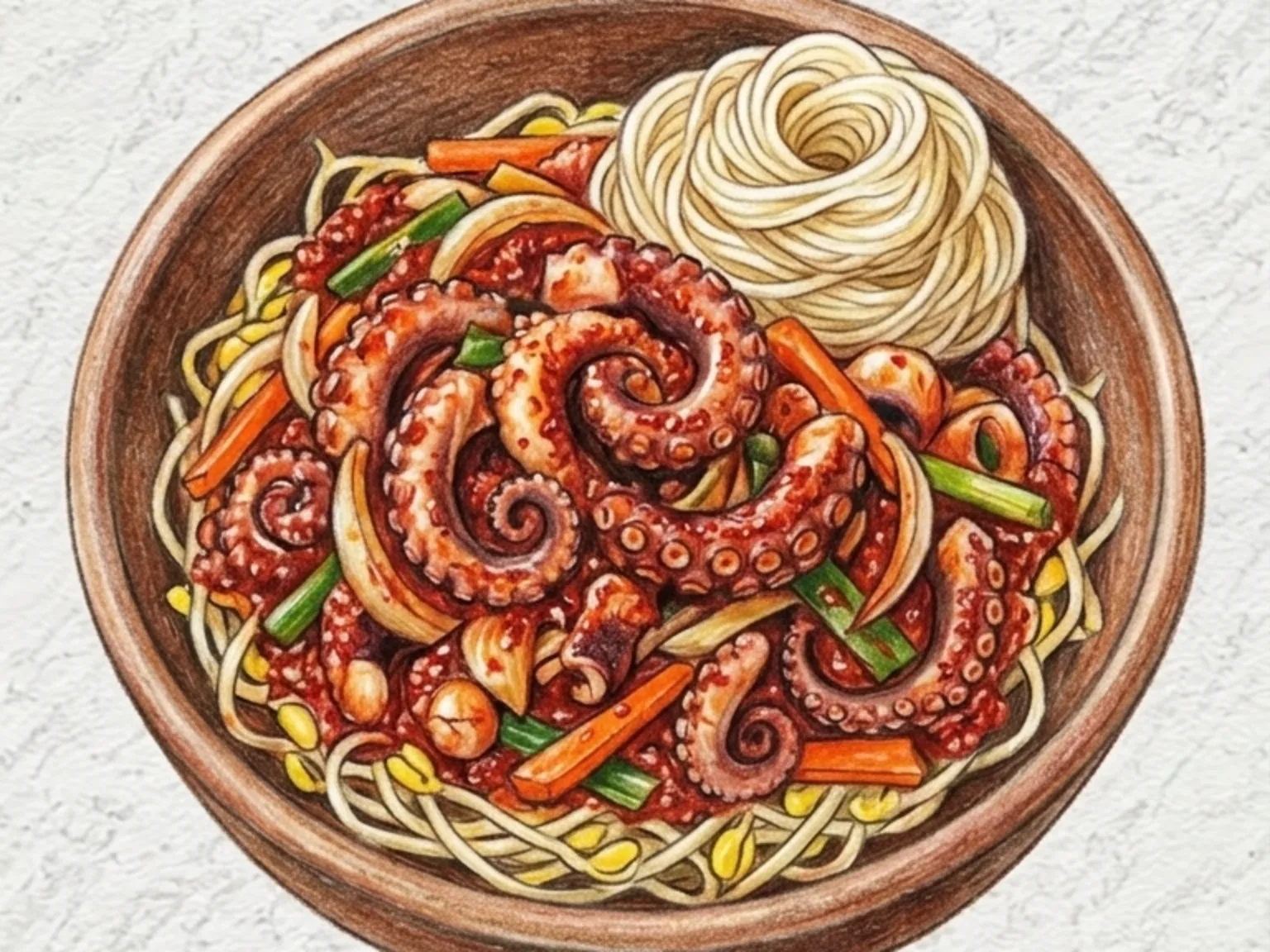
Nakji-bokkeum is a fiery Korean stir-fry of small octopus (nakji) coated in a sauce of gochujang, gochugaru, soy sauce, sugar, and garlic, tossed with bean sprouts, onion...

What makes this special

  • Nakji-bokkeum layers tender small octopus over bean sprouts in a fiery gochujang-gochugaru sauce.
  • Bean sprouts layered on pan bottom release steam to prevent scorching
  • Covered medium-heat 3 minutes then high-heat 2 minutes for char aroma on octopus
Total time
25 min
Level
Medium
Servings
2 servings
Ingredients
11
Calories
260 kcal
Protein
24 g

Key ingredients

Small octopus (nakji)OnionCarrotGreen onionBean sprouts

Core cooking flow

  1. 1 Rub 300 g small octopus with flour and salt until the surface feels less sli...
  2. 2 Slice 1 onion, 1/2 carrot, and 1 green onion so they soften evenly in the pan.
  3. 3 Heat the pan, then spread 100 g bean sprouts in an even layer across the bottom.

Nakji-bokkeum is a fiery Korean stir-fry of small octopus (nakji) coated in a sauce of gochujang, gochugaru, soy sauce, sugar, and garlic, tossed with bean sprouts, onion, carrot, and scallion. Bean sprouts line the bottom of the pan, releasing moisture to prevent sticking while adding crunch. The vegetables and half the sauce go on next, then the octopus on top, covered and steamed on medium heat for three minutes before a final high-heat stir-fry sears everything for two minutes. Speed is critical - octopus toughens with prolonged cooking - and the dish is often mixed with boiled thin wheat noodles for a heartier meal.

Prep 15min Cook 10min 2 servings

Instructions

Read the steps as a cooking flow: prep, heat, seasoning, doneness control, and finish.

6 steps
  1. 1
    Season

    Rub 300 g small octopus with flour and salt until the surface feels less slippery, then rinse several times.

    Drain well, pat off excess moisture, and cut into bite-size pieces so it cooks quickly.

  2. 2
    Season

    Slice 1 onion, 1/2 carrot, and 1 green onion so they soften evenly in the pan.

    Mix 2 tbsp gochujang, 1.5 tbsp gochugaru, and 1 tbsp each soy sauce, sugar, and minced garlic.

  3. 3
    Control

    Heat the pan, then spread 100 g bean sprouts in an even layer across the bottom.

    Add onion and carrot on top, scatter half of the sauce over them, and keep the sprouts underneath to release moisture and reduce scorching.

  4. 4
    Control

    Place the octopus over the vegetables and coat the top with the remaining sauce.

    Cover the pan and cook over medium heat for 3 minutes, just until the octopus begins to curl and release juices.

  5. 5
    Control

    Uncover, raise the heat to high, and stir-fry quickly for 2 minutes.

    Toss from the bottom so the bean sprout moisture blends into the sauce, and stop when the sauce thickens and the octopus feels springy.

  6. 6
    Season

    Add the green onion and toss only until it softens slightly, then turn off the heat.

    Drizzle in 1 tbsp sesame oil for aroma, and if using boiled thin wheat noodles, mix them separately with some sauce just before serving.

After the steps

Pick a recipe that fits this dish.

Continue with shared ingredients, meal pairings, or a similar method.

Recipes That Go Well With This

More Stir-fry →

Based on shared ingredients and meal pairing

Korean Spicy Stir-fried Squid
Shared ingredient: onion Stir-fry

Korean Spicy Stir-fried Squid

Ojingeo-bokkeum is one of Korea's most popular spicy stir-fries, featuring scored squid bodies and tentacles tossed over high heat with onion, carrot, cabbage, and scallion in a gochujang-gochugaru-soy-sugar sauce. Crosshatch scoring on the squid allows the thick, spicy sauce to penetrate deeply, ensuring consistent flavor in every bite. The entire stir-fry takes only a few minutes on maximum heat - essential for keeping the squid springy rather than rubbery. Cabbage and carrot go in near the end to retain their crunch, and a final sesame oil drizzle ties the smoky wok char to the bold red seasoning.

Korean Spicy Octopus Stir-fry
Shared ingredient: onion Stir-fry

Korean Spicy Octopus Stir-fry

Muneo-bokkeum is a Korean stir-fry of pre-boiled octopus pieces cooked on high heat with onion, carrot, and scallion in a sauce built from gochujang and soy sauce. Because the octopus arrives already cooked, two to three minutes of high-heat stir-frying is the target window - enough time to heat the pieces through and coat them in the seasoning without pushing the texture past springy into tough. The sauce brings spice from the gochujang and saltiness from the soy sauce, and that combination lifts the naturally clean, mild flavor of the octopus without masking it. Vegetables are pulled from the pan while they still carry some bite, which sets up a textural contrast against the dense, elastic chew of the octopus. Sesame oil goes in at the very end as a finishing drizzle, adding a nutty, aromatic layer that ties the dish together. It works as a rice side dish or as an anju pairing alongside drinks.

Manduguk (Korean Dumpling Clear Broth Soup)
Serve together Soups

Manduguk (Korean Dumpling Clear Broth Soup)

Manduguk is a Korean dumpling soup in which hand-folded dumplings stuffed with ground pork, tofu, scallion, and garlic are dropped into a clear, simmering broth, typically anchovy-kelp stock or beef broth, and cooked until they float. As the dumplings cook, their thin wheat-flour wrappers release a subtle starch that gives the broth a barely perceptible body, while the filling leaks savory juices that enrich the liquid gradually. A thin drizzle of beaten egg stirred in near the finish creates silken wisps on the surface of the broth and gives the bowl a more finished appearance. Shredded egg strips and crumbled dried seaweed scattered on top add a pleasant contrast in color and a faint oceanic note to the flavor. Many Korean households serve manduguk on Lunar New Year as an alternative to tteokguk, and some combine the two by adding sliced rice cakes alongside the dumplings. Dumplings can be made in large batches and frozen raw, which means this soup can be pulled together quickly on weeknights without sacrificing any of the flavor that comes from homemade filling. A small dish of soy-vinegar dipping sauce served alongside lets each person adjust the seasoning at the table, and the light acidity of the sauce cuts through the mild broth in a way that makes the contrast between the two worth trying.

Korean Stir-fried Anchovies
Similar recipe Stir-fry

Korean Stir-fried Anchovies

Myeolchi-bokkeum is a foundational Korean banchan of small dried anchovies glazed in a sweet-salty coating of soy sauce and oligosaccharide syrup. The anchovies are first dry-roasted in a clean pan on low heat for three minutes to remove fishiness and build crunch. A sauce of garlic, soy sauce, and syrup is bubbled separately, and the anchovies are tossed back in for a quick, even coating. Sesame oil and toasted sesame seeds finish the dish; once fully cooled, the glaze sets firm, giving the anchovies a snappy texture that keeps well in an airtight container for over a week.

Serve with this

Korean Stir-Fried Sweet Potato Stems
Side dishes Medium

Korean Stir-Fried Sweet Potato Stems

Goguma julgi - sweet potato stems - are the above-ground vines of the sweet potato plant, a byproduct that Korean cooks transform into a summer namul rather than discarding. The most labor-intensive step is peeling each stem by hand, pinching the outer skin with a fingernail and pulling it away to reveal the tender core beneath. After blanching for two minutes and rinsing in cold water, the stems are stir-fried in perilla oil with garlic and seasoned with soup soy sauce. Perilla powder stirred in at the end thickens the remaining liquid into a nutty glaze. In season during summer, the stems are harvested from sweet potato fields before the tubers themselves are dug up.

🏠 Everyday 🍱 Lunchbox
Prep 30min Cook 10min 4 servings
Korean Mushroom Soft Tofu Porridge
Rice Easy

Korean Mushroom Soft Tofu Porridge

Shiitake mushrooms and sliced onion are sauteed in perilla oil until their edges soften and the oil takes on a faint herbal fragrance, then soaked rice and kelp stock go into the same pot. The mixture simmers until the grains break down into a smooth, cohesive porridge. At that point, the heat is lowered and spoonfuls of silken tofu are dropped in without stirring - preserving the soft, pillowy clusters that give the bowl its characteristic texture variation. Kelp stock brings a clean, moderate umami that anchors the dish without heaviness, and perilla oil contributes a slightly bitter, grass-like finish that differentiates this porridge from sesame-based versions. Soup soy sauce provides the seasoning, and chopped scallion goes on last. The result is gentle enough for a sensitive stomach yet complete enough to serve as a full meal.

🥗 Light & Healthy 🏠 Everyday
Prep 12min Cook 20min 2 servings
Korean Whelk Stew (Spicy Canned Whelk & Cabbage Pot)
Stews Easy

Korean Whelk Stew (Spicy Canned Whelk & Cabbage Pot)

Golbaengi-jjigae is a spicy Korean stew made with canned whelk as the centerpiece. Because the whelk is already fully cooked inside the can, it goes in near the end of cooking rather than at the start, allowing the broth and vegetables to reach their full flavor first. Extended heat makes whelk rubbery, so a brief simmer of two to three minutes is enough to warm the pieces through while preserving their distinctive chewy texture. Anchovy stock forms the savory foundation of the broth, delivering a clean seafood depth that amplifies the whelk's flavor without masking it. Gochujang and gochugaru combine to give the stew its fiery, full-bodied heat, while cabbage and onion absorb the broth over time and release a gentle sweetness that balances the spice. A single cheongyang chili added whole sharpens the heat at the finish, pulling the entire broth taut with a bright, clean burn. A handful of sliced green onion stirred in at the end brings a fresh aroma that lifts the richness of the stew. It works equally well as a rice-side dish or as an accompaniment to soju.

🏠 Everyday ⚡ Quick
Prep 12min Cook 18min 2 servings

Similar recipes

Korean Stir-Fried Octopus Fried Rice
Rice Medium

Korean Stir-Fried Octopus Fried Rice

Baby octopus is tossed with rice over high heat in a gochujang-and-red-pepper-flake sauce for a bold, spicy fried rice. The sauce coats each grain with a deep red glaze, and the octopus adds a springy, chewy bite throughout. Cleaning the octopus with flour before rinsing removes any sliminess, and a fast cook on high heat keeps the tentacles from toughening. Green onion and sesame oil go in at the very end for a fragrant finish.

🏠 Everyday 🍱 Lunchbox
Prep 15min Cook 10min 2 servings
Korean Spicy Webfoot Octopus & Pork Belly Stir-fry
Stir-fry Medium

Korean Spicy Webfoot Octopus & Pork Belly Stir-fry

Jjukkumi-samgyeop-bokkeum combines chewy baby octopus and thick pork belly slices in a spicy stir-fry. The pork belly is first grilled until golden to render its fat, then the octopus and gochujang-based sauce are added for a fast, high-heat toss. Pork richness and the octopus's clean ocean flavor merge inside the chili seasoning, with onions and scallions adding sweetness. It is typically served sizzling on a hot plate, and diners often finish with fried rice made in the remaining sauce. Because baby octopus toughens rapidly with heat, adding it only after the pork is nearly cooked and pulling the pan off the heat within one to two minutes is the single most important step for keeping its signature chewy texture intact.

🍺 Bar Snacks 🏠 Everyday
Prep 20min Cook 10min 2 servings
Korean Spicy Stir-Fried Octopus Rice Bowl
Rice Medium

Korean Spicy Stir-Fried Octopus Rice Bowl

Spicy stir-fried baby octopus in a gochujang sauce is served over a bowl of steamed rice. The octopus delivers a satisfying chew, coated alongside onion and cheongyang chili in a well-seasoned glaze that makes each bite of rice deeply flavorful. Stir-frying on high heat for just a few minutes keeps the octopus springy rather than tough, and scrubbing it with flour before rinsing ensures a clean taste free of any sliminess. Adding a layer of bean sprouts under the stir-fry introduces a contrasting crunch.

🏠 Everyday 🍺 Bar Snacks
Prep 15min Cook 10min 2 servings

Tips

Cook octopus quickly on high heat--overcooking makes it tough.
Bean sprouts on the bottom release moisture, prevent burning, and add crunch.
Mix with boiled thin noodles for nakji-bokkeum somyeon.

Nutrition (per serving)

Calories
260
kcal
Protein
24
g
Carbs
20
g
Fat
10
g

Variations

Spicy Octopus and Green Onion Stir-Fry

Baby octopus and green onions stir-fried in a spicy gochujang sauce. Tender, chewy octopus paired with sweet caramelized green onions.