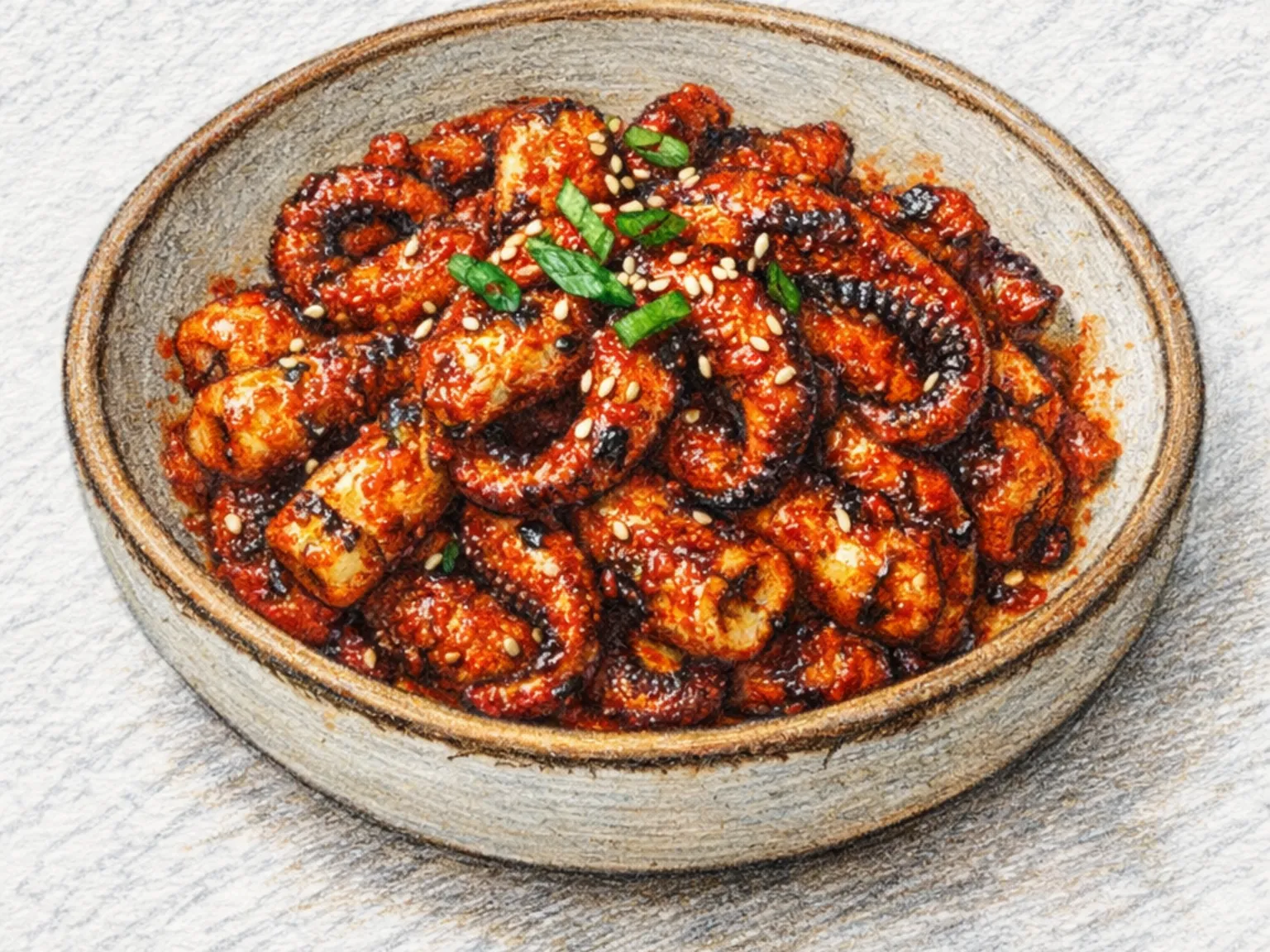
Korean Grilled Octopus
Grill this octopus fast, because overcooking makes it tough. Dry 2 cleaned octopuses thoroughly, coat them lightly with the marinade, and rest them for only 10 to 20 minutes. Over high heat, leave them untouched for about 40 seconds, turn as soon as the tentacles darken red, and finish within about 1 minute 30 seconds to 2 minutes total.
Quick answer
- Total time
- 30 min
- Level
- Medium
- Servings
- 2 servings
- Ingredients
- 6
About this dish
Coated thinly in gochujang and syrup, small octopus needs only a minute and a half on a grill rack or pan, two minutes at most.
Read more
Snipped into bites with scissors, it goes into perilla or lettuce wraps or over a bowl of rice.
Ingredients
Instructions
- 1
Remove the innards from the 2 octopuses and rub the skin and between the suckers repeatedly under cold running water.
Rinse clean and pat thoroughly dry.
- 2
Mix 2 tablespoons gochujang, 1 tablespoon soy sauce, 1 tablespoon sesame oil, 3 minced garlic cloves, and 1 tablespoon corn syrup.
Stir until the marinade is thick and glossy, with no separate streaks of oil or syrup.
- 3
Coat the dried octopus lightly and evenly with the marinade, making sure the sauce reaches between the tentacles.
If time allows, rest it for only 10 to 20 minutes so the seasoning penetrates without drawing out too much moisture.
- 4
Heat a grill grate or pan over high heat until the marinade would sizzle on contact.
Lay the octopus out in a single layer and leave it untouched for about 40 seconds so the gochujang and corn syrup begin to caramelize.
- 5
Turn the octopus as soon as the tentacles darken red and the edges feel firmer.
Finish within about 1 minute 30 seconds to 2 minutes total, pulling it from the heat before the fine muscle fibers turn rubbery.
- 6
Let the octopus rest briefly off the heat.
Cut it into bite-size pieces with scissors and serve immediately while evenly coated with the sauce.
Use-up ingredient planner
Turn these ingredients into two more meals
The overlap excludes basic seasonings. Open the next recipe and your selected dishes will stay with you.
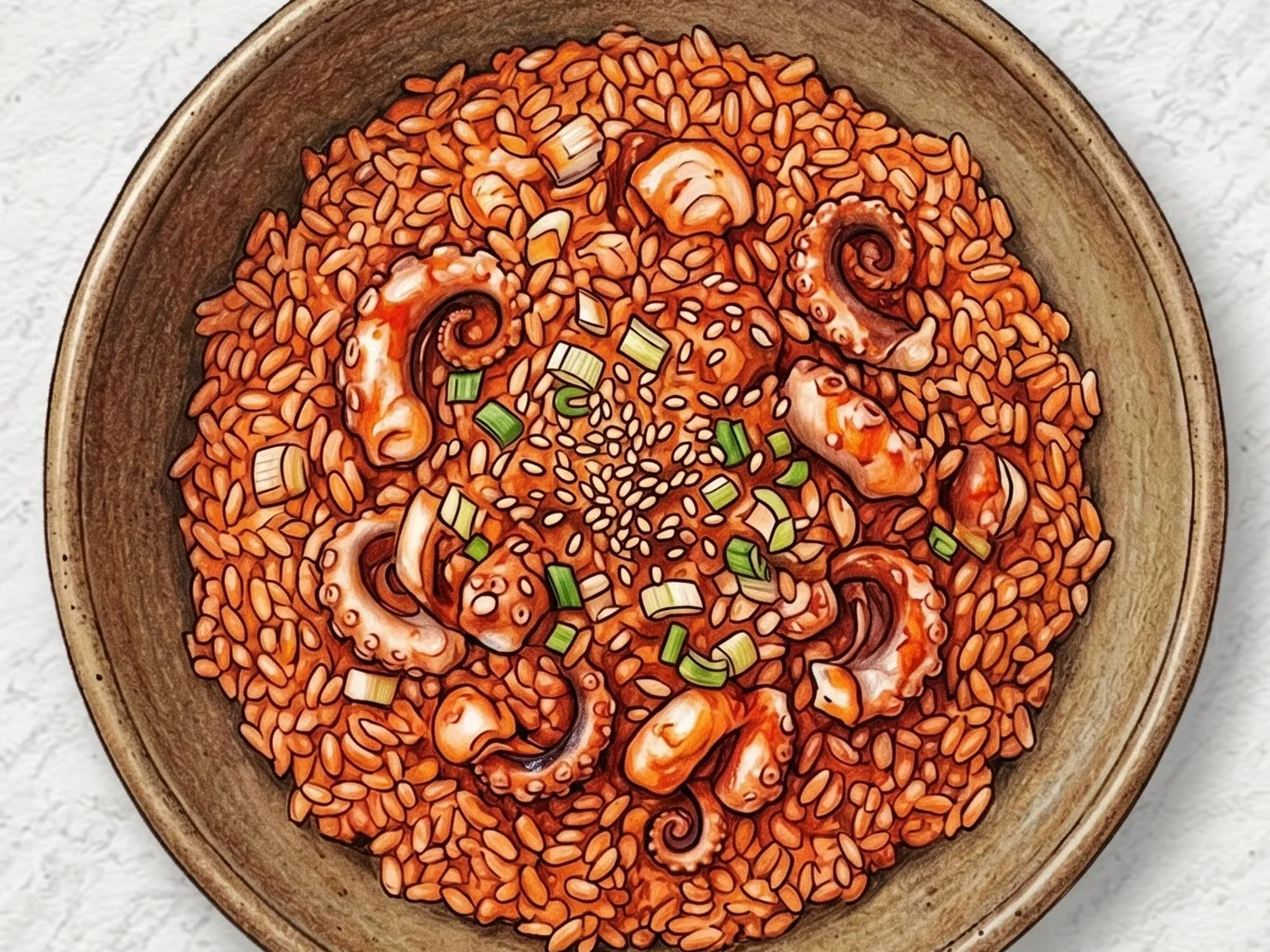
Korean Stir-Fried Octopus Fried Rice
small octopus
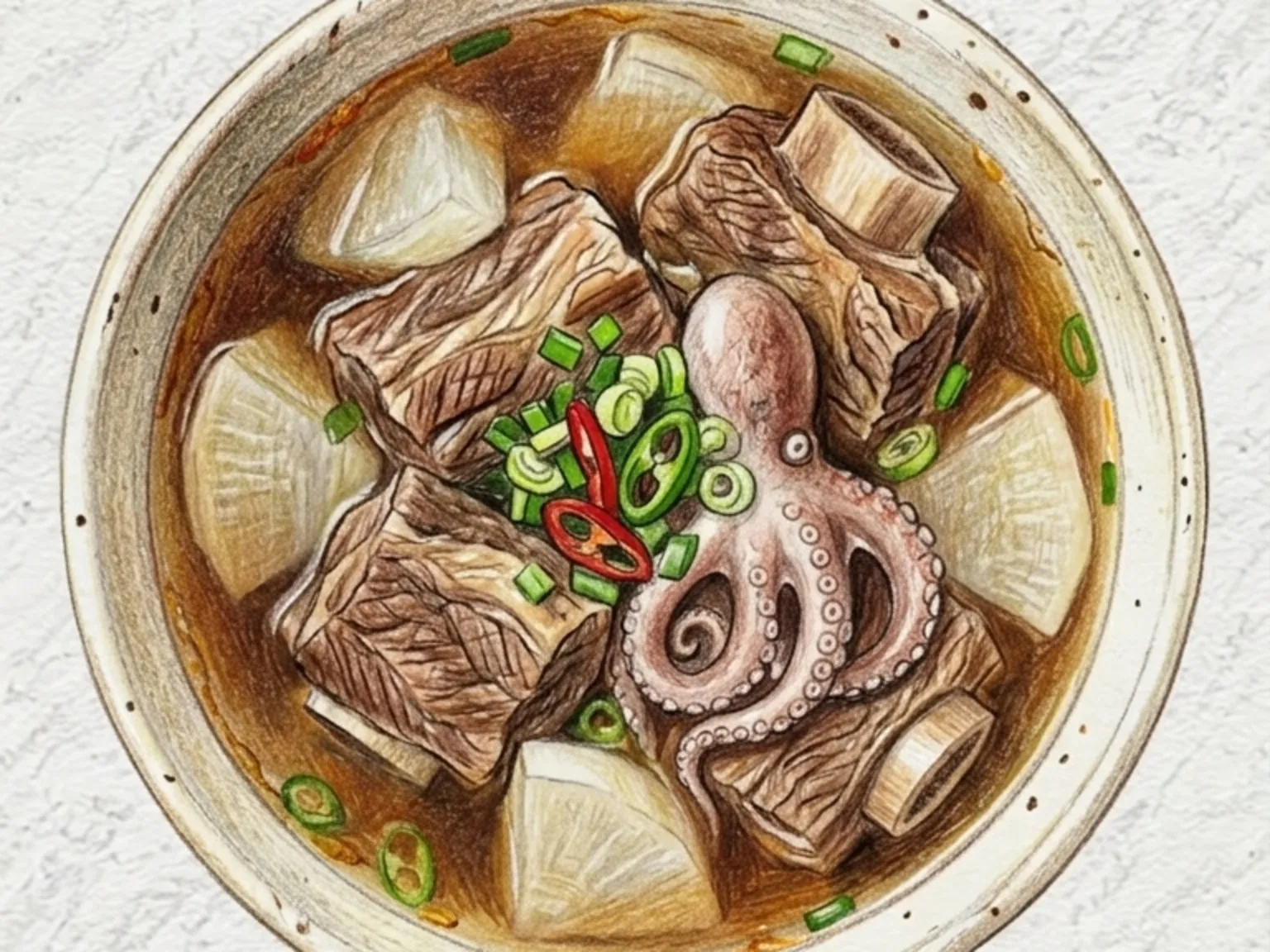
Korean Short Rib and Octopus Soup
small octopus
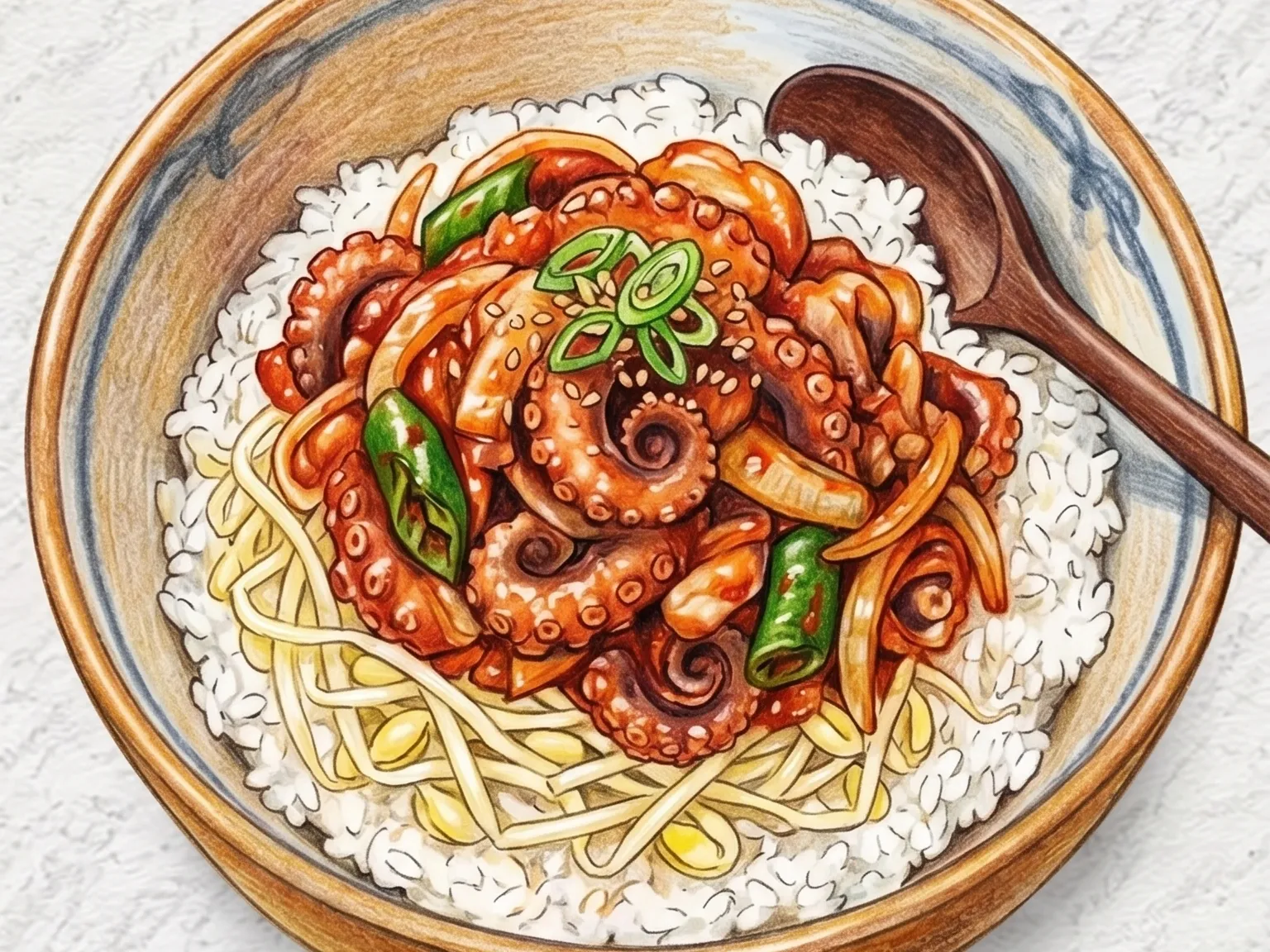
Korean Spicy Stir-Fried Octopus Rice Bowl
small octopus