Korean Octopus Hot Pot (Spicy Gochujang Broth with Herbs)
Stews Medium

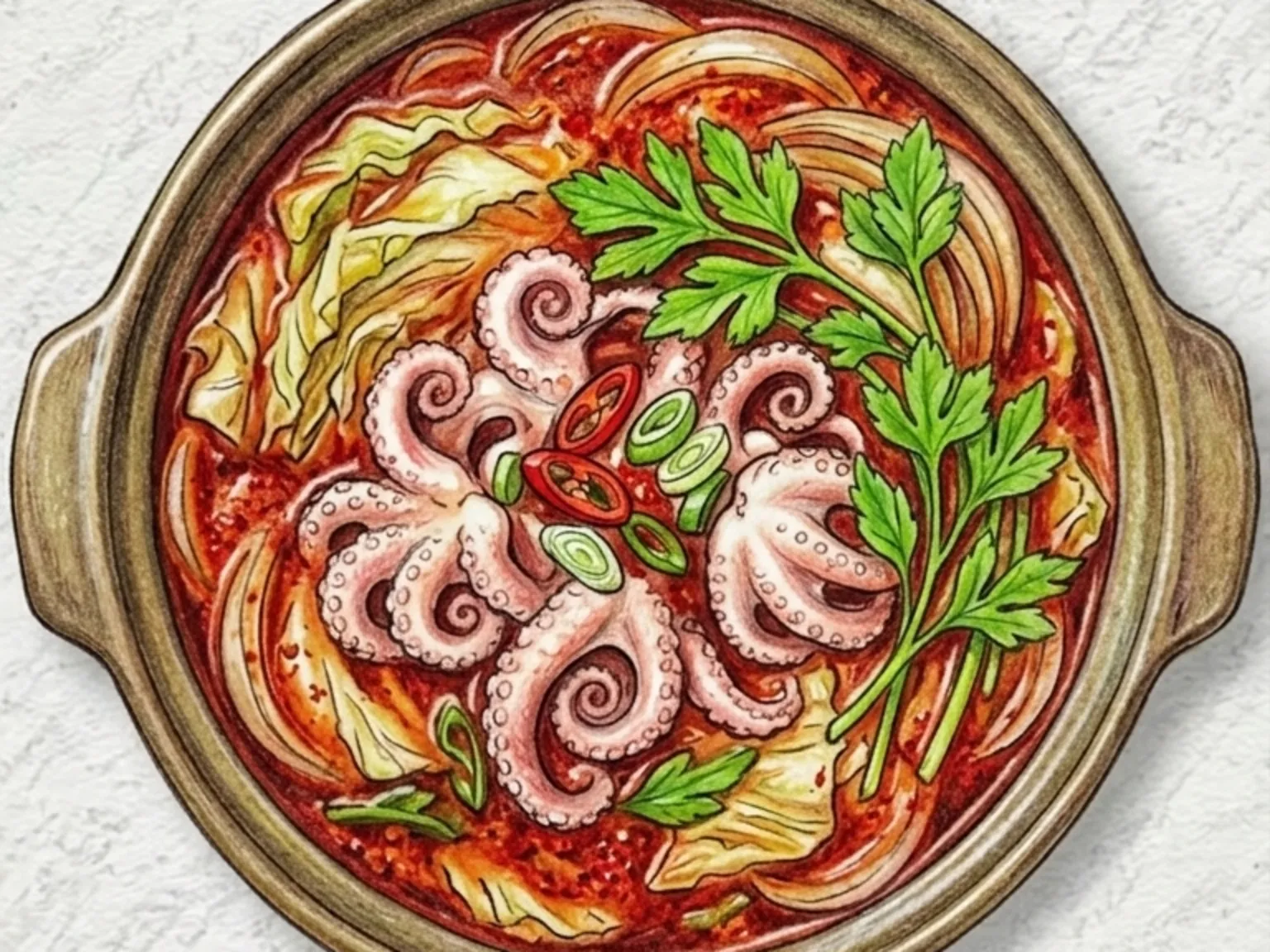
Korean Octopus Hot Pot (Spicy Gochujang Broth with Herbs)

Quick answer

Nakji jeongol is a spicy Korean hot pot built around small octopus simmered in anchovy stock seasoned with gochujang and gochugaru, together with napa cabbage, water pars...

What makes this special

  • Nakji jeongol emphasizes briefly cooked, springy octopus and late-added water parsley to maintain a sharp, refreshing scent within the spicy gochujang-based soup.
  • Octopus cooked under 2 minutes keeps its springy elastic texture
  • Minari goes in 1 minute before the flame off to keep its sharp bright aroma above the spice
Total time
43 min
Level
Medium
Servings
2 servings
Ingredients
9
Calories
320 kcal
Protein
30 g

Key ingredients

Small octopusNapa cabbageWater parsleyOnionGochujang

Core cooking flow

  1. 1 Rub 300g small octopus quickly with coarse salt to remove the slippery coating.
  2. 2 Cut 120g napa cabbage into bite-size pieces and slice 70g onion into thick strips.
  3. 3 Mix 1 tablespoon each gochujang, gochugaru, soy sauce, and minced garlic in a bowl.

Nakji jeongol is a spicy Korean hot pot built around small octopus simmered in anchovy stock seasoned with gochujang and gochugaru, together with napa cabbage, water parsley, onion, and tofu. Anchovy stock works particularly well here because it has a clean, salty depth that amplifies rather than competes with the oceanic flavor of the octopus. The gochujang contributes a fermented sweetness to the broth while the gochugaru layer on top provides the sharp, direct heat, producing a multi-dimensional spicy broth that is more complex than either ingredient alone. Octopus is highly sensitive to overcooking. Cooked within two minutes, it stays springy and pleasantly chewy. Beyond that, the protein fibers contract and the texture becomes tough and rubbery. Water parsley loses its fresh herbal fragrance quickly under heat, so it is best added about one minute before serving to keep that clean, slightly grassy brightness intact. Cooking the hot pot at the table allows diners to add octopus in small batches at their own pace, which is the most reliable way to keep every piece at the ideal doneness.

Prep 25min Cook 18min 2 servings

Instructions

Read the steps as a cooking flow: prep, heat, seasoning, doneness control, and finish.

6 steps
  1. 1
    Season

    Rub 300g small octopus quickly with coarse salt to remove the slippery coating.

    Rinse well under cold running water, cut into 5cm pieces, and drain thoroughly so the broth does not become cloudy.

  2. 2
    Prep

    Cut 120g napa cabbage into bite-size pieces and slice 70g onion into thick strips.

    Cut 60g water parsley into 4cm lengths, then keep it separate because it should go in at the very end.

  3. 3
    Season

    Mix 1 tablespoon each gochujang, gochugaru, soy sauce, and minced garlic in a bowl.

    Stir until no dry chili flakes or thick lumps remain so the seasoning dissolves evenly in the stock.

  4. 4
    Control

    Spread the cabbage and onion evenly across the bottom of the pot, then pour in 850ml anchovy stock.

    Heat over high heat until the stock comes to a steady boil around the vegetables.

  5. 5
    Control

    Dissolve the seasoning paste into the boiling stock, then lower the heat to medium and simmer for 5 minutes.

    The broth should turn evenly red and the cabbage should soften slightly without collapsing.

  6. 6
    Finish

    Add the octopus and cook for about 2 minutes only.

    When the tentacles curl and the flesh turns opaque, add the water parsley, warm it for 1 minute, and serve immediately before the octopus toughens.

After the steps

Pick a recipe that fits this dish.

Continue with shared ingredients, meal pairings, or a similar method.

Recipes That Go Well With This

More Stews →

Based on shared ingredients and meal pairing

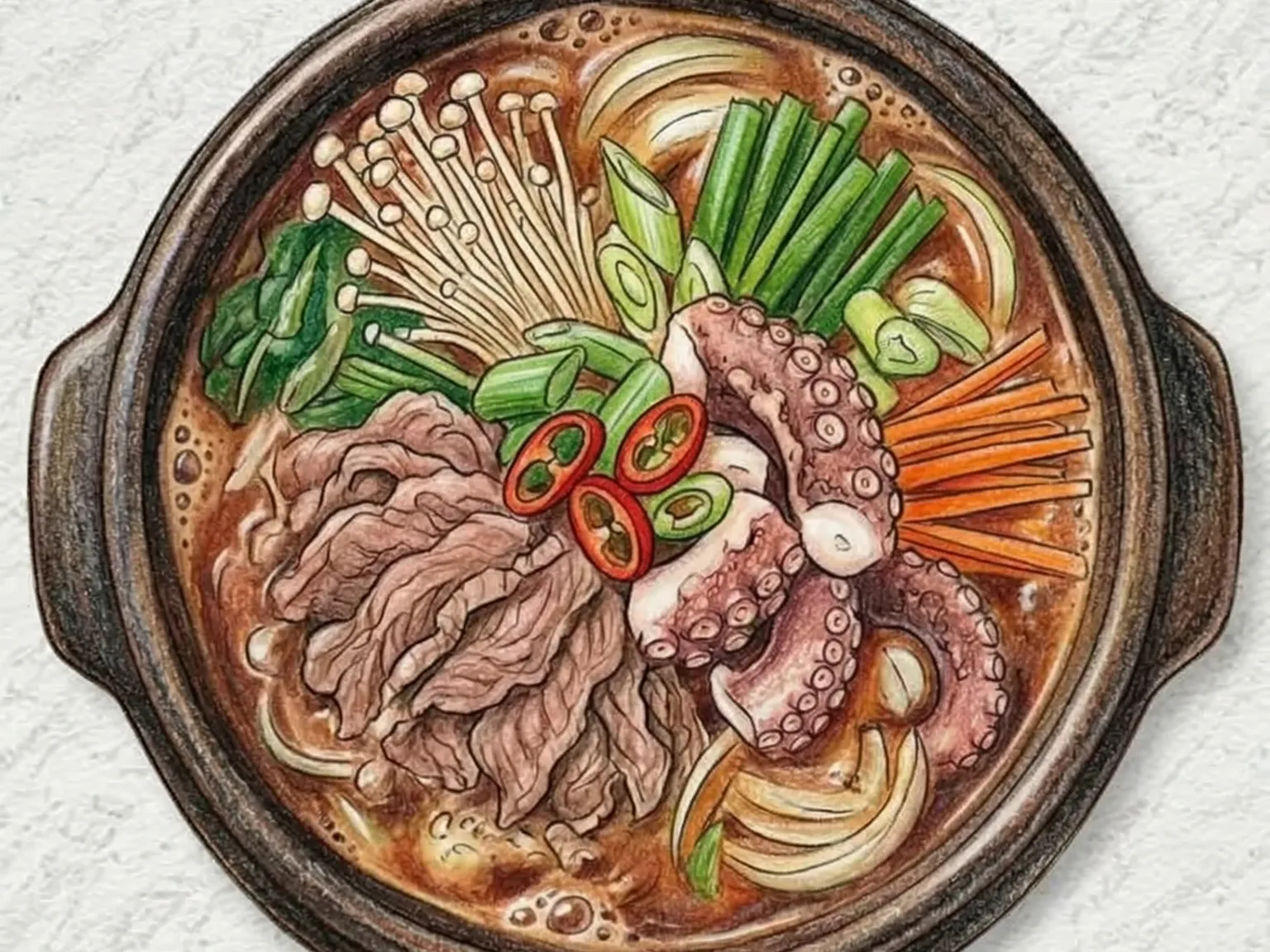
Korean Beef and Octopus Hot Pot
Shared ingredient: octopus Stews

Korean Beef and Octopus Hot Pot

Bulnak jeongol is a hot pot made by simmering sliced beef chadolbaegi and fresh octopus together in an anchovy-kelp broth. The beef enriches the stock with a meaty depth while the fat renders out and emulsifies into the broth, and the octopus adds a firm, springy chew that holds up through the heat. Napa cabbage and water dropwort lighten the pot with fresh, slightly bitter vegetal notes, keeping the heavily flavored broth from becoming too rich. The seasoning stays restrained with soy sauce and garlic so the natural taste of each ingredient carries. Octopus should be added last so it does not toughen; the legs curling and turning a vivid red-orange is the sign that it is properly cooked. Cracking a raw egg into the simmering broth near the end adds a mild, creamy element that rounds out the intense savory notes.

Korean Octopus and Tofu Hot Pot
Shared ingredient: octopus Stews

Korean Octopus and Tofu Hot Pot

This Korean hot pot features fresh octopus and soft tofu cooked in a clear, savory anchovy broth. The preparation starts by simmering thinly sliced Korean radish in the broth for eight minutes to extract a natural sweetness and refreshing depth. After seasoning the base lightly with soup soy sauce and minced garlic, the sliced tofu and cleaned octopus are added to cook for five minutes. Precise timing is essential, as the octopus must only simmer until its legs curl and turn opaque to prevent the flesh from becoming tough. To finish, fresh water dropwort and green onion are placed on top and simmered for another three minutes. The water dropwort adds a bright herbal aroma that neutralizes any seafood odor while providing a crisp texture. This dish is served hot at the table, allowing diners to enjoy the tender octopus and clean broth together.

Korean Grilled Eel Rice Bowl
Serve together Rice

Korean Grilled Eel Rice Bowl

Jangeeo deopbap is a bowl of grilled freshwater eel over steamed rice, where the key technique is building up a thick, lacquered glaze through multiple applications of a sweet-salty sauce reduced from soy sauce, mirin, sugar, and ginger juice. The eel starts skin-side down on the grill over medium heat for around five minutes to crisp the skin, then is flipped and basted repeatedly with the sauce as it finishes cooking. A single coat of sauce produces a pale, thin color, so at least two applications and ideally three or more are needed to build the characteristic glossy surface. With each additional coat, the sugars in the sauce react with heat through both Maillard browning and caramelization, layering flavor with every pass. Because freshwater eel is naturally fatty, fat drips during grilling can cause flare-ups, so heat control is important throughout the process. Sansho pepper dusted on at the end cuts through the eel's inherent richness with a sharp, numbing fragrance that balances the sweet glaze and keeps the dish from feeling heavy.

Korean Seafood Hot Pot (Shrimp, Squid & Crab Spicy Pot)
Similar recipe Stews

Korean Seafood Hot Pot (Shrimp, Squid & Crab Spicy Pot)

Haemul jeongol is a Korean seafood hot pot that brings together shrimp, Manila clams, squid, and blue crab in a spicy kelp-based broth seasoned with gochujang and gochugaru. The two chili seasonings serve different purposes: gochujang contributes fermented umami depth and body to the broth, while gochugaru adds clean heat and the vivid red color that makes the dish visually striking. Each type of seafood contributes something distinct to the pot. The clams release their natural briny-sweet liquor as they open, forming the backbone of the broth's flavor. The blue crab sweetens the stock progressively as it simmers, adding a richness that builds over time. The squid provides a chewy textural counterpoint to the softer elements, and the shrimp contribute a clean, delicate sweetness. Tofu and zucchini round out the pot with soft contrast between the firm seafood, and soup soy sauce is used for final seasoning rather than regular soy sauce to avoid darkening the broth. Because jeongol is served bubbling at the table and eaten while still cooking, the seafood should not be fully cooked before serving - shrimp and squid in particular should be added just as the broth comes to a boil and cooked only briefly, since prolonged heat makes them rubbery and dry. The wide vessel and communal style of eating, with everyone reaching into the same pot, is central to what makes haemul jeongol a gathering dish rather than a solo meal.

Serve with this

Korean Flower Crab Pancake
Pancakes Hard

Korean Flower Crab Pancake

Fresh blue crab meat is picked clean, coated in a mixture of all-purpose flour and Korean pancake mix, dipped in beaten egg, and pan-fried until the surface turns golden. The crab's natural sweetness and mild brininess stay intact throughout the process, and minced ginger cuts through any residual fishiness without announcing itself in the finished jeon. Black pepper is added in small amounts - just enough to clean up the aftertaste without competing with the delicate crab. The egg coating holds moisture inside, keeping the meat tender while the outside crisps to a light, golden crust. A generous amount of crab filling in each piece is what makes the texture satisfying.

🍺 Bar Snacks 🎉 Special Occasion
Prep 18min Cook 12min 2 servings
Crispy Seaweed Chips
Side dishes Hard

Crispy Seaweed Chips

Basak gim-bugak is a traditional Korean snack made of seaweed sheets coated with glutinous rice paste and fried until crispy. The process begins by cooking a thick mixture of water, glutinous rice flour, and salt. After cooling the paste, it is spread thinly onto half of a seaweed sheet. The sheet is folded in half and coated with another thin layer of paste to build a double-layer structure. Sesame seeds are scattered on top before drying. The sheets are dried in a dehydrator or an air fryer at 80 degrees Celsius until stiff and hard. Ensuring the seaweed is completely dry, especially at the edges, is crucial for a crisp outcome. The dried pieces are flash-fried in hot oil at 180 degrees Celsius for just two to three seconds. They puff up instantly and must be removed quickly to prevent burning.

🔥 Trending Now 🍺 Bar Snacks
Prep 40min Cook 10min 4 servings
Korean Stuffed Bossam Kimchi
Kimchi Hard

Korean Stuffed Bossam Kimchi

Bo-kimchi is a premium Korean stuffed kimchi where brined napa cabbage leaves are wrapped around a filling of julienned radish, water dropwort, chestnuts, jujubes, shrimp, and pine nuts, then tied into bundles and left to ferment. Each ingredient in the stuffing develops its own flavor during fermentation, building a complex, layered taste enclosed in a single neat package. Shrimp and pine nuts contribute richness and a roasted note, while chestnuts and jujubes add subtle sweetness that lifts this well above everyday kimchi. Originating in the Gaeseong region and tracing its lineage through Goryeo-era court cuisine, it is a kimchi reserved for holidays and formal occasions.

🎉 Special Occasion 🥗 Light & Healthy
Prep 70min Cook 15min 4 servings

Similar recipes

Korean Spicy Blue Crab Hot Pot
Stews Medium

Korean Spicy Blue Crab Hot Pot

Maeun kkotge jeongol is a fiery blue crab hot pot made with two whole crabs broken down and simmered in a gochujang and gochugaru-laced broth. The crab shells and innards gradually release a deep, concentrated shellfish essence into the pot, which layers with the fermented chili paste to produce a broth that is bold and complex rather than simply hot. Daikon radish and tofu absorb the spicy liquid as they cook, becoming flavorful in their own right, while thick green onion stalks add fragrance near the end. This is a communal dish meant to be placed in the center of the table over a portable burner and shared as it simmers, with a little water added as the broth reduces to keep it going through the meal. Stirring the crab innards directly into the broth deepens the umami considerably.

🍺 Bar Snacks 🎉 Special Occasion
Prep 20min Cook 20min 2 servings
Korean Stir-Fried Octopus Fried Rice
Rice Medium

Korean Stir-Fried Octopus Fried Rice

Baby octopus is tossed with rice over high heat in a gochujang-and-red-pepper-flake sauce for a bold, spicy fried rice. The sauce coats each grain with a deep red glaze, and the octopus adds a springy, chewy bite throughout. Cleaning the octopus with flour before rinsing removes any sliminess, and a fast cook on high heat keeps the tentacles from toughening. Green onion and sesame oil go in at the very end for a fragrant finish. Controlling resting time and grain texture helps the ingredients cook evenly while keeping the final seasoning balanced.

🏠 Everyday 🍱 Lunchbox
Prep 15min Cook 10min 2 servings
Korean Spicy Stir-Fried Octopus Rice Bowl
Rice Medium

Korean Spicy Stir-Fried Octopus Rice Bowl

Spicy stir-fried baby octopus in a gochujang sauce is served over a bowl of steamed rice. The octopus delivers a satisfying chew, coated alongside onion and cheongyang chili in a well-seasoned glaze that makes each bite of rice deeply flavorful. Stir-frying on high heat for just a few minutes keeps the octopus springy rather than tough, and scrubbing it with flour before rinsing ensures a clean taste free of any sliminess. Adding a layer of bean sprouts under the stir-fry introduces a contrasting crunch.

🏠 Everyday 🍺 Bar Snacks
Prep 15min Cook 10min 2 servings

Tips

Cook octopus briefly to keep it tender.
Add parsley at the end to keep its fresh aroma.

Nutrition (per serving)

Calories
320
kcal
Protein
30
g
Carbs
16
g
Fat
13
g

Variations

Octopus and Water Parsley Hot Pot

Octopus and minari hot pot highlights chewy texture and bright herbal aroma. Spicy broth brings out the sweetness of the seafood.