Korean Octopus Soft Tofu Stew
Quick answer
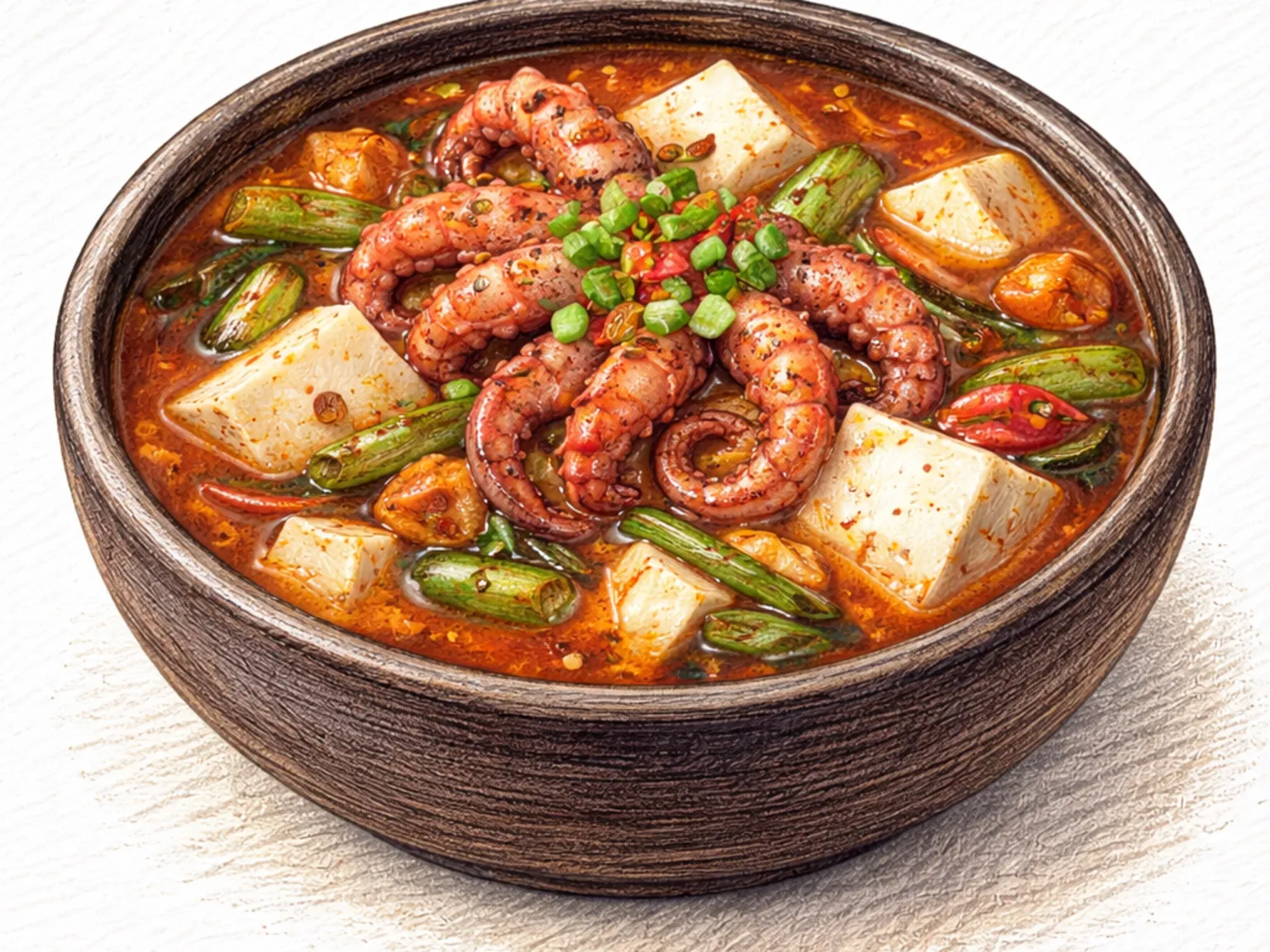
Nakji-sundubu-jjigae is a Korean stew that pairs silky soft tofu with small octopus in a deeply spiced anchovy broth.
What makes this special
- Nakji sundubu jjigae integrates tender, quick-cooked octopus with large pillows of silken tofu, finishing with a soft-boiled egg for a rich, spicy experience.
- Octopus added last and cooked under 2 minutes to stay tender
- Egg steamed 30 seconds lid-on for a runny yolk finish
Key ingredients
Core cooking flow
- 1 Sprinkle coarse salt over 150g of small octopus and rub it with your fingert...
- 2 Put 350ml of anchovy broth and 2 tablespoons of gochugaru in a pot or stone...
- 3 When the broth reaches a rolling boil, lower the heat to medium and simmer for about 2 minutes.
Nakji-sundubu-jjigae is a Korean stew that pairs silky soft tofu with small octopus in a deeply spiced anchovy broth. The broth is built from anchovy and kelp stock seasoned with gochugaru, which gives it a bright red color and a layered heat that comes from the fermented pepper rather than raw chili alone. Soft tofu is dropped in large, undisturbed spoonfuls so it holds together during cooking instead of crumbling into the broth. The octopus is cut into manageable pieces and added last, once the broth is at a full boil, and should be cooked for no more than 90 to 120 seconds before the heat is cut. Octopus contracts and toughens quickly when overcooked, so adding it after every other ingredient is ready is essential for keeping it springy and tender. A cracked egg is dropped in at the end and the lid is closed for 30 seconds, which lets the yolk set partially before it dissolves into the broth, adding richness and a gentle smoothness to the heat. The contrast between the yielding, almost liquid texture of sundubu and the firm chew of the octopus is what defines the experience of the dish, with the spiced broth pulling both elements together. Serving in a stone pot keeps the stew at eating temperature through the entire meal.
Instructions
Read the steps as a cooking flow: prep, heat, seasoning, doneness control, and finish.
- 1Season
Sprinkle coarse salt over 150g of small octopus and rub it with your fingertips for about 1 minute to remove the slippery film.
Rinse several times under cold running water, then cut it into 4cm pieces.
- 2Control
Put 350ml of anchovy broth and 2 tablespoons of gochugaru in a pot or stone pot, then stir until the pepper flakes disperse evenly.
Bring it to a strong boil over high heat until the broth turns red and aromatic.
- 3Control
When the broth reaches a rolling boil, lower the heat to medium and simmer for about 2 minutes.
Continue until the pepper flakes no longer float separately and the broth looks evenly seasoned.
- 4Season
Spoon 300g of soft tofu into the broth in large curds instead of breaking it up.
Do not stir hard. Gently shake the pot so the seasoning reaches the tofu while the pieces stay intact.
- 5Heat
When the broth returns to an active boil, add the prepared octopus and cook it for only 90 to 120 seconds.
As soon as the pieces curl and turn opaque, lower the heat so they do not tighten and become tough.
- 6Finish
Crack 1 egg over the tofu, cover the pot, and let it steam for 30 seconds with the residual heat.
Serve immediately when the white is lightly set and the yolk is still soft enough to enrich the broth.
After the steps
Pick a recipe that fits this dish.
Continue with shared ingredients, meal pairings, or a similar method.
Recipes That Go Well With This
More Stews →Based on shared ingredients and meal pairing
Korean Silken Tofu Seafood Stew
Sundubu haemul jjigae is a seafood soft tofu stew that combines silken tofu with shrimp and Manila clams in an anchovy stock seasoned with gochujang and Korean chili flakes. The aromatics are stir-fried in sesame oil first to build a deeper base before the stock is added. As the shrimp and clams cook through, they release their own briny juices into the spicy broth and push the umami noticeably higher. An egg cracked in at the end binds gently with the silken tofu, adding richness and a slight body to the broth. Deveining the shrimp and removing the back intestine keeps the flavor clean, and soaking the clams in lightly salted water beforehand purges any sand that would otherwise cloud the stock.
Korean Tofu Stew (Spicy Kimchi & Firm Tofu Pot)
Dubu jjigae is a spicy Korean stew built on firm tofu and fermented kimchi simmered together in anchovy stock. Gochugaru goes into the broth first to establish a vivid red, peppery base; from that point, the kimchi releases its fermented tang with each additional minute over heat, steadily deepening the broth. Green onion adds fragrance, and the tofu absorbs the surrounding liquid the longer it cooks. With only five or so main ingredients, this is an efficient dish - the fermented kimchi handles the complexity, producing layered acidity and depth that reads far richer than the short ingredient list would suggest.
Korean Kimchi Rice Bowl (Stir-Fried Aged Kimchi over Steamed Rice)
Stir-frying aged kimchi in a hot pan drives off moisture and triggers caramelization, mellowing the sharpness into a deeper, sweeter intensity that raw kimchi cannot replicate. Cooking the kimchi over medium-high heat for five to seven minutes transforms its texture from wet and tangy to slightly charred and richly savory. A splash of soy sauce and a drizzle of sesame oil finish the seasoning with a salty, nutty note. Spooned over a bowl of steamed rice and topped with a single sunny-side-up egg, the dish is deceptively simple in construction. Using well-fermented kimchi like mukeunji introduces complex layers of lactic sourness and umami depth that more than compensate for the minimal ingredient list. Adding thin slices of pork shoulder or a can of tuna to the pan alongside the kimchi turns it into a more substantial meal with added protein. The whole dish comes together in under fifteen minutes, making it the first choice Korean rice bowl when the pantry is almost bare.
Korean Pollack Roe Tofu Stew
Myeongnan-dubu-jjigae is a Korean stew built around whole pollack roe simmered in anchovy and kelp stock. As the broth comes to a boil, the roe gradually loosens and disperses into the liquid, releasing a briny, concentrated umami that permeates every ingredient in the pot. Using anchovy-kelp stock rather than plain water lets the oceanic character of the roe come through without competition. Firm tofu cut into one-centimeter slices absorbs the savory broth while holding its shape throughout cooking, unlike soft tofu which breaks apart. Red pepper flakes, minced garlic, and sliced green onion finish the stew with a clean, spicy edge. The grainy, textured bite of the intact roe kernels is what sets this stew apart from other Korean jjigae. Cooking time should be kept short: once the broth reaches a full boil, the heat is reduced immediately, because prolonged boiling dissolves the roe completely and erases the textural contrast. Spooning the broth and roe together over steamed rice and mixing it in is the most satisfying way to eat it.
Serve with this
Korean Braised Tofu and Egg
Dubu-gyeran-jorim is a practical braised banchan that combines two of the most affordable protein sources in Korean cooking -- tofu and hard-boiled eggs -- in a single soy-based sauce. The tofu is pan-fried until golden on each side, building a lightly crisped surface that holds up during braising. The eggs are hard-boiled, peeled, and added alongside the tofu in a sauce made from soy sauce, sugar, minced garlic, and water. Over fifteen or more minutes of gentle simmering on low heat, the tofu draws the dark braising liquid into its porous interior, becoming dense with savory flavor throughout. The eggs develop a tan exterior as the soy sauce stains the outer white, while the inside remains fully set with a pale yellow yolk. As the liquid reduces, it thickens into a glossy coat that clings to every curve of both ingredients. This banchan is a staple of Korean school cafeterias and lunchboxes alike, valued for its keeping power -- it refrigerates well for up to five days, and the seasoning continues to deepen overnight, making day-two leftovers often better than the freshly cooked batch.
Chicken Mu (Korean Fried Chicken Radish Pickle)
The crunchy, sweet-sour radish pickle served with every order of Korean fried chicken - now easy to make at home in under 15 minutes. Cubed radish is submerged in a cooled brine of vinegar, sugar, salt, and whole black peppercorns. Using fully cooled brine rather than hot is critical for maintaining the radish's firm, snapping crunch. Ready to eat after one day of refrigeration, its bright acidity cleanses the palate between bites of crispy chicken. Stored in a glass jar, this pickle keeps for over a week.
Korean Burdock Matchstick Pancake
Burdock root, julienned into thin matchstick strips and pan-fried with onion and cheongyang chili, is a jeon with texture as its main argument. The combination of Korean pancake mix and tempura flour in the batter produces a result that is crispier than standard jeon, particularly at the edges where the thin strips of burdock protrude from the batter and catch the heat. Burdock has an earthy, faintly bitter flavor that holds up in the pan, and the onion provides sweetness alongside it. Cheongyang chili cuts through with a slow-building, lingering heat. Cold water keeps the batter loose and inhibits gluten development, so the finished jeon stays light rather than dense. Hot from the pan, the edges shatter; cooled, they turn chewy.
Similar recipes
Korean Squid Stew
Ojingeo jjigae simmers a whole cleaned squid in an anchovy broth enriched with gochujang and chili flakes, producing a sweet-spicy stew that pairs directly with steamed rice. The squid body is scored with diagonal cuts before going into the pot, which lets the bold red pepper paste seasoning penetrate the flesh so that each bite carries the full flavor of the broth. Tofu and zucchini cook alongside, absorbing the spicy liquid while softening enough to contrast with the firm, chewy squid. The natural sweetness of gochujang is well matched to the mild, clean flavor of squid, keeping the stew from tasting one-dimensional despite its deep red color. Timing matters: squid added too early toughens quickly, so it goes in during the final five minutes and cooks just until opaque. Cheongyang chili peppers can be added for extra heat, and a handful of sliced green onion stirred in at the end provides a fresh aromatic note. The braising liquid, spiced and slightly thickened from the vegetables, is rich enough to spoon over rice and eat on its own.
Korean Soft Tofu Stew Rice Bowl
Fiery soft-tofu stew is cooked until bubbling and poured directly over a bowl of rice so the spicy broth seeps into every grain. The silky tofu breaks apart gently, creating pockets of creamy texture within the chili-laced soup. Cracking a raw egg into the simmering pot softens the heat and adds body to the broth. Variations with shrimp, clams, or pork each shift the base flavor in a different direction, making this a versatile single-bowl meal. Serving it soon after cooking keeps the intended texture clearer, while brief resting lets the sauce or broth settle into the dish.
Korean Grilled Octopus
Nakji-gui is a traditional Korean preparation of grilled small octopus that requires specific cleaning techniques and precise timing. The preparation begins by cleaning the small octopus through a process of vigorous rubbing with salt to remove impurities from the skin. Once cleaned, the octopus is coated in a marinade that includes gochujang, soy sauce, sesame oil, minced garlic, and corn syrup. This small octopus possesses significantly finer muscle fibers compared to a full-sized octopus, a physical trait that results in a very narrow window between a desirable springy texture and an undesirable rubbery one. A cooking time of only two minutes is frequently sufficient to push the protein past the point of no return, so the person cooking must stay attentive and remove the tentacles from the heat as soon as they firm up and take on color. The gochujang and corn syrup within the marinade undergo rapid caramelization when they come into contact with the hot surface of the pan or grill. This reaction forms a red, lacquered shell around each tentacle that provides a combination of fermented heat and sweetness in every bite. Using a direct flame for cooking introduces smoky and charred notes that increase the complexity of the flavor profile. If the dish is prepared in a pan rather than on a grill, the octopus must be dried thoroughly first. Any moisture remaining on the surface will generate steam and cause the octopus to braise instead of grill, which prevents the formation of the caramelized exterior. After the cooking process is complete, the octopus is usually snipped into bite-sized pieces with kitchen scissors. It can be served as a wrap with perilla or lettuce leaves, or it can be laid over a bowl of steamed rice.