Charim

2686 Korean & World Recipes

2686+ Korean recipes, clean and organized. Ingredients to instructions, all at a glance.

Korean Flying Fish Roe Gimbap

Korean Flying Fish Roe Gimbap

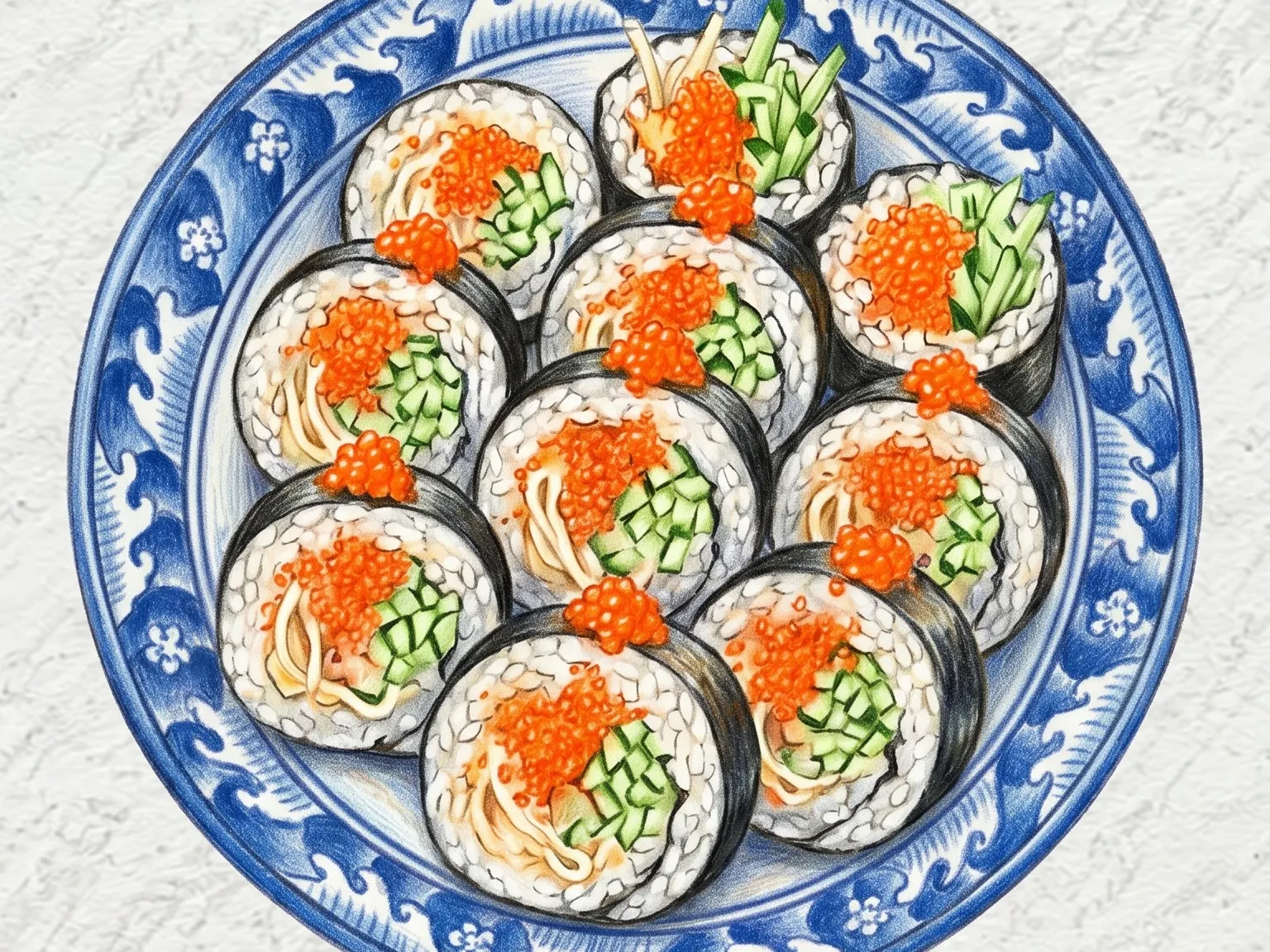
Nalchial gimbap is made by spreading sesame-oil-and-salt-seasoned rice across a sheet of nori, piping a thin line of mayonnaise down the center, then laying refrigerated flying fish roe and julienned cucumber in parallel before rolling everything tightly. The roe must come straight from the refrigerator at the moment of assembly - as the tiny eggs warm up, their skins soften and lose the signature pop that defines this roll. Biting through releases a simultaneous burst of briny, savory roe juice and creamy mayonnaise, while crisp cucumber strips cut through the richness with their cool crunch. Once sliced, a small spoonful of extra roe placed on each cut piece makes the rolls visually striking and amplifies the popping sensation per bite. Salmon roe or spicy pollack roe can substitute for flying fish roe using the exact same method.

Prep 15min Cook 5min 2 servings

Adjust Servings

2servings
servings

Instructions

  1. 1

    Season cooked rice with sesame oil and salt.

  2. 2

    Julienne cucumber, lightly salt, and squeeze out excess water.

  3. 3

    Spread rice on seaweed, squeeze a line of mayo, then add roe and cucumber.

  4. 4

    Roll tightly, cut into pieces, and top with extra roe for garnish.

🛒Shop Ingredients on Amazon

As an Amazon Associate, we may earn from qualifying purchases.

Tips

Keep roe refrigerated until just before rolling to preserve its popping texture.
Add avocado for an even creamier filling.

Nutrition (per serving)

Calories
360
kcal
Protein
14
g
Carbs
44
g
Fat
14
g

Goes Well With

Korean Perilla Oil Noodles
NoodlesEasy

Korean Perilla Oil Noodles

Deulgireum guksu is a Korean cold mixed noodle dish where boiled somyeon are rinsed thoroughly in cold water to strip surface starch, tossed in soy sauce seasoning to coat each strand with salt and umami, then finished with a generous pour of perilla oil. The order matters: soy sauce first to season the noodles through, perilla oil last so its volatile fragrance is not cooked off. The oil has a distinctive earthiness - more roasted and grassy than sesame - and it clings to every strand in a way that makes the whole bowl smell powerfully aromatic. Crumbled roasted seaweed contributes a briny crunch, and toasted sesame seeds provide a quiet textural counterpoint. The whole preparation takes under ten minutes from pot to bowl, which makes it a practical choice for late-night meals or solo eating. A fried egg placed on top is a frequent addition; the runny yolk breaks into the dressed noodles, adding richness and rounding out the sharp, saline seasoning.

🌙 Late Night Quick
Prep 10minCook 7min2 servings
Korean Malcha Duyu Latte (Matcha Soy Latte)
DrinksEasy

Korean Malcha Duyu Latte (Matcha Soy Latte)

Matcha duyu latte is a vegan drink that pairs whisked matcha with gently warmed unsweetened soy milk. The tea's vegetal bitterness meets the soy milk's natural nuttiness in a creamy balance, anchored by acacia honey and a pinch of salt that clarify both flavors. A small measure of vanilla extract adds a background sweetness, and roasted soybean powder dusted on top reinforces the nutty character. Heating the soy milk only until tiny bubbles appear at the edges prevents any off-flavors from developing.

🍺 Bar Snacks Quick
Prep 8minCook 7min2 servings
Schisandra Fruit Punch (Korean Cold-Brewed Berry Fruit Bowl)
DessertsEasy

Schisandra Fruit Punch (Korean Cold-Brewed Berry Fruit Bowl)

Omija hwachae is a traditional Korean fruit punch made by cold-infusing dried schisandra berries in water for at least two hours to extract a vivid red liquid, then sweetening with honey. Cold extraction is not optional: hot water pulls excess astringency from the berries and makes the liquid harsh rather than bright. Only a small portion of the infusion is gently warmed to dissolve the honey before the two are combined. Scooped balls of Korean pear and watermelon sit submerged in the chilled omija broth, so each spoonful delivers a crisp, juice-filled bite against the tart-sweet liquid. Pine nuts floated on the surface add a mild fatty richness that tempers the sharpness of the schisandra acid, and serving the hwachae over generous ice keeps every component at its most vivid.

🧒 Kid-Friendly Quick
Prep 15minCook 5min4 servings
Korean Seasoned Deer Fern Namul
Side dishesMedium

Korean Seasoned Deer Fern Namul

Samnamul-muchim is a Korean mountain vegetable side dish made from 220 grams of deer fern, a spring foraged green with a distinctively herbal, slightly bitter flavor. Blanching for one minute and immediately rinsing in cold water tempers the fern's wild aroma to a pleasant, manageable level while preserving its tender bite. The dressing of soup soy sauce, perilla oil, minced garlic, chopped green onion, and ground sesame keeps the dish clean in both color and flavor, letting the fern's natural character come through. Cut into 4-centimeter lengths for easy eating, each piece carries a gentle earthiness that pairs naturally with steamed rice. The ground sesame adds a subtle crunch and nuttiness that complements the perilla oil.

🏠 Everyday🍱 Lunchbox
Prep 10minCook 5min4 servings

More Recipes

Korean Avocado Gimbap (Creamy Avocado Crab Seaweed Rice Roll)
Street foodEasy

Korean Avocado Gimbap (Creamy Avocado Crab Seaweed Rice Roll)

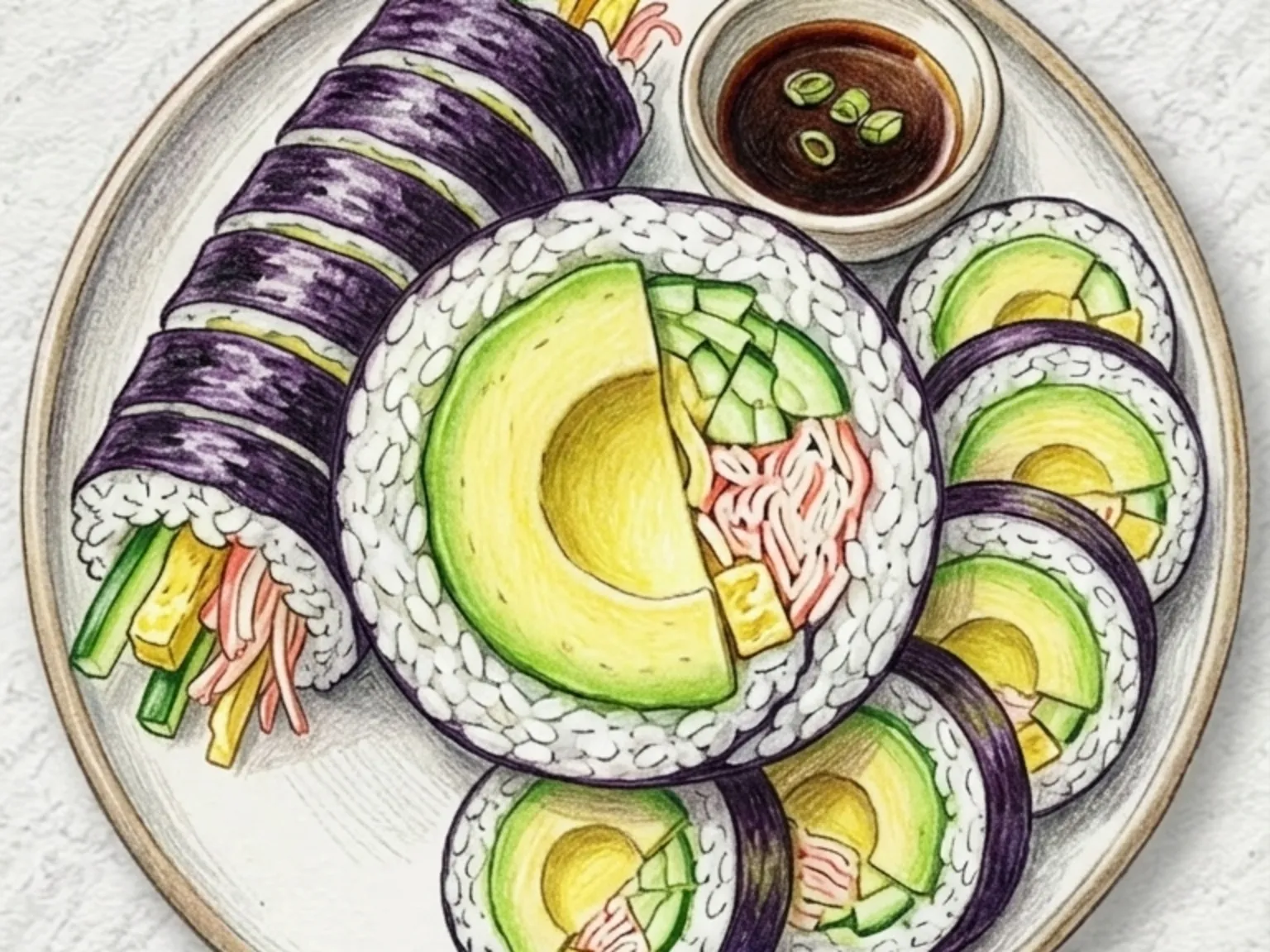
Avocado gimbap is a contemporary Korean roll that emerged in the 2010s as avocado shifted from a specialty import to a common supermarket staple in Korea. The timing of Korean avocado adoption is traceable: consumption roughly doubled between 2014 and 2018, driven by cafe culture and wellness trends, and this gimbap variant followed directly from that availability. Where traditional gimbap - danmuji, ham, spinach, carrot, egg - delivers discrete, clearly differentiated flavors in each bite, avocado gimbap works differently. The avocado at the center is buttery and neutral, its creaminess binding the other ingredients rather than competing with them. Selecting the right avocado matters considerably: the fruit must be ripe enough to yield when bitten without resistance, but firm enough to hold a clean slice. Underripe avocado is hard and flavorless; overripe avocado collapses when cut and turns the cross-section muddy. The rice is seasoned simply with sesame oil and salt, and the sheet of dried laver wrapping everything contributes a roasted, oceanic note. Crab stick placed lengthwise in the center, alongside julienned cucumber and a strip of egg jidan, creates the characteristic cross-section: concentric rings of green, white, and yellow that have made this version one of the most photographed gimbap in Korean food media. The avocado begins oxidizing and browning within an hour of cutting, so the roll is best eaten soon after assembly. It has become one of the highest-selling items in Korean convenience store gimbap sections, and a standard offering at gimbap specialty restaurants.

🥗 Light & Healthy🌙 Late Night
Prep 15minCook 5min2 servings
Korean Chicken Gimbap (Crispy Chicken Tender Seaweed Rice Roll)
Street foodEasy

Korean Chicken Gimbap (Crispy Chicken Tender Seaweed Rice Roll)

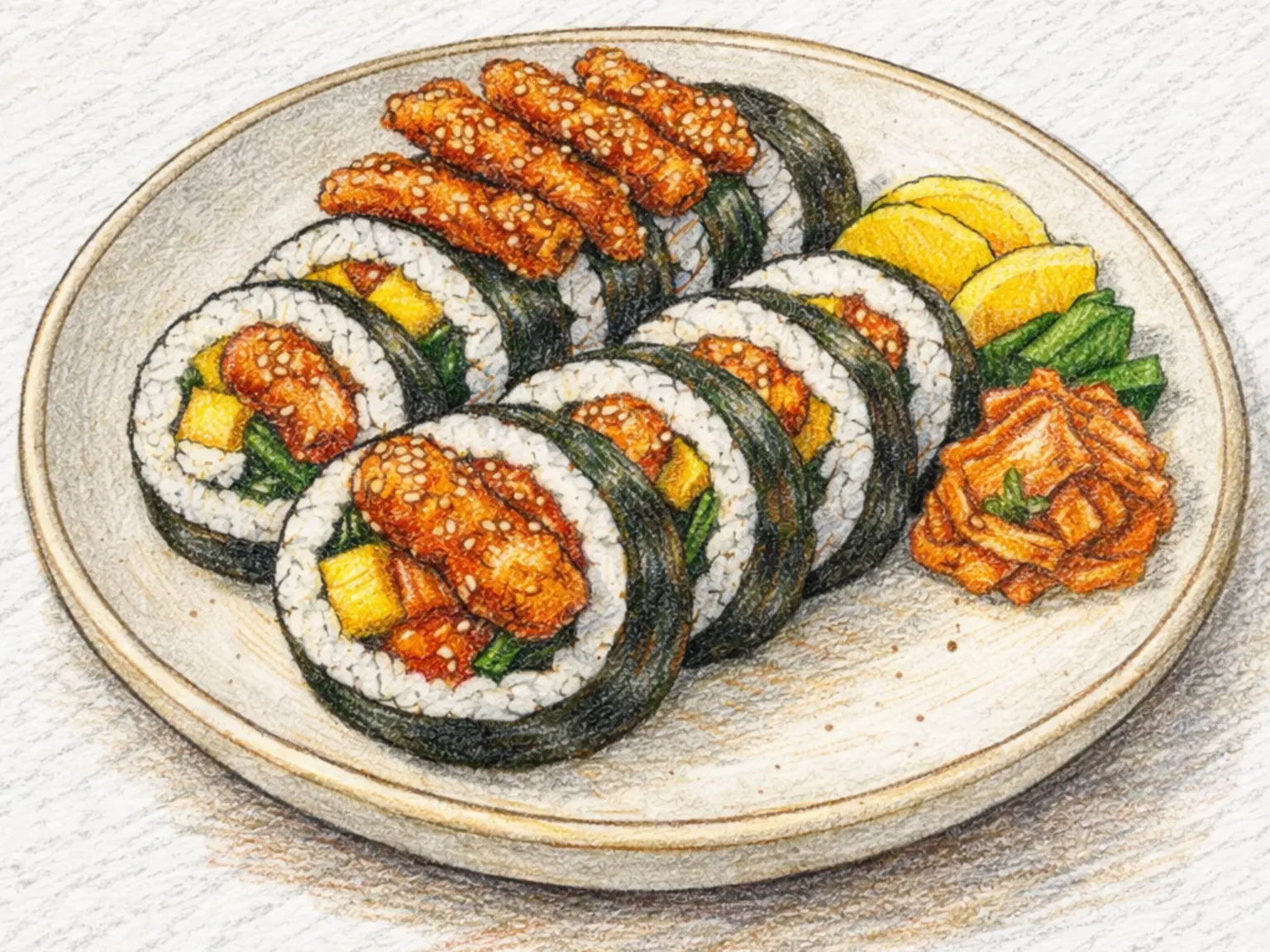
Chicken gimbap is a Korean seaweed rice roll filled with air-fried crispy chicken tenders, sesame-salt seasoned rice, lettuce, and mayonnaise. The timing of assembly is important: the chicken must go in immediately after cooking while the fried coating is still hot and rigid, otherwise moisture from the rice and lettuce softens the crust before the roll is even finished. Mayonnaise forms a creamy layer between rice and chicken that also acts as a barrier, slowing moisture transfer and keeping each component distinct. Lettuce adds a fresh, cool crunch that balances the richness of the fried chicken and mayo. Laying the chicken pieces in a straight line before rolling produces an even cross-section when the gimbap is sliced. Mixing hot sauce into the mayonnaise creates a spicy version that can be scaled to taste. The roll travels well and is a reliable choice for packed lunches.

🧒 Kid-Friendly
Prep 15minCook 15min2 servings
Korean Shrimp Gimbap (Plump Shrimp and Vegetable Seaweed Roll)
Street foodEasy

Korean Shrimp Gimbap (Plump Shrimp and Vegetable Seaweed Roll)

Shrimp are peeled and deveined with a toothpick before being blanched for two minutes, then rolled inside seasoned rice, egg strips, sauteed julienned carrot, and cucumber. Deveining before blanching is essential because the intestinal tract can leave a faint off-flavor in the finished roll. Large shrimp are halved lengthwise before rolling so the cross-section of each slice shows a generous amount of pink shrimp flesh rather than a thin crescent. The shrimp's clean, mild flavor does not compete with the sauteed carrot, egg, or cucumber, and the firm, springy bite of well-cooked shrimp gives each piece a distinct texture against the soft rice and yielding egg. The rice is seasoned with sesame oil and salt, but the sesame oil should be kept to no more than one tablespoon per two cups of cooked rice, as too much will soften the seaweed prematurely. Chilling the completed rolls for 30 minutes before cutting helps the cross-sections hold their shape cleanly on the cutting board. Saeu-gimbap is a common choice for children's lunchboxes because its flavors are mild and accessible, and it makes a lighter, less assertive option compared to rolls with stronger-seasoned fillings like braised burdock or spiced fishcake.

🍱 Lunchbox
Prep 20minCook 10min2 servings
Korean Vegetable Gimbap (Colorful Veggie Seaweed Rice Roll)
Street foodEasy

Korean Vegetable Gimbap (Colorful Veggie Seaweed Rice Roll)

Yachae gimbap is a vegetable-focused Korean seaweed rice roll filled with blanched spinach, sauteed carrot, braised burdock root, pickled radish, and egg omelet strips, all wrapped in sesame-oil-seasoned rice. Each vegetable is prepared separately to preserve and highlight its own distinct character: spinach is dressed with sesame oil and salt after blanching, carrot is stir-fried to draw out its natural sweetness, and burdock root is slow-braised in soy sauce and sugar to develop a deep savory-sweet depth that nothing else in the roll can replicate. Pickled radish adds a tart, satisfying crunch that contrasts with the soft egg strips, and the combination of six or more individually seasoned ingredients creates both visual variety in the cross-section and complexity in every bite. Draining every filling thoroughly and cutting them all to a uniform diameter is the practical key to a roll that stays tight, slices cleanly, and keeps the seaweed from turning soggy.

🧒 Kid-Friendly🍱 Lunchbox
Prep 25minCook 10min2 servings
Korean Tuna Gimbap (Chamchi Gimbap)
RiceMedium

Korean Tuna Gimbap (Chamchi Gimbap)

Chamchi gimbap is a Korean seaweed rice roll filled with canned tuna mixed with mayonnaise, along with carrot, spinach, and pickled radish, all wrapped in seasoned rice and a sheet of roasted gim. The creamy tuna filling contrasts with the crisp vegetables, while the tangy pickled radish cuts through the richness and keeps each bite lively. A longtime staple in Korean lunchboxes and picnic spreads, the roll slices neatly into rounds that are easy to eat without utensils. Sesame oil brushed on the outside adds a subtle sheen and a nutty aroma. Spacing the fillings evenly before rolling ensures a clean, colorful cross-section with every cut - part of what makes well-made gimbap visually satisfying alongside the taste.

🍱 Lunchbox
Prep 20minCook 10min2 servings
Korean Spicy Fish Roe Stew
StewsMedium

Korean Spicy Fish Roe Stew

Altang is a Korean stew built around pollock roe - the egg sacs that are the defining ingredient, distinguishing this dish from the many other spicy Korean seafood stews. The dish originated in east coast fishing towns where fresh roe is available in large quantities during the winter spawning season and must be used quickly. Anchovy-kelp stock simmers first with radish to create a clean, sweet foundation before the roe and tofu are added. Once the roe goes into the broth, something visible happens: the egg sacs release their contents as they cook, turning the liquid cloudy and enriching it with marine oils that give the broth a noticeably heavier, more unctuous body. This transformation is specific to altang and is part of what makes it a different eating experience from other spicy Korean stews. Gochugaru and doenjang season the stew together - the chili bringing direct heat and the fermented paste adding depth - and together they neutralize the fishy edge that pollock roe would otherwise carry. Crown daisy, ssukgat, is added in the final moments. Its sharp, almost medicinal herbal fragrance is the correct counterpoint to the heavy, briny broth. In Korean drinking culture, altang occupies a specific role as a late-night restorative consumed at the end of a long evening. The image of a stone pot of altang arriving at the table still vigorously boiling, at two or three in the morning, is a recognizable part of Korean urban nightlife.

🍺 Bar Snacks🏠 Everyday
Prep 12minCook 18min2 servings
More Street food →