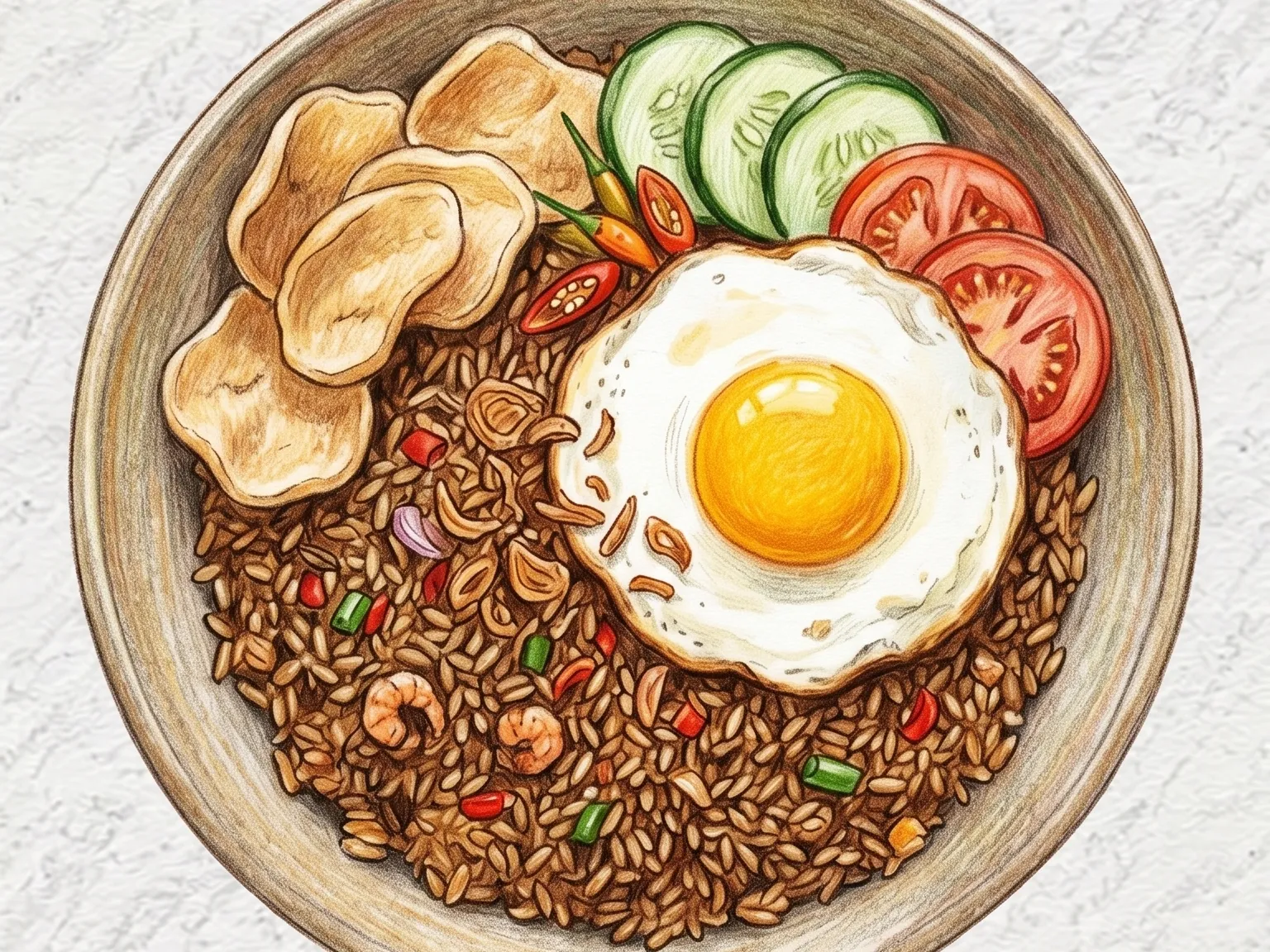
Nasi Goreng (Indonesian Sweet Soy Sauce Shrimp Fried Rice)
Nasi goreng is Indonesia's national dish and one of Southeast Asia's most recognized comfort foods. Day-old rice is tossed in a blazing-hot wok with kecap manis, a thick sweet soy sauce that gives each grain a dark, caramelized glaze. Shrimp paste adds a deep umami backbone, while sambal chili paste cuts through the sweetness with a sharp heat. A fried egg crowns each serving, its runny yolk acting as a rich, on-the-spot sauce when broken. Crispy prawn crackers on the side provide crunch against the soft rice. The dish appears at every hour of the day, from breakfast stalls to late-night street carts.
Adjust Servings
Instructions
- 1
Fry shallots and garlic in oil.
- 2
Add shrimp paste and sambal; stir-fry until fragrant.
- 3
Add rice and season with kecap manis; stir-fry over high heat.
- 4
Top each serving with a fried egg.
As an Amazon Associate, we may earn from qualifying purchases.
Tips
Nutrition (per serving)
More Recipes

Nasi Uduk (Jakartan Coconut Lemongrass Pandan Steamed Rice)
Nasi uduk is a Jakartan coconut rice that serves as a staple breakfast across Indonesia. Rice is simmered in coconut milk with lemongrass, pandan leaves, and a pinch of salt, producing grains coated in a gentle coconut richness with herbal undertones. Though it shares the coconut-rice concept with Malaysian nasi lemak, nasi uduk has a milder coconut presence and comes with distinctly Indonesian accompaniments. Fried shallots scattered on top provide an aromatic crunch that defines the dish. Common sides include fried tempeh, seasoned chicken, omelette strips, and prawn crackers, each adding a different texture and flavor layer. Street vendors wrap portions in paper or banana leaf for a convenient morning meal.

Bihun Goreng (Indonesian Stir-Fried Rice Vermicelli with Sweet Soy)
Bihun goreng - fried rice vermicelli - is a street-food staple across Indonesia and Malaysia, sold from pushcarts and warung stalls from early morning through midnight. Thin rice noodles, soaked briefly until pliable, hit a scorching-hot wok with garlic, shallots, and a spoonful of sambal or chili paste that sizzles instantly. Kecap manis - Indonesia's thick sweet soy sauce - caramelizes against the wok's surface, coating each strand in a dark, sticky glaze. Cabbage, bean sprouts, and sliced carrot are tossed in rapidly, keeping their crunch against the soft noodles. The technique demands constant movement - the noodles must be lifted and turned without breaking, absorbing the sauce without clumping. A fried egg on top, its edges lacy from high-heat oil, is the standard finishing touch. The flavor profile is distinctly Indonesian: sweet from the kecap manis, smoky from the wok, spicy from the sambal, and salty from a splash of fish sauce stirred in at the end.

Mohinga (Burmese Fish Broth Rice Noodle Soup)
Mohinga is widely regarded as Myanmar's national dish - a fish noodle soup eaten most often at breakfast but available throughout the day from street vendors and restaurants alike. The broth is built from freshwater fish, typically catfish, simmered until the flesh falls apart, then strained and enriched with turmeric, lemongrass, ginger, and a slurry of toasted rice flour that gives the soup its signature thick, almost porridge-like consistency. Thin rice noodles are ladled into the broth and topped with crispy chickpea fritters, a halved boiled egg, fresh cilantro, and sliced banana stem. Fish sauce and a squeeze of lime at the table pull everything into focus. The broth is deeply savory with a golden color from the turmeric, and the fritters add crunch against the soft noodles.

Ayam Goreng (Indonesian Spiced Fried Chicken Without Coating)
Ayam goreng is Indonesia's answer to fried chicken, but the technique diverges sharply from Western versions - there is no flour coating. Instead, chicken pieces are simmered in a paste of garlic, ginger, coriander, turmeric, and coconut milk until the liquid reduces to almost nothing and the spices have permeated the meat to the bone. Only then does the chicken hit hot oil, where the coconut-milk residue on the skin fries into a thin, uneven crust with a deep golden hue. The flavor is aromatic rather than salty, with turmeric's earthiness and coriander's citrus notes layered into every bite. Street stalls across Jakarta and Yogyakarta serve it with sambal, lalapan (raw vegetables), and steamed rice.

Korean Tomato Egg Fried Rice
Eggs are scrambled first and set aside, then tomatoes are stir-fried in the same pan until their juices burst and coat the wok. Day-old or freshly cooked rice goes in next, tossed at high heat so the grains absorb the tomato's sweet-tart moisture while staying individually distinct. The scrambled egg is folded back in at the end, distributing soft, fluffy curds throughout the fried rice. Rooted in the Chinese classic of tomato and egg, this version turns those familiar flavors into a satisfying one-bowl fried rice.

Korean Seafood Fried Rice
Mixed seafood including shrimp, squid, and mussel meat is stir-fried together on high heat until a smoky wok char develops. Day-old cold rice works best because its lower moisture content lets the grains separate cleanly in the pan, and seasoning with soy sauce and oyster sauce layers additional depth on top of the seafood's own brininess. Cracking the eggs into the pan first and immediately tossing the rice on top coats each grain in a thin shell of egg, yielding a lightly crisp exterior. Sesame oil is drizzled only after the heat is off so its fragrance stays intact.