Nasi Kandar (Penang Indian-Muslim Rice with Mixed Curries)
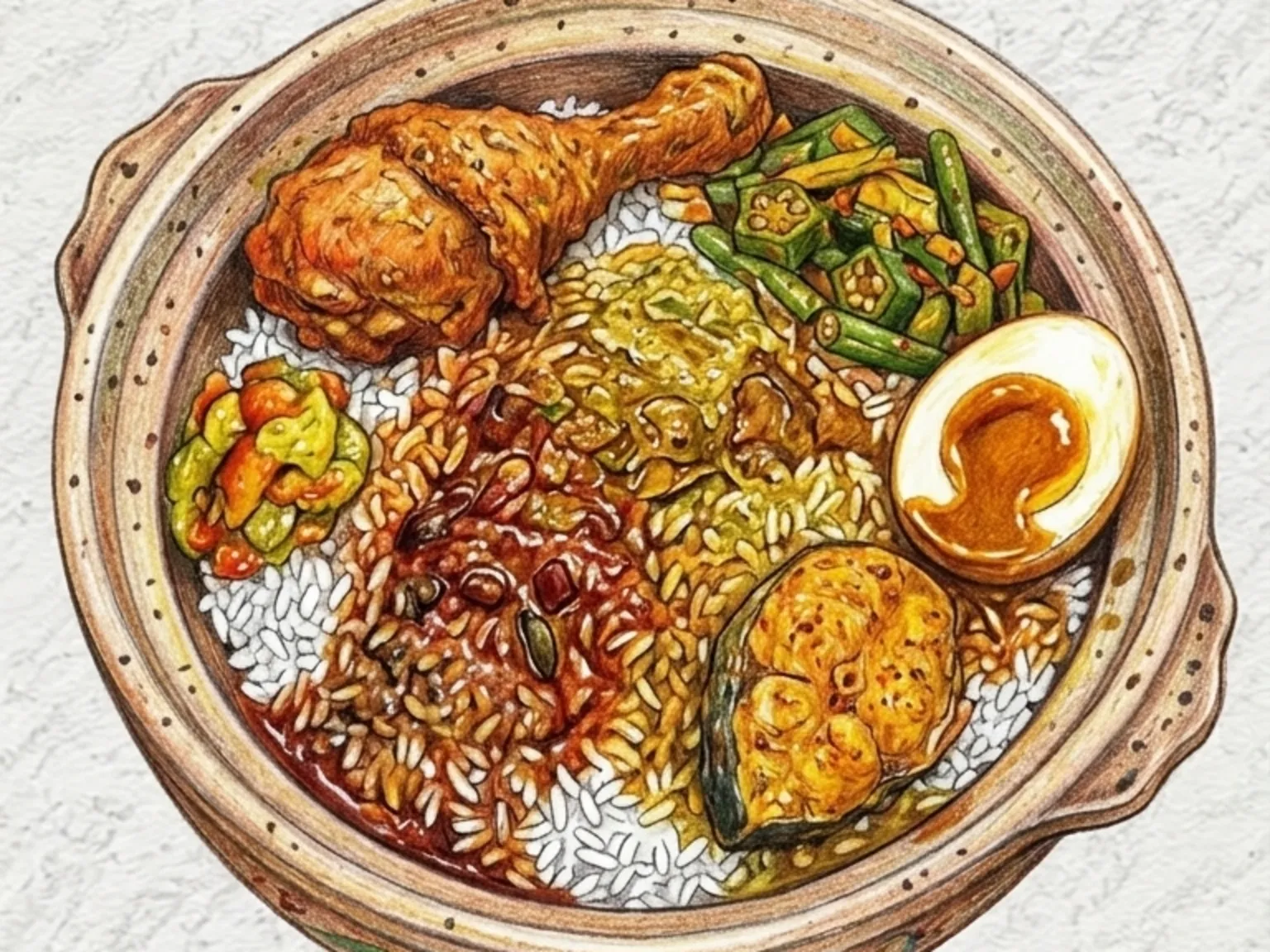
Nasi kandar is a Penang-born rice dish rooted in the culinary traditions of Malaysia's Indian-Muslim community. A mound of steamed white rice is doused with multiple curry gravies and accompanied by a choice of protein and vegetable sides. The defining technique is kuah campur - the deliberate mixing of different curry sauces so they pool together and soak into the rice, creating a layered complexity no single curry could achieve alone. Coconut milk lends a gentle richness, curry powder supplies aromatic depth, and chili brings lingering warmth. Diners select their own combination from a counter full of dishes, making each plate unique.
Adjust Servings
Instructions
- 1
Rinse and cook the rice first.
- 2
Saute onion until sweet, then add chicken and sear.
- 3
Bloom curry and chili powders, then cook with tomato.
- 4
Add coconut milk, a little water, and fish sauce, then simmer 15 minutes.
- 5
Plate rice, top with curry chicken and eggs, and spoon over extra gravy.
As an Amazon Associate, we may earn from qualifying purchases.
Tips
Nutrition (per serving)
More Recipes

Nasi Lemak (Malaysian Coconut Pandan Rice with Anchovy Sambal)
Nasi lemak is Malaysia's definitive national dish, built on a foundation of rice cooked in coconut milk with pandan leaves. The rice alone carries a subtle richness and a faint vanilla-like fragrance from the pandan, making it flavorful even before any accompaniment. The essential sambal is a cooked chili paste built on shrimp paste and tamarind, delivering sweetness and slow-building heat in equal measure. Crispy fried anchovies and roasted peanuts contribute crunch, while a halved boiled egg and fresh cucumber slices balance the richness. In its simplest form, nasi lemak is wrapped in a banana leaf for a quick breakfast.

Ayam Lemak Cili Padi (Malay Coconut Chicken with Bird's Eye Chili)
Ayam lemak cili padi is a Malay kampung dish - village cooking at its most direct. Chicken simmers in a thin coconut milk broth spiked with bird's eye chilies, turmeric, lemongrass, and sliced shallots. The coconut milk stays light and soupy rather than reduced to a thick gravy, keeping the dish from becoming heavy. Bird's eye chilies deliver a sharp, immediate heat that lingers long after each spoonful, distinct from the slow burn of dried chili pastes. Turmeric tints the broth pale gold and adds an earthy bitterness beneath the coconut sweetness. This is comfort food across Malaysia's east coast states, typically served with steamed rice that soaks up the fragrant, spicy broth.

Nasi Kerabu (Malaysian Blue Herb Rice with Coconut and Vegetables)
Nasi kerabu is a traditional rice dish from Malaysia's east coast that commands attention with its striking blue-tinted rice. The color comes from butterfly pea flowers, which stain the grains a vivid indigo without altering the taste. Rice is cooked with coconut milk and lemongrass, then served alongside grilled fish, julienned cucumber, blanched bean sprouts, and finely chopped fresh herbs. Sambal provides a spicy counterpoint that ties the plate together. The proper way to eat it is to mix everything by hand, combining herbs, rice, protein, and chili paste in each bite so no two mouthfuls taste the same. Fresh mint and cilantro give the dish a bright, herbaceous character.

Roti Canai (Malaysian Flaky Ghee Flatbread with Curry Dip)
Roti canai is a flaky, pan-fried flatbread served at mamak stalls across Malaysia from dawn until late at night. The dough is enriched with ghee and stretched by hand until nearly translucent, then folded back onto itself multiple times to create dozens of paper-thin layers. On a well-oiled griddle, the bread puffs and crisps on the outside while the interior stays chewy and layered. Each tear reveals the laminated structure inside. The standard pairing is a bowl of dhal curry for dipping, though sardine curry and chicken curry are equally common. Variations abound: roti telur folds in a beaten egg, roti pisang wraps sliced banana inside, and roti bom is a thicker, butterier version dusted with sugar. The bread is torn by hand, never cut, and the best versions leave a faint sheen of ghee on the fingers.

Mee Rebus (Noodles in Sweet Potato Curry Gravy)
Mee rebus is a Malaysian noodle dish where springy yellow noodles are topped with a thick gravy built from mashed sweet potato, curry powder, peanut butter, and chicken stock. The sweet potato dissolves into the stock to form a naturally thick base, and the curry powder and peanut butter contribute layers of spice and nuttiness that make the sauce unlike any other noodle topping. Soy sauce adds fermented depth and ties the sweetness and spice together. If the gravy becomes too thick during cooking, extra stock loosens it without diluting the flavor. A halved boiled egg and a squeeze of fresh lime just before eating cut through the richness, bringing the bright acidity that is a hallmark of Southeast Asian noodle dishes.

Korean Curry Fried Rice (Golden Spiced Chicken Fried Rice)
Curry bokkeumbap is a Korean fried rice where curry powder infuses each grain with a warm, aromatic spice and a vivid golden hue. Chicken breast, onion, carrot, and bell pepper are stir-fried together before the rice goes in, ensuring a balanced mix of protein and vegetables in every serving. The curry fragrance unfolds gradually with each bite, less intense than a curry sauce but more present than plain fried rice, hitting a satisfying middle ground. The bell pepper adds a slight sweetness and a pop of color against the golden rice, while the chicken keeps each bite substantial. Topping it with a fried egg adds creaminess when the yolk breaks and mixes in, making an already complete dish even more indulgent.