Nasi Kerabu (Malaysian Blue Herb Rice with Coconut and Vegetables)
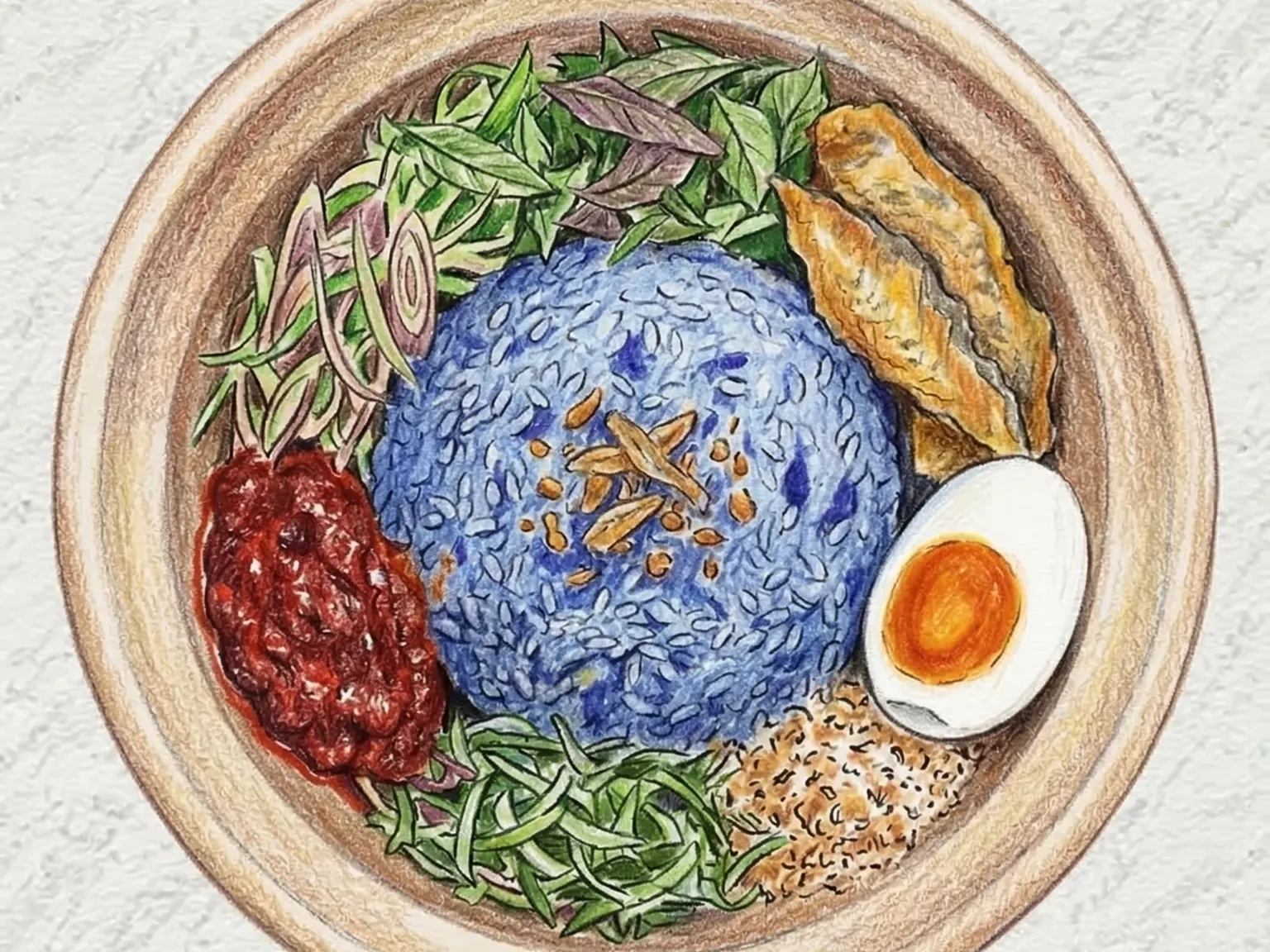
Nasi kerabu is a traditional rice dish from Malaysia's east coast that commands attention with its striking blue-tinted rice. The color comes from butterfly pea flowers, which stain the grains a vivid indigo without altering the taste. Rice is cooked with coconut milk and lemongrass, then served alongside grilled fish, julienned cucumber, blanched bean sprouts, and finely chopped fresh herbs. Sambal provides a spicy counterpoint that ties the plate together. The proper way to eat it is to mix everything by hand, combining herbs, rice, protein, and chili paste in each bite so no two mouthfuls taste the same. Fresh mint and cilantro give the dish a bright, herbaceous character.
Adjust Servings
Instructions
- 1
Cook rice with coconut milk, water, and lemongrass.
- 2
Julienne cucumber and blanch bean sprouts briefly.
- 3
Grill mackerel and flake the flesh.
- 4
Plate rice and arrange cucumber, bean sprouts, and fish on top.
- 5
Serve with sambal and mix before eating.
As an Amazon Associate, we may earn from qualifying purchases.
Tips
Nutrition (per serving)
More Recipes

Nasi Lemak (Malaysian Coconut Pandan Rice with Anchovy Sambal)
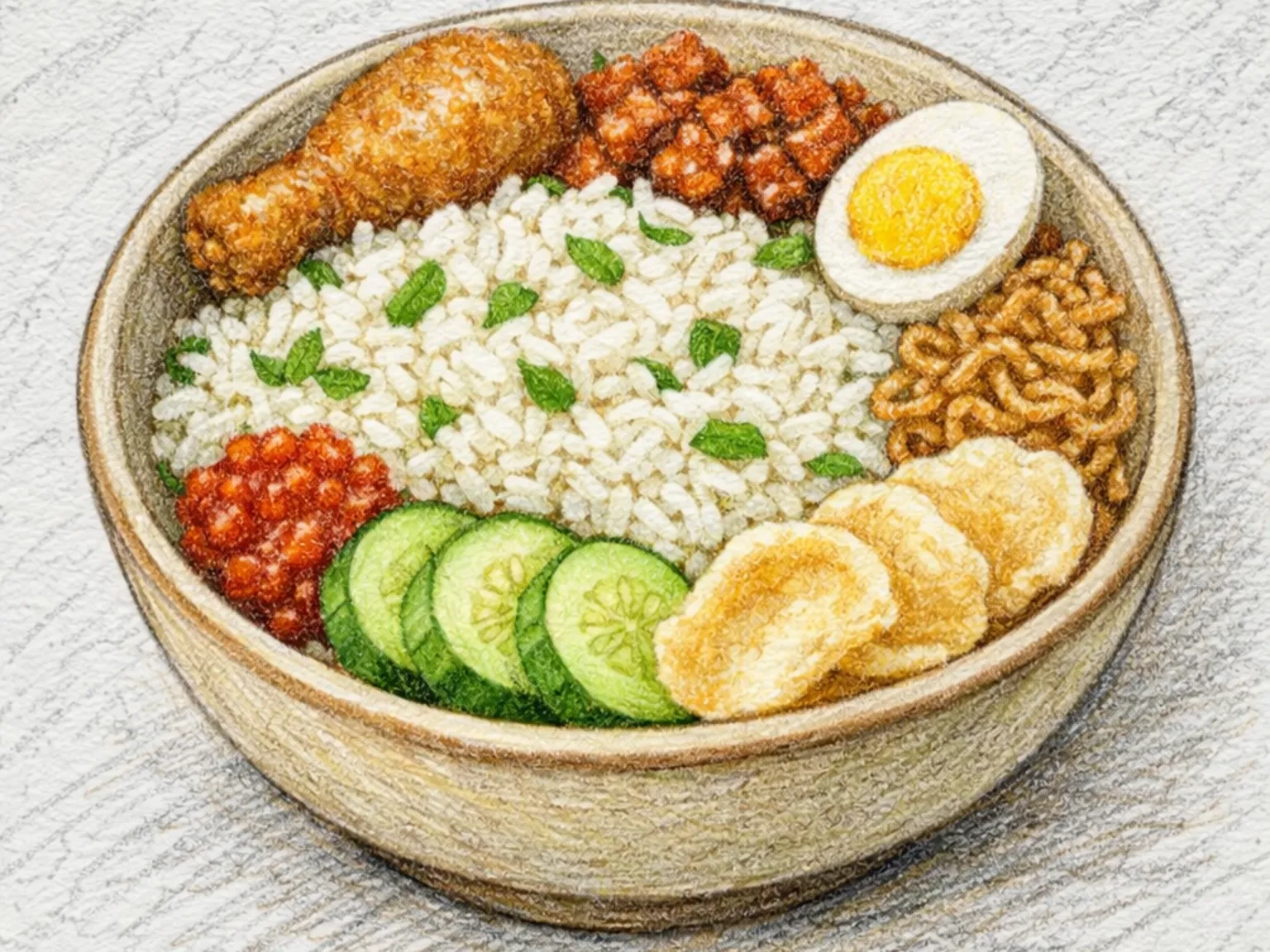
Nasi lemak is Malaysia's definitive national dish, built on a foundation of rice cooked in coconut milk with pandan leaves. The rice alone carries a subtle richness and a faint vanilla-like fragrance from the pandan, making it flavorful even before any accompaniment. The essential sambal is a cooked chili paste built on shrimp paste and tamarind, delivering sweetness and slow-building heat in equal measure. Crispy fried anchovies and roasted peanuts contribute crunch, while a halved boiled egg and fresh cucumber slices balance the richness. In its simplest form, nasi lemak is wrapped in a banana leaf for a quick breakfast.

Nasi Kandar (Penang Indian-Muslim Rice with Mixed Curries)
Nasi kandar is a Penang-born rice dish rooted in the culinary traditions of Malaysia's Indian-Muslim community. A mound of steamed white rice is doused with multiple curry gravies and accompanied by a choice of protein and vegetable sides. The defining technique is kuah campur - the deliberate mixing of different curry sauces so they pool together and soak into the rice, creating a layered complexity no single curry could achieve alone. Coconut milk lends a gentle richness, curry powder supplies aromatic depth, and chili brings lingering warmth. Diners select their own combination from a counter full of dishes, making each plate unique.

Char Kway Teow (Penang Wok-Fried Flat Rice Noodles with Prawns)
Char kway teow originated in Penang as a cheap, filling meal for Chinese laborers - flat rice noodles fried fast over high heat with whatever protein was affordable that day. Wide rice noodles hit a scorching wok with prawns, cockles, egg, bean sprouts, Chinese chives, and slices of lap cheong sausage, while dark soy sauce and oyster sauce stain the noodles a deep caramel brown. The dish lives or dies by wok hei - the elusive smoky breath of the wok that only comes from cooking at extreme temperatures, tossing the noodles through open flame. Traditionally fried in pork lard rather than vegetable oil, the rendered fat coats every strand with a richness that lighter oils cannot replicate. Penang's hawker stalls cook one plate at a time, refusing to batch, because cramming the wok would steam the noodles instead of searing them. The result, when done right, carries a charred, slightly bitter edge beneath the salty-sweet sauce that makes it one of Southeast Asia's most celebrated street dishes.

Ayam Lemak Cili Padi (Malay Coconut Chicken with Bird's Eye Chili)
Ayam lemak cili padi is a Malay kampung dish - village cooking at its most direct. Chicken simmers in a thin coconut milk broth spiked with bird's eye chilies, turmeric, lemongrass, and sliced shallots. The coconut milk stays light and soupy rather than reduced to a thick gravy, keeping the dish from becoming heavy. Bird's eye chilies deliver a sharp, immediate heat that lingers long after each spoonful, distinct from the slow burn of dried chili pastes. Turmeric tints the broth pale gold and adds an earthy bitterness beneath the coconut sweetness. This is comfort food across Malaysia's east coast states, typically served with steamed rice that soaks up the fragrant, spicy broth.

Mee Rebus (Noodles in Sweet Potato Curry Gravy)
Mee rebus is a Malaysian noodle dish where springy yellow noodles are topped with a thick gravy built from mashed sweet potato, curry powder, peanut butter, and chicken stock. The sweet potato dissolves into the stock to form a naturally thick base, and the curry powder and peanut butter contribute layers of spice and nuttiness that make the sauce unlike any other noodle topping. Soy sauce adds fermented depth and ties the sweetness and spice together. If the gravy becomes too thick during cooking, extra stock loosens it without diluting the flavor. A halved boiled egg and a squeeze of fresh lime just before eating cut through the richness, bringing the bright acidity that is a hallmark of Southeast Asian noodle dishes.

Korean Mountain Herb Bibimbap
Sanchae bibimbap arranges individually seasoned mountain vegetables - fernbrake, bellflower root, and chwi-namul - over rice, then brings everything together with a spoonful of gochujang. Each wild green carries a distinct character: fernbrake is stir-fried in sesame oil until tender, bellflower root is salted and squeezed to remove bitterness before being left crunchy, and chwi-namul is blanched briefly to preserve its herbal fragrance. Julienned carrot adds a bright visual contrast. When mixed at the table, the spicy-sweet chili paste ties together the earthy, grassy, and slightly bitter notes into a cohesive, satisfying bite. This is a dish rooted in Korean mountain temple cuisine, where foraged greens and simple grains form the foundation of a nourishing, plant-based meal.