Nasi Uduk (Jakartan Coconut Lemongrass Pandan Steamed Rice)
Asian Easy

Nasi Uduk (Jakartan Coconut Lemongrass Pandan Steamed Rice)

Quick answer

Nasi uduk is a steamed rice dish from Jakarta, Indonesia, cooked with coconut milk, lemongrass, and pandan leaves.

What makes this special

  • Nasi Uduk grains are simmered in coconut milk with lemongrass to produce a subtle, herbal richness.
  • Coconut milk, lemongrass, and pandan leaf infuse each grain with herbal richness
  • Softer coconut profile than nasi lemak with distinctly Indonesian sides
Total time
40 min
Level
Easy
Servings
4 servings
Ingredients
7
Calories
420 kcal
Protein
6 g

Key ingredients

ricecoconut milkwaterlemongrasspandan leaf

Core cooking flow

  1. 1 Rinse 2 cups of rice under running water 3 to 4 times, rubbing lightly until the water is mostly clear.
  2. 2 Bruise 1 lemongrass stalk with the back of a knife so it releases aroma, and...
  3. 3 Put the drained rice, 300ml coconut milk, 250ml water, and 1 teaspoon salt in a pot.

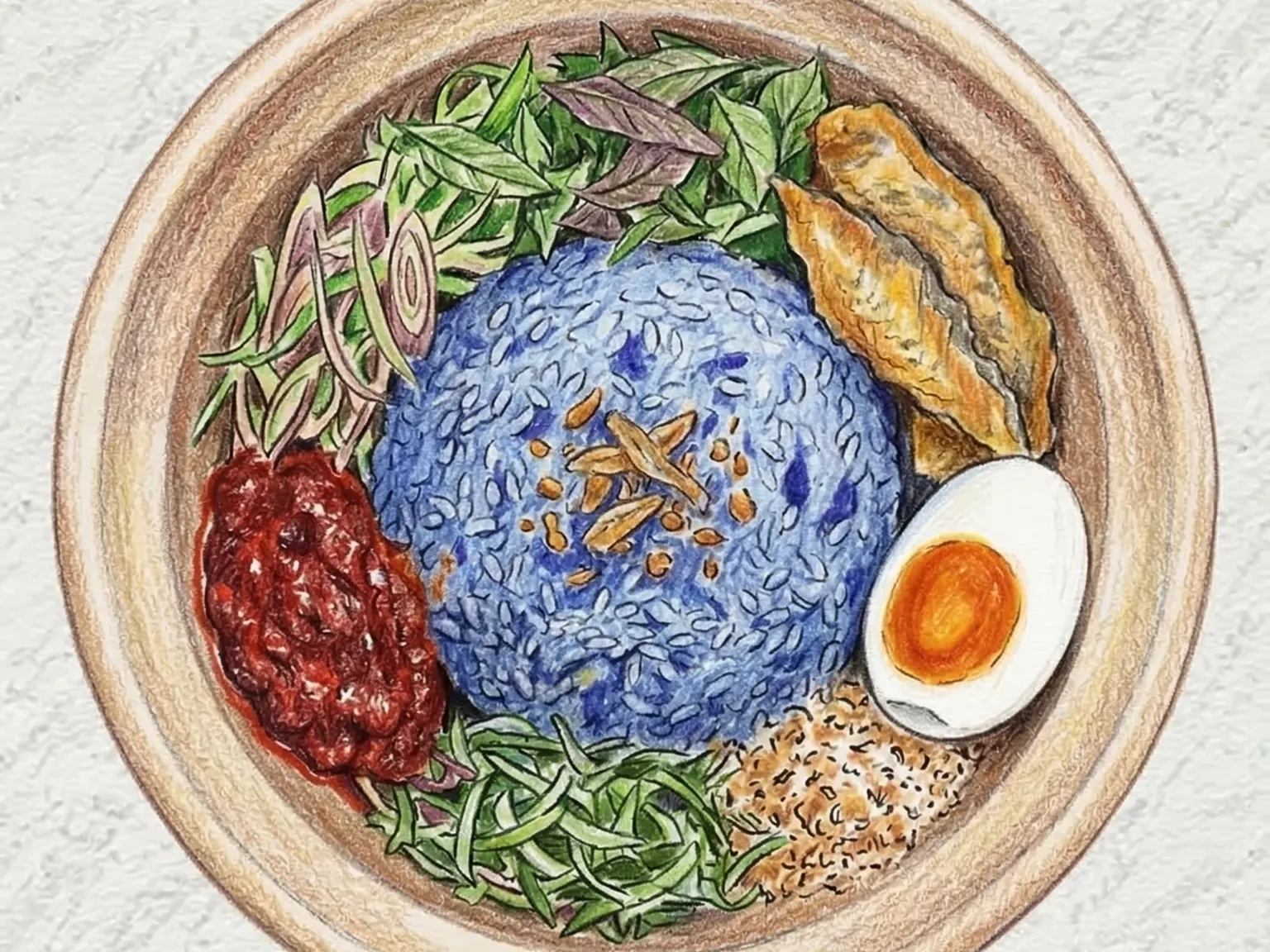
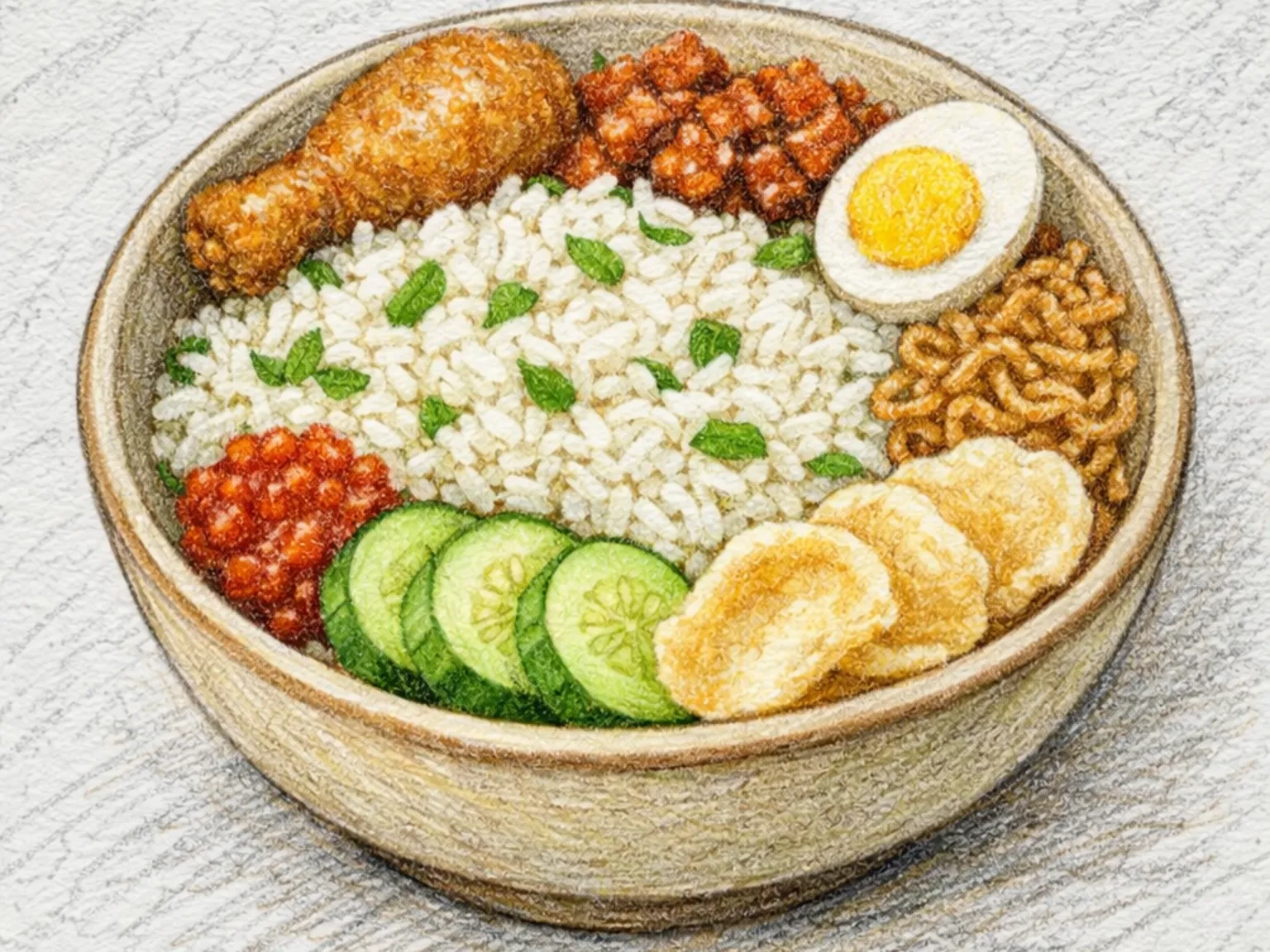
Nasi uduk is a steamed rice dish from Jakarta, Indonesia, cooked with coconut milk, lemongrass, and pandan leaves. The preparation begins by rinsing and soaking the rice to remove excess starch. It is then simmered in a mixture of coconut milk, water, and salt. Bruised lemongrass and knotted pandan leaves are added to the pot, infusing the rice grains with a gentle herbal aroma and a light coconut richness. Compared to Malaysian nasi lemak, this dish has a milder coconut profile. After cooking on low heat, the rice is left to steam with the heat off before the aromatics are removed. The dish is finished with a topping of crispy fried shallots, which add a nutty flavor and a crunchy texture. It is served alongside Indonesian sides such as fried tempeh, seasoned chicken, and omelette strips.

Prep 10min Cook 30min 4 servings
Recipes by ingredient → short grain rice

Instructions

Read the steps as a cooking flow: prep, heat, seasoning, doneness control, and finish.

6 steps
  1. 1
    Heat

    Rinse 2 cups of rice under running water 3 to 4 times, rubbing lightly until the water is mostly clear.

    Soak in cold water for 15 minutes, then drain well so excess water does not upset the cooking ratio.

  2. 2
    Step

    Bruise 1 lemongrass stalk with the back of a knife so it releases aroma, and tie 2 pandan leaves into loose knots.

    Keep the aromatics intact rather than shredded, so they can be removed cleanly after steaming.

  3. 3
    Season

    Put the drained rice, 300ml coconut milk, 250ml water, and 1 teaspoon salt in a pot.

    If the coconut milk is very thick, add a small splash of water, then stir to distribute salt and fat evenly.

  4. 4
    Control

    Add the lemongrass and pandan, then heat the pot over medium heat until the edges begin to bubble.

    Stir once, scraping the bottom gently because coconut milk can stick, then immediately reduce the heat to low.

  5. 5
    Control

    Cover and cook over low heat for about 15 minutes, letting the liquid absorb into the grains.

    Avoid opening the lid early; wait until the wet bubbling sound fades and the surface looks tender rather than soupy.

  6. 6
    Finish

    Turn off the heat and let the rice rest, covered, for 10 minutes, then remove the lemongrass and pandan leaves.

    Fluff with a cutting motion, serve in bowls, and finish with 2 tablespoons of fried shallots.

After the steps

Pick a recipe that fits this dish.

Continue with shared ingredients, meal pairings, or a similar method.

Recipes That Go Well With This

More Asian →

Based on shared ingredients and meal pairing

Korean Black Rice Coconut Smoothie
Shared ingredient: coconut milk Drinks

Korean Black Rice Coconut Smoothie

This smoothie is built on cooked black rice, blended with coconut milk, banana, and ice into a thick, grain-forward drink. The black rice is cooked and cooled before blending, which gives it a chewy, starchy quality that thickens the smoothie from within and contributes a toasty grain flavor that fruit-based smoothies do not have. Anthocyanin pigments in the black rice bran stain the drink a deep purple. Coconut milk brings its fat content to bear on the coarser grain particles, smoothing the texture into something creamy and uniform. Banana adds natural sweetness and a binding thickness that allows the smoothie to come together without added sugar from the start. Date syrup deepens the sweetness further, and blending with ice brings the drink to a cold temperature while loosening the consistency. Toasted coconut chips scattered over the finished smoothie provide a layer of crunch that contrasts with the thick, smooth body below and reinforces the coconut flavor throughout.

Gado-Gado Salad (Indonesian Peanut Sauce Veggie Plate)
Serve together Salads

Gado-Gado Salad (Indonesian Peanut Sauce Veggie Plate)

Gado-gado salad is an Indonesian composed dish that brings together blanched cabbage, bean sprouts, boiled potato wedges, pan-seared firm tofu, and halved soft-boiled eggs on a single plate, then finishes them with a thick, glossy peanut sauce. The sauce combines peanut butter, lime juice, and soy sauce into a base that layers nuttiness over a sharp, salty-sour foundation, lifting the mild flavors of every vegetable and the tofu in a single pour. Each vegetable is blanched separately and pulled from the water at a different moment: cabbage stays crisp, while bean sprouts are allowed to soften just slightly, so the finished plate holds distinct textures rather than a uniform mush. The tofu must be pressed or patted completely dry before it goes into the pan; residual moisture prevents proper browning and causes the cubes to crumble when tossed with the sauce. If the peanut sauce thickens as it sits, a tablespoon of warm water at a time is all it takes to bring it back to a pourable, coating consistency that drapes over the vegetables rather than clumping on top.

Gochujang Vongole Linguine
Serve together Noodles

Gochujang Vongole Linguine

Gochujang vongole linguine brings together the briny liquor of Manila clams and the fermented heat of Korean red chili paste in a single pan. White wine steams the clams open and releases their cooking juices, which form the base of the sauce; dissolving gochujang into that liquid adds a layer of thick, complex spice that standard vongole never carries. Stirring in a knob of butter just before the heat goes off gives the sauce a glossy finish and a smooth coating texture, while parsley and black pepper anchor the flavors at the end. The most important step in the process is slicing garlic as thin as possible and frying it slowly in olive oil until the raw sharpness converts entirely into a sweet, penetrating fragrance that defines the aromatic foundation of the sauce.

Nasi Goreng (Indonesian Sweet Soy Sauce Shrimp Fried Rice)
Similar recipe Asian

Nasi Goreng (Indonesian Sweet Soy Sauce Shrimp Fried Rice)

Nasi goreng is Indonesia's national dish and one of Southeast Asia's most recognized comfort foods. Day-old rice is tossed in a blazing-hot wok with kecap manis, a thick sweet soy sauce that gives each grain a dark, caramelized glaze. Shrimp paste adds a deep umami backbone, while sambal chili paste cuts through the sweetness with a sharp heat. A fried egg crowns each serving, its runny yolk acting as a rich, on-the-spot sauce when broken. Crispy prawn crackers on the side provide crunch against the soft rice. The dish appears at every hour of the day, from breakfast stalls to late-night street carts.

Serve with this

Korean Clam Pot Rice (Savory Clam Broth Cooked Rice Bowl)
Rice Medium

Korean Clam Pot Rice (Savory Clam Broth Cooked Rice Bowl)

Bajirak sotbap is a Korean pot rice where every grain is cooked in clam broth and topped with shucked clam meat just before serving. Purged clams are simmered with a piece of dried kelp until they open, then removed and shucked while the broth is strained through a fine sieve. The kelp contributes glutamic acid that reinforces the clam's natural umami, producing a cooking liquid with a depth that plain water cannot provide. This clam stock infuses every grain of rice as it cooks, embedding a marine character throughout. The rice, soaked for at least thirty minutes to ensure even absorption, goes into the pot with the measured clam broth and cooks over a sequence of high, medium, and low heat. Holding on low heat for an extra five minutes forms a thin nurungji - a lightly caramelized crust at the bottom - whose toasted aroma rises through the lid. During the resting phase, the shucked clam meat is placed on top of the rice so residual heat warms it through without further cooking; since the clams were already cooked once, additional heat would toughen them. A soy sauce and sesame oil dipping sauce is mixed into the rice at the table. The most memorable moment of the dish is lifting the lid, when the concentrated clam fragrance escapes in a sudden rush. After the rice is eaten, adding hot water to the pot dissolves the nurungji layer into a light, smoky scorched-rice tea that serves as a natural closer to the meal.

🎉 Special Occasion 🏠 Everyday
Prep 20min Cook 25min 2 servings
Korean Butter-Grilled Scallops
Drinks Medium

Korean Butter-Grilled Scallops

Garibi butter-gui sears fresh scallops in garlic butter until each side develops a deep golden-brown crust, then finishes with lemon juice and parsley to balance the richness. Removing every trace of surface moisture with paper towels before seasoning is the single most important step -- water on the surface of the scallop causes it to steam rather than sear, and no caramelized crust will form until that moisture has evaporated. Each side cooks for only one to two minutes at the highest heat the pan can sustain, leaving the center just barely opaque and the texture tender rather than rubbery. After flipping, butter and minced garlic are added directly to the hot pan and spooned continuously over the scallops so the aroma infuses the surface. A squeeze of lemon and a scatter of chopped parsley added just before removing from heat layers acidity and freshness over the butter richness. Simple to prepare and fast to cook, this dish appears regularly at home gatherings in Korea as a crowd-pleasing appetizer.

🍺 Bar Snacks 🎉 Special Occasion
Prep 12min Cook 8min 2 servings

Similar recipes

Gado-Gado (Indonesian Peanut Salad)
Asian Easy

Gado-Gado (Indonesian Peanut Salad)

Gado-gado means mix-mix in Javanese, and the name describes exactly how the dish is assembled and eaten. Blanched spinach, bean sprouts, cabbage, and boiled potato are arranged on a plate alongside hard-boiled egg, fried tofu, and fried tempeh, then drenched generously with a thick peanut sauce before being mixed together at the table. The sauce is made by pounding freshly roasted peanuts in a mortar and mixing them with chili, garlic, tamarind, palm sugar, and kecap manis. The result is a complete flavor system in a single condiment -- nutty, spicy, sour, and sweet all at once -- so no additional seasoning is required. Street vendors pound the peanuts to order for each customer, and the smell of toasting nuts fills the air around their carts. Crushed kerupuk, the shrimp cracker common across Indonesian cooking, is scattered on top to add a shattering crunch that contrasts with the soft vegetables and protein. As the crackers absorb the sauce over the course of the meal they soften and swell, and that textural transition is considered part of the eating experience rather than a flaw. The dish adapts easily: built from vegetables alone it becomes a complete vegan meal, and loaded generously with egg and tofu it provides substantial protein. In Indonesia, gado-gado is eaten at any hour of the day with no particular seasonal or mealtime association, appearing at roadside carts and home tables with equal frequency.

🥗 Light & Healthy 🎉 Special Occasion
Prep 20min Cook 10min 2 servings
Ayam Bakar (Indonesian Grilled Chicken in Sweet Soy Marinade)
Asian Medium

Ayam Bakar (Indonesian Grilled Chicken in Sweet Soy Marinade)

Ayam bakar means 'roasted chicken' in Malay-Indonesian and is a staple street food across Java, Sumatra, and Bali, where roadside warungs grill it over coconut-shell charcoal. The preparation follows a two-stage method: the chicken first simmers in a marinade of kecap manis (sweet soy sauce), garlic, ground coriander, turmeric, and lime juice until partially cooked and deeply colored throughout. The pre-cooked pieces then move to a very hot grill where the sugar-heavy glaze caramelizes rapidly, forming dark, lacquered patches with a faint char at the edges. This two-step approach ensures the meat stays moist under the intense grill heat while the exterior achieves maximum caramelization. The surface is sticky-sweet, with turmeric's earthiness and coriander's citrusy warmth detectable beneath. Served alongside steamed white rice, raw cucumber slices, and sambal, the dish relies on the sharp chili heat of the sauce and the cool cucumber to balance the sweetness of the glaze. The smoke from coconut-shell charcoal is considered part of the flavor, though a gas or charcoal grill at home produces an acceptable result.

🎉 Special Occasion 🍺 Bar Snacks
Prep 25min Cook 30min 4 servings
Soto Betawi (Jakarta Creamy Coconut Milk Beef Soup)
Asian Hard

Soto Betawi (Jakarta Creamy Coconut Milk Beef Soup)

Soto Betawi is a Jakarta-born beef soup distinguished by its creamy, coconut-enriched broth and a layered spice profile. The aromatics begin with a paste of onion, garlic, and ginger, bloomed in oil alongside ground coriander and a cinnamon stick to build a warm, complex base. Beef brisket simmers in this fragrant liquid for forty minutes or more until it yields to the touch, its collagen enriching the stock. Coconut milk and fish sauce are stirred in toward the end, transforming the broth into something rich and velvety while rounding off the sharper spice edges. The finished soup is neither thin nor heavy-it sits in a satisfying middle ground, substantial enough to serve as a main course with steamed rice or crusty bread on the side. Soto Betawi is a point of pride for Jakarta's Betawi community and a fixture of the city's street-food landscape.

🎉 Special Occasion
Prep 20min Cook 55min 4 servings

Tips

Increase water slightly if coconut milk is very thick.
If pandan is unavailable, a little bay leaf can add aroma.

Nutrition (per serving)

Calories
420
kcal
Protein
6
g
Carbs
60
g
Fat
17
g