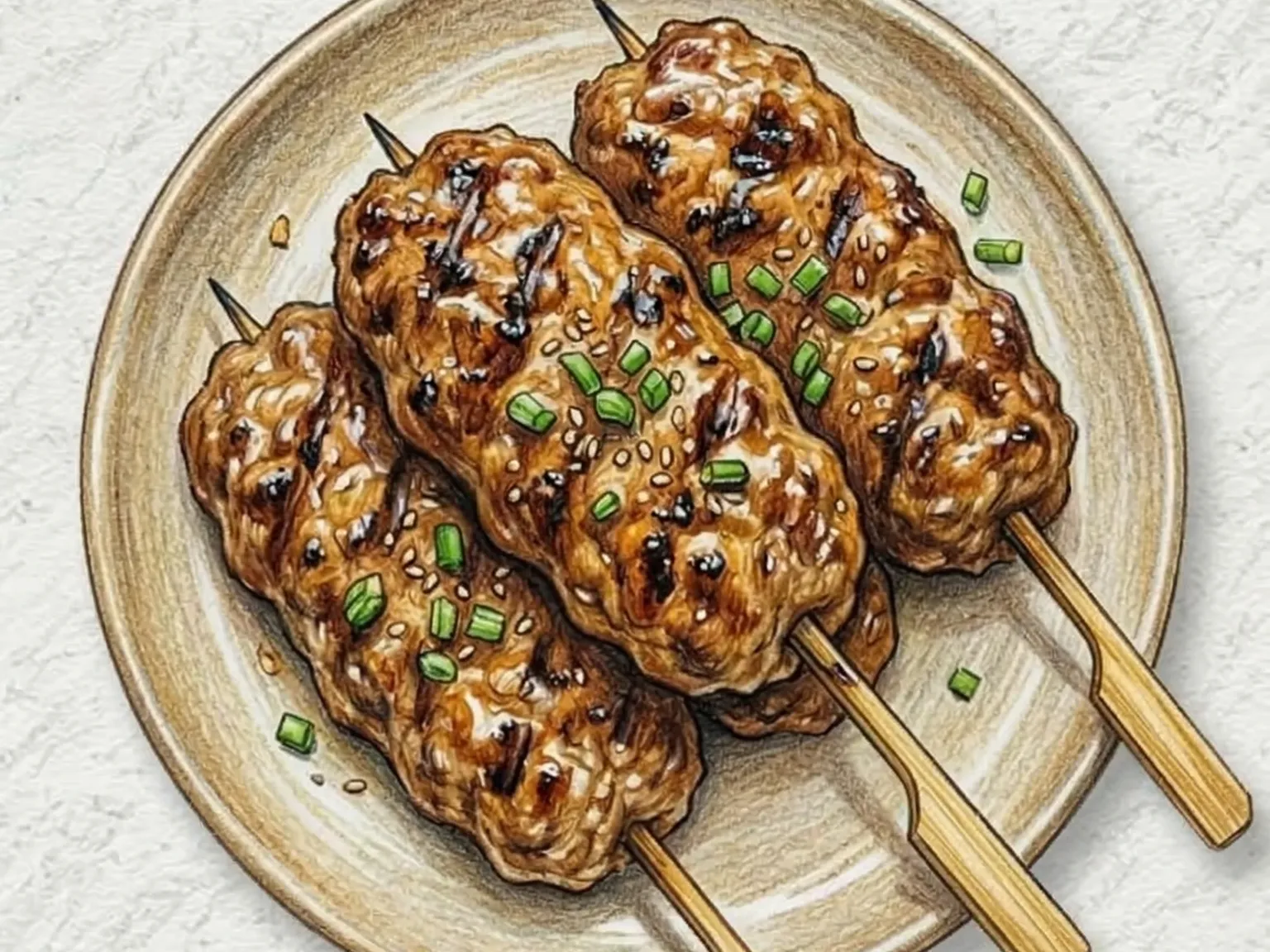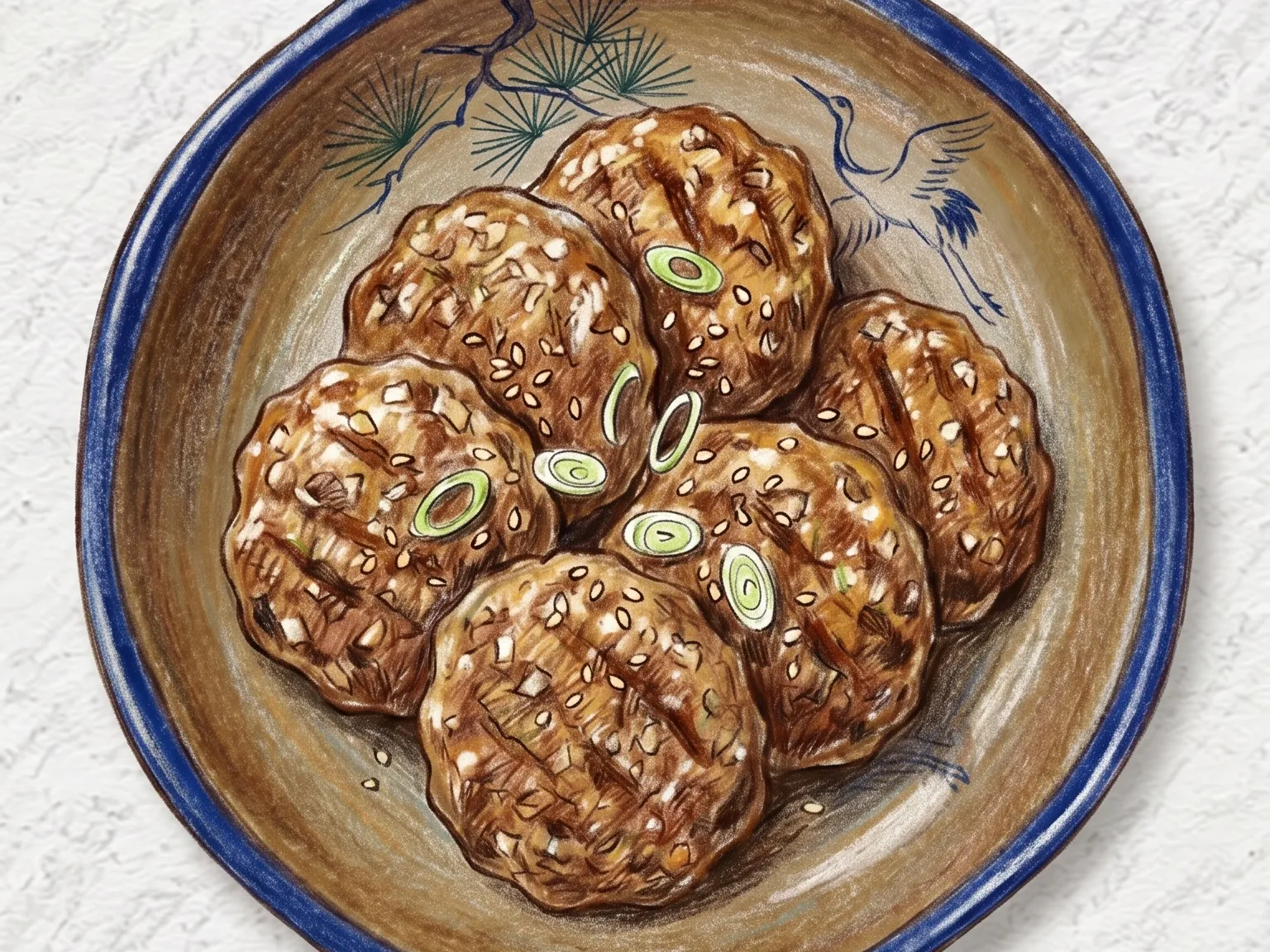
Korean Grilled Neobiani Beef Patties
Grilled Medium

Korean Grilled Neobiani Beef Patties

Quick answer

Neobiani-gui is a Korean royal-court grilled beef patty made by kneading finely minced beef with minced onion, green onion, soy sauce, sugar, garlic, sesame oil, and blac...

What makes this special

  • Neobiani beef patties use finely minced beef and mild seasoning to honor their royal court roots.
  • Royal court origin calls for restrained seasoning, letting beef flavor come forward
  • 15-minute cold rest binds the protein so the patty holds its shape while grilling
Total time
40 min
Level
Medium
Servings
4 servings
Ingredients
8
Calories
410 kcal
Protein
29 g

Key ingredients

ground beefoniongreen onionsoy saucesugar

Core cooking flow

  1. 1 Finely mince 80 g onion and 30 g green onion.
  2. 2 Add 3 tablespoons soy sauce, 1 tablespoon sugar, 1 tablespoon minced garlic...
  3. 3 Divide the mixture into 8 portions and shape each one into a flat oval patty.

Neobiani-gui is a Korean royal-court grilled beef patty made by kneading finely minced beef with minced onion, green onion, soy sauce, sugar, garlic, sesame oil, and black pepper, then shaping the mixture into thin oval patties and pan-frying until caramelized. The dish traces its origins to the royal court cuisine of the Joseon dynasty, where the seasoning was kept deliberately restrained to let the beef's natural flavor take center stage. Squeezing excess moisture from the minced onion before mixing strengthens the patty's structure, and the onion's natural sugars caramelize during cooking, adding a gentle, almost floral sweetness to the crust. Resting the shaped patties in the refrigerator for fifteen minutes firms the protein bonds so the patties hold their shape in the pan. Cooking over medium-low heat is essential: the surface develops a glossy, lacquered sear while the interior cooks through evenly, and excessive heat risks charring the outside before the center is done. The finished patties carry a thin, aromatic glaze from the soy sauce and sesame oil, making them a refined centerpiece on the Korean table.

Prep 25min Cook 15min 4 servings

Instructions

Read the steps as a cooking flow: prep, heat, seasoning, doneness control, and finish.

6 steps
  1. 1
    Step

    Finely mince 80 g onion and 30 g green onion.

    Gently squeeze excess moisture from the onion, then add both aromatics to 500 g ground beef so the patties bind better instead of turning loose.

  2. 2
    Season

    Add 3 tablespoons soy sauce, 1 tablespoon sugar, 1 tablespoon minced garlic, 1 tablespoon sesame oil, and 1/2 teaspoon black pepper. Knead by hand for 2 to 3 minutes until the mixture feels sticky and cohesive.

  3. 3
    Heat

    Divide the mixture into 8 portions and shape each one into a flat oval patty.

    Press them to about 1 cm thick, because a thick center cooks slowly and can stay underdone while the surface browns.

  4. 4
    Finish

    Place the shaped patties on a plate and refrigerate for about 15 minutes.

    When the surface feels cold and firmer, the protein structure holds better and the patties are less likely to break in the pan.

  5. 5
    Control

    Heat a pan over medium-low heat and coat it with a very thin layer of oil.

    Add the patties with space between them and cook the first side for 3 to 4 minutes, until glossy brown.

  6. 6
    Step

    Turn the patties over and keep the heat at medium-low for another 3 to 4 minutes.

    Remove them when they feel springy when pressed and the juices look clear, then rest for 2 minutes before serving.

After the steps

Pick a recipe that fits this dish.

Continue with shared ingredients, meal pairings, or a similar method.

Recipes That Go Well With This

More Grilled →

Based on shared ingredients and meal pairing

Korean Seafood Hot Pot Soup
Serve together Soups

Korean Seafood Hot Pot Soup

Haemul-tang is a Korean seafood hot pot that throws together crab, shrimp, clams, and squid in a fiery, brick-red broth. The liquid starts with gochugaru and plenty of garlic, building a spicy base that the seafood then amplifies with its own briny juices. Radish chunks soften as the pot bubbles, thickening the broth slightly and adding a cool sweetness behind the heat. Green onions and cheongyang peppers go in toward the end for a sharp, vegetal bite. The magic of haemul-tang lies in the convergence of flavors: crab shells release a sweet, crustacean stock; clams open to spill their liquor; shrimp and squid contribute distinct textures from snappy to chewy. The pot is brought to the table still at a rolling boil, and diners pick through the shells and tentacles while the broth continues to concentrate.

Korean Grilled Eel Rice Bowl
Serve together Rice

Korean Grilled Eel Rice Bowl

Jangeeo deopbap is a bowl of grilled freshwater eel over steamed rice, where the key technique is building up a thick, lacquered glaze through multiple applications of a sweet-salty sauce reduced from soy sauce, mirin, sugar, and ginger juice. The eel starts skin-side down on the grill over medium heat for around five minutes to crisp the skin, then is flipped and basted repeatedly with the sauce as it finishes cooking. A single coat of sauce produces a pale, thin color, so at least two applications and ideally three or more are needed to build the characteristic glossy surface. With each additional coat, the sugars in the sauce react with heat through both Maillard browning and caramelization, layering flavor with every pass. Because freshwater eel is naturally fatty, fat drips during grilling can cause flare-ups, so heat control is important throughout the process. Sansho pepper dusted on at the end cuts through the eel's inherent richness with a sharp, numbing fragrance that balances the sweet glaze and keeps the dish from feeling heavy.

Korean Stir-fried Balloon Flower Root
Serve together Side dishes

Korean Stir-fried Balloon Flower Root

Doraji -- balloon flower root -- has been cultivated in Korea for centuries, valued in cooking and herbal medicine alike. The raw root carries a pronounced bitterness from saponins, so it must be shredded into thin strips, rubbed vigorously with salt, left for ten minutes, then rinsed twice in cold water. The salt scrub draws out the saponins while preserving the root's firm, snappy bite. A base of green onion goes into the pan first to build a fragrant oil, then the prepared doraji stir-fries for two minutes before gochujang, soy sauce, and oligosaccharide syrup go in for another three minutes. The heat is raised at the end to drive off moisture, so the sauce tightens and clings to each strip rather than pooling in the pan. The result is a glossy, sweet-spicy banchan with a distinctly chewy pull.

Korean Grilled Soy-Marinated Blue Crab
Similar recipe Grilled

Korean Grilled Soy-Marinated Blue Crab

Ganjang-gejang-gui is a Korean grilled blue crab dish where the crab is halved, marinated in soy sauce with garlic, ginger juice, and sesame oil, then cooked on a grill or in an oven until the shell chars and the meat absorbs the salty-sweet seasoning. The key flavor element is the crab's hepatopancreas inside the top shell, which solidifies under heat into a thick, intensely savory paste that acts as a built-in sauce when eaten with the leg and body meat. The sugars in the soy marinade caramelize over high heat, forming a glossy glaze across the shell surface, and a final brush of sesame oil before serving adds a toasted nuttiness over the briny crab flavor. Marinating time matters considerably: a minimum of thirty minutes allows the soy to penetrate the surface, but refrigerating the crab for one to two hours gives the seasoning time to reach the interior flesh, producing noticeably deeper flavor. Placing the grilled crab over a bowl of rice and mixing the shell's concentrated juices and tomalley into the grains makes a complete meal without any additional side dishes.

Similar recipes

Korean Marinated Beef Short Rib Grill
Grilled Medium

Korean Marinated Beef Short Rib Grill

Beef ribs or bulgogi-cut slices are marinated for at least an hour in a sauce of soy sauce, Korean pear juice, sugar, minced garlic, sesame oil, and black pepper. The pear's natural enzymes break down connective tissue while the soy-sugar combination penetrates deep into the meat. On a high-heat grill, the sugars in the marinade caramelize rapidly, forming a glossy, dark-brown glaze with visible char marks. Thin-cut pieces cook through in under four minutes total, and the interplay of charcoal smoke with the sweet-salty marinade defines the signature taste of Korean yangnyeom-gui.

🍺 Bar Snacks 🎉 Special Occasion
Prep 60min Cook 15min 2 servings
Korean Grilled Corn with Soy Butter
Grilled Easy

Korean Grilled Corn with Soy Butter

Corn-gui is Korean grilled corn on the cob brushed with a glaze of soy sauce, melted butter, sugar, and minced garlic, then turned slowly over medium heat until the kernels develop a caramelized, salty-sweet crust. The corn is pre-cooked by boiling or microwaving before grilling, so time on the grill is dedicated entirely to building flavor through caramelization and char. Grilling over too-high heat burns the sugar before the corn colors evenly, so patience and repeated thin coats of glaze at every turn are essential. The result layers the corn natural starch sweetness with the richness of butter and the deep savoriness of fermented soy sauce, all in one bite.

🍺 Bar Snacks ⚡ Quick
Prep 5min Cook 20min 2 servings
Korean Grilled Beef Intestine
Grilled Hard

Korean Grilled Beef Intestine

Gopchang-gui is Korean grilled beef small intestine, prized for its crackling exterior and springy interior that develop simultaneously on a high-heat pan. The preparation begins by kneading the raw intestine with coarse salt and flour to scrub away impurities and draw out off-flavors, then par-boiling for five minutes to strip away residual organ smell before any seasoning is applied. Once patted dry and seasoned with minced garlic, salt, pepper, and sesame oil, the intestine hits a very hot pan where its internal fat renders out rapidly. As the fat releases, it essentially fries the outer surface from the inside, producing a deeply golden crust while the inner walls stay bouncy and chewy. Blotting the accumulated rendered fat from the pan at intervals with paper towels prevents the gopchang from stewing in grease and keeps the crust sharply crisp rather than slick. Served immediately off the heat with a heap of fresh garlic chives alongside, the pungent, vegetal bite of the chives cuts cleanly through the richness of the intestine and refreshes the palate for the next piece.

🍺 Bar Snacks 🎉 Special Occasion
Prep 30min Cook 20min 2 servings
Korean Soy-braised Beef (Tender Shredded Brisket in Soy Glaze)
Side dishes Medium

Korean Soy-braised Beef (Tender Shredded Brisket in Soy Glaze)

Jangjorim is the soy-braised beef that lives semi-permanently in Korean refrigerators - a make-ahead banchan with a shelf life of roughly two weeks. Beef eye round (hongdukkasal) is the traditional cut because its uniform grain and low fat content allow clean shredding along the fibers, producing the signature stringy texture. The process is unhurried: thirty minutes of soaking to draw out blood, forty minutes of simmering with whole garlic and peppercorns, then shredding and returning to the pot with soy sauce and sugar for another twenty minutes. Hard-boiled eggs and shishito peppers added in the final stage absorb the dark soy broth - the eggs turn mahogany and the peppers contribute a gentle heat to the sauce. Swapping in quail eggs makes each piece lunchbox-sized. Flavor deepens noticeably after a day of refrigeration as the seasoning penetrates fully.

🏠 Everyday 🍱 Lunchbox
Prep 15min Cook 60min 4 servings
Korean Bulgogi Sandwich (Soy-Marinated Beef Toast with Mayo Lettuce)
Street food Easy

Korean Bulgogi Sandwich (Soy-Marinated Beef Toast with Mayo Lettuce)

The preparation of a bulgogi sandwich begins with beef marinated in a mixture of soy sauce, sugar, minced garlic, and sesame oil before meeting a scorching pan. A surface heated to its limit is essential because only extreme heat can evaporate moisture instantly, allowing the sugars in the marinade to caramelize into a savory-sweet exterior. If the temperature is insufficient, the meat stews in its own liquid rather than searing. A generous layer of mayonnaise on the toasted bread acts as a structural barrier, preventing the beef juices from making the sandwich soggy while softening the intensity of the seasoning. Fresh, crisp lettuce provides a textural contrast to the warm meat. Folding ssamjang into the mayonnaise introduces fermented and spicy elements that emphasize the Korean origin of the dish. A slice of cheese adds a smooth layer between the bread and the beef, and increasing the vegetable portion creates a lighter meal. With the meat prepped ahead of time, the entire assembly takes under ten minutes, offering a practical solution for a busy morning or a simple lunch.

🧒 Kid-Friendly 🍱 Lunchbox
Prep 15min Cook 10min 1 servings

Tips

Resting the mixture in the fridge for 15 minutes helps patties hold shape.
Avoid high heat to prevent burning the outside before the inside stays juicy.

Nutrition (per serving)

Calories
410
kcal
Protein
29
g
Carbs
8
g
Fat
28
g