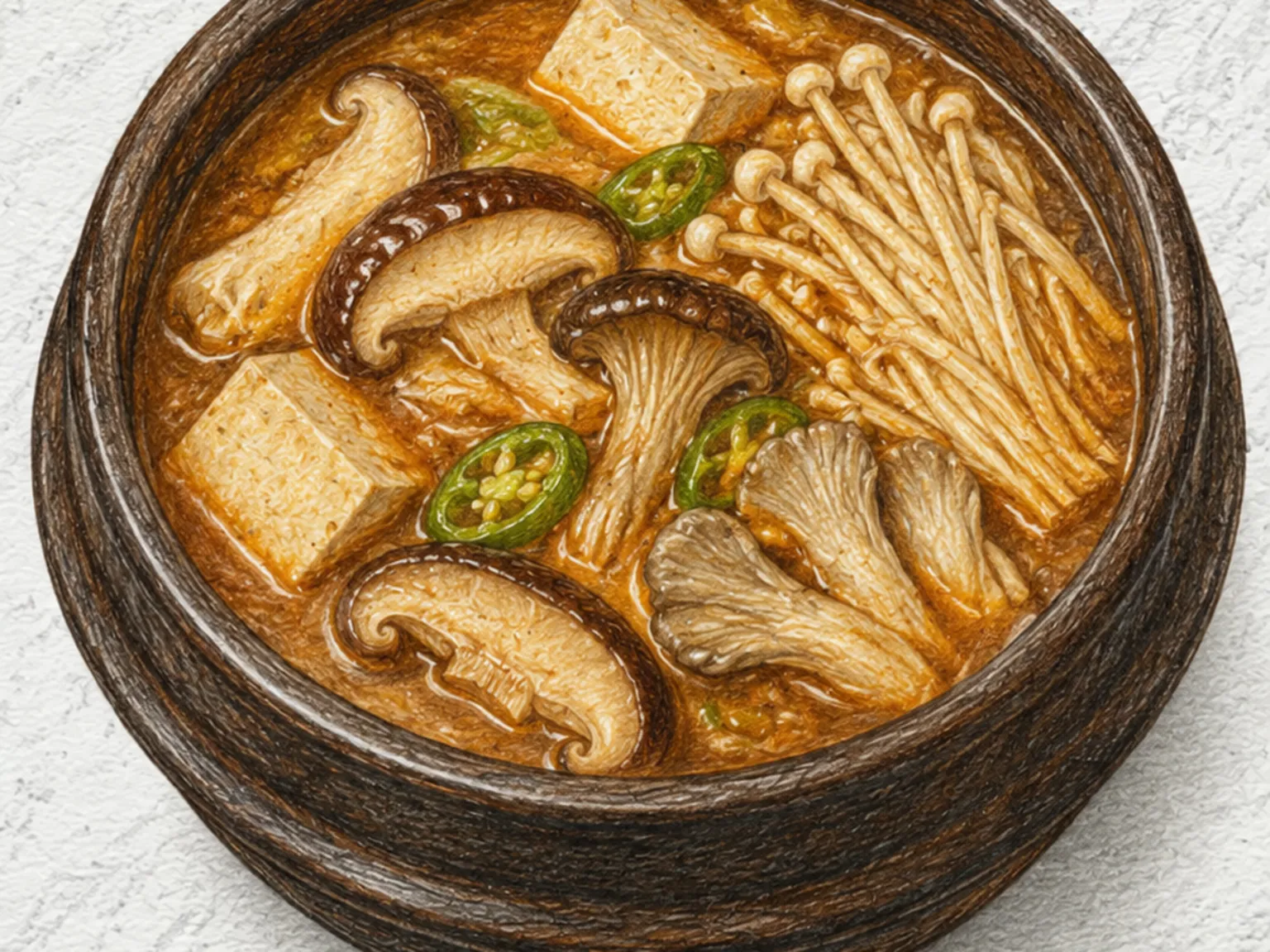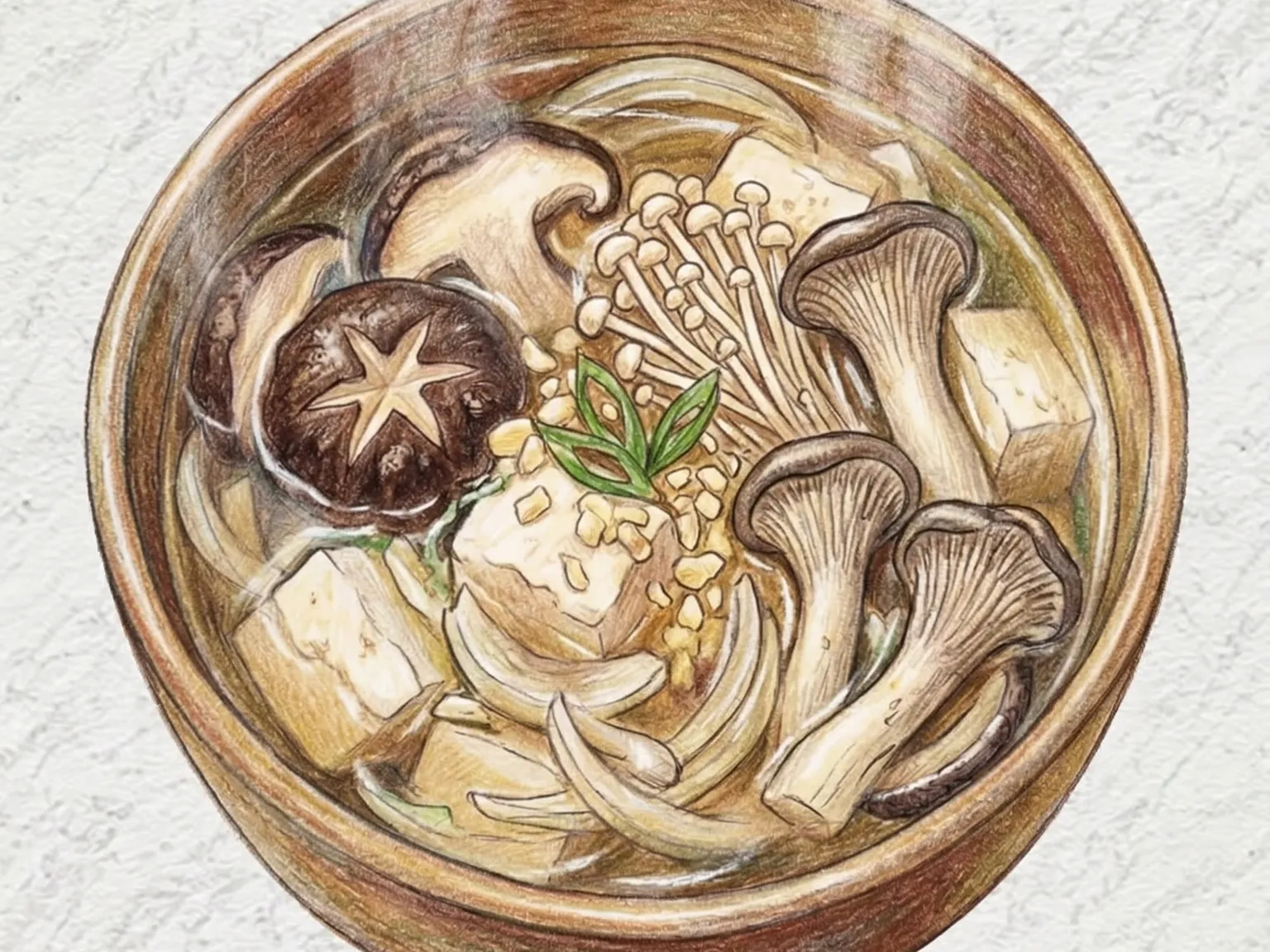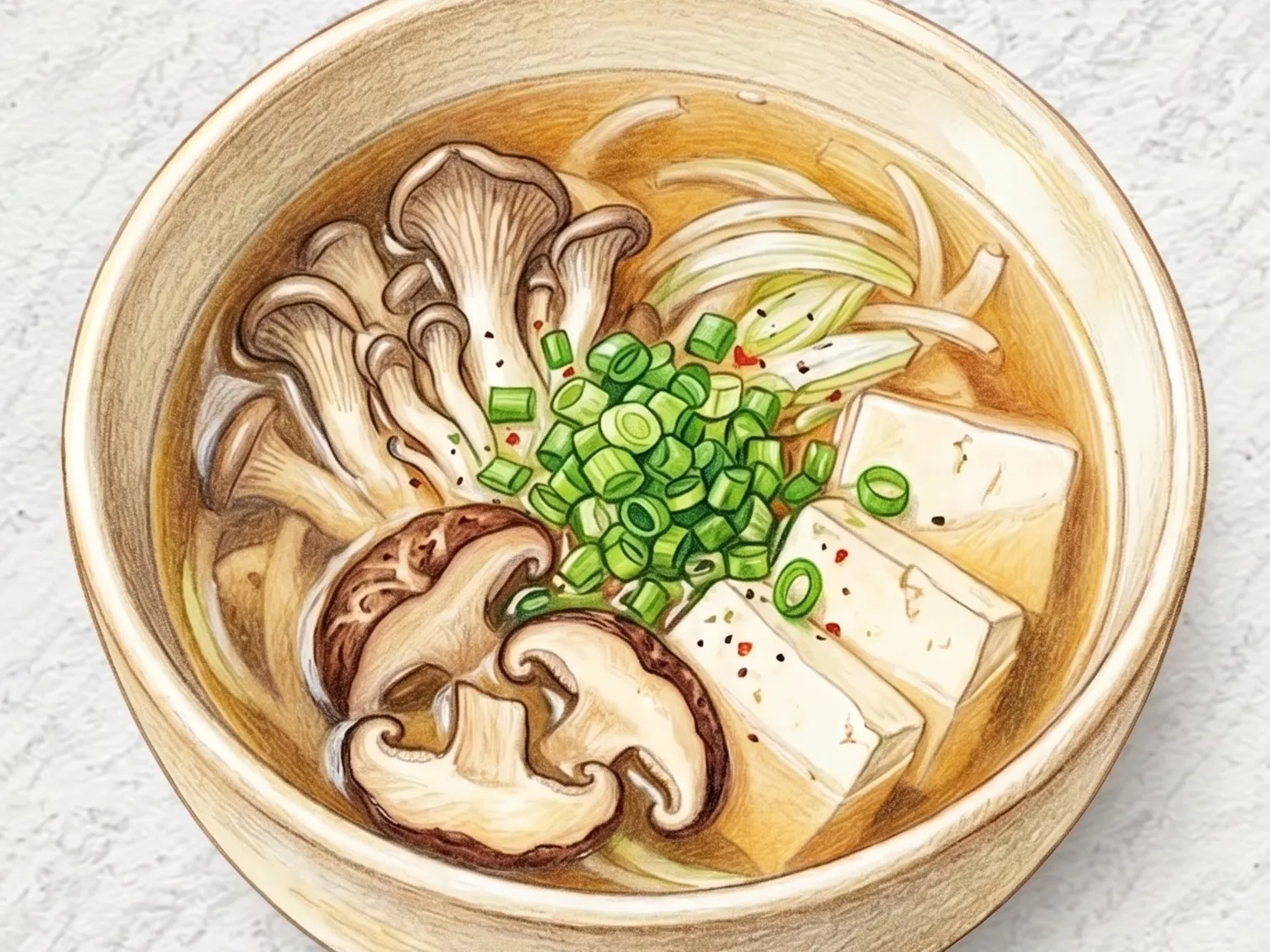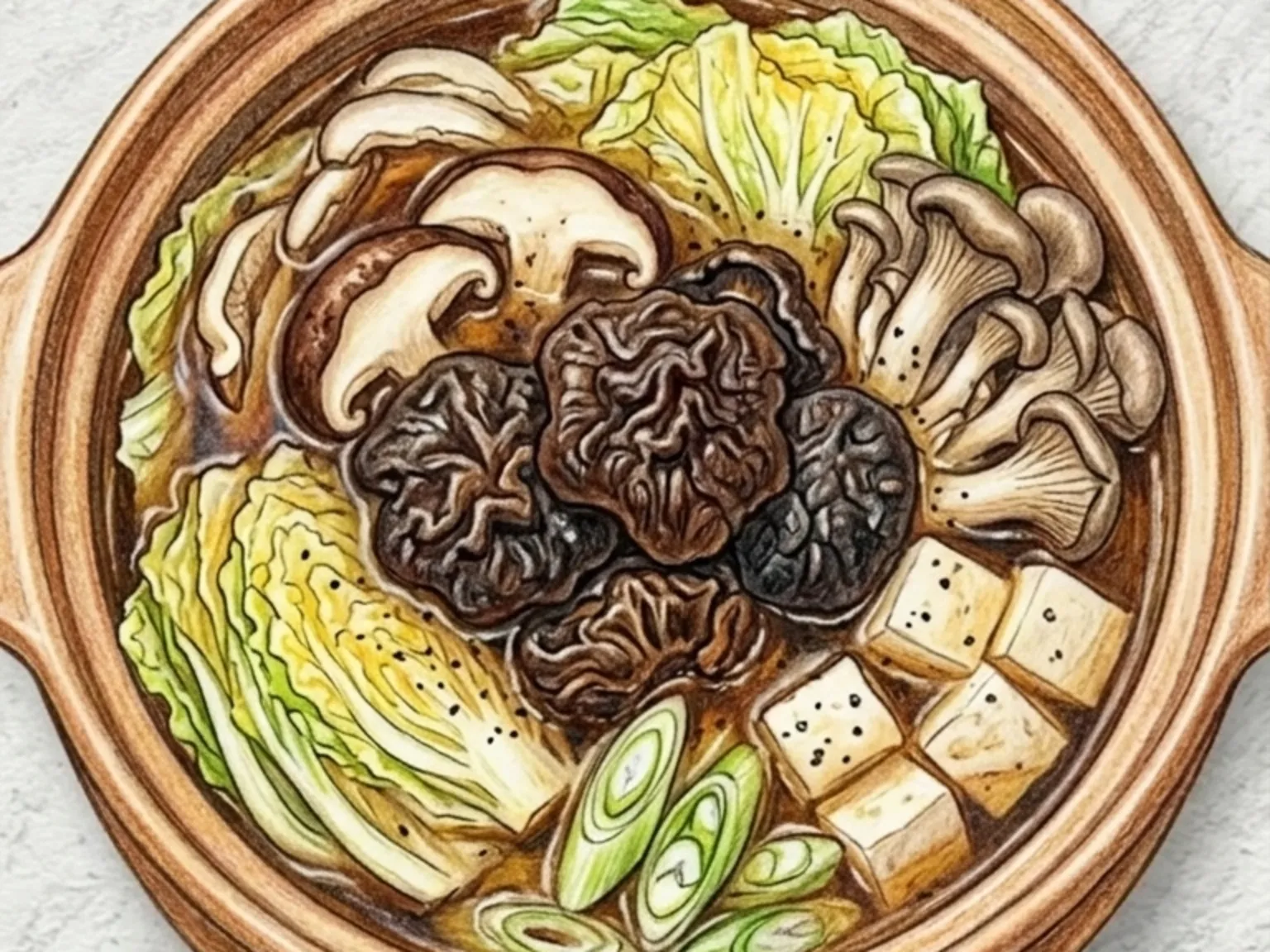
Korean Wild Mushroom Hot Pot
Quick answer
This Korean hot pot features earthy neungi mushrooms simmered with shiitake and oyster mushrooms, napa cabbage, and tofu.
What makes this special
- Earthy neungi mushrooms define this wild mushroom hot pot simmered with napa cabbage.
- Soaking liquid from dried neungi mushrooms reused as broth base
- Three mushroom varieties layered for distinct aroma and texture
Key ingredients
Core cooking flow
- 1 Soak 80g neungi mushrooms in lukewarm water for 10 minutes, then reserve the soaking liquid.
- 2 Remove the stems from 120g shiitake mushrooms and tear the caps by hand.
- 3 Cut 200g napa cabbage into 5cm pieces and slice 200g tofu into 1.5cm thick slabs.
This Korean hot pot features earthy neungi mushrooms simmered with shiitake and oyster mushrooms, napa cabbage, and tofu. Neungi mushrooms contribute an intense, woody aroma that builds a deep broth without any meat. The soaking liquid from the neungi mushrooms is reused as the broth base to concentrate the fragrance. Napa cabbage and tofu slices are arranged at the bottom of the pot to support the hand-torn mushrooms. The stew is seasoned with soup soy sauce, minced garlic, and black pepper, then simmered for twelve to fifteen minutes over medium heat. This cooking time allows the earthy flavors to meld while keeping the mushrooms tender. Serving the hot pot immediately after the broth darkens prevents the ingredients from becoming chewy. The layered textures of three distinct mushroom varieties form the core flavor experience.
Instructions
Read the steps as a cooking flow: prep, heat, seasoning, doneness control, and finish.
- 1Finish
Soak 80g neungi mushrooms in lukewarm water for 10 minutes, then reserve the soaking liquid.
Do not discard it, because it will be used as part of the broth and gives the hot pot a stronger mushroom aroma.
- 2Heat
Remove the stems from 120g shiitake mushrooms and tear the caps by hand.
Trim the firm base from 120g oyster mushrooms, then separate them along their natural grain so they cook evenly without becoming too tough.
- 3Prep
Cut 200g napa cabbage into 5cm pieces and slice 200g tofu into 1.5cm thick slabs.
Arrange them side by side in the hot pot so the tofu stays intact and the cabbage forms a base.
- 4Finish
Spread the torn mushrooms evenly over the cabbage and tofu.
Pour in 1200ml water, including the reserved neungi soaking liquid, then heat over high heat until the broth begins to bubble around the edges.
- 5Control
When the pot reaches a steady boil, add 2 tablespoons soup soy sauce, 1 tablespoon minced garlic, and 0.5 teaspoon black pepper.
Lower to medium heat and simmer for 12 to 15 minutes, keeping the boil gentle.
- 6Finish
Taste when the broth darkens and the mushroom aroma rises clearly.
Add only a few drops of soup soy sauce if it needs more salt, then serve the hot pot at once before the mushrooms turn chewy.
After the steps
Pick a recipe that fits this dish.
Continue with shared ingredients, meal pairings, or a similar method.
Recipes That Go Well With This
More Stews →Based on shared ingredients and meal pairing
Korean Perilla Mushroom Hot Pot
Korean perilla mushroom hot pot is a hearty vegetarian dish made with shiitake, oyster, and enoki mushrooms, tofu, and bok choy simmered in a light vegetable stock. The cooking process starts by boiling the vegetable stock seasoned with soup soy sauce and minced garlic. Shiitake and oyster mushrooms are added first to build a deep umami base. Tofu, enoki mushrooms, and bok choy are then arranged on top and simmered until the vegetables are tender. To finish, ground perilla seed powder is gently stirred into the broth at the very end, which prevents the soup from becoming gritty while releasing a rich, nutty aroma and creating a naturally thick texture. This hot pot delivers a satisfying combination of earthy mushrooms, soft tofu, and crisp bok choy, offering a comforting meatless meal.
Korean Kimchi Beef Dumpling Hot Pot
Kimchi-beef mandu jeongol is a generous Korean hot pot that combines frozen dumplings, thinly sliced beef, and aged kimchi in anchovy stock seasoned with gochujang and soup soy sauce. As the pot bubbles, the meat filling inside each dumpling leaches its savory fat into the broth while the kimchi's fermented sourness and heat layer in on top, building a soup that grows more complex the longer it simmers. Napa cabbage leaves, enoki mushrooms, and firm tofu add contrasting textures to each spoonful. Blanching the beef briefly before adding it to the pot prevents the broth from clouding, and the tofu goes in last to keep it intact. The older and more pungent the kimchi, the deeper and more rounded the soup becomes, which is why well-fermented kimchi is worth seeking out for this dish specifically. A drop of perilla oil stirred in just before serving adds a nutty finish that ties the layers together. Eaten communally from the stove, with rice stirred in at the end to absorb the remaining broth, this pot feeds a table with minimal effort.
Korean Bitter Herb Kimchi
Sseumbagwi kimchi is a traditional spring fermented side dish made from sseumbagwi, a wild bitter herb that grows in Korea during early spring. The herb is soaked in cold water for at least twenty minutes to pull back its pronounced bitterness before being salted to soften the stalks. It is then dressed in a seasoning paste built from gochugaru, sand lance fish sauce, minced garlic, ginger, sweet rice paste, and plum syrup, mixed together with cut scallions. The rice paste adds body to the seasoning so it clings to the herb's thin stems and narrow leaves rather than sliding off. Plum syrup works on both the bitterness and the salt's edge at once, smoothing the overall profile without masking the herb's character. Sand lance fish sauce is preferred over anchovy sauce here because its gentler aroma does not compete with the plant's natural flavor. Five hours of room-temperature fermentation followed by refrigeration sets off lactic acid development, layering tangy depth over the bitter-green base. The flavor peaks around day three when bitterness, acidity, and umami reach the best balance. If the raw herb tastes too sharp, one additional soak in fresh cold water brings it within range before seasoning.
Korean Mushroom Bulgogi Jeongol
Soy sauce-marinated beef and a mix of shiitake and enoki mushrooms simmer together in a generous broth, with the beef's umami and the shiitake's deep, earthy scent building into the stock as the jeongol cooks. Sweet potato noodles absorb that concentrated broth, picking up its full flavor in every chewy strand. Onion's natural sweetness moderates the saltiness of the soy-based stock, and the garlic-infused liquid makes the dish work equally well as a rice accompaniment or a drinking table side. The jeongol is typically left on a portable burner at the table and eaten continuously as it cooks.
Serve with this
Korean Abalone Pot Rice (Ocean-Scented Sesame Base Grain Pot)
Jeonbok sotbap is an abalone and rice dish cooked in a heavy-bottomed pot, where the process of building flavor begins before the rice itself goes in. Abalone innards are sauteed directly in the cooking vessel with sesame oil, and their distinctive green pigment dissolves into the fat and spreads a deep, marine-tinged aroma throughout the pot. Soaked rice and water are added to this scented base and the rice is cooked in the usual way, absorbing the briny fragrance into each grain. Sliced abalone meat is placed on top of the rice only when it is nearly done, then the lid is replaced for a five-minute steam that gently cooks the abalone without toughening it. Extending this resting time by two or three minutes generates a layer of nurungji, scorched rice at the bottom of the pot, that adds a crisp textural counterpoint. A sauce of soy sauce, sliced chives, minced garlic, and sesame seeds is mixed into each bowl at the table, bringing a savory, nutty accent that complements the abalone's subtle flavor.
Korean Crumbled Tofu Stir-fry
Dubu seoboro - crumbled tofu stir-fry - is a Korean banchan that transforms a block of tofu into something resembling a dry, granular scramble. The tofu is crumbled by hand into rough, irregular pieces rather than diced, creating a range of textures from large curds to fine crumbs that hold seasoning differently. Squeezed thoroughly in a cloth to remove as much moisture as possible, it then goes into a hot pan with diced carrot, onion, and zucchini. The key technique is cooking on high heat without stirring too often, allowing the tofu crumbles to develop lightly golden edges before soy sauce and sesame oil go in at the end. The result is a fluffy, granulated side dish that soaks into rice like a savory topping - satisfying without being rich. Popular in Korean daycare and school lunches because it delivers plant protein in a form that children eat willingly, and it travels cleanly in lunchboxes without leaking. The ingredient cost is low and the cooking time short, which makes it one of the first recipes to reach for when the refrigerator is running low on banchan.
Korean Stuffed Perilla Leaf Pancakes
Kkae-ip-jeon are pan-fried perilla leaf parcels stuffed with a filling of ground pork and firm tofu, coated in flour and egg. The tofu must be squeezed dry in a cloth before mixing; excess moisture causes the filling to spread and stick to the pan. Garlic chives and onion add crunch and fragrance to the mix, and the filling seasoned with soy sauce and black pepper pairs cleanly with the perilla's strong herbal character. Dusting with flour first, then dipping in egg, produces an even coating, and frying covered over medium-low heat for two minutes per side ensures the filling is cooked through to the center. The bite-sized pieces work well as a packed lunch side or as bar food.
Similar recipes
Korean Octopus Hot Pot (Spicy Gochujang Broth with Herbs)
Nakji jeongol is a spicy Korean hot pot built around small octopus simmered in anchovy stock seasoned with gochujang and gochugaru, together with napa cabbage, water parsley, onion, and tofu. Anchovy stock works particularly well here because it has a clean, salty depth that amplifies rather than competes with the oceanic flavor of the octopus. The gochujang contributes a fermented sweetness to the broth while the gochugaru layer on top provides the sharp, direct heat, producing a multi-dimensional spicy broth that is more complex than either ingredient alone. Octopus is highly sensitive to overcooking. Cooked within two minutes, it stays springy and pleasantly chewy. Beyond that, the protein fibers contract and the texture becomes tough and rubbery. Water parsley loses its fresh herbal fragrance quickly under heat, so it is best added about one minute before serving to keep that clean, slightly grassy brightness intact. Cooking the hot pot at the table allows diners to add octopus in small batches at their own pace, which is the most reliable way to keep every piece at the ideal doneness.
Korean Herb Mushroom Pot Rice
Chamnamul beoseot sotbap is a Korean pot rice cooked with fragrant chamnamul herbs, oyster mushrooms, and shiitake mushrooms in kelp stock. The chamnamul infuses the rice with a fresh, slightly herbaceous scent, while the two types of mushroom contribute contrasting textures and layers of umami. Oyster mushrooms are soft and springy, while shiitake mushrooms are firmer with a deeper, woodsy character. Served with a soy-sesame dipping sauce drizzled over the top and mixed in, every spoonful carries a balanced salty, nutty finish. Even without any meat, the mushroom depth and herbal brightness make each bowl feel substantial. The nurungji crust that forms at the bottom of the pot adds a toasty crunch that is one of the small rewards of cooking rice this way, and scraping it into hot water makes a simple, satisfying nurungji tea to close the meal.
Korean Mushroom and Vegetable Stir-Fry
Mushroom-yachae-bokkeum stir-fries king oyster and oyster mushrooms with broccoli and carrot in a light soy-oyster sauce seasoning. Harder vegetables go into the hot pan first to get a head start, then the mushrooms join and pick up the sauce. High heat is essential because mushrooms release water quickly - fast cooking evaporates that moisture and concentrates the umami rather than steaming the ingredients. A finish of sesame oil ties the flavors together in a low-calorie dish that draws its depth entirely from the mushrooms' natural savoriness.