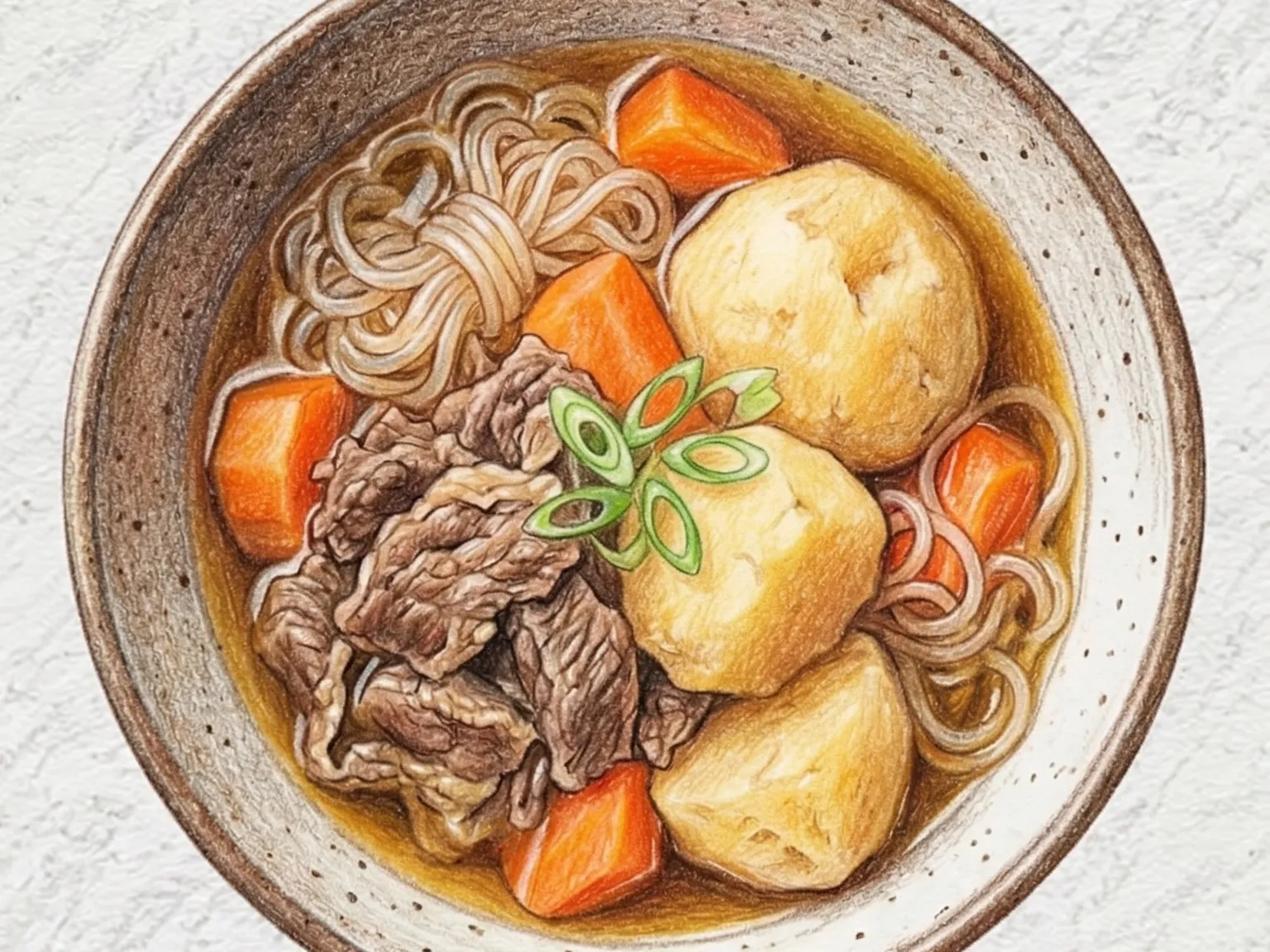
Nikujaga (Japanese Beef Potato Onion Soy-Sweet Stew)
Nikujaga is the quintessential Japanese home-cooked stew, often described as the dish that defines a mother's cooking in Japan. Thinly sliced beef, potatoes, onion, carrot, and shirataki noodles are simmered in a broth of dashi, soy sauce, mirin, and sugar. The dish traces its origins to the Meiji era, when a Japanese naval officer attempted to recreate British beef stew using local ingredients - resulting in a clear, soy-based braise rather than a thick, flour-bound stew. The potatoes absorb the seasoned liquid until soft at the edges but still holding shape, while shirataki noodles soak up flavor and add a springy contrast.
Adjust Servings
Instructions
- 1
Cut vegetables into bite-sized pieces.
- 2
Stir-fry beef in oil.
- 3
Add vegetables and shirataki noodles, stir-fry briefly.
- 4
Add dashi, soy sauce, sugar, mirin and simmer until potatoes are tender.
As an Amazon Associate, we may earn from qualifying purchases.
Tips
Nutrition (per serving)
More Recipes

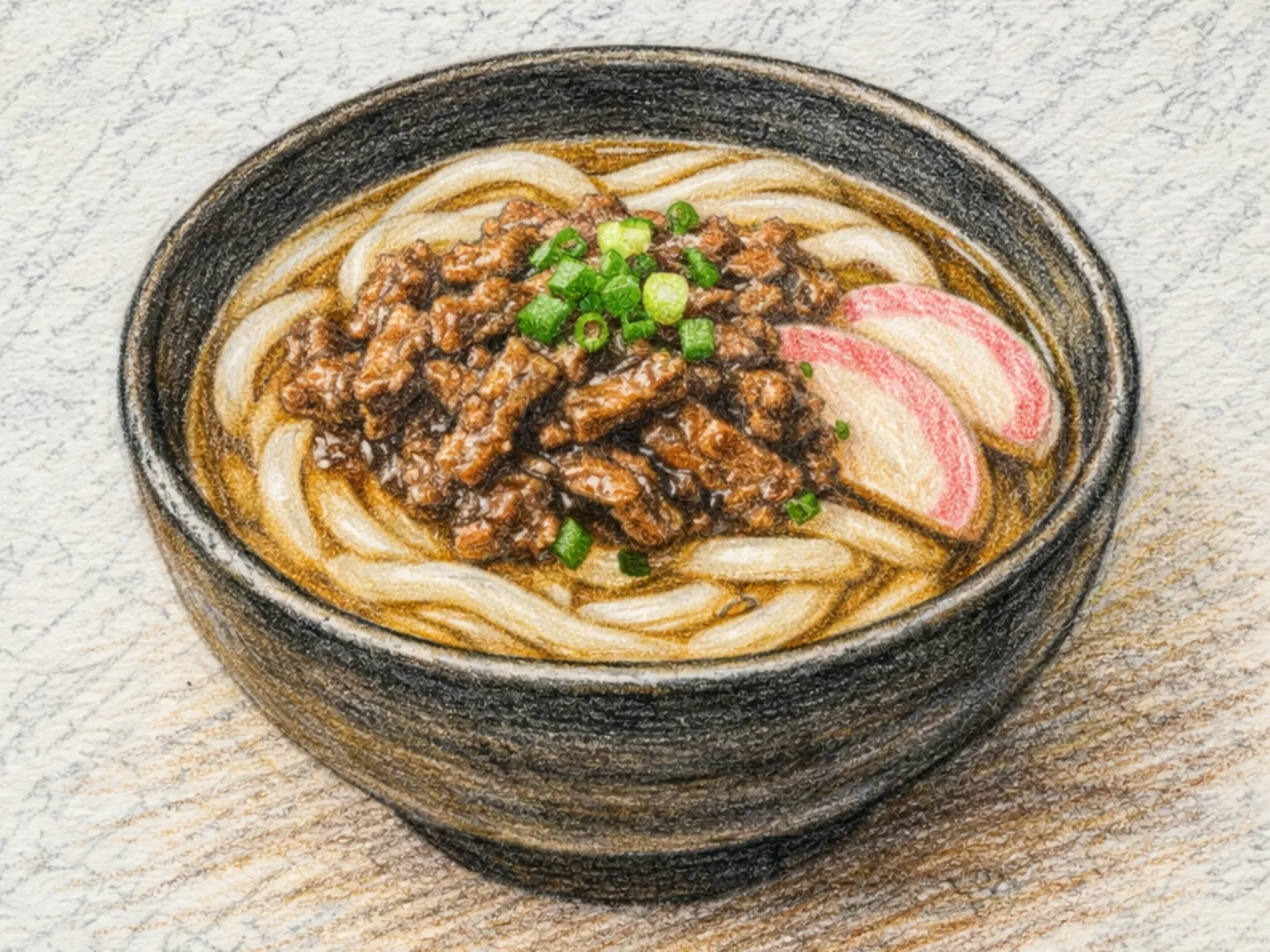
Niku Udon (Japanese Thick Noodles in Dashi Broth with Braised Beef)
Niku udon is a Japanese noodle soup built on two distinct layers of flavor. The broth starts with a clear dashi made from kombu and bonito flakes, seasoned with soy sauce and mirin for a clean, umami-rich base. Separately, thinly sliced beef is simmered with onion in a concentrated mix of soy sauce, mirin, and sugar until each slice is glazed in a sweet, savory coating. The beef is placed atop thick, chewy udon noodles swimming in the hot broth, and the two seasoning profiles merge at the table. Chopped scallions add freshness to cut through the richness. It is a staple of both home kitchens and udon shops across Japan.

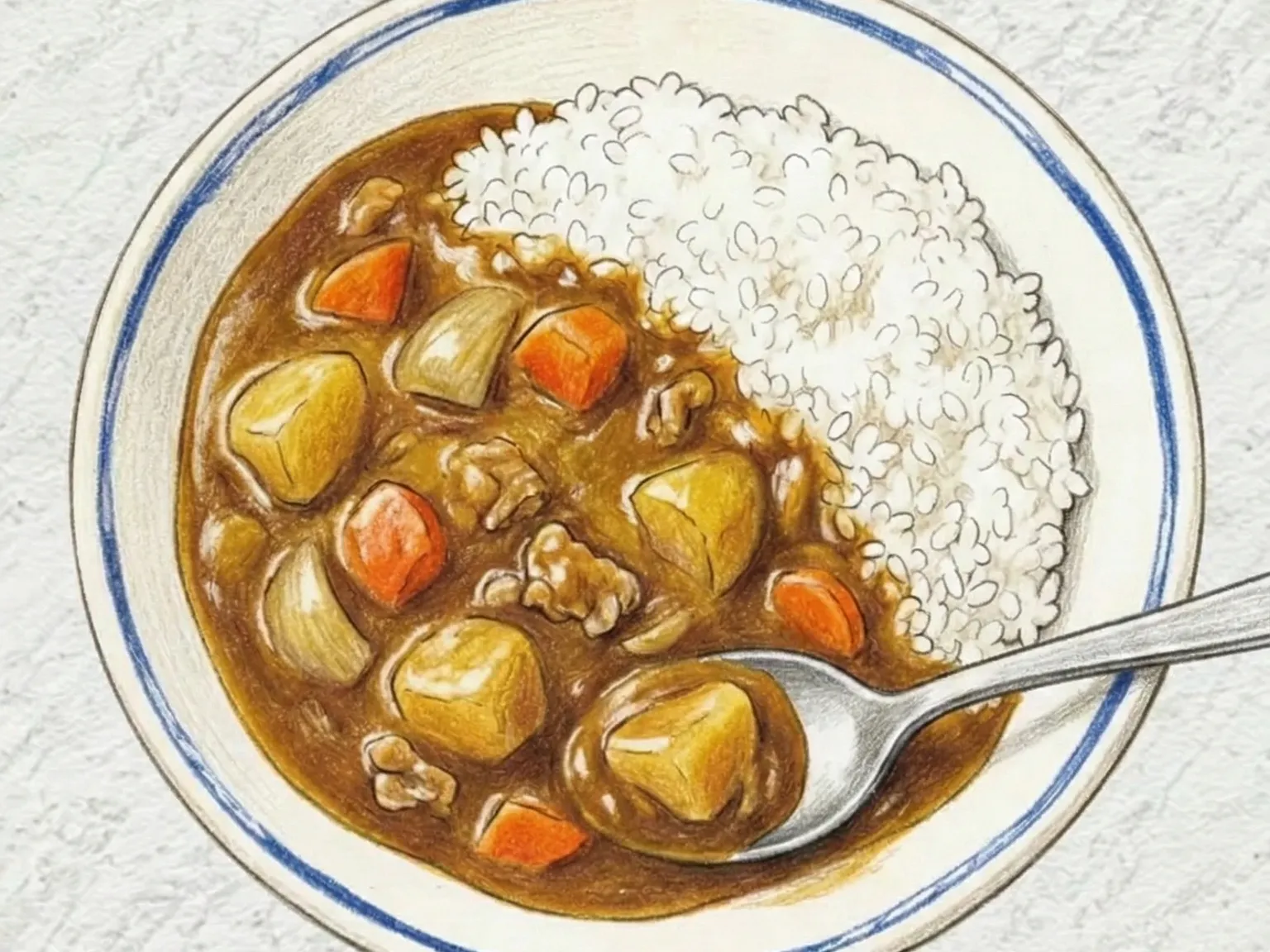
Katsu Curry
Katsu curry combines two Japanese comfort food staples on one plate: a thick, breaded pork cutlet and a smooth, glossy curry sauce over rice. The pork loin is seasoned with salt and pepper, then coated in flour, beaten egg, and panko breadcrumbs whose coarse, jagged flakes create a rougher surface that fries up crunchier than fine breadcrumbs. The cutlet deep-fries at 170 degrees Celsius for four to five minutes until deep golden, then rests for two minutes so the residual heat finishes cooking the center while the juices redistribute. The curry sauce is prepared separately by sauteing onion and carrot, simmering in water until soft, then dissolving the curry roux on low heat until thick. Resting the curry overnight intensifies its flavor as the vegetables break down further. When plated, the curry occupies one side and the sliced katsu the other, so the crust stays crisp until deliberately dipped into the sauce.

Classic Katsudon (Pork Cutlet Egg Rice Bowl)
Classic katsudon is a Japanese rice bowl that transforms a crispy pork cutlet into something altogether different by simmering it briefly with onion, egg, and seasoned dashi broth. Thinly sliced onion cooks first in a shallow pan of tsuyu - a blend of soy sauce, mirin, and dashi - until soft and sweet. The fried cutlet, sliced into strips, is nestled into the onion broth, then lightly beaten egg is poured over the top and cooked just until it sets into a custard-like layer. This half-set egg clings to the panko crust, creating a contrast between the still-crunchy edges and the silky coating. The entire mixture is slid onto a bowl of steaming rice, where the savory broth soaks into the grains. In Japan, katsudon is traditionally eaten before exams or competitions as a good-luck ritual.

Osaka Kitsune Udon (Thick Noodles with Sweet Fried Tofu in Dashi)
Kitsune udon is Osaka's signature noodle bowl, defined by sweet simmered fried tofu draped over thick wheat noodles in a clear dashi broth. The broth is made from kombu and bonito flakes, seasoned with light soy sauce in the Kansai tradition - pale in color but full in umami. The aburaage tofu is simmered separately in a mixture of dashi, soy sauce, mirin, and sugar until it swells with sweet braising liquid, releasing a burst of flavor with each bite. Thick, chewy udon noodles sit in the steaming broth, their neutral wheat taste serving as a canvas for the delicate soup. A scattering of sliced green onion adds freshness and a mild bite. In Osaka, kitsune udon is eaten at all hours - a quick breakfast before work, a light lunch, or a late-night bowl after drinks - and every neighborhood udon shop has its own version of the sweet tofu recipe.

Japanese Rice Soup Porridge
Zosui is a Japanese rice porridge made by simmering leftover cooked rice in dashi broth and finishing with beaten egg. The broth soaks into the rice grains, giving the porridge a deep umami base, while the egg sets into soft ribbons throughout. Enoki mushrooms add thin, delicate strands of texture, and chopped scallions contribute a fresh finish. Seasoning is kept minimal with just soy sauce and salt to let the broth flavor come forward. It is often served as the closing dish after a nabe hot pot, using the remaining broth as the cooking liquid.

French Beef Stew
French beef stew takes tough, inexpensive cuts of beef and transforms them through patience and slow heat into a deeply flavored, fork-tender dish. Chuck or brisket is cut into large chunks, dusted with flour, and seared until a dark brown crust forms - this initial browning builds the foundation of flavor for the entire pot. Red wine and beef stock are poured in, and the pot goes into a low oven or onto a gentle burner for at least two hours. Root vegetables - carrots, potatoes, celery, and onions - braise alongside the meat, contributing natural sweetness and body to the liquid. As the wine reduces, its acidity dissipates while its fruit depth and tannic structure remain, giving the sauce a robust backbone. Thyme sprigs and bay leaves infuse the broth with herbal warmth. The stew tastes even better the next day, after the flavors have had time to marry overnight in the refrigerator.