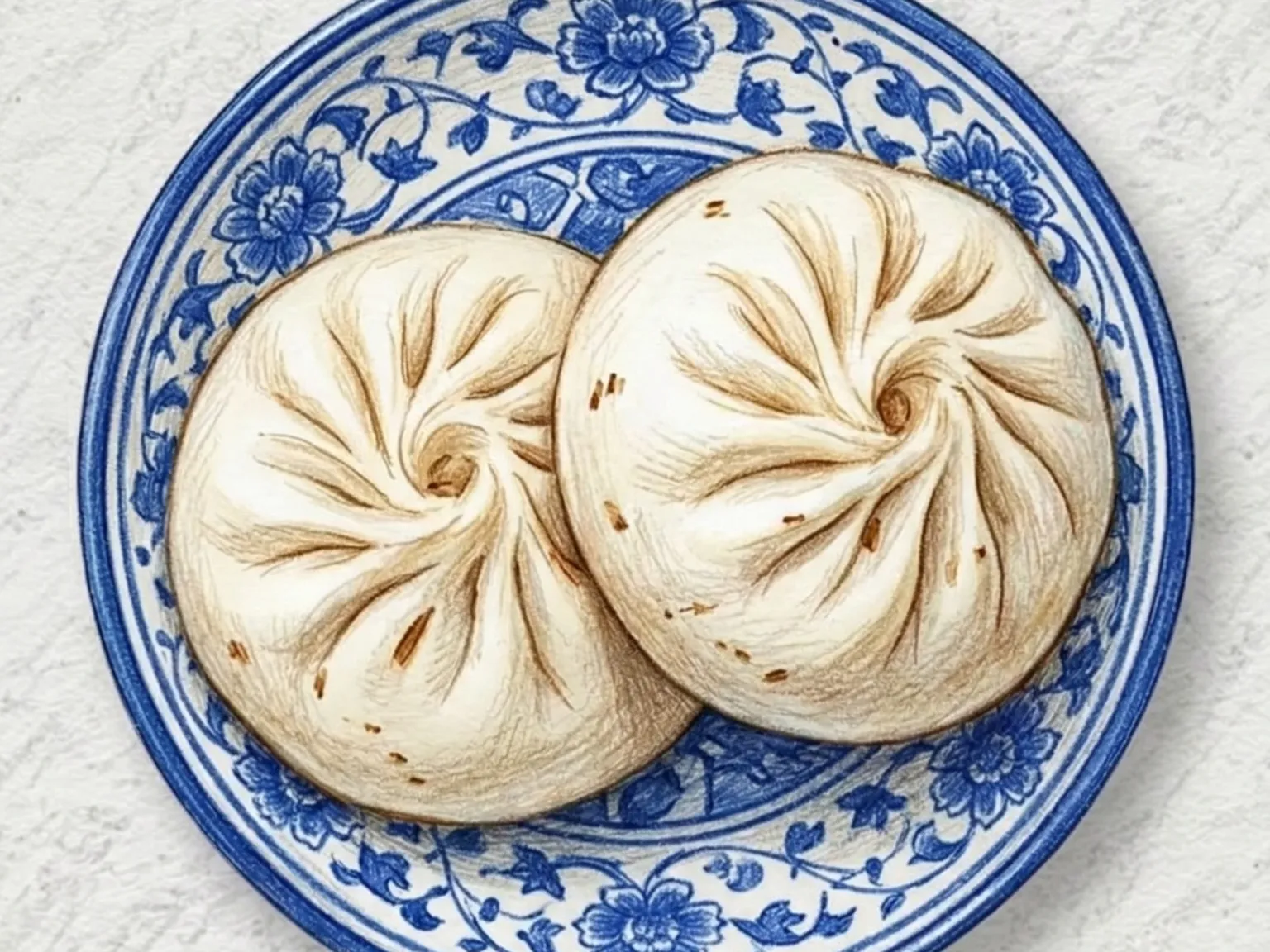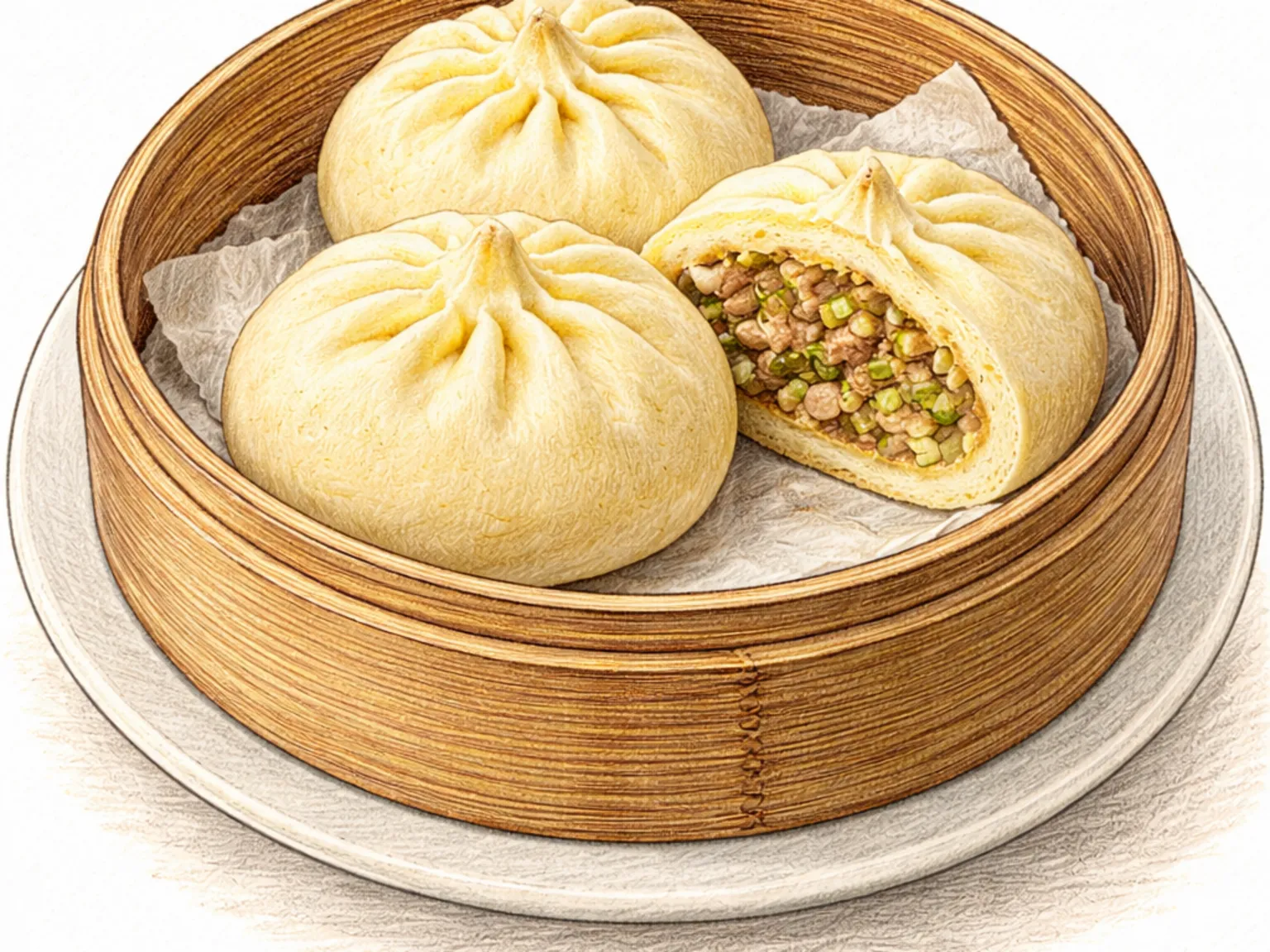
Steamed Pork Buns
Quick answer
Nikuman is a Japanese steamed pork bun descended from Chinese baozi but adapted to local tastes over generations.
What makes this special
- Nikuman consists of pillowy yeast-leavened dough filled with ginger and soy seasoned pork.
- Yeast-leavened dough steamed into a pillowy white cloud-like bun
- Soy and ginger aroma carries on steam when the lid is lifted
Key ingredients
Core cooking flow
- 1 Mix 300 g all-purpose flour, 5 g instant yeast, and 20 g sugar, then pour in 170 ml water gradually.
- 2 Shape the dough into a ball, place it in a bowl, and cover it with a damp cloth.
- 3 Combine 220 g ground pork with 80 g finely chopped cabbage, 8 g ginger, 1.5...
Nikuman is a Japanese steamed pork bun descended from Chinese baozi but adapted to local tastes over generations. Yeasted wheat dough is kneaded, left to rise, then filled with a mixture of ground pork seasoned with soy sauce, ginger, and sesame oil, along with finely chopped cabbage. After pleating and steaming, the bun emerges snow-white and pillowy, with a moist, savory filling inside. Opening the steamer releases a cloud of fragrant steam carrying notes of ginger and soy. In Japan, nikuman is the defining winter convenience-store snack -- warming your hands around the bun before biting into the hot, juicy filling.
Instructions
Read the steps as a cooking flow: prep, heat, seasoning, doneness control, and finish.
- 1Season
Mix 300 g all-purpose flour, 5 g instant yeast, and 20 g sugar, then pour in 170 ml water gradually.
Knead for about 10 minutes until the dough feels smooth, elastic, and no longer shaggy.
- 2Control
Shape the dough into a ball, place it in a bowl, and cover it with a damp cloth.
Let it proof in a warm place for about 1 hour, until it looks noticeably puffed and soft.
- 3Season
Combine 220 g ground pork with 80 g finely chopped cabbage, 8 g ginger, 1.5 tablespoons soy sauce, and 1 teaspoon sesame oil.
Mix until the filling turns slightly sticky, which helps it hold together inside the buns.
- 4Control
Press the proofed dough gently to release gas, divide it into 8 equal pieces, and round each piece.
Keep them covered with the damp cloth and rest for 10 minutes so they roll out without shrinking back.
- 5Step
Flatten each piece so the center stays a little thicker and the edges are thinner.
Add the pork filling, then pleat the edges upward and pinch the top firmly so steam cannot open the bun.
- 6Control
Place the buns in the steamer with space between them once steady steam is rising.
Steam over medium heat for 15 minutes, turn off the heat, rest with the lid closed for 3 minutes, then remove carefully.
After the steps
Pick a recipe that fits this dish.
Continue with shared ingredients, meal pairings, or a similar method.
Recipes That Go Well With This
More Asian →Based on shared ingredients and meal pairing
Katsu Sando (Japanese Crispy Pork Cutlet Sandwich)
Katsu sando is a Japanese sandwich built around a thick, crispy pork cutlet pressed between slices of soft milk bread. The pork loin is sliced at least two centimeters thick, pounded lightly to tenderize, seasoned with salt and pepper, then coated in flour, beaten egg, and coarse panko breadcrumbs before being lowered into oil at 180 degrees Celsius. The result is a deep golden crust that shatters on the first bite while the interior stays moist and tender. Tonkatsu sauce, a thick condiment with a fruity, sweet-savory profile similar to Worcestershire, is spread generously on one side of the bread, while a thin layer of Japanese mayonnaise goes on the other. Finely shredded cabbage is layered beneath the cutlet, providing a fresh, watery crunch that cuts through the richness of the fried meat. The crusts are trimmed from the bread, the sandwich is pressed firmly and sliced cleanly in half, and the cross-section of pale bread, pale cabbage, and dark golden cutlet becomes the defining visual of the dish. Katsu sando works as a packed lunch, a picnic item, a late-night snack, or a quick meal at the counter of a butcher shop in Tokyo.
Classic Tonkotsu Ramen (Pork Bone Milky Broth Noodles)
Classic Tonkotsu Ramen is a Japanese noodle dish defined by its deep, creamy pork bone broth. The foundation of this soup requires boiling pork back bones and pig trotters with garlic and ginger at a continuous, vigorous roll for seven to eight hours. This sustained high heat emulsifies the fat and breaks down the collagen, producing a milky, gelatinous broth that coats the palate. It is served with thin, firm noodles that retain a springy bite without becoming soggy in the heavy soup. Top the bowl with pork belly chashu braised in soy sauce and mirin, soft-boiled eggs marinated in the braising liquid, and sliced green onions. Maintaining a strong boil without reducing the heat is critical to achieving the characteristic white color and rich texture. Prepare the chashu a day in advance and chill it for easier thin slicing.
Grapefruit Shiso Shrimp Salad
Grapefruit shiso shrimp salad brings together ice-chilled blanched shrimp, membrane-free grapefruit segments, shredded shiso leaves, and thinly sliced cucumber and radish, all tossed in a yuja marmalade dressing. Blanching the shrimp for exactly two minutes and transferring them immediately to ice water locks in a firm, springy texture by contracting the protein rapidly while preventing the rubbery toughness that comes from overcooking. Removing all of the white pith from the grapefruit eliminates bitterness and leaves only the clean, tart juice of the flesh. Cutting the segments free from the membrane also makes the pieces easier to eat in a single bite. The dressing is built from yuja marmalade, rice vinegar, olive oil, and pepper, and the yuzu's floral acidity layers on top of the grapefruit to create a pronounced citrus profile that is bright but not harsh. The mint-like herbal quality of shiso leaves neutralizes any trace of fishiness from the shrimp and ties the Japanese-influenced flavor framework together. The crisp bite of cucumber and radish contrasts with the softness of the shrimp and grapefruit segments. Serving the salad well chilled is necessary to keep every texture and fragrance sharp and distinct rather than muted.
Buta Shogayaki (Japanese Ginger Pork Stir-Fry with Soy Mirin Glaze)
Buta shogayaki is one of the most frequently cooked dishes in Japanese home kitchens, appearing in bento boxes, teishoku set meals, and university cafeterias with equal regularity. The name translates directly as pork ginger stir-fry, and the technique is as precise as it is simple: thinly sliced pork loin or shoulder is marinated briefly in a mixture of soy sauce, mirin, sake, and freshly grated ginger, then seared quickly in a hot pan and finished with a reduction of the marinade. The ginger does more than add flavor -- it contains proteolytic enzymes that break down muscle fibers, measurably tenderizing the meat even in a marinade as short as ten minutes. The slices must not overlap in the pan; piling them causes steam to accumulate and the pork poaches rather than sears, losing the caramelized, slightly charred edges that define the dish. The marinade is added only in the final thirty seconds so it reduces rapidly into a sticky, glossy glaze that adheres to every surface rather than pooling at the bottom of the pan. Placing the finished pork over a mound of shredded raw cabbage is not optional in traditional presentation -- the cold, crunchy vegetable contrasts sharply with the hot, lacquered meat and cuts through the sweetness of the mirin glaze. Shogayaki has been a menu fixture since the mid-20th century, when rising pork production in Japan made it affordable enough for everyday cooking. From pantry to plate in fifteen minutes, it demands nothing more than a hot pan, fresh ginger, and attention to heat control.
Serve with this
Dipping Ramen (Japanese Thick Noodles with Concentrated Dipping Broth)
Tsukemen is a Japanese dipping ramen where thick noodles and a concentrated broth are served separately. The broth - typically tonkotsu or seafood-soy based - is reduced to roughly double the intensity of standard ramen soup. Noodles are rinsed in cold water after boiling, which firms their texture and creates a temperature contrast when dipped into the hot broth. Toppings such as chashu pork, soft-boiled egg, and nori are arranged alongside the noodles. The recipe takes about 50 minutes, with most time spent building and reducing the dipping broth.
Steak Rice Bowl (Seared Beef with Soy-Garlic Glaze over Rice)
A thick-cut beef steak is seared at high heat until a deep brown crust forms, then sliced and fanned over a bowl of hot rice. A glaze of soy sauce, garlic, and mirin is spooned over the slices, coating them in a glossy, caramelized finish. As the warm rice absorbs the pan juices, each spoonful carries the full weight of the beef's seared flavor. A runny fried egg or a small dab of wasabi on the side balances the richness with creaminess or heat. Controlling resting time and grain texture helps the ingredients cook evenly while keeping the final seasoning balanced.
Korean Fish Cake Soup (Clear Anchovy Radish Broth)
Eomuk-tang is a Korean fish cake soup in which skewered fish cakes and thick radish slices simmer in a clear broth built from dried anchovies and kelp. The kelp must be removed the moment the water begins to boil, otherwise it releases a slimy texture that clouds the broth. Cutting the radish thick allows it to slowly release natural sweetness over the long simmer. Rinsing the fish cakes in hot water before adding them washes away surface oil and keeps the broth clear and clean. Soup soy sauce adjusts the seasoning, and green onion and black pepper finish the pot. Adding the radish before the fish cakes ensures it has enough time to fully soften and sweeten the broth, since it takes longer than the eomuk to cook through.
Similar recipes
Katsu Curry
Katsu curry is a Japanese single-plate meal of crisp deep-fried pork cutlet served beside a thick, glossy curry sauce over steamed rice. The pork loin is pounded to an even thickness, seasoned with salt and pepper, then coated in three layers: flour, beaten egg, and panko. Panko breadcrumbs have a coarser, more jagged texture than standard breadcrumbs, which creates more air pockets in the crust and produces a crunch that stays crisp longer after frying. The breaded cutlet is lowered into oil heated to 170 degrees Celsius and fried for four to five minutes until deep golden brown, then lifted onto a wire rack to rest for two minutes. The resting period allows the residual heat to finish cooking the center while the juices redistribute and the crust firms up. The curry sauce is built separately: onion and carrot are sauteed until their natural sweetness develops fully, then water is added and everything simmers until the vegetables are tender. The curry roux blocks are added and dissolved over low heat until the sauce reaches a thick, velvety consistency. Resting the curry overnight deepens its flavor as the vegetables continue to release sugars and the spices meld together. At the table, the curry fills one side of the plate and the sliced katsu occupies the other so the crust stays dry until deliberately pushed into the sauce, preserving the contrast between the two textures.
Japanese Melon Bread (Crispy Cookie-Crusted Sweet Bun)
A Japanese sweet bun that wraps a soft, yeasted bread dough in a layer of cookie dough, then bakes both together so the exterior crisps into a shell while the interior stays fluffy. The bread dough, made with bread flour, milk, and butter, is kneaded and proofed until pillowy; the cookie dough, a simple blend of cake flour, sugar, butter, and egg, is chilled until firm enough to drape over the risen bread rounds. The contrast between the shattering cookie crust and the cloud-soft bread beneath is what defines melon pan. Scoring a crosshatch pattern on the cookie layer with a bench scraper mimics the rind of a melon and gives the bun its name and iconic look. Rolling the tops in granulated sugar before proofing adds sparkle and an extra layer of crunch. Baking at 170 degrees Celsius for 13 to 15 minutes sets the cookie shell without over-browning it; the bread inside continues to steam and rise, pushing against the firming crust and creating the characteristic dome shape. Best eaten within hours of baking, while the crust still audibly cracks.
Pork Rice Bowl (Sweet-Salty Glazed Pork over Rice)
Butadon is a Japanese pork rice bowl that originated in Obihiro, Hokkaido, where thin slices of pork belly or shoulder are simmered with onion in a glaze of soy sauce, mirin, and sugar, then laid over a bowl of steamed rice. The soy salt and sugar sweetness balance precisely as the meat absorbs the sauce, while the onion dissolves gradually into the cooking liquid, contributing a natural sweetness that deepens the glaze. Where the pork meets the pan, the edges caramelize into a slightly charred coating that adds a roasted dimension to the otherwise clean, saucy topping. Hokkaido pork, with its firm texture and higher fat content, is traditional, though any well-marbled cut works. The preparation is genuinely simple - one pan, one sauce, no elaborate knife work - which is exactly why it became a staple weeknight meal across Japan.