Korean Grilled Dried Pollock
Quick answer
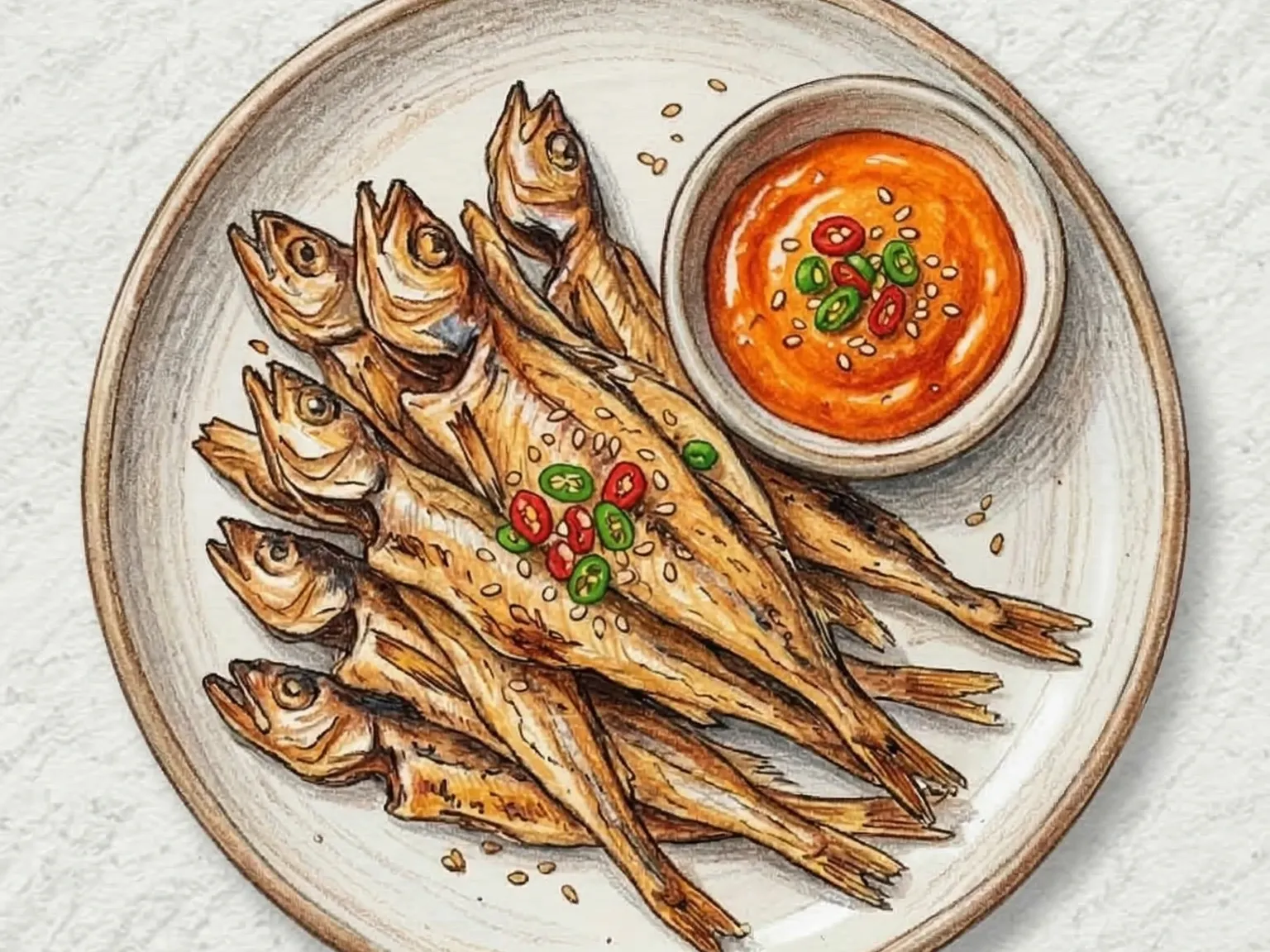
Nogari-gui is a classic Korean bar snack in which semi-dried young pollock is cut into pieces with scissors, then cooked in a buttered pan over medium-low heat until gold...
What makes this special
- Nogari-gui uses a slow-cooking method to crisp young pollock fibers evenly in melted butter.
- Medium-low heat crisps the dried pollock evenly through each fiber
- Butter seeps into the dried fish fibers and adds a rich nutty note
Key ingredients
Core cooking flow
- 1 Trim 180g dried pollock with kitchen shears, removing rough fins and hard edges.
- 2 If the pollock feels too hard, microwave it for only 20 seconds to relax the fibers slightly.
- 3 In a small bowl, combine 1tbsp gochujang, 2tbsp mayonnaise, 0.5tsp sugar, and 1tsp lemon juice.
Nogari-gui is a classic Korean bar snack in which semi-dried young pollock is cut into pieces with scissors, then cooked in a buttered pan over medium-low heat until golden and crisp on both sides. The low-and-slow approach matters: the thin fish needs time to dry out evenly into a chewy-crisp texture without scorching on the surface. Butter melts into the fibrous dried flesh with each pass over the heat, coating the fibers with richness that plain dry-frying cannot replicate. The dipping sauce is a deliberate combination of gochujang and mayonnaise, loosened with lemon juice, sweetened with a pinch of sugar, and sharpened with minced garlic, producing a sauce that is spicy, creamy, tangy, and savory all at once. That sauce against the salty, umami-concentrated pollock is the reason one piece is never enough. Cutting with scissors rather than a knife exposes more cross-section of the dried fibers, helping the sauce cling more effectively. The snack is closely associated with the pojangmacha stalls of Noryangjin and remains one of the most requested accompaniments to cold draft beer in Korea.
Instructions
Read the steps as a cooking flow: prep, heat, seasoning, doneness control, and finish.
- 1Heat
Trim 180g dried pollock with kitchen shears, removing rough fins and hard edges.
Cut thicker sections into similar lengths so the pieces heat at the same pace and stay easy to dip after grilling.
- 2Step
If the pollock feels too hard, microwave it for only 20 seconds to relax the fibers slightly.
Stop when it is just warm, because longer heating can make the dried fish tougher instead of easier to chew.
- 3Season
In a small bowl, combine 1tbsp gochujang, 2tbsp mayonnaise, 0.5tsp sugar, and 1tsp lemon juice.
Stir until no sugar grains are visible and the sauce looks smooth, creamy, and evenly red.
- 4Control
Warm a wide pan over medium-low heat for about 1 minute, then melt 20g butter.
When small bubbles appear, tilt the pan to spread the butter across the surface without letting it brown or smoke.
- 5Heat
Lay the pollock pieces in one layer without overlapping and cook the first side for about 3 minutes.
Flip when the edges curl slightly and the surface turns light brown, adjusting the heat if butter darkens quickly.
- 6Finish
Cook the second side for 3 to 4 minutes, finishing when the outside is crisp but the center is not leathery.
Transfer to a plate and serve warm with the prepared sauce while the butter aroma is still fresh.
After the steps
Pick a recipe that fits this dish.
Continue with shared ingredients, meal pairings, or a similar method.
Recipes That Go Well With This
More Drinks →Based on shared ingredients and meal pairing
Korean Grilled Filefish Jerky
Jjipo-gui is a Korean bar snack made by pan-grilling dried filefish jerky in melted butter until golden on both sides. Jjipo - dried and pressed filefish - has a dense, chewy texture and a concentrated umami that intensifies the longer you chew, which is what makes it so effective as drinking food alongside beer or soju. Grilling it in butter rather than oil adds a rich, nutty fat quality that complements the inherent savoriness of the dried fish in a way that neutral oil cannot. A thin glaze of soy sauce and oligosaccharide syrup applied near the end of cooking transforms the surface into a glossy, sweet-savory crust that caramelizes without burning, and a pinch of red chili flakes dusted over the top adds a mild heat that persists through the finish. The key to getting the glaze right is temperature control - medium-low heat allows the sugars to caramelize gradually and evenly without scorching, while too high a flame will burn the coating and turn it bitter before the fish has fully grilled through. Too low, and the moisture simply steams off without the glaze setting properly. Cutting the grilled jjipo into long strips with kitchen scissors before serving preserves the chewy pull of the jerky and makes it easier to share and eat in pieces without tearing.
Gotgam Cream Cheese Roll (Dried Persimmon Rolls)
Gotgam cream cheese roll is a no-cook Korean dessert that requires nothing more than a knife, a bowl, and a refrigerator. Dried persimmons are slit open and flattened into thin sheets, each one acting as the outer wrapper. The filling is cream cheese mixed with honey and fresh lemon juice to balance its natural richness with acidity, and finely chopped walnuts are folded in throughout to add a crunchy, nutty element to every bite. The filling is spread across the opened persimmon, which is then rolled tightly and wrapped in plastic wrap. Twenty minutes in the refrigerator firms the roll enough to slice cleanly. Dipping the knife in warm water and wiping it dry before each cut produces the smoothest cross-sections. The finished slices reveal clearly defined layers: the chewy, caramel-sweet dried persimmon on the outside, the tangy cream cheese in the middle, and flecks of walnut distributed throughout. The combination makes it a natural pairing with wine or a polished addition to a traditional holiday table.
Korean Spicy Rice Cakes (Gochujang Braised Chewy Tteok with Fish Cake)
Simmering cylindrical rice cakes and thin fish cake sheets in a spicy base of gochujang, red chili flakes, sugar, and soy sauce creates a sticky, glossy coating. The starch released from the rice cakes as the liquid reduces acts as a natural thickener, ensuring the sauce clings tightly to each ingredient. While the fish cakes soak up the heat from the surrounding liquid, they release a subtle seafood essence into the pan, and the addition of green onions at the final stage provides a crisp contrast to the underlying sweetness. Preparing a stock from dried anchovies and kelp rather than using plain water establishes a solid savory foundation for the entire dish. It helps to start with only half the seasoning paste, adding the remainder gradually to manage the final intensity and texture as the volume decreases. If the liquid evaporates too quickly, adding small amounts of water prevents the sugars in the sauce from scorching before the rice cakes reach the desired softness. For rice cakes that have been chilled or feel exceptionally firm, a short soak in cool water or a quick blanch in boiling water helps them cook through evenly. Serving the finished dish with boiled eggs, blood sausage, or assorted fried items replicates the setup found at traditional street stalls. This recipe scales easily into different versions by incorporating heavy cream or tomato-based sauces, resulting in the rose and cream variations often found in modern snack shops.
Korean Garlic-Grilled Octopus
Muneo-garlic-gui is a Korean seafood drinking snack made by slicing pre-boiled octopus into bite-size pieces, seasoning them with salt, pepper, and red chili flakes, then searing them hard in olive oil with minced garlic over high heat. The garlic goes in first at low heat to bloom slowly in the oil, then the flame is raised and the octopus is added so the exterior chars rapidly while the interior stays springy and resilient. The olive oil coats the surface at high temperature and locks in moisture, producing a scorched crust outside and a genuinely tender bite within. A squeeze of fresh lemon juice at the finish cuts through the oil and brings the natural brininess of the octopus into sharp relief. The octopus should go straight to the table after cooking, as the texture toughens quickly, and thorough pan preheating is essential to getting the sear right.
Serve with this
Korean Spicy Stir-Fried Anchovies
Spicy stir-fried anchovies (maeun myeolchi-bokkeum) toss medium-sized dried anchovies in a gochujang-gochugaru glaze, occupying the opposite end of the flavor spectrum from the sweet jiri-myeolchi version and targeting adult palates. Medium anchovies are larger and thicker than the tiny variety, requiring individual head-and-gut removal to eliminate bitterness - a tedious prep step that nonetheless determines the dish's clean finish. After dry-toasting to drive off moisture, the anchovies simmer in a sauce of gochujang, gochugaru, soy sauce, oligosaccharide, and minced garlic until each piece is coated in a rust-colored glaze. The gochujang's fermented heat combines with gochugaru's vivid red to create both flavor depth and visual appeal. The larger anchovy size delivers a satisfying crunch that lingers alongside a lasting savory umami. Heat intensity is adjustable via gochugaru quantity - adding chopped cheongyang chili ratchets it up another notch. This banchan doubles as a soju drinking snack, appearing as frequently on bar tables as on dinner tables.
Dasik (Korean Honey-Pressed Roasted Grain Confection)
Dasik is a traditional Korean pressed confection made by kneading roasted grain or nut powders with honey and pressing the mixture into carved wooden molds. Unlike baked goods, dasik holds its shape entirely through the binding power of honey, with no heat applied during preparation. This technique produces a texture that is slightly resistant at first contact, then dissolves gently at body temperature in a way that releases the full aroma of the main ingredient. Roasted soybean powder yields a nutty version, black sesame produces a deeply aromatic one, and additions of pine nut powder or cinnamon develop the flavor in different directions. The wooden molds carve decorative patterns into the surface of each piece, giving dasik a visual refinement that matches its restrained sweetness. For centuries, dasik has been a standard offering at Korean tea gatherings, and its subtle flavor remains a natural match for the gentle bitterness of green tea.
Similar recipes
Korean Grilled Dried Pollack
Hwangtae-po-gui is a grilled dried pollack snack prepared by brushing seasoning paste onto semi-dried hwangtae fillets and cooking them over medium-low heat. Hwangtae is pollack that has been freeze-dried repeatedly through winter cycles, a process that puffs up the flesh and gives it a softer grain and chewier texture than ordinary dried fish. A paste of gochujang, soy sauce, and oligosaccharide syrup is spread on both sides and grilled slowly so the sugars caramelize into a glossy, sticky coating. Minced garlic, sesame oil, and sesame seeds add roasted richness, and each torn piece delivers alternating salty and sweet notes. Cooking over high heat is a common mistake that chars the surface while leaving the interior hard and dry, so maintaining a low, patient heat is what allows the seasoning to penetrate fully and the fillet to stay moist. The finished snack pairs well with makgeolli or soju, and dipping torn pieces into mayonnaise is a widely practiced variation that softens the saltiness with a creamy counterpoint.
Korean Salt-Grilled Chicken Gizzards
Dak-ttongjip sogeum-gui involves trimming the silver skin from chicken gizzards, seasoning them with salt and black pepper for ten minutes, then searing them in a hot, garlic-scented pan for six to seven minutes. High heat is essential: it crisps the exterior while keeping the interior springy and chewy, and overcrowding the pan causes the gizzards to steam rather than sear, turning them soft and rubbery. Removing the silver skin thoroughly before cooking reduces the tough, chewy membrane that can make gizzards difficult to eat. Scallion is tossed in for the final minute, and a squeeze of lemon juice at the end cuts through the richness and brightens the finish. The dish pairs particularly well with soju or beer, and adding sliced Cheongyang chili during cooking gives a spicier variation for those who want extra heat.
Korean Grilled Semi-dried Pollock
Kodari-gui is a Korean grilled semi-dried pollock dish where the fish is pan-fried while being brushed repeatedly with a glaze made from soy sauce, gochujang, oligosaccharide syrup, minced garlic, and sesame oil. Semi-drying the pollock removes a substantial portion of its moisture, concentrating the protein into a dense, chewy texture that absorbs seasoning far more readily than fresh fish. It also strips away the fishy undertone that fresh pollock carries, making the end result noticeably cleaner on the palate. As the fish cooks, the sugars in the glaze undergo caramelization layer by layer, building a glossy, dark coating that catches the heat and deepens in flavor with every pass. Applying the sauce in a thick coat from the start leads to burning before the inside is properly cooked through, so the technique calls for flipping once a side is set and applying the glaze in multiple thin brushings. Soaking the dried fish in cold water for about ten minutes before cooking softens the flesh while still allowing the surface to grip the seasoning. Sesame seeds scattered over the finished fish add a toasted, nutty finish, and the dish is best served hot over steamed white rice.
Korean Dwaeji Kkeopdegi Gui (Grilled Pork Skin)
Dwaeji-kkeopdegi-gui is grilled pork skin that has been parboiled to draw out excess fat and eliminate the raw, gamey odor of the skin before it meets the fire. After blanching, the skin is coated in a spicy marinade built on gochujang and gochugaru, reinforced with soy sauce, minced garlic, and sugar to balance heat with savory depth. The skin is almost pure collagen, which makes blanching time critical: too brief and it stays rubbery with an unpleasant resistance, too long and it goes limp, forfeiting the springy chew that defines the dish. As the marinated pieces hit a hot grill or cast iron, the skin contracts and buckles, forming ridges and shallow pockets that trap the glaze. Every bite delivers a concentrated hit of spicy-sweet flavor where the caramelized marinade has pooled in those grooves. The texture offers a satisfying, slightly elastic chew that is unlike any other grilled meat. It is most commonly eaten wrapped in a perilla leaf with ssamjang, or served straightforwardly alongside soju as a classic drinking snack.