Green Tea Dasik Cookies (No-Bake Korean Matcha Pressed Cookies)

Green Tea Dasik Cookies (No-Bake Korean Matcha Pressed Cookies)

Quick answer

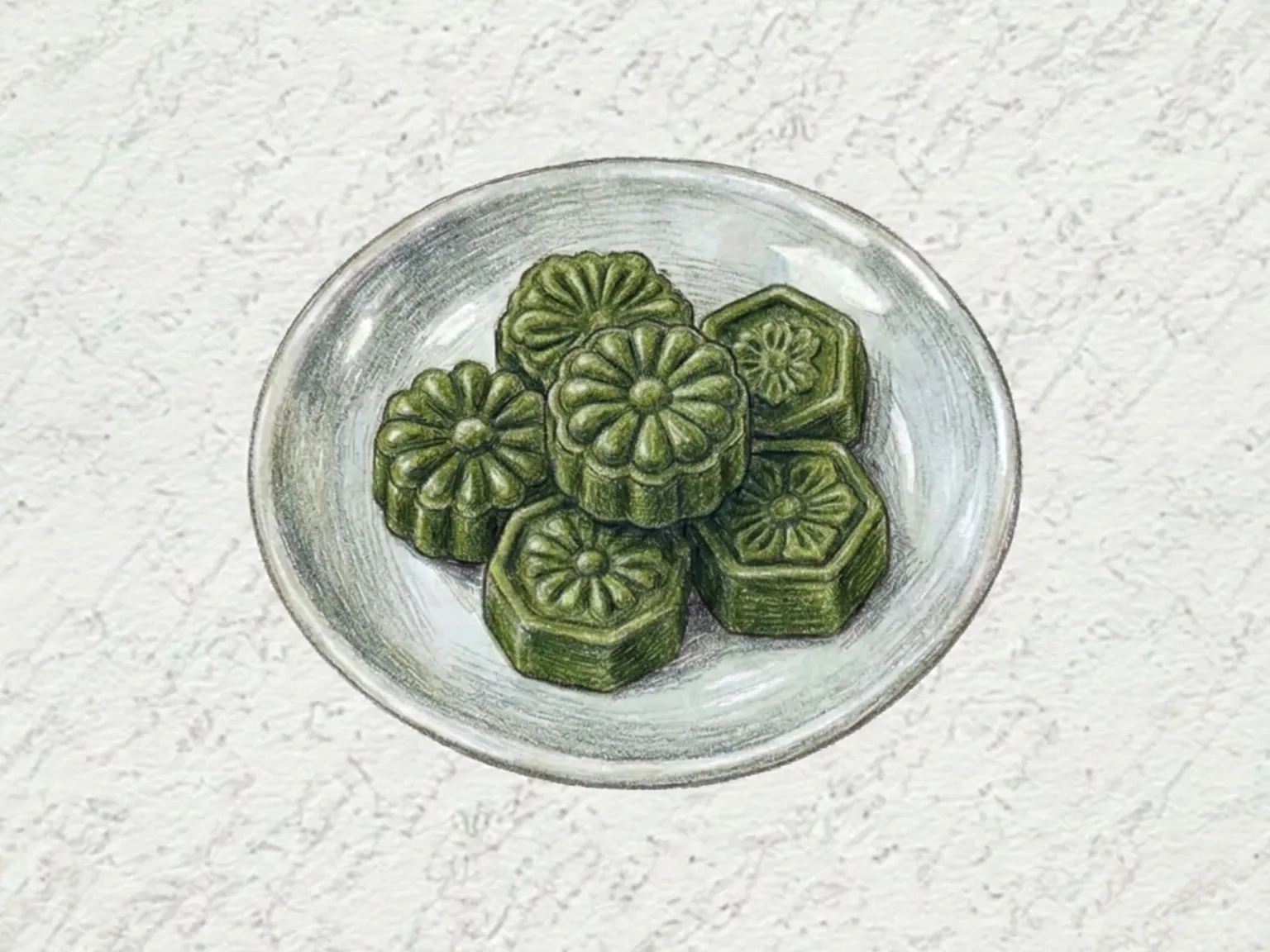
Nokcha dasik are Korean pressed tea cookies formed by binding roasted soybean powder and matcha with honey, rice syrup, and a touch of sesame oil, then stamping the mixtu...

What makes this special

  • Nokcha dasik green tea cookies are stamped in traditional wooden molds without requiring oven heat.
  • No oven needed; traditional dasik mold stamps the pattern directly
  • Jocheong amount controls dough consistency; too dry and it cracks
Total time
25 min
Level
Easy
Servings
4 servings
Ingredients
6
Calories
138 kcal
Protein
4 g

Key ingredients

roasted soybean powdermatcha powderhoneyrice syrupsalt

Core cooking flow

  1. 1 Sift 90g roasted soybean powder and 10g green tea powder together through a...
  2. 2 Combine 45g honey, 20g corn syrup, 1g salt, and 5ml sesame oil in a bowl and...
  3. 3 Add the sifted powder to the syrup in 2 to 3 additions and press-mix with a...

Nokcha dasik are Korean pressed tea cookies formed by binding roasted soybean powder and matcha with honey, rice syrup, and a touch of sesame oil, then stamping the mixture in a traditional wooden mold. No oven or heat is needed; the key is achieving a moisture ratio that lets the dough hold together under pressure without cracking. If the dough is too dry, the surface splits when unmolded; too wet, and the stamped pattern loses definition. Rice syrup quantity is the primary lever for adjusting consistency. On the tongue, the cookie dissolves gently, releasing the toasty depth of roasted soybean first, followed by the grassy bitterness of green tea that cleans the palate. The embossed pattern from the mold gives each piece a refined, ornamental appearance, and a brief air-dry at room temperature firms the surface enough for neat storage. Arranged two or three to a small plate beside a cup of tea, they make a composed and properly presented traditional tea-table spread.

Prep 25min 0 4 servings
Recipes by ingredient → honey sesame oil

Instructions

Read the steps as a cooking flow: prep, heat, seasoning, doneness control, and finish.

6 steps
  1. 1
    Prep

    Sift 90g roasted soybean powder and 10g green tea powder together through a fine sieve to remove any lumps and create an evenly fine mixture.

  2. 2
    Season

    Combine 45g honey, 20g corn syrup, 1g salt, and 5ml sesame oil in a bowl and stir until well blended into a viscous, sticky syrup.

  3. 3
    Prep

    Add the sifted powder to the syrup in 2 to 3 additions and press-mix with a spatula each time until the powder is fully absorbed and the mixture forms a cohesive mass.

  4. 4
    Step

    Squeeze a small amount firmly in your fist; if it holds together without cracking the moisture ratio is correct.

    If it cracks, add 0.5 teaspoon more honey at a time until it holds.

  5. 5
    Step

    Dust the mold lightly with soybean flour, pack the dough firmly into the pattern cavity, and press out decisively in one strong motion to get a sharp, clear imprint.

  6. 6
    Finish

    Arrange the pressed green tea cookies on a plate and dry at room temperature for 10 minutes to stabilize the surface before serving.

After the steps

Pick a recipe that fits this dish.

Continue with shared ingredients, meal pairings, or a similar method.

Recipes That Go Well With This

More Desserts →

Based on shared ingredients and meal pairing

Black Sesame Tea Cookies (No-Bake Korean Pressed Cookies)
Shared ingredient: honey Desserts

Black Sesame Tea Cookies (No-Bake Korean Pressed Cookies)

Heukimja dasik is a traditional Korean pressed tea cookie made by binding roasted black sesame powder and almond flour with honey and rice syrup, then pressing the mixture into a decorative wooden mold. No heat is applied at any point: the rich, toasty depth of the sesame and the fatty body of the almond combine within the sticky honey base to produce a crumbly, melt-in-the-mouth texture. A small measure of sesame oil improves binding, and dusting the mold with pine nut powder before pressing yields a sharply defined surface pattern. Resting the shaped cookies in an airtight container for thirty minutes allows them to firm up, resulting in bite-sized confections traditionally served alongside tea at a Korean tea table.

Barley Puff Brittle (Korean Puffed Barley Walnut Sesame Candy)
Shared ingredient: honey Desserts

Barley Puff Brittle (Korean Puffed Barley Walnut Sesame Candy)

Bori-gangjeong is a Korean barley puff brittle made by tossing puffed barley and roughly chopped walnuts with toasted sesame seeds in a syrup of rice malt, sugar, and honey cooked precisely to 118 degrees Celsius. Temperature is the deciding variable: below that threshold the brittle never fully sets and stays soft and sticky even when cool, while above it the result hardens into something that resists the teeth uncomfortably. Once the correct temperature is reached, the mixture must be worked quickly - the syrup sets fast. Sesame oil stirred in at the very end coats the barley in a layer of nutty fragrance that ties the toasty grain, the honey sweetness, and the dense crunch of walnut together. Scoring the slab while it is still pliable is essential: cuts made after the brittle fully sets tend to crack rather than slice cleanly, and the pieces lose their uniform shape. The deep sweetness of the rice malt syrup and the nuttiness of the barley combine into a straightforward but lingering flavor that keeps the hand returning to the plate.

Tonkatsu Korean Style (Panko-Breaded Pork Cutlet with Sweet Sauce)
Serve together Street food

Tonkatsu Korean Style (Panko-Breaded Pork Cutlet with Sweet Sauce)

Donkatsu is Korean-style breaded pork cutlet, made by dredging pork loin through flour, egg, and panko breadcrumbs in sequence before deep-frying in hot oil. Pounding the loin with a meat mallet to an even thickness ensures uniform heat transfer so the interior cooks through while staying moist, and the panko shell turns golden and audibly crunchy. Korean donkatsu sauce blends ketchup, Worcestershire sauce, and sugar into a sweet-salty condiment that is noticeably sweeter than Japanese tonkatsu's demi-glace-based sauce. Shredded raw cabbage served alongside provides a crisp, refreshing contrast to the fried cutlet and cuts through the richness. In Korean bunsik restaurants, donkatsu typically arrives as a set with rice and soup.

Candied Tangerine Peel (Korean Citrus Honey Confection)
Similar recipe Desserts

Candied Tangerine Peel (Korean Citrus Honey Confection)

Gyul jeonggwa is a traditional Korean confection made by cutting tangerine peels into 0.8 cm strips with a moderate amount of white pith left on, blanching the strips twice in salted water to eliminate bitterness, then cooking them low and slow in a syrup of sugar, honey, and cinnamon for thirty-five to forty minutes. Keeping the pith is deliberate: it holds the essential citrus oils that define the candy's fragrance, so trimming too much away produces a noticeably flatter result. The longer the peels simmer, the more completely they turn translucent, pulling syrup into every layer of fiber until the texture becomes dense and springy, close to a firm fruit jelly. Lemon juice added toward the end of cooking performs two functions: it inhibits crystallization of the syrup as it cools, and its acidity trims back the sweetness for a cleaner finish. Draining the pieces and resting them on a rack for an hour produces a dry, non-tacky surface that holds its shape well.

Serve with this

Korean Sweet Corn Latte (Butter Sauteed Corn Milk Drink)
Drinks Easy

Korean Sweet Corn Latte (Butter Sauteed Corn Milk Drink)

Sweet corn latte begins by sauteing cooked corn kernels in butter until fragrant, then simmering them in milk to draw out the corn's natural sugars before blending everything smooth. The butter amplifies the starchy, roasted aroma during the initial saute, coating each kernel so that the fat-soluble flavor compounds dissolve fully into the milk during the five-minute simmer. Blending the mixture until completely smooth and then straining it through a fine sieve removes any remaining hull pieces, producing a texture as silky as a custard sauce. This straining step makes a noticeable difference in the final quality. Condensed milk adds a rounded sweetness, and a small amount of white pepper introduces a faint spiced warmth that gives the drink depth beneath the sweetness. It works equally well served hot in a ceramic mug or chilled and poured over ice; the corn aroma remains vivid in both versions.

🍺 Bar Snacks 🧒 Kid-Friendly
Prep 8min Cook 10min 2 servings
Kimchi Bacon Quiche (Fermented Kimchi Egg Custard Pie)
Baking Medium

Kimchi Bacon Quiche (Fermented Kimchi Egg Custard Pie)

This fusion quiche traps the sharp tang of well-fermented kimchi and the smoky depth of bacon inside a silky egg custard. Squeezing the kimchi dry before adding it concentrates its fermented intensity while preventing a soggy filling. Bacon and onion are sauteed until their moisture evaporates, then combined with a custard of eggs, heavy cream, and milk. When sliced, each wedge reveals a mosaic of red kimchi shreds and bacon bits suspended in the golden custard. Melted mozzarella weaves through the filling, binding every layer, while the buttery pie crust provides a crisp, flaky foundation. A two-stage bake, starting at 190 degrees Celsius and dropping to 175, browns the surface while keeping the interior creamy rather than rubbery. Black pepper is the only seasoning needed, since the bacon and kimchi supply all the salt and heat. Served warm from the oven, a single slice makes a complete brunch plate.

🎉 Special Occasion 🧒 Kid-Friendly
Prep 25min Cook 40min 4 servings
Chicken Quesadilla
Western Easy

Chicken Quesadilla

Chicken quesadilla seasons diced chicken thigh with paprika, sautees it with onion and bell pepper, then presses the filling between flour tortillas with cheddar and mozzarella and toasts on low heat until crisp. Spreading a thin layer of cheese to the edges acts as glue, sealing the tortilla shut so the filling stays in place and the wedges cut cleanly. Low heat is essential - it gives the cheese time to melt evenly through the filling before the tortilla surface browns. The sharp flavor of cheddar and the stretch of mozzarella together wrap around the lean chicken, while paprika and onion add a sweet, smoky undertone. Sliced into eight wedges and served warm with sour cream or salsa on the side.

🏠 Everyday 🧒 Kid-Friendly
Prep 15min Cook 12min 2 servings

Similar recipes

Saenggang Jeonggwa (Candied Ginger)
Desserts Medium

Saenggang Jeonggwa (Candied Ginger)

Saenggang jeonggwa is a traditional Korean candied ginger prepared by slicing fresh ginger thin, blanching it twice to reduce the raw heat, then simmering the pieces slowly in a glaze of sugar and grain syrup. A ten-minute soak in cold water draws out the sharpest bite first, and two rounds of boiling soften the pungency further while leaving the clean, aromatic core intact. The slices are cooked on low heat until the syrup reduces to a thick, glossy coat on the surface, at which point lemon juice is added to introduce an acidity that keeps the sweetness from becoming cloying. Once dried on a rack and rolled in granulated sugar, the finished pieces carry a crisp, crystalline shell on the outside. On the first bite, the sugar crust shatters, and the chewy, syrup-saturated ginger beneath releases a slow, building warmth that lingers well after the piece is finished.

🎉 Special Occasion 🧒 Kid-Friendly
Prep 15min Cook 45min 4 servings
Dasik (Korean Honey-Pressed Roasted Grain Confection)
Baking Easy

Dasik (Korean Honey-Pressed Roasted Grain Confection)

Dasik is a traditional Korean pressed confection made by kneading roasted grain or nut powders with honey and pressing the mixture into carved wooden molds. Unlike baked goods, dasik holds its shape entirely through the binding power of honey, with no heat applied during preparation. This technique produces a texture that is slightly resistant at first contact, then dissolves gently at body temperature in a way that releases the full aroma of the main ingredient. Roasted soybean powder yields a nutty version, black sesame produces a deeply aromatic one, and additions of pine nut powder or cinnamon develop the flavor in different directions. The wooden molds carve decorative patterns into the surface of each piece, giving dasik a visual refinement that matches its restrained sweetness. For centuries, dasik has been a standard offering at Korean tea gatherings, and its subtle flavor remains a natural match for the gentle bitterness of green tea.

🧒 Kid-Friendly ⚡ Quick
Prep 20min 4 servings
Korean Dried Persimmon Cinnamon Tea
Drinks Easy

Korean Dried Persimmon Cinnamon Tea

Gotgam-gyepi-cha is a traditional Korean winter tea made by slowly simmering dried persimmon, a cinnamon stick, fresh ginger, and jujubes in water for close to thirty minutes. Cinnamon, ginger, and jujube are added first and simmered for twenty minutes to establish the spiced backbone of the drink, building a deeply aromatic and gently sweet base before the persimmon is introduced. Quartered dried persimmons and dark brown sugar are then added for another eight to ten minutes, during which the fruit softens and its dense, concentrated fructose dissolves into the broth, giving the liquid a slight viscosity along with a rich, jammy sweetness. Because dried persimmons vary considerably in sugar content, the amount of dark brown sugar should be adjusted or omitted entirely when the fruit is particularly sweet, to prevent the drink from becoming cloying. Once strained through a fine mesh and poured into cups, the tea is a clear, reddish-amber color. A whole walnut is placed on top -- its firm crunch and toasted nuttiness contrast sharply with the warm, fragrant liquid and serve as a visual as well as textural counterpoint. The warming combination of ginger and cinnamon makes this tea well suited to cold weather, and it often appears alongside sikhye and sujeonggwa on holiday tables.

🍺 Bar Snacks 🥗 Light & Healthy
Prep 10min Cook 30min 2 servings

Tips

If dough is dry, add honey 1 tsp at a time.
Store in a cool, shaded place to preserve matcha aroma.

Nutrition (per serving)

Calories
138
kcal
Protein
4
g
Carbs
17
g
Fat
6
g