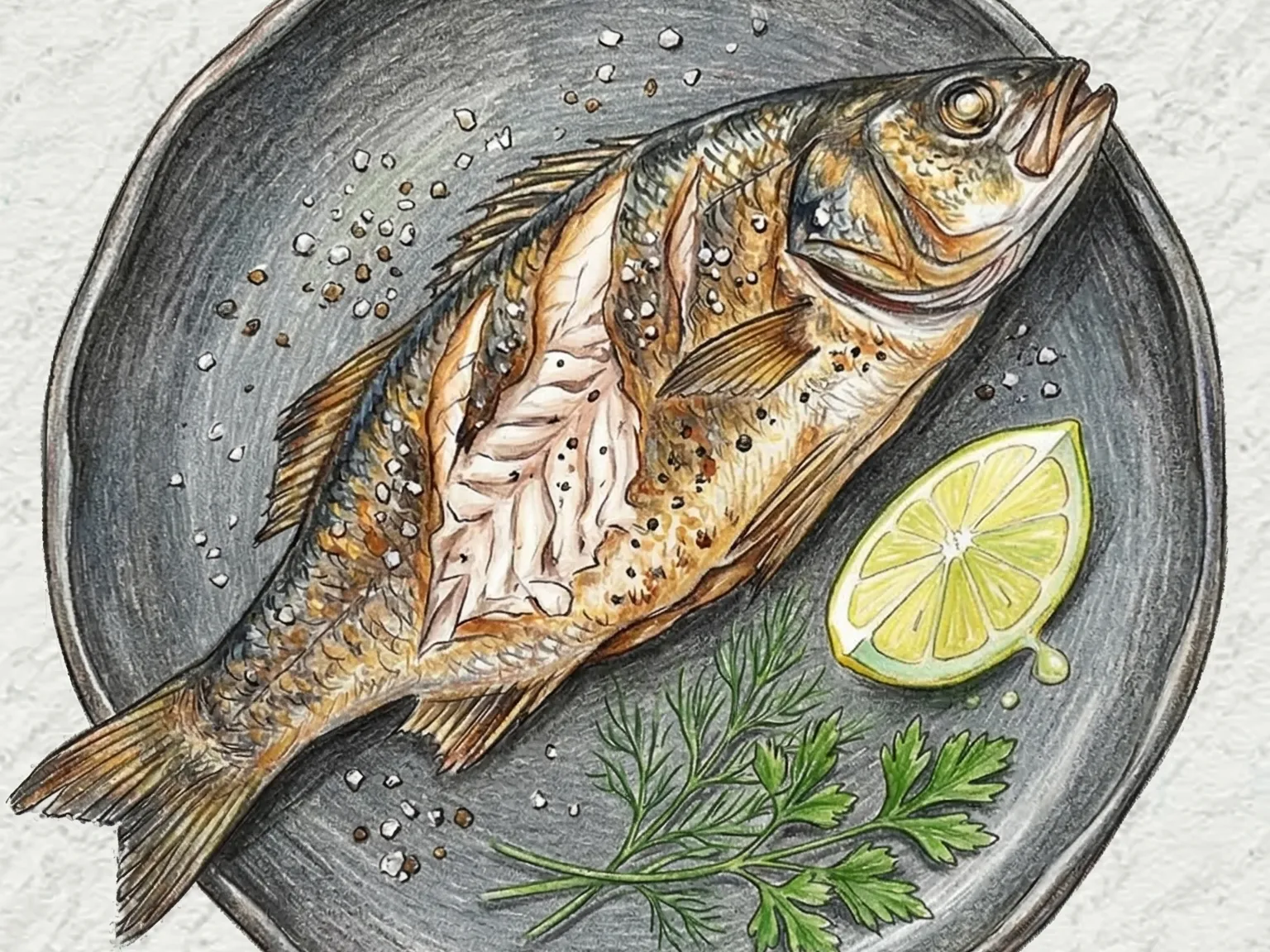
Korean Salt-Grilled Sea Bass
Quick answer
Nongeo sogeum-gui is a Korean salt-grilled sea bass where scored fillets are seasoned only with coarse salt and black pepper, then seared skin-side down in olive oil infu...
What makes this special
- Salt-grilled sea bass is seared skin-side down with fresh thyme to enhance its firm white flesh.
- Skin pressed flat for 5 minutes then basted with pan drippings
- Garlic and thyme infuse oil on low heat before searing
Key ingredients
Core cooking flow
- 1 Remove any pin bones from 380 g sea bass fillets, then dry the skin thoroughly with paper towels.
- 2 Season both sides evenly with 1 tsp coarse salt and 1/4 tsp black pepper.
- 3 Add 1 tbsp olive oil, 2 lightly crushed garlic cloves, and 1 tsp fresh thyme to the pan.
Nongeo sogeum-gui is a Korean salt-grilled sea bass where scored fillets are seasoned only with coarse salt and black pepper, then seared skin-side down in olive oil infused with garlic and fresh thyme. Sea bass has firm, low-odor white flesh that takes well to minimal seasoning, and pressing the skin against the hot pan for a full five minutes drives out moisture and renders the thin fat layer underneath into a crisp, shattering crust. After flipping, the aromatic oil pooled in the pan is spooned over the flesh for three to four minutes-the fish is done when the center shifts from translucent to opaque white. A squeeze of lemon at the table adds brightness that cleans up any residual richness from the oil-basted cooking.
Instructions
Read the steps as a cooking flow: prep, heat, seasoning, doneness control, and finish.
- 1Heat
Remove any pin bones from 380 g sea bass fillets, then dry the skin thoroughly with paper towels.
Make shallow scores through the skin only so the fillet stays flatter as it cooks.
- 2Season
Season both sides evenly with 1 tsp coarse salt and 1/4 tsp black pepper.
Let the fish stand for 5 minutes, then press away any moisture that beads on the skin so it can crisp instead of steam.
- 3Control
Add 1 tbsp olive oil, 2 lightly crushed garlic cloves, and 1 tsp fresh thyme to the pan.
Warm over low heat for about 1 to 2 minutes, stopping before the garlic browns, when the oil smells aromatic.
- 4Step
Raise the heat to medium-high and lay the sea bass in the pan skin-side down.
For the first 30 seconds, press gently with a spatula so the skin stays in full contact with the hot surface.
- 5Heat
Cook the skin side without moving the fish for about 5 minutes.
Wait until the edges turn opaque and the skin releases firmly from the pan, which helps prevent tearing and gives a crisp surface.
- 6Finish
Flip the fillets, lower the heat to medium, and cook for 3 to 4 minutes while spooning the garlic-thyme oil over the flesh.
Serve at once with lemon juice when the center changes from translucent to opaque white.
After the steps
Pick a recipe that fits this dish.
Continue with shared ingredients, meal pairings, or a similar method.
Recipes That Go Well With This
More Grilled →Based on shared ingredients and meal pairing
Korean Saeu Herb Sogeum Gui (Herb Salt Grilled Shrimp)
Saeu herb-sogeum-gui is Korean herb-salt grilled shrimp, where shell-on medium shrimp are deveined, tossed with olive oil, minced garlic, rosemary, thyme, and black pepper for ten minutes, then seared over high heat on a grill pan lined with a thin layer of coarse salt. Keeping the shells on prevents moisture loss during the intense heat, so the flesh stays moist while the shells themselves crisp into an edible, crunchy layer. Grilling on a salt bed distributes radiant heat evenly and draws surface moisture away from the shrimp, preventing the steaming effect that makes shellfish soggy. A finishing squeeze of lemon juice lifts the herb and garlic aromas while sharpening the shrimp's natural sweetness.
Korean Salt-Grilled Croaker
Mineo-sogeum-gui is a Korean salt-grilled croaker where fillets are seasoned with only coarse sea salt and white pepper, then pan-fried skin-side down in olive oil. Croaker is a lean white-fleshed fish with a subtle but genuine depth of flavor, and restraint with seasoning allows that natural character to come through clearly. Patting the surface completely dry before cooking is critical, since any moisture on the skin prevents it from crisping and causes it to stick to the pan. A whisper-thin coat of flour on the fillet creates a light barrier that forms a delicate crust on contact with the hot oil. Placing the fillet skin-side down and cooking it that way for roughly seventy to eighty percent of the total time allows the flesh to finish gently from residual heat after flipping, which prevents it from drying out. Minced garlic is introduced only in the final minute so it perfumes the oil without burning. A squeeze of lemon juice and a scatter of sliced chives at the table add brightness that frames the clean flavor of the fish rather than competing with it. Fresh croaker is best from July through August, but frozen fillets can be prepared with the same method.
Refreshing Spicy Mulhoe Broth
Refreshing Spicy Mulhoe Broth is a Korean cold soup base for raw fish dishes. This recipe combines red pepper paste, red pepper powder, vinegar, sugar, plum syrup, and minced garlic. The mixture of six tablespoons of vinegar and two of plum syrup provides a double acidity that blocks fishy notes from seafood. Adding one hundred milliliters of lemon-lime soda introduces carbonation that lifts a bright, airy note in the broth. Alternatively, using pear juice instead of soda offers a sophisticated sweetness. To prepare, mix the paste first to remove dry pockets, stir in water, and add the soda last to preserve carbonation. Chill the broth for at least two hours or ferment it for a day to deepen the flavor. Serving it semi-frozen as a slushy lets the ice dilute the seasoning gradually as sashimi thaws.
Korean Domi Sogeum Gui (Salt-Grilled Sea Bream)
Domi-sogeum-gui is a Korean pan-grilled sea bream dish where fillets are seasoned with nothing more than coarse salt and black pepper, then cooked skin-side down for the majority of the cooking time. Sea bream sits at a favorable point among white fish varieties, carrying enough natural fat to produce a clean, rounded umami from salt alone without needing additional marinades or sauces. Patting the surface completely dry with paper towels before the fish goes into the pan is essential, as any surface moisture will cause the skin to steam rather than crisp. Placing the fillet skin-side down first and keeping it there for roughly seventy percent of the total cooking time allows the skin to turn crackling and golden while the heat travels up through the flesh from below. A brief flip to finish the flesh side is all that is needed, since overcooking removes moisture from the delicate meat quickly. Minced garlic and chopped scallions placed on top after cooking add a fresh, pungent note, and a squeeze of lemon from the side wedge sharpens the bream's mild, clean sweetness by cutting through any lingering fish aroma.
Serve with this
Korean Crisp Chili Pepper Salad
Asakigochu is a specific variety of Korean pepper characterized by its thick walls and a distinct snap when bitten. This pepper was developed to prioritize texture over spiciness, resulting in a vegetable that offers a significant crunch without the heat of other varieties. The preparation of this dish involves a brief blanching process where the peppers are submerged in boiling water for a duration of exactly twenty seconds. This short exposure to heat is sufficient to eliminate the raw, grassy aroma often found in uncooked peppers, yet it is not long enough to soften the cellular structure. Consequently, the characteristic crispness remains unchanged. The seasoning sauce is a mixture of two traditional fermented pastes. Doenjang provides a salty and fermented depth, while gochujang adds complexity. To balance these heavy flavors, vinegar is added for sharpness and oligosaccharide syrup is used to adjust the consistency and add a subtle sweetness. This combination creates a contrast between the deep, funky notes of the fermented beans and a bright acidity that highlights the clean taste of the pepper. Timing is important for the final result. It is best to allow the seasoned peppers to rest for five minutes before serving. This pause allows the flavors from the thick sauce to soak into the pepper walls instead of simply sitting on the exterior. This side dish functions well as a standard accompaniment to a bowl of rice or as a more fullly flavored snack to be consumed while drinking soju.
Korean Soft Tofu Stew Rice Bowl
Fiery soft-tofu stew is cooked until bubbling and poured directly over a bowl of rice so the spicy broth seeps into every grain. The silky tofu breaks apart gently, creating pockets of creamy texture within the chili-laced soup. Cracking a raw egg into the simmering pot softens the heat and adds body to the broth. Variations with shrimp, clams, or pork each shift the base flavor in a different direction, making this a versatile single-bowl meal. Serving it soon after cooking keeps the intended texture clearer, while brief resting lets the sauce or broth settle into the dish.
Chicken Mu (Korean Fried Chicken Radish Pickle)
The crunchy, sweet-sour radish pickle served with every order of Korean fried chicken - now easy to make at home in under 15 minutes. Cubed radish is submerged in a cooled brine of vinegar, sugar, salt, and whole black peppercorns. Using fully cooled brine rather than hot is critical for maintaining the radish's firm, snapping crunch. Ready to eat after one day of refrigeration, its bright acidity cleanses the palate between bites of crispy chicken. Stored in a glass jar, this pickle keeps for over a week.
Similar recipes
Korean Okdom Sogeum Gui (Salt-Grilled Tilefish)
Okdom sogeum-gui is a salt-grilled tilefish dish iconic to Jeju Island, where the whole cleaned fish is rubbed with a thin layer of ginger juice, seasoned with coarse salt and pepper, and pan-fried skin-side down for six to seven minutes over medium-high heat. Tilefish has moderately fatty, firm flesh that develops deep umami with salt alone, and the ginger juice is applied sparingly-just enough to neutralize any fishiness without masking the fish's own character. Thorough surface drying with paper towels before cooking is non-negotiable for crisp skin, and the pan must be fully preheated or the fish will stick immediately. Chopped green onion and fresh lemon juice served alongside provide a sharp, aromatic contrast to the clean, mellow flavor of the grilled tilefish.
Korean Steamed Pomfret (Whole Fish with Soy Ginger Sauce)
Korean steamed pomfret is a mild fish dish made by steaming a whole scored pomfret with ginger and green onions, then seasoning it with a warm soy sauce mixture. The thin, delicate flesh of the pomfret becomes tender after steaming, allowing the meat to separate easily from the bone. To manage the fish odor and build layers of aroma, sliced ginger and cut green onions are added in two separate stages: first during the main steaming process and again at the end. A heated sauce of soy sauce, rice wine, and water is poured over the cooked fish to ensure the seasoning penetrates evenly. A final touch of sesame oil adds a toasted scent to the non-spicy, low-fat preparation. This clean and mild dish is suitable for various diners.
Korean Steamed Flounder (Whole Flatfish with Soy Garlic Sauce)
Korean steamed flounder, called gajami-jjim, is a fish dish prepared by cooking whole flatfish over a bed of vegetables with a light soy garlic sauce. The process starts by layering sliced onions at the bottom of the steamer to prevent the delicate white flesh from sticking or breaking apart during cooking. A seasoning mixture of soy sauce, minced garlic, and rice wine is spooned over the cleaned fish. The rice wine and garlic neutralize fishy notes while keeping the flounder moist. Steaming takes about twelve minutes over medium-high heat, followed by an additional two minutes after scattering sliced green onions on top. The cooking time must be monitored closely to prevent the tender fish from drying out. The resulting dish features a clean, savory taste highlighting the natural flavor of the flounder. The light sauce left in the dish can be mixed with cooked rice.