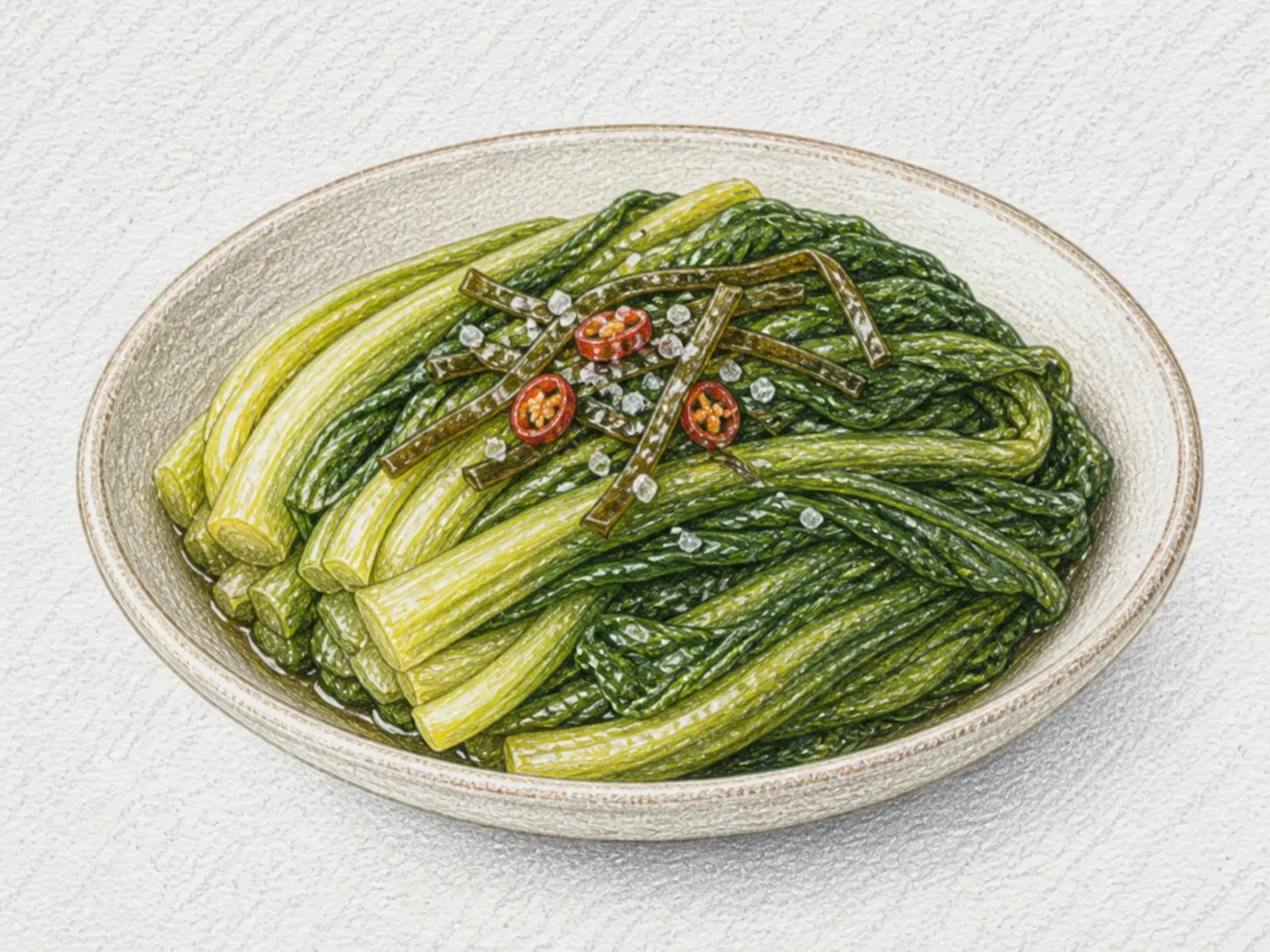
Nozawana-zuke (Fermented Nozawana Greens)
Quick answer
- Total time
- 300 min
- Level
- Hard
- Servings
- 100 servings
- Ingredients
- 5
About this dish
Frost-softened nozawana greens are layered whole in a barrel with salt, kombu and dried chili, then pressed under a heavy weight until their own brine rises and lactic fermentation proceeds in the cold.
Read more
The plant developed in the cool highlands of Nozawa Onsen in Nagano, growing long leaves and stalks rather than a big root, and became an essential way to keep greens through winter. It can be sampled after a few weeks and turns more sour and savory at around a month. With 40 kg of greens, foot-treading and stones of 30 kg or more, this is a two-person barrel project rather than a kitchen pickle.
Ingredients
Instructions
- 1
Use 40kg nozawana harvested after November 23 and exposed to frost.
Trim while leaving a little base, and slit the bases of large plants. Wash soil carefully from between leaves and near the roots, then spread out and drain completely.
- 2
Wash and fully dry a food-grade barrel of about 72L, its inner lid, and a 30kg to 40kg weight.
Sanitize the barrel interior with 180ml of the 35 percent shochu and air-dry. Fit a new food-grade liner and sanitize its interior with the remaining 180ml shochu.
- 3
Divide 1.2kg pickling salt according to the planned layers.
Pack nozawana tightly in one direction across the bottom and distribute salt, 160g shredded kombu, and, if desired, 80 dried chilies evenly between layers. Reverse the direction of the next layer to balance stems and leaves.
- 4
After every two layers, cover with a new food-grade sheet and press evenly with clean boots to reduce volume, then remove the sheet and continue layering. Keep pulling the liner upward so it does not fold inward. When full, close the liner and set on the inner lid and 30kg to 40kg weight.
- 5
Keep the barrel in a dark cool place at 0°C to 10°C and check daily for rising brine.
Once brine reaches above the vegetables, replace the weight with 10kg to 20kg, using only enough pressure to keep every leaf and stalk submerged.
- 6
Pour it around the barrel edge until submerged.
Never add plain water, and record the amount, concentration, and date.
- 7
From 2 to 3 weeks, remove one stalk with sanitized tongs to assess aroma and acidity, and continue cold fermentation to about 1 month. Do not manage fuzzy growth by merely skimming it; discard the entire batch if there is fuzzy mold, slime, pink or black discoloration, or rotten odor.
- 8
Divide the finished nozawana into sanitized smaller containers while keeping it submerged in brine, and store at 4°C or below.
Use clean tongs every time and cut only the serving amount into 3cm to 4cm lengths.
References checked
These references were consulted when this page was prepared or corrected. A source check does not mean the recipe was independently kitchen-tested.
- 일본 농림수산성 うちの郷土料理
「佐久市農村生活マイスターの会 レシピ集 母から子へ 孫へ伝える佐久の味」(佐久市農村生活マイスターの会) · Checked: 2026-08-11
Use-up ingredient planner
Turn these ingredients into two more meals
The overlap excludes basic seasonings. Open the next recipe and your selected dishes will stay with you.
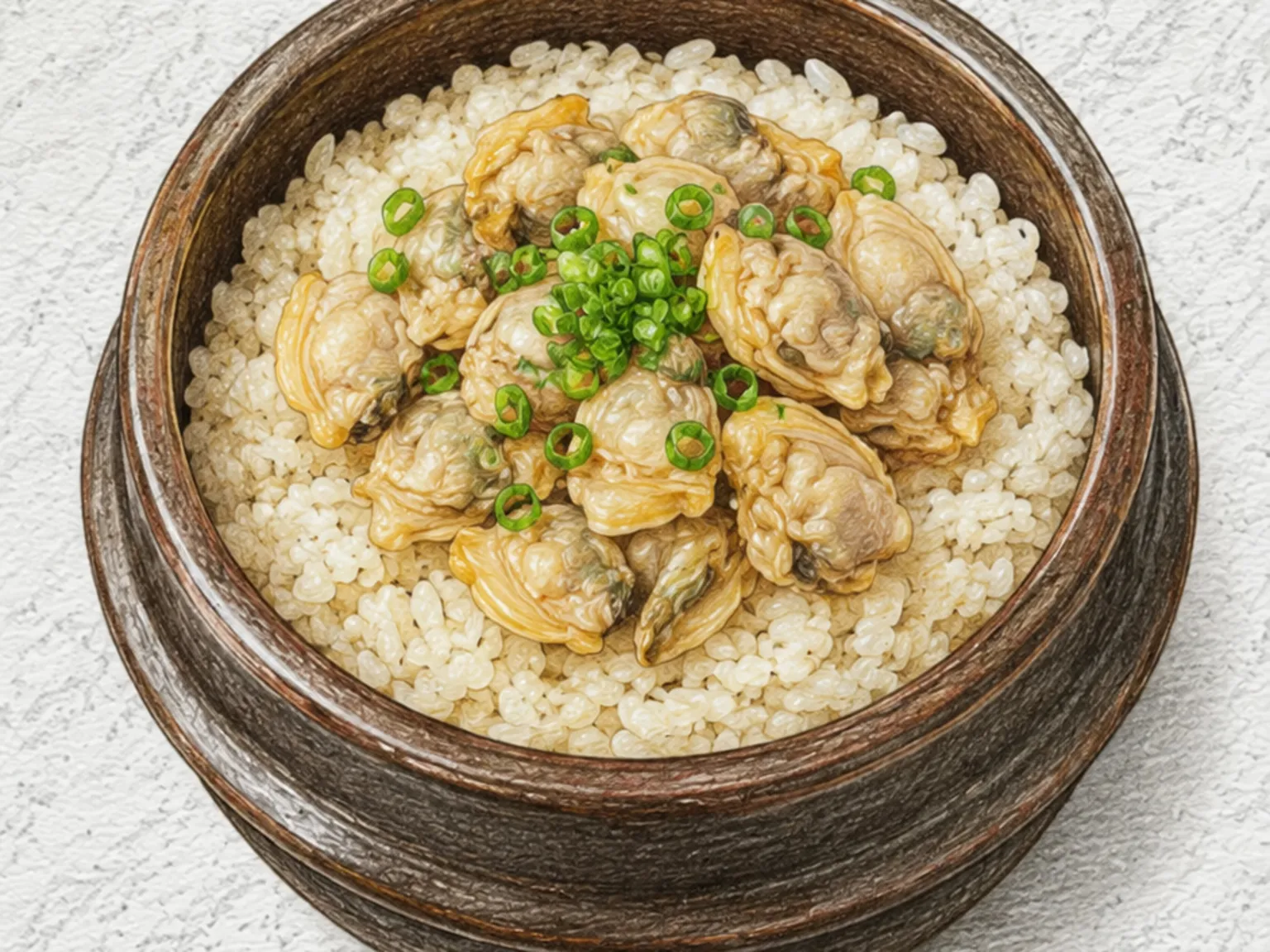
Korean Clam Pot Rice (Savory Clam Broth Cooked Rice Bowl)
shredded kombu
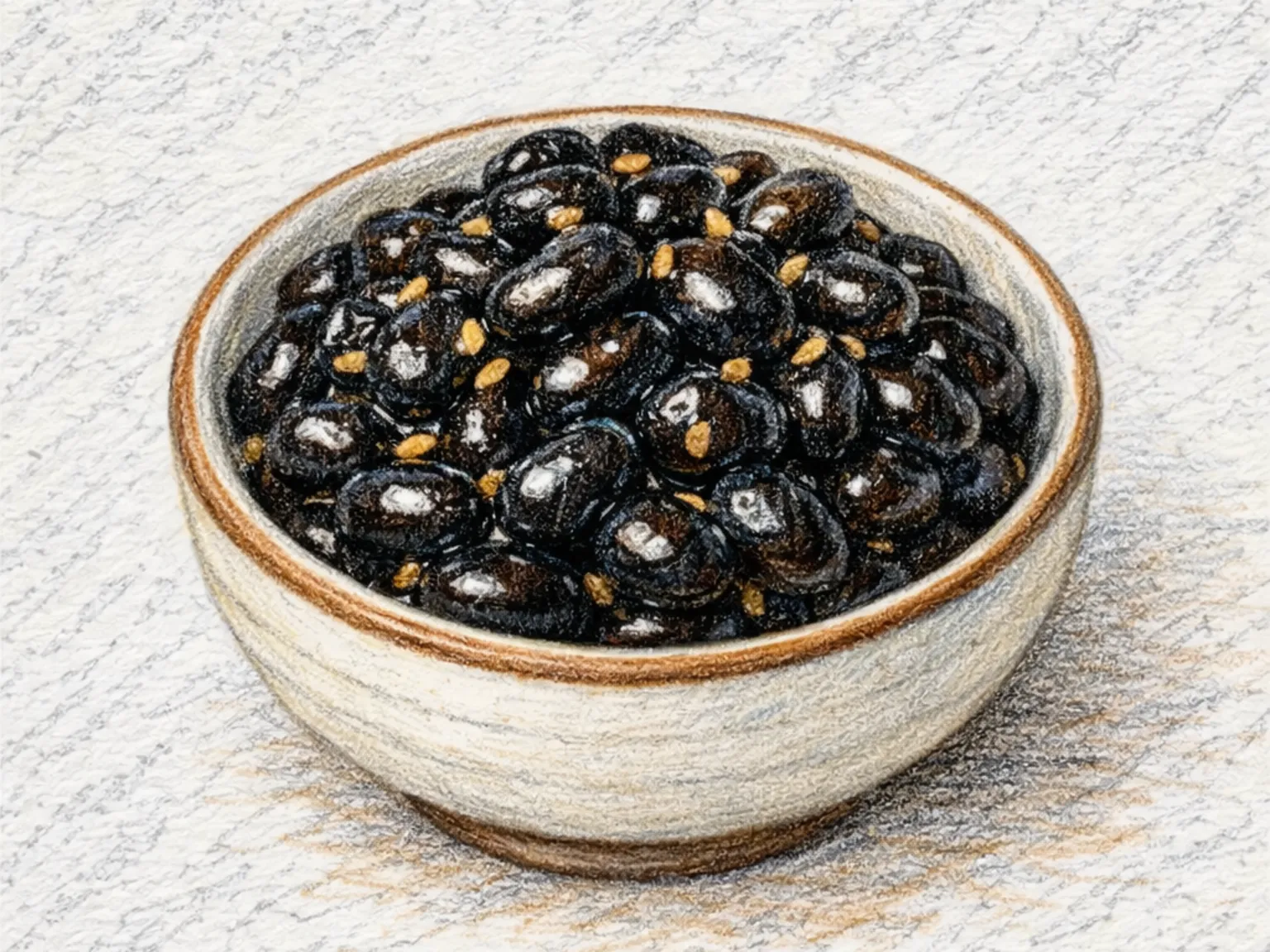
Korean Soy-Braised Black Beans
shredded kombu
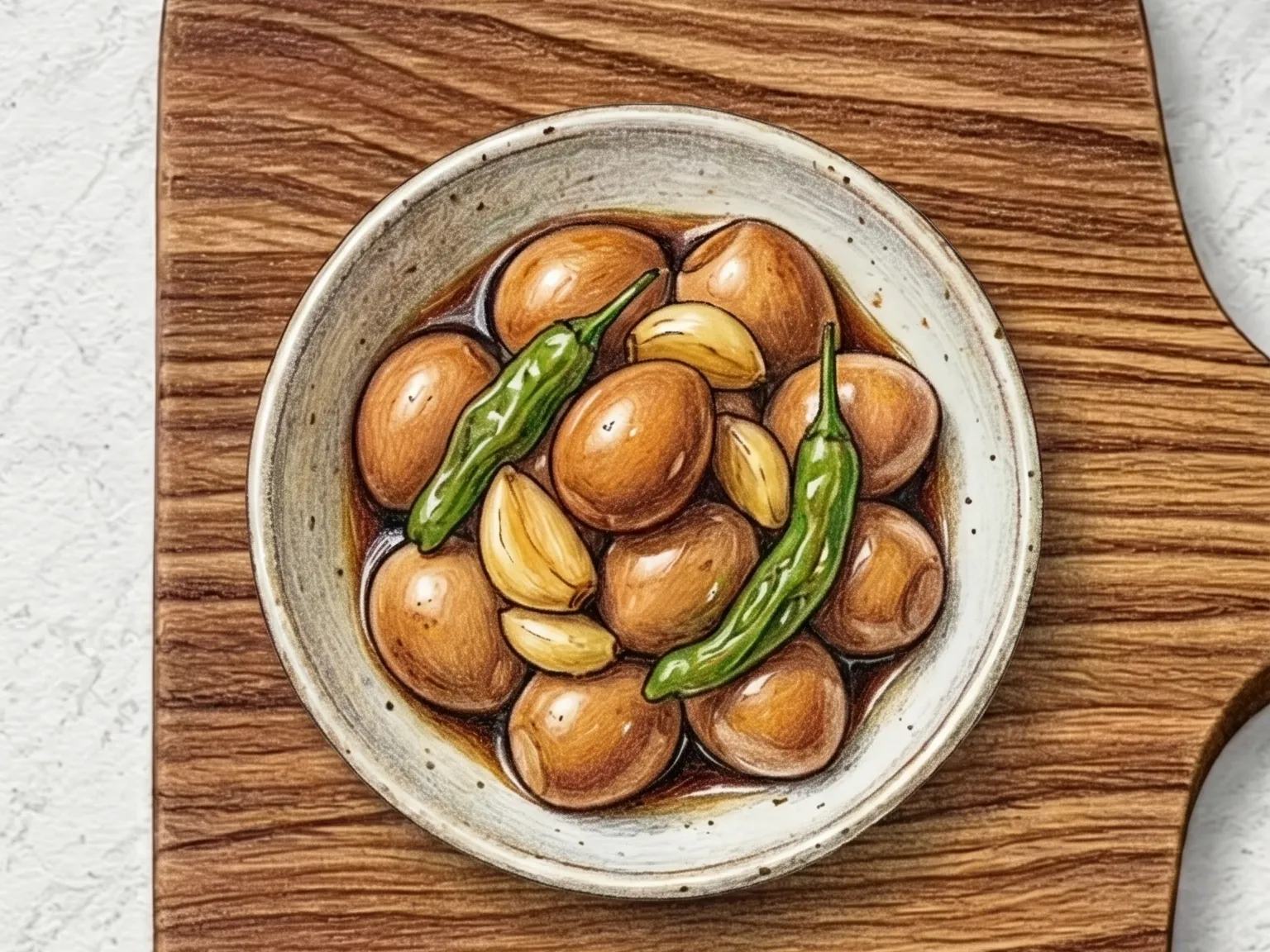
Korean Soy-Braised Quail Eggs
shredded kombu