Nut Tart
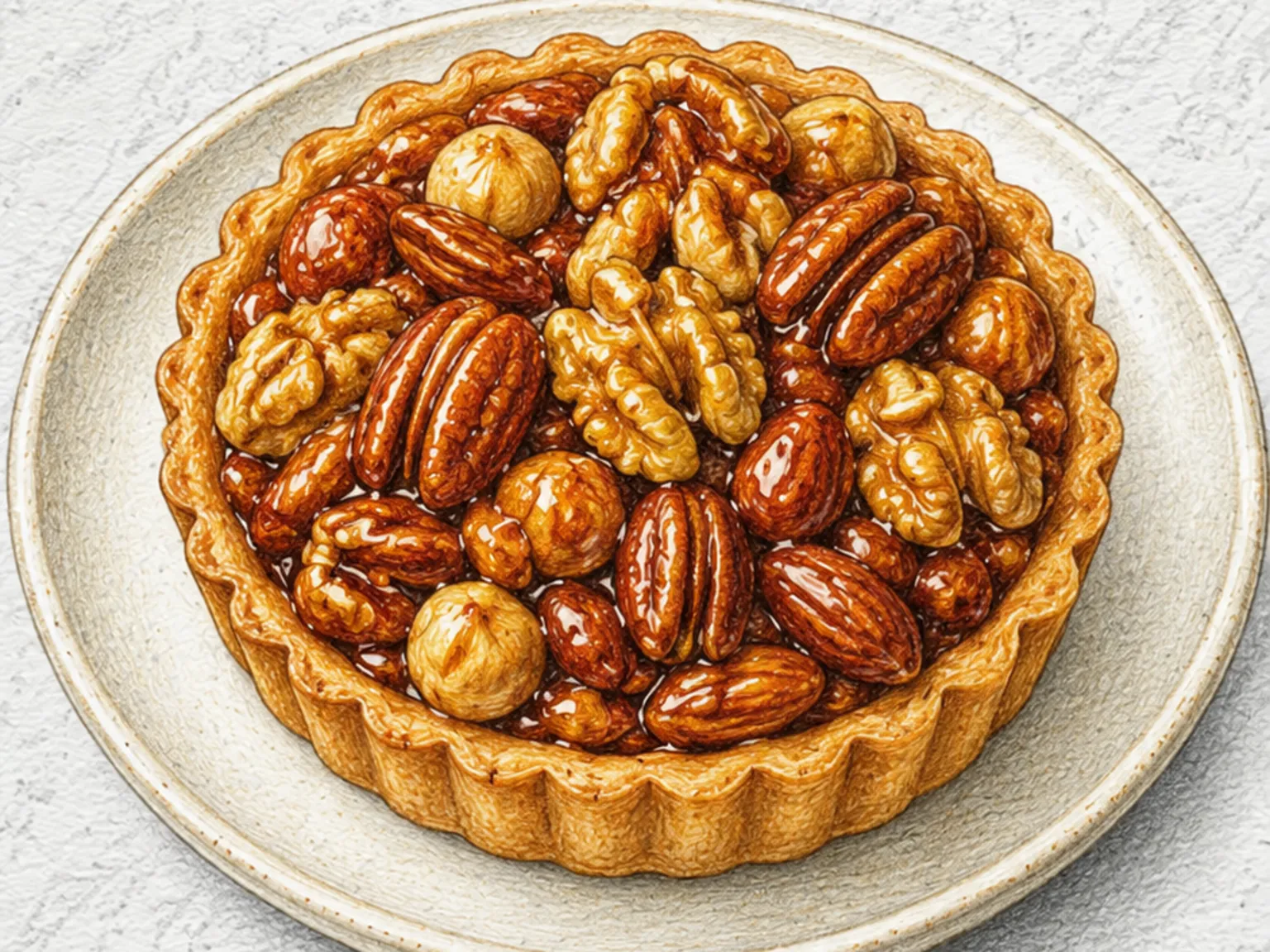
A buttery shortcrust shell is filled with a generous tumble of mixed nuts - walnuts, almonds, pecans, hazelnuts - bound together in a caramel of sugar, butter, and cream, then baked until the top turns deep amber. Each nut retains its individual character: the walnut's slight bitterness, the almond's clean sweetness, the pecan's buttery softness, the hazelnut's toasty depth. Pre-toasting the nuts before adding them to the caramel means they roast a second time in the oven, amplifying their oils and fragrance. The caramel must set firm enough to hold the filling in place when sliced but not so hard that it turns into toffee. A pinch of flaky sea salt over the top before baking lifts the sweetness into complexity. Served at room temperature with cold whipped cream, the contrast between the sticky, crunchy filling and the light dairy tempers the intensity.
Adjust Servings
Instructions
- 1
Make pastry dough with butter, flour, and egg; blind-bake.
- 2
Cook sugar to a caramel and whisk in the cream.
- 3
Fold the nuts into the caramel.
- 4
Pour into the shell and let set.
As an Amazon Associate, we may earn from qualifying purchases.
Tips
Nutrition (per serving)
Goes Well With

Sweet Rice Punch (Traditional Korean Malted Barley Grain Drink)
Sikhye is a traditional Korean sweet rice punch made by steeping malted barley powder in lukewarm water, straining the liquid, adding cooked rice, and holding the mixture at around 60 degrees Celsius for one hour until the rice grains float to the surface. The amylase enzymes in the malt break down the rice starch, producing a distinctly malty, clear sweetness with grain depth that no sugar alone can replicate. Only the clear top liquid is used after settling -- discarding the sediment keeps the punch from turning cloudy. Simmering with sugar and sliced ginger for 20 minutes rounds the sweetness and adds a gentle, spiced warmth to the finish. Served well chilled with the reserved floating rice grains and pine nuts on top, the cold temperature sharpens the malty aroma and makes each sip crisp. Temperature control during the steeping stage is critical: if the mixture exceeds 70 degrees Celsius, the amylase denatures and the grains will not float, so keeping a steady 60-degree hold determines whether the preparation succeeds.

Gnocchi alla Sorrentina (Tomato Mozzarella Baked Gnocchi)
Gnocchi alla Sorrentina is a southern Italian baked pasta dish from the Sorrento coast where soft potato gnocchi are tossed in tomato sauce, blanketed with torn mozzarella and grated Parmesan, then baked until the cheese melts and bubbles. Garlic is gently coaxed in olive oil before the tomato sauce goes in and simmers, drawing the garlic's mellow sweetness throughout the base. Gnocchi are boiled only until they float and then immediately drained to preserve their characteristic pillowy chew, before being folded into the sauce with half the basil and transferred to a baking dish. Eight minutes at 220 degrees Celsius transforms the cheese into a molten, pulling layer that unites the bright tomato acidity and the salty richness of the two cheeses into a single flavor. The remaining fresh basil scattered across the top at the end adds a fragrant lift that anchors the dish to its coastal Italian origins.

Korean Dalgona Milk (Caramel Puffed Sugar Candy Milk)
Dalgona milk starts with melting sugar in a small pan over low heat until it reaches a deep amber color, then adding baking soda, which causes the hot caramel to foam and aerate instantly into a honeycomb-like structure. Once cooled, the puffed candy is crushed and dissolved into cold milk. The baking soda reaction is what gives dalgona its distinctive lightness: instead of a dense, hard caramel, the aerated structure makes it brittle and easy to break while also helping it dissolve quickly in the milk. The caramelized sugar delivers a deep, toasty sweetness with a slight bitterness at the edges, similar to butterscotch, that spreads through the milk as the pieces melt. A small amount of vanilla extract sharpens the flavor and a pinch of salt rounds it out. Keeping some crushed dalgona pieces separate and dropping them on top of the finished drink as a garnish adds a crunchy contrast to the creamy liquid beneath.

Lotus Root Persimmon Salad
This salad combines blanched lotus root and sliced sweet persimmon to reflect seasonal autumn produce. The lotus root provides a clean and crisp texture that contrasts with the natural sweetness found in the fruit slices. A dressing composed of olive oil, honey, and fresh lemon juice is used to coat the ingredients without masking their individual flavors. Crumbled feta cheese provides a salty and tangy dairy element that balances the sugar content of the persimmon. Toasted walnuts, which are prepared by heating them briefly in a dry pan, contribute earthy fats and a crunchy texture that differs from the softer fruit. The salad is assembled on a base of baby greens to provide a layer of color. Dividing the dressing into two separate additions during the mixing process ensures that the seasoning is distributed evenly across all components. While the recipe typically uses firm persimmons, ripe soft persimmons known as hongsi can be used as an alternative. This variation produces a salad with a sweeter profile and a much softer, more yielding consistency.
More Recipes

Tarte Tatin (French Upside-Down Caramelized Apple Tart)
Apples are cooked in butter and sugar on the stovetop until the caramel darkens to a deep amber, then a sheet of puff pastry is draped over the top and the whole pan goes into the oven. After baking, the tart is inverted onto a plate so the caramelized apples become the glossy, lacquered top. The long exposure to heat transforms the apples from firm slices into soft, butter-soaked segments that are nearly translucent. The caramel should be pushed slightly past golden - a faint bitterness at the edge of sweetness gives the tart its signature depth. Cutting the pastry slightly larger than the pan and tucking the edges down around the apples prevents juice from leaking during baking. The inversion must happen within a few minutes of leaving the oven, while the caramel is still liquid enough to release cleanly. Served warm with a spoon of creme fraiche, the contrast between the hot, sticky apples and the cool, tangy cream is the defining experience of this dessert.

Cinnamon Rolls
Cinnamon rolls are yeasted enriched dough baked into spirals of butter, cinnamon, and brown sugar, with roots in both Scandinavian and North American baking traditions. The dough, enriched with milk, butter, and eggs, rises into a crumb soft enough to pull apart in layers by hand. A thick layer of softened butter and cinnamon-sugar is spread on the rolled dough before it is coiled tightly and sliced into rounds. During baking, the sugar melts and caramelizes between the coiled layers, and the cinnamon aroma filling the space is one of the most recognizable in all of baking. A cream cheese glaze poured over the hot rolls melts into a tangy coating that balances the sweetness. In Sweden the same concept appears as kanelbulle with less sugar and added cardamom; in the United States the rolls are rolled thicker and buried under a generous glaze.

Apple Crumble
Apple crumble was born from wartime constraint: during World War II, butter and sugar rationing in Britain made traditional double-crust pastry impractical, and bakers found that rubbing a far smaller amount of fat into flour and oats produced a topping that required none of the skill or rolling that pastry demanded. Sliced apples are tossed with sugar, lemon juice, and cinnamon, then spread into a baking dish and covered with the rough, breadcrumb-like mixture. In the oven, the fruit collapses into a thick, bubbling sauce while the topping bakes unevenly: the peaks turn deeply crisp and golden, while the underside where the topping meets the fruit juices becomes slightly sticky and chewy. Tart apple varieties such as Granny Smith hold up better under oven heat than sweet ones, turning into a fragrant sauce that contrasts with the sandy crumble overhead. The tension between the hot, yielding apple beneath and the crunchy, butter-scented rubble on top is the structural logic of the dish. Served with cold vanilla ice cream or warm pouring custard, the contrast multiplies further as cold cream melts into the steaming fruit. It remains the default British home dessert precisely because it needs nothing beyond what a reasonably stocked cupboard can supply and comes together in under an hour.

Butter Cookies
Butter cookies are a classic pastry built around the flavor of high-quality butter, aiming for a melt-in-the-mouth texture and a clean, rich aroma. Unsalted butter is creamed thoroughly with powdered sugar to incorporate air, creating the foundation for a crumbly, delicate crumb. Egg yolk and cake flour are mixed in just enough to form a smooth dough, and vanilla essence adds a sweet depth that complements the butter without distracting from it. Piped into flower or ring shapes, the cookies bake until the thin edges turn crisp and golden while the thicker centers remain tender and soft. Resting the piped shapes in the refrigerator for fifteen to twenty minutes before baking helps them hold their definition rather than spreading in the oven. The sweetness is deliberately restrained so the butter's own flavor comes through clearly. Stored in an airtight tin, the cookies maintain their snap and fragrance for over a week.

Laphet Thoke (Burmese s signature salad)
Laphet thoke is Myanmar's signature salad, built entirely around fermented tea leaves whose tannic bitterness and concentrated umami form the flavor foundation from which everything else is assembled. The leaves undergo a long fermentation that softens their rawness, coaxing out a layered sourness and complex savory depth that explains why laphet holds a ceremonial significance in Burmese food culture beyond its role as an everyday dish. Shredded cabbage provides a neutral, crunchy base, while chopped tomato adds juicy acidity that lightens the tea leaves' intensity and keeps the salad from feeling heavy. Roasted peanuts contribute a nutty richness, and fried garlic chips deliver a salty, crispy element that introduces textural contrast in every bite. The essential technique is dressing the tea leaves first with lime juice, sesame oil, and chili flakes, allowing the seasoning to soak fully into the leaves before the vegetables and nuts are folded in, so the bold flavors distribute evenly throughout the bowl rather than pooling at the bottom.

Mixed Korean Tempura
Modeum twigim is an assorted Korean tempura platter featuring sweet potato, squid, shrimp, onion, and carrot dipped in a light batter of frying powder mixed with cold water, then deep-fried at 170 degrees Celsius until crisp. Keeping the water cold and mixing minimally prevents gluten development, yielding a thin, shattering crust rather than a heavy coating. Each ingredient brings its own character: sweet potato offers starchy sweetness, squid and shrimp contribute oceanic umami, and onion and carrot release their natural moisture and fragrance as they fry. Because each ingredient has a different density and water content, maintaining a steady oil temperature is essential so every piece cooks through at the center while staying crisp at the surface. Served with a small bowl of soy sauce, the platter lets the clean frying flavor and the individual taste of each ingredient come through without any additional seasoning.