Korean Acanthopanax Herbal Tea
Quick answer
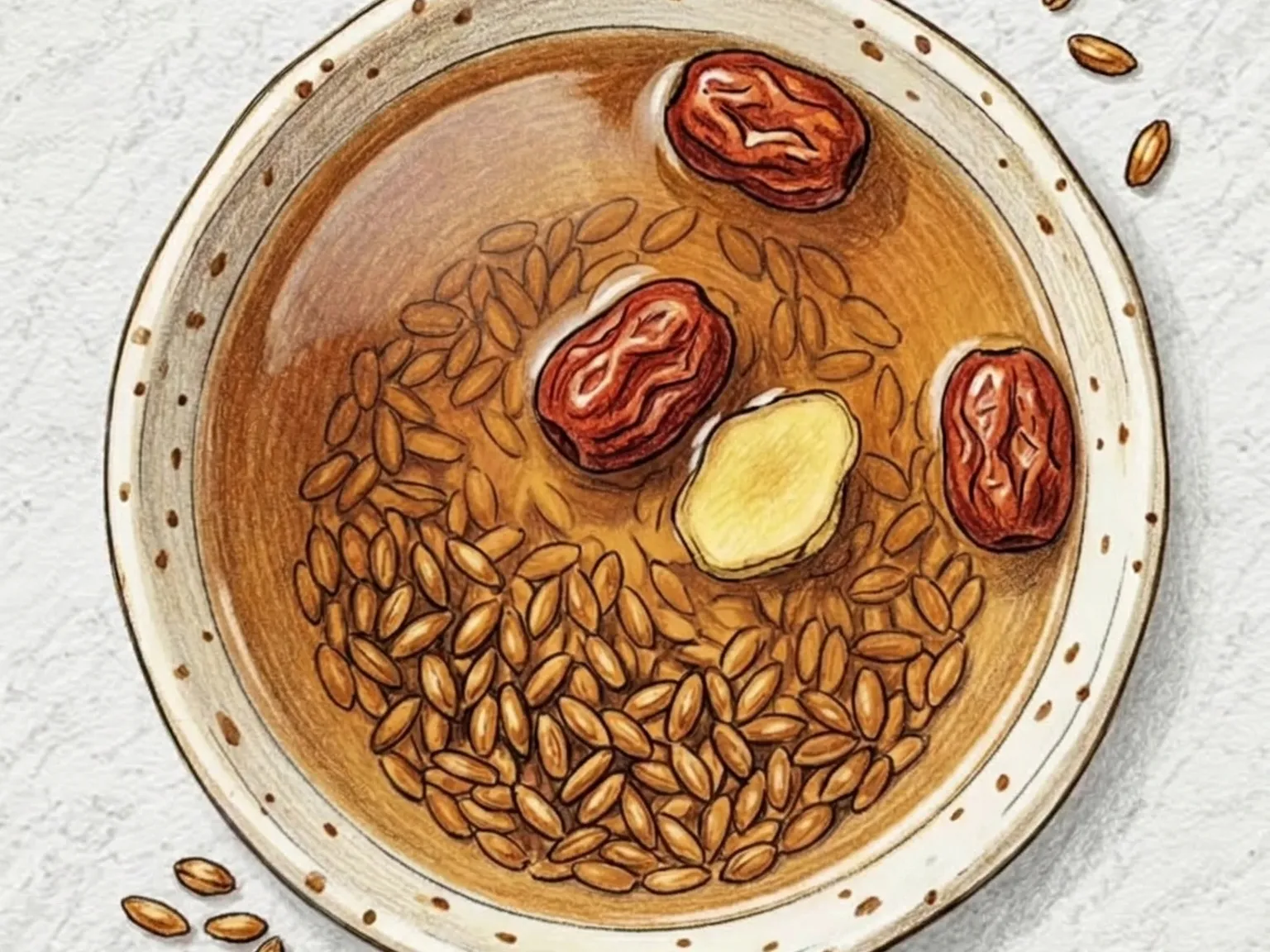
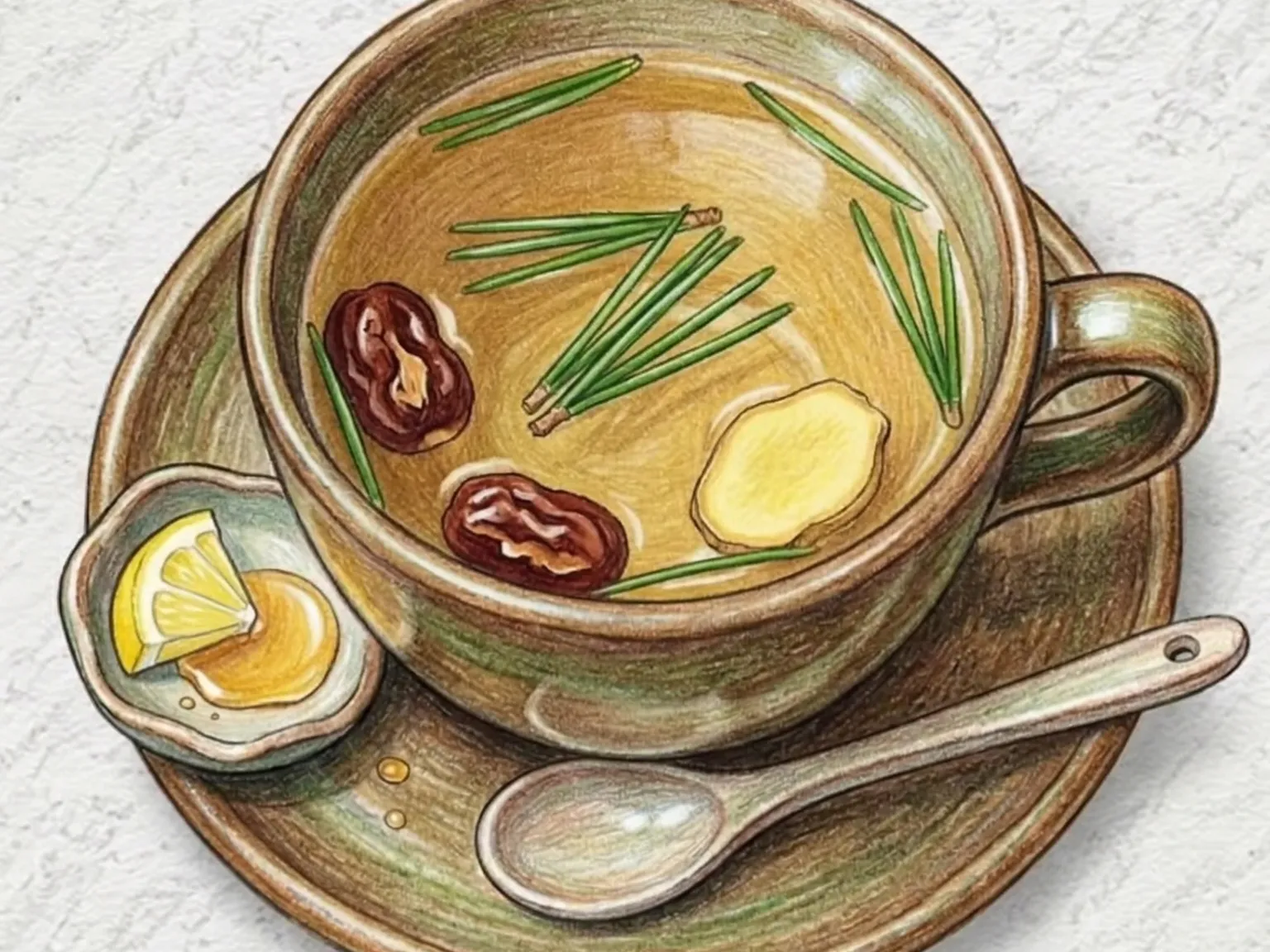
Ogapi-cha is a Korean herbal tea made by slow-decocting dried acanthopanax bark, astragalus root, jujubes, and fresh ginger in water for over 30 minutes on low heat.
What makes this special
- A cold water soak removes surface dust before simmering this medicinal Ogapi-cha herbal tea.
- Five-minute cold soak before simmering removes dust and raw off-notes
- Thirty minutes on low heat melds woody acanthopanax with mellow astragalus
Key ingredients
Core cooking flow
- 1 Rinse 18g of dried ogapi bark and 10g of astragalus root under cold water, t...
- 2 Make several small incisions around the seeds of 5 dried jujubes to help rel...
- 3 Place the prepared ogapi, astragalus, jujubes, and ginger into a large pot w...
Ogapi-cha is a Korean herbal tea made by slow-decocting dried acanthopanax bark, astragalus root, jujubes, and fresh ginger in water for over 30 minutes on low heat. The bark and astragalus are briefly soaked in cold water to loosen surface dust, the jujubes are scored with a knife to release their sweetness more readily, and the ginger is thinly sliced to maximize surface area. After an initial boil, the heat drops to a gentle simmer that coaxes a woody, slightly earthy aroma from the bark while the astragalus contributes a mellow root-like depth and the jujubes round out the flavor with quiet sweetness. The strained tea receives a tiny pinch of salt to anchor the flavor, and honey stirred in just before drinking softens the herbal bitterness into a smooth, warming finish.
Instructions
Read the steps as a cooking flow: prep, heat, seasoning, doneness control, and finish.
- 1Step
Rinse 18g of dried ogapi bark and 10g of astragalus root under cold water, then soak them in clean water for 5 minutes to remove impurities before draining them thoroughly.
- 2Step
Make several small incisions around the seeds of 5 dried jujubes to help release their flavor, and peel 15g of fresh ginger before slicing it into thin pieces to maximize aroma.
- 3Control
Place the prepared ogapi, astragalus, jujubes, and ginger into a large pot with 1300ml of water, then bring the mixture to a rolling boil over high heat with the lid removed.
- 4Control
Once the water boils, reduce the heat to low and cover with a lid, then simmer gently for 30 minutes to extract the active medicinal compounds and develop a deep herbal flavor.
- 5Control
Strain the brewed tea through a fine mesh to collect only the clear liquid, then add 0.5 teaspoon of salt to reduce bitterness and enhance the natural savory profile of herbs.
- 6Step
Pour the warm tea into a cup and stir in 2 tablespoons of honey right before serving to adjust the sweetness, then enjoy the gentle herbal aroma while drinking it slowly.
After the steps
Pick a recipe that fits this dish.
Continue with shared ingredients, meal pairings, or a similar method.
Recipes That Go Well With This
More Drinks →Based on shared ingredients and meal pairing
Korean Ssanghwa Herbal Tea
Ssanghwa-cha is a traditional Korean tonic tea made by slow-simmering astragalus root, angelica root, cinnamon bark, licorice, and jujube in approximately 1800 ml of water over low heat for more than fifty minutes. The prolonged extraction coaxes layered complexity from each herb, producing a brew that is simultaneously bitter, sweet, and warmly aromatic with cinnamon woven through every sip. Jujubes added during the simmer soften the sharpest herbal edges while contributing a mild natural sweetness that rounds the overall profile. Honey is stirred in after straining to let each person adjust the sweetness to taste. The tea is poured hot into a ceramic cup and finished with a small cluster of pine nuts whose oil blooms on contact with the steaming surface, releasing a gentle, nutty fragrance. The deep medicinal warmth lingers in the throat long after each sip, making the drink a reliable remedy for fatigue and cold weather.
Korean Kudzu Root Tea (Earthy Herbal Root Brew)
Chik-cha is a traditional Korean tea made by soaking dried kudzu root in cold water to remove dust, then slowly simmering it with sliced ginger, scored jujubes, and a cinnamon stick for at least twenty-five minutes on low heat. The kudzu root releases an earthy, starchy depth that forms the tea's backbone, while ginger adds warm pungency and cinnamon contributes a sweet, woody spice layer. Honey is stirred in only after the heat is turned off to preserve its floral aroma, and longer simmering intensifies the kudzu's flavor. In traditional Korean medicine, kudzu root has long been used to address fever and thirst, and the tea was commonly brewed at the first sign of a cold. Straining out the solids and storing the tea in a thermos keeps it warm and drinkable throughout the day.
Crispy Seaweed Chips
Basak gim-bugak is a traditional Korean snack made of seaweed sheets coated with glutinous rice paste and fried until crispy. The process begins by cooking a thick mixture of water, glutinous rice flour, and salt. After cooling the paste, it is spread thinly onto half of a seaweed sheet. The sheet is folded in half and coated with another thin layer of paste to build a double-layer structure. Sesame seeds are scattered on top before drying. The sheets are dried in a dehydrator or an air fryer at 80 degrees Celsius until stiff and hard. Ensuring the seaweed is completely dry, especially at the edges, is crucial for a crisp outcome. The dried pieces are flash-fried in hot oil at 180 degrees Celsius for just two to three seconds. They puff up instantly and must be removed quickly to prevent burning.
Korean Lotus Leaf Tea (Roasted Rice and Lotus Brew)
Yeonnip-cha is a Korean traditional tea brewed by simmering dried lotus leaf together with roasted brown rice, jujube, and ginger for fifteen minutes, then steeping covered for three more minutes to lock in the aroma. The fragrance of lotus leaf is understated and grassy, very different from the assertive herbal notes of Western tisanes, which makes it one of the more approachable traditional Korean teas for first-time drinkers. Roasted brown rice added to the pot contributes a toasty, nutty character that fills in the quiet gaps left by the lotus leaf and turns what might otherwise be a flat cup into something layered and satisfying. Jujube and ginger work together to sand down any rough vegetal edges and add a faint warmth and sweetness that carries through to the finish. Rice syrup can be stirred in to adjust sweetness, but only in small amounts, as too much drowns the delicate lotus fragrance that gives the tea its identity. Brewing time should be watched carefully; going beyond twenty minutes pulls out astringent tannins that make the tea bitter rather than clean. The tea contains no caffeine whatsoever, making it suitable before sleep or during pregnancy, and served cold over ice in summer it becomes a light, refreshing drink.
Serve with this
Gotgam Cream Cheese Roll (Dried Persimmon Rolls)
Gotgam cream cheese roll is a no-cook Korean dessert that requires nothing more than a knife, a bowl, and a refrigerator. Dried persimmons are slit open and flattened into thin sheets, each one acting as the outer wrapper. The filling is cream cheese mixed with honey and fresh lemon juice to balance its natural richness with acidity, and finely chopped walnuts are folded in throughout to add a crunchy, nutty element to every bite. The filling is spread across the opened persimmon, which is then rolled tightly and wrapped in plastic wrap. Twenty minutes in the refrigerator firms the roll enough to slice cleanly. Dipping the knife in warm water and wiping it dry before each cut produces the smoothest cross-sections. The finished slices reveal clearly defined layers: the chewy, caramel-sweet dried persimmon on the outside, the tangy cream cheese in the middle, and flecks of walnut distributed throughout. The combination makes it a natural pairing with wine or a polished addition to a traditional holiday table.
Korean Grilled Chicken Heart Skewers
Dak-yeomtong-kkochi starts by soaking trimmed chicken hearts in milk for fifteen minutes to remove any off-flavors, then threading them onto skewers for direct grilling. A glaze of soy sauce, gochujang, sugar, garlic, and cooking wine is applied in stages during grilling, building up a salty-sweet coating with gentle heat. Unlike regular chicken meat, hearts have a firm, springy chew that deepens in nuttiness the more you bite into them. The milk soak combined with garlic and cooking wine in the glaze cleanly removes any organ taste, so the finished skewers carry only the char from the grill and the layered seasoning. A common sight at street stalls and pojangmacha tents, these skewers work equally well as a quick snack eaten on the spot or as drinking food alongside a cold beer.
Danhobak Cream Cheese Swirl Muffin (Kabocha Cream Cheese Swirl Muffin)
Kabocha squash swirl muffins are autumn bakes that use steamed and mashed kabocha puree in the batter and a lightly sweetened cream cheese filling swirled across the top before baking. The puree contributes natural moisture and sweetness that transform the crumb from the typically dry muffin texture into something denser and notably more tender, while the orange pigment of the squash tints the batter to a warm amber that signals the season. A small amount of cinnamon and nutmeg deepens the earthy sweetness of the squash and wraps each bite in the rounded, cozy warmth that autumn spices are known for. The cream cheese filling is kept at minimal sweetness so its tanginess remains assertive, and drawing swirls through the batter with a toothpick before baking creates marble-like veins across the surface and through the interior once cut. The muffins emerge from the oven with lightly cracked, golden tops, and splitting one open reveals bright orange crumb threaded with white cream cheese streaks. The interplay between the sharp, rich cream cheese and the spiced squash crumb produces a complexity that makes these more interesting than a single-note muffin, and they come together in under an hour from mixing bowl to cooling rack.
Similar recipes
Korean Heotgae Tea (Oriental Raisin Tree Hangover Herbal Brew)
Heotgae-cha is a traditional Korean herbal tea made by simmering dried oriental raisin tree fruit with jujubes, ginger, and cinnamon over low heat for thirty-five minutes. The dried heotgae fruit, small and knobby in appearance, is astringent and muted in raw form, but prolonged simmering draws out a deep, earthy sweetness that gradually fills the water. Jujubes add natural sweetness and a faint fruity note, ginger contributes a sharp warmth that lingers at the tip of the tongue, and cinnamon layers in a gentle, aromatic sweetness, building a multi-layered flavor that develops slowly over the long cooking time. Honey is stirred in at the end to adjust sweetness to taste. In Korean traditional medicine, the oriental raisin tree has long been associated with supporting liver function and alleviating hangover symptoms, which is why the tea has been consumed as a morning-after drink for generations. Among Korean office workers accustomed to frequent after-work drinking gatherings, heotgae-cha remains one of the most commonly reached-for hangover remedies.
Baesuk (Korean Poached Pear Punch)
Baesuk is a traditional Korean punch made by slowly simmering whole or large-cut Korean pear with ginger, whole black peppercorns, and dried jujubes. As the pear cooks over low heat, its juice gradually dissolves into the liquid, building a natural sweetness that forms the drink's backbone. Ginger contributes a warm, peppery sharpness that interlocks with the pear's sweetness, producing a flavor that is comforting yet clean. Whole peppercorns are added sparingly and function as an aromatic element rather than a source of actual heat. Jujubes add a faint reddish tint and a mild fruity undertone to the liquid. Honey is stirred in after the heat is turned off and the temperature has dropped slightly to preserve its fragrance; because the pear already provides significant sweetness, the honey amount should start small and be adjusted by taste. Overnight refrigeration allows the ginger and pear flavors to penetrate more fully, rounding out the drink. Pine nuts floated on the surface before serving add a subtle oily richness to the finish of each sip. Historical records indicate that baesuk appeared on royal banquet tables during the Joseon dynasty and at aristocratic tea spreads, and Korean traditional medicine has long recommended it as a remedy for cold prevention and digestive support. Even today it remains a seasonal drink associated with holidays and ancestral rite preparations.
Green Tea Dasik Cookies (No-Bake Korean Matcha Pressed Cookies)
Nokcha dasik are Korean pressed tea cookies formed by binding roasted soybean powder and matcha with honey, rice syrup, and a touch of sesame oil, then stamping the mixture in a traditional wooden mold. No oven or heat is needed; the key is achieving a moisture ratio that lets the dough hold together under pressure without cracking. If the dough is too dry, the surface splits when unmolded; too wet, and the stamped pattern loses definition. Rice syrup quantity is the primary lever for adjusting consistency. On the tongue, the cookie dissolves gently, releasing the toasty depth of roasted soybean first, followed by the grassy bitterness of green tea that cleans the palate. The embossed pattern from the mold gives each piece a refined, ornamental appearance, and a brief air-dry at room temperature firms the surface enough for neat storage. Arranged two or three to a small plate beside a cup of tea, they make a composed and properly presented traditional tea-table spread.