Five-Grain Crispy Bars (Korean Puffed Rice and Seed Honey Bars)
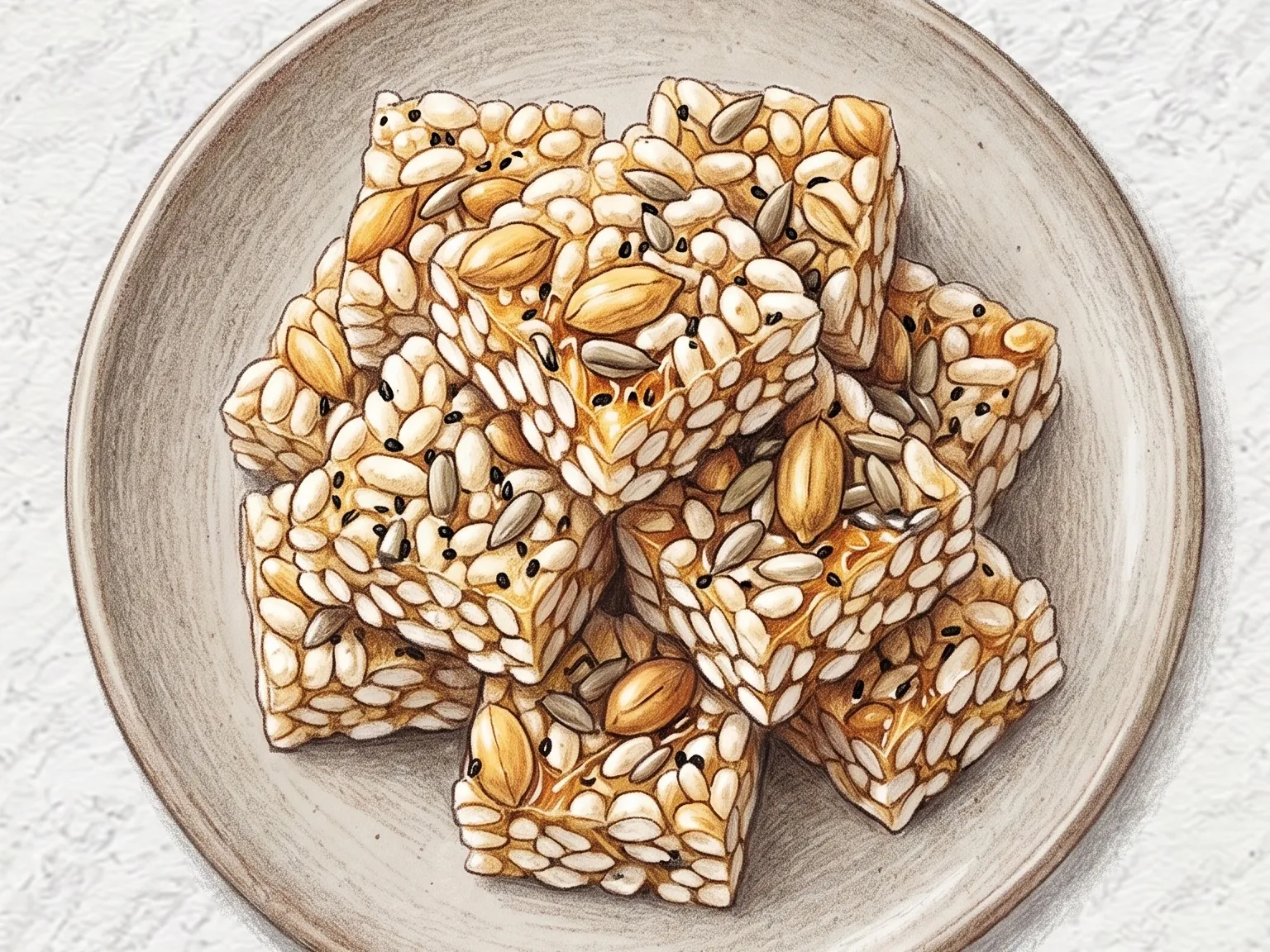
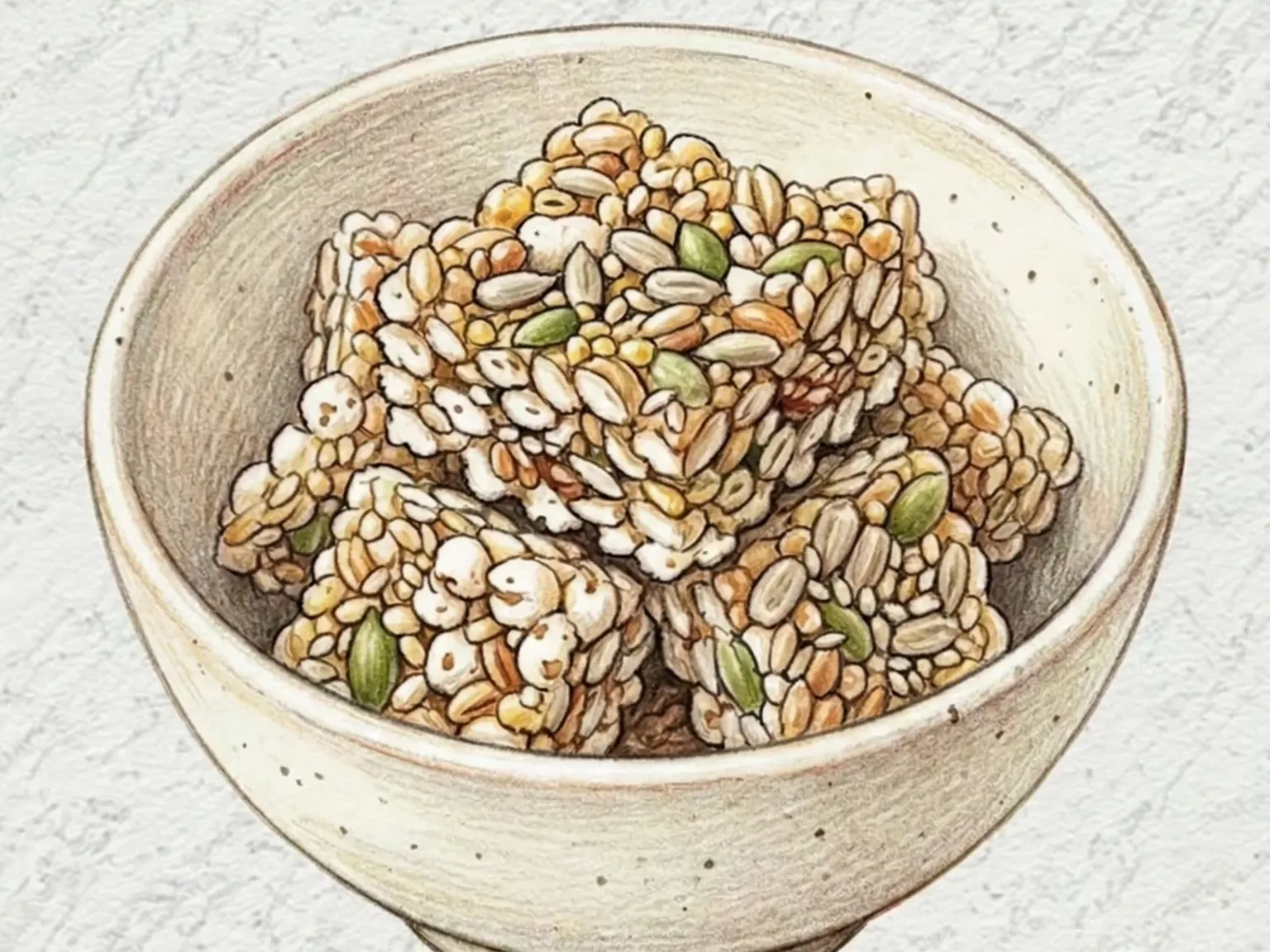
Ogok gangjeong is a traditional Korean grain bar made by binding five ingredients, puffed rice, toasted brown rice, sunflower seeds, pumpkin seeds, and black sesame, with a syrup of rice syrup and honey. The syrup is simmered for two to three minutes to build viscosity, then poured over the grain mixture and pressed into a lined pan within one minute before it sets. Each bite layers the airy crunch of puffed rice against the denser chew of brown rice, while sunflower and pumpkin seeds contribute a rich oiliness and black sesame adds a roasted undertone. Cutting with a lightly oiled knife after full cooling yields clean edges, and the bars keep their crispness for several days in airtight storage.
Adjust Servings
Instructions
- 1
Line a square pan with parchment and lightly oil the surface.
- 2
Combine puffed rice, toasted brown rice, sunflower seeds, pumpkin seeds, and black sesame in a large bowl.
- 3
Heat rice syrup, honey, and salt over low heat for 2-3 minutes until slightly thickened.
- 4
Pour syrup over the grain mix and toss quickly to coat everything evenly.
- 5
Transfer to the pan and press firmly with a damp spatula to level the surface.
- 6
Set for 20 minutes, cut into bite-size bars, and cool completely before storing.
As an Amazon Associate, we may earn from qualifying purchases.
Tips
Nutrition (per serving)
More Recipes

Korean Rice Puff Gangjeong
Ssal-gangjeong is a traditional Korean confection made by binding puffed rice, roasted peanuts, sunflower seeds, and black sesame in a syrup of rice malt and sugar, then pressing the mixture into a mold to set. Controlling syrup temperature is essential: heating too high makes the bars rock-hard once cooled, so stopping when the syrup forms soft threads keeps the final texture crisp yet breakable. The airy crunch of puffed rice contrasts with the firm bite of whole nuts, while black sesame adds a lingering toasty undertone. Scoring the slab before it fully cools produces clean cuts, and storing in an airtight container preserves the crispness for several days.

Honey Rice Puff Cookies (Korean Double-Fried Puffed Glutinous Rice)
Yugwa is a traditional Korean rice puff cookie made by kneading glutinous rice flour with makgeolli, drying the shaped pieces for two hours, then double-frying them at low and high temperatures to achieve dramatic puffing. The yeast in makgeolli creates tiny air pockets in the dough that expand during the second, hotter fry, and thorough drying beforehand is essential to prevent dangerous oil splatter. A warm glaze of rice syrup and honey is tossed over the fried pieces, forming a sticky layer that anchors a coating of puffed rice and a dusting of ground cinnamon. The finished cookie shatters into airy shards when bitten, with the nutty, fermented depth of glutinous rice meeting the warm spice of cinnamon under a crisp cereal shell.

Honey-Filled Rice Cakes (Steamed Glutinous Rice with Brown Sugar Syrup)
Kkultteok are bite-sized Korean rice cakes made by kneading glutinous rice flour with hot water, wrapping each 20-gram portion around a filling of dark brown sugar, ground cinnamon, and chopped walnuts, then steaming for eight to ten minutes. After steaming, a light brush of sesame oil gives the surface a sheen and prevents the pieces from sticking, and a final coating of roasted soybean powder adds a powdery, nutty layer. Biting through the chewy shell releases a pool of melted brown sugar syrup laced with cinnamon warmth, while the walnut fragments provide a contrasting crunch. The most critical step is pinching the dough seam tightly closed so the liquid filling does not leak out during steaming.

Gaeseong Juak (Honey Fried Rice Cake)
Crispy outside, chewy inside, and glazed in warm honey syrup with cinnamon and pine nuts, this Goryeo-dynasty confection is Korea's answer to a fried doughnut. The two-stage frying method starts at 150 degrees Celsius to set the interior, then finishes at 170 degrees to develop a light golden crust, yielding a thin crisp shell around a chewy core. After frying, each piece is rolled in a warm glaze of honey and rice syrup, which coats the surface in a glossy, fragrant sweetness. A final dusting of ground cinnamon and chopped pine nuts adds aromatic spice and crunch, completing a confection that traces its origins to the Gaeseong region and the Goryeo dynasty.

Jeungpyeon (Fermented Makgeolli Rice Cake)
Jeungpyeon is a traditional Korean fermented rice cake made by mixing rice flour with makgeolli, fermenting the batter in a warm spot for one hour until bubbly, then steaming for eighteen to twenty minutes. The yeast and lactic acid bacteria in the makgeolli break down the rice starch while generating small air pockets, and a supplementary addition of baking powder ensures the cake rises into a soft, sponge-like crumb. Raisins and pumpkin seeds placed on top just before steaming soften slightly in the heat, contributing fruit sweetness and seed richness to the surface. Wrapping the steamer lid with cloth prevents condensation from dripping onto the cakes, which keeps the top smooth, and the lingering makgeolli fermentation aroma sets jeungpyeon apart from other steamed rice cakes.

Korean Rice Puff Confection
Gangjeong is a traditional Korean confection made by coating puffed glutinous rice in warm rice syrup, then pressing the mixture into molds and allowing it to set. The process begins with soaking and steaming glutinous rice, drying it thoroughly, and deep-frying the grains until they puff into white, airy clusters. Working quickly, the hot syrup is folded through the puffs so that it bonds every piece together without making them soggy. Once cooled, the confection firms into a block that shatters satisfyingly when bitten. The rice syrup provides a gentle, caramel-like sweetness that never overwhelms. Black sesame seeds, pine nuts, or peanuts mixed in before setting add nutty richness and visual contrast. In Korean tradition, brightly colored versions appear on holiday tables, dyed with natural food colorings. Stored in an airtight container, gangjeong keeps its crunch for several days.