Sweet Rice Punch (Traditional Korean Malted Barley Grain Drink)
Quick answer
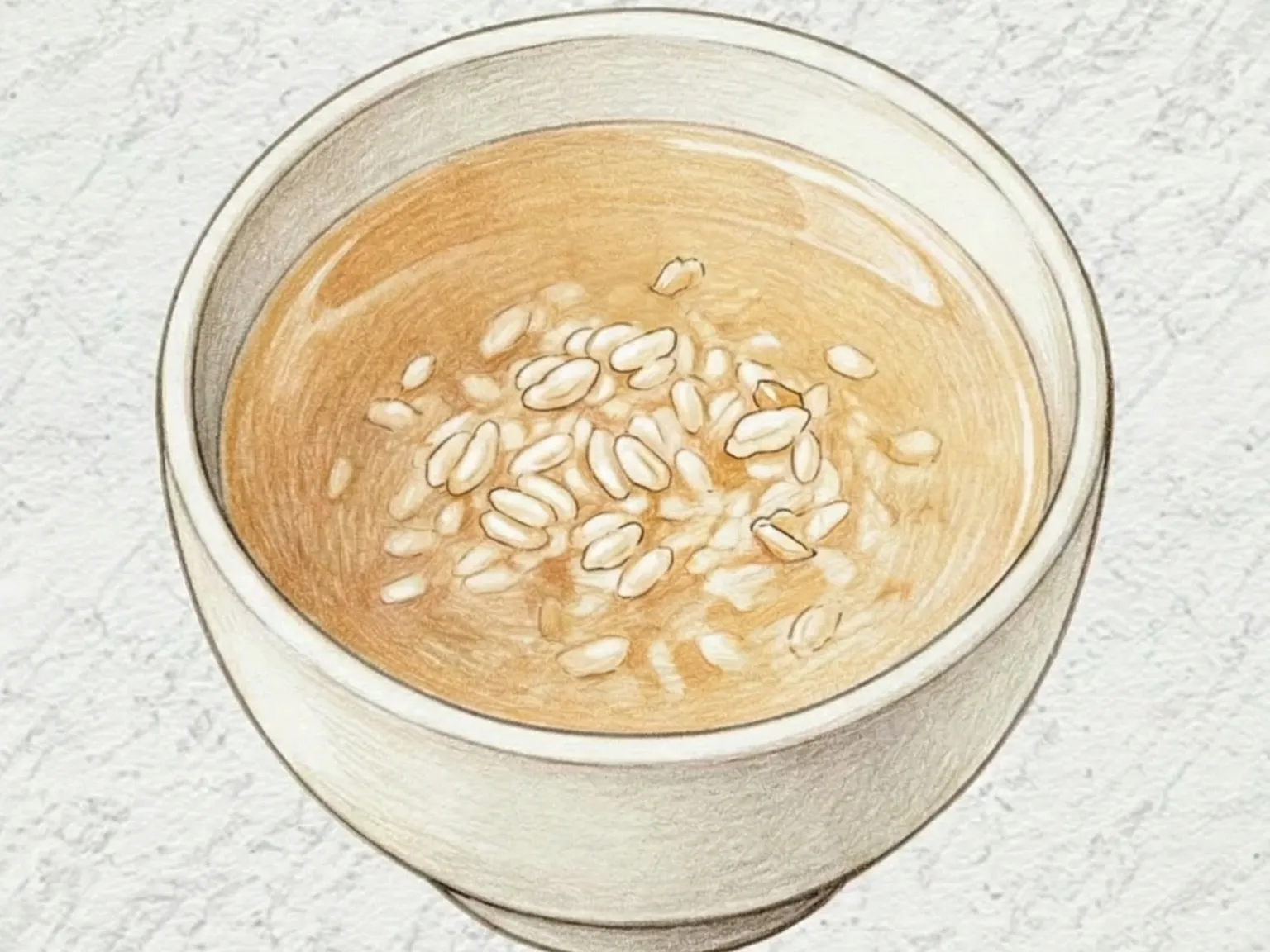
Sikhye is a traditional Korean sweet rice punch made by steeping malted barley powder in lukewarm water, straining the liquid, adding cooked rice, and holding the mixture...
What makes this special
- Sikhye sweet rice punch uses malted barley amylase to float cooked grains at a steady 60 degree Celsius.
- Malted barley amylase floats the rice grains at 60C for 1 hour
- Above 70C enzymes deactivate; temperature control decides success
Key ingredients
Core cooking flow
- 1 Pour 500ml lukewarm water over 120g barley malt, soak for 20 minutes, knead...
- 2 Pour the remaining water over the spent malt in two additions, extracting ea...
- 3 Carefully pour only the clear liquid into a pot, add 180g cooked rice and 12...
Sikhye is a traditional Korean sweet rice punch made by steeping malted barley powder in lukewarm water, straining the liquid, adding cooked rice, and holding the mixture at around 60 degrees Celsius for one hour until the rice grains float to the surface. The amylase enzymes in the malt break down the rice starch, producing a distinctly malty, clear sweetness with grain depth that no sugar alone can replicate. Only the clear top liquid is used after settling -- discarding the sediment keeps the punch from turning cloudy. Simmering with sugar and sliced ginger for 20 minutes rounds the sweetness and adds a gentle, spiced warmth to the finish. Served well chilled with the reserved floating rice grains and pine nuts on top, the cold temperature sharpens the malty aroma and makes each sip crisp. Temperature control during the steeping stage is critical: if the mixture exceeds 70 degrees Celsius, the amylase denatures and the grains will not float, so keeping a steady 60-degree hold determines whether the preparation succeeds.
Instructions
Read the steps as a cooking flow: prep, heat, seasoning, doneness control, and finish.
- 1Step
Pour 500ml lukewarm water over 120g barley malt, soak for 20 minutes, knead by hand to fully dissolve the starch, then strain through a fine sieve to collect the liquid.
- 2Prep
Pour the remaining water over the spent malt in two additions, extracting each time the same way, combine all the liquid and rest for 30 minutes so the sediment settles to the bottom.
- 3Heat
Carefully pour only the clear liquid into a pot, add 180g cooked rice and 12g thinly sliced ginger, and maintain at 60C for 1 hour until several rice grains float to the surface, indicating saccharification is complete.
- 4Control
Scoop out the rice grains with a strainer, rinse in cold water to remove stickiness, and keep separately; boil the liquid over medium-low heat for 20 minutes to deactivate the saccharification enzymes.
- 5Finish
Add 90g sugar and the reserved sliced ginger to the liquid and simmer over medium-low heat for 20 minutes until the ginger flavor fully infuses.
- 6Finish
Cool completely and refrigerate; just before serving, add the reserved rice grains and 8g pine nuts to each bowl and serve cold.
After the steps
Pick a recipe that fits this dish.
Continue with shared ingredients, meal pairings, or a similar method.
Recipes That Go Well With This
More Desserts →Based on shared ingredients and meal pairing
Sweet Pumpkin Rice Punch (Korean Kabocha Malt Drink)
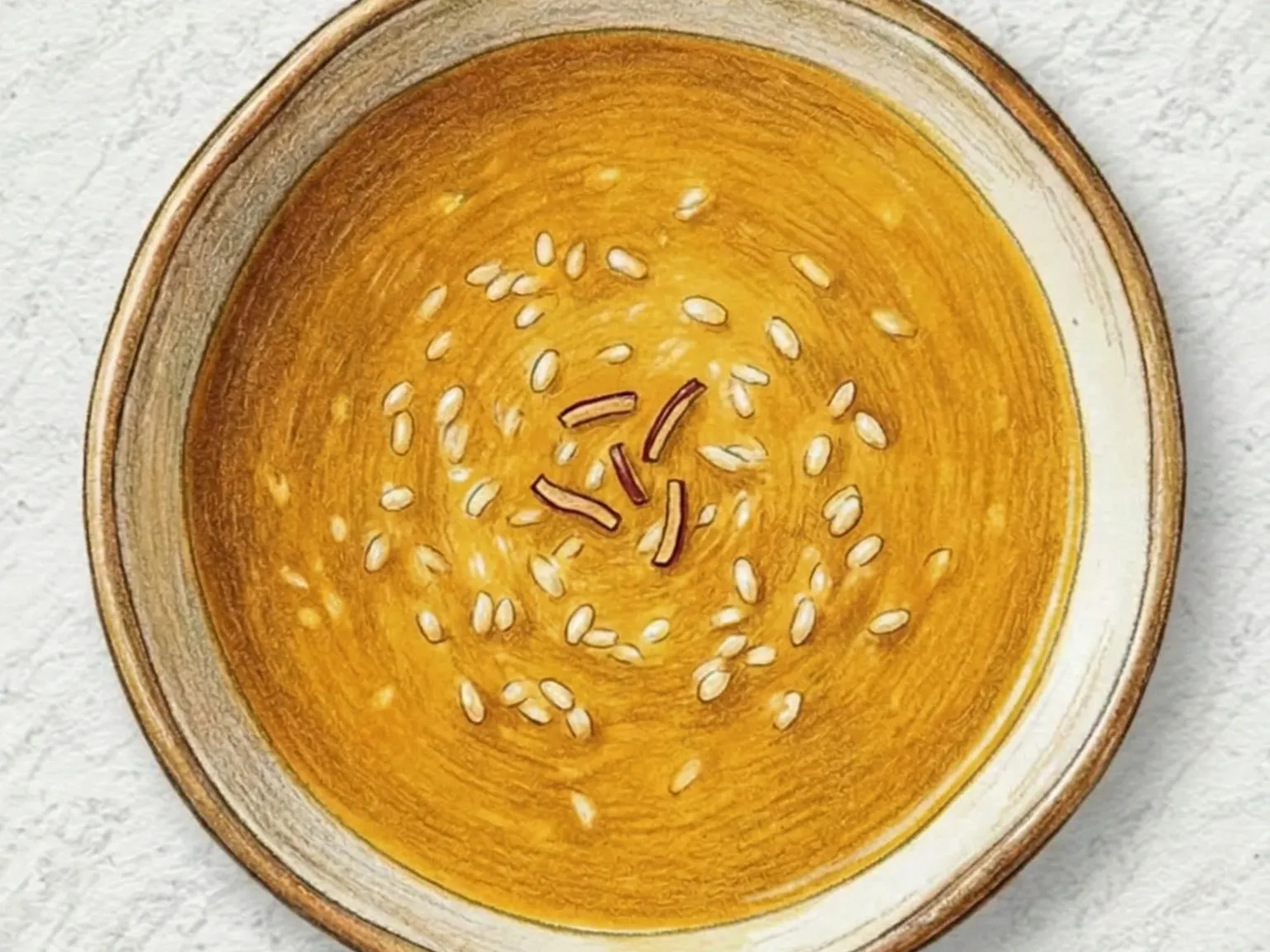
Danhobak sikhye is a Korean malt rice punch with steamed kabocha pumpkin puree stirred in to thicken the body and deepen the color beyond what plain sikhye offers. The base follows traditional method: cooked rice steeps in malt-strained water held at around 60 degrees Celsius, where the malt enzymes convert starches to maltose over several hours, creating a sweetness that needs no added sugar. Kabocha puree blended into the fermented liquid adds a dense, velvety weight and a warm golden-orange color. Sliced fresh ginger added during the fermentation hold leaves a faint spicy note in the finish, which prevents the pumpkin's natural sweetness from turning cloying as the drink warms. After the steeping is done, the liquid is brought to a full boil to stop the enzyme activity before cooling. Served cold with a few floating rice grains, it occupies the space between a refreshing beverage and a light dessert.
Baesuk (Korean Poached Pear Punch)
Baesuk is a traditional Korean punch made by slowly simmering whole or large-cut Korean pear with ginger, whole black peppercorns, and dried jujubes. As the pear cooks over low heat, its juice gradually dissolves into the liquid, building a natural sweetness that forms the drink's backbone. Ginger contributes a warm, peppery sharpness that interlocks with the pear's sweetness, producing a flavor that is comforting yet clean. Whole peppercorns are added sparingly and function as an aromatic element rather than a source of actual heat. Jujubes add a faint reddish tint and a mild fruity undertone to the liquid. Honey is stirred in after the heat is turned off and the temperature has dropped slightly to preserve its fragrance; because the pear already provides significant sweetness, the honey amount should start small and be adjusted by taste. Overnight refrigeration allows the ginger and pear flavors to penetrate more fully, rounding out the drink. Pine nuts floated on the surface before serving add a subtle oily richness to the finish of each sip. Historical records indicate that baesuk appeared on royal banquet tables during the Joseon dynasty and at aristocratic tea spreads, and Korean traditional medicine has long recommended it as a remedy for cold prevention and digestive support. Even today it remains a seasonal drink associated with holidays and ancestral rite preparations.
Soboro Bread (Korean Sweet Streusel-Topped Bun)
Soboro bread is a Korean bakery staple that tops a soft, milk-enriched yeast bun with a layer of sweet cookie crumble. The bun interior is pillowy and slightly sweet, with a fine crumb that tears in gentle strands, while the streusel cap - mixed from butter, sugar, egg, and flour - bakes into a crunchy, golden shell that cracks into irregular pieces. The appeal lies in the contrast: each bite delivers both the airy softness of enriched bread and the sandy crunch of a cookie. Applying the crumble after the second proof, rather than before, prevents the rising dough from being weighed down and allows the surface to fracture naturally in the oven's heat. The crumble stays crisp even after the bread cools completely, which is why soboro bread remains satisfying the next day when many other bakery items have gone stale.
Korean Five-Grain Sweet Rice Punch
Ogok-sikhye is a traditional Korean grain punch made by saccharifying a mix of cooked sweet rice, barley, millet, and foxtail millet in barley malt extract at 60 to 65 degrees Celsius for one hour. The malt powder is soaked in lukewarm water for 20 minutes, kneaded by hand, and strained through a cloth to yield a clear, enzyme-rich liquid -- this is the working ingredient that converts the grain starches into natural sugars during the slow saccharification. Temperature control is central to the process: below 60 degrees the enzymes slow down, and above 70 degrees they denature and die, so maintaining the right range throughout the hour-long rest determines whether the conversion succeeds. As saccharification progresses, the rice grains hollow out and float to the surface; these are skimmed off, rinsed separately, and later floated back into the finished punch to add a soft, chewable element to each cup. After sweetening with sugar and chilling completely in the refrigerator, the drink is served cold with pine nuts floating on top. The combination of multiple grains produces a more layered, complex sweetness than single-grain sikhye, and the overnight rest in the refrigerator smooths the flavor into something more cohesive.
Serve with this
Korean Kkul Tarae Honey Threads
Kkul tarae is a traditional Korean confection made by boiling rice syrup, corn syrup, and sugar to between 115 and 125 degrees Celsius, cooling the candy ring, then repeatedly stretching and folding it with dustings of glutinous rice flour until thousands of hair-thin strands form. The finished thread bundle is filled with roasted peanut, almond, and black sesame powders mixed together, rolled up, and cut into bite-sized pieces. Temperature control during candy cooking is critical: below 115 degrees the syrup stays too pliable to hold shape, above 125 it hardens before you can work it. Each stretch-and-fold cycle doubles the strand count and makes the bundle progressively lighter and more cloud-like, so the final texture in the mouth is a slow, silky dissolve rather than a chew. High humidity causes the delicate strands to stick to one another, making rapid work in a dry environment essential. Near Gyeongbokgung Palace and other tourist areas in Seoul, vendors often demonstrate the stretching process live as part of the sale.
Korean Dalgona Milk (Caramel Puffed Sugar Candy Milk)
Dalgona milk starts with melting sugar in a small pan over low heat until it reaches a deep amber color, then adding baking soda, which causes the hot caramel to foam and aerate instantly into a honeycomb-like structure. Once cooled, the puffed candy is crushed and dissolved into cold milk. The baking soda reaction is what gives dalgona its distinctive lightness: instead of a dense, hard caramel, the aerated structure makes it brittle and easy to break while also helping it dissolve quickly in the milk. The caramelized sugar delivers a deep, toasty sweetness with a slight bitterness at the edges, similar to butterscotch, that spreads through the milk as the pieces melt. A small amount of vanilla extract sharpens the flavor and a pinch of salt rounds it out. Keeping some crushed dalgona pieces separate and dropping them on top of the finished drink as a garnish adds a crunchy contrast to the creamy liquid beneath.
Buffalo Wings
Buffalo wings coat chicken wings in baking powder and roast them at high heat for forty-five minutes, producing a crisp skin without deep-frying. The baking powder raises the skin's pH to accelerate the Maillard reaction and drives out moisture faster, yielding a crunch that rivals the fryer. Straight from the oven, the wings are tossed in a sauce of melted butter and hot sauce - the butter tempers the vinegar-based heat into something that coats the tongue rather than burning it, and a touch of white vinegar at the end sharpens the finish. Blue cheese dipping sauce and celery sticks served alongside provide a cooling, creamy contrast and a crisp palate cleanser between bites.
Similar recipes
Schisandra Fruit Punch (Korean Cold-Brewed Berry Fruit Bowl)
Omija hwachae is a traditional Korean fruit punch made by cold-infusing dried schisandra berries in water for at least two hours to extract a vivid red liquid, then sweetening with honey. Cold extraction is not optional: hot water pulls excess astringency from the berries and makes the liquid harsh rather than bright. Only a small portion of the infusion is gently warmed to dissolve the honey before the two are combined. Scooped balls of Korean pear and watermelon sit submerged in the chilled omija broth, so each spoonful delivers a crisp, juice-filled bite against the tart-sweet liquid. Pine nuts floated on the surface add a mild fatty richness that tempers the sharpness of the schisandra acid, and serving the hwachae over generous ice keeps every component at its most vivid.
Korean Sweet Glutinous Rice
Glutinous rice is soaked, steamed, and dressed with a mixture of soy sauce, sesame oil, and honey, then studded with jujubes, chestnuts, and pine nuts before a second steaming. The double-steaming process gives the rice a dense, chewy stickiness while the soy sauce penetrates each grain and tints it a deep amber. Jujubes lend a natural caramel-like sweetness, chestnuts add a crumbly, starchy contrast, and pine nuts contribute a subtle oiliness that enriches the overall taste. Traditionally prepared for the first full moon festival, yakbap is equally enjoyable as an everyday snack or packed lunch.
Korean Sweet Corn Latte (Butter Sauteed Corn Milk Drink)
Sweet corn latte begins by sauteing cooked corn kernels in butter until fragrant, then simmering them in milk to draw out the corn's natural sugars before blending everything smooth. The butter amplifies the starchy, roasted aroma during the initial saute, coating each kernel so that the fat-soluble flavor compounds dissolve fully into the milk during the five-minute simmer. Blending the mixture until completely smooth and then straining it through a fine sieve removes any remaining hull pieces, producing a texture as silky as a custard sauce. This straining step makes a noticeable difference in the final quality. Condensed milk adds a rounded sweetness, and a small amount of white pepper introduces a faint spiced warmth that gives the drink depth beneath the sweetness. It works equally well served hot in a ceramic mug or chilled and poured over ice; the corn aroma remains vivid in both versions.