Honey Ginger Pastry (Korean Deep-Fried Layered Wheat Honey Cookie)

Honey Ginger Pastry (Korean Deep-Fried Layered Wheat Honey Cookie)

Quick answer

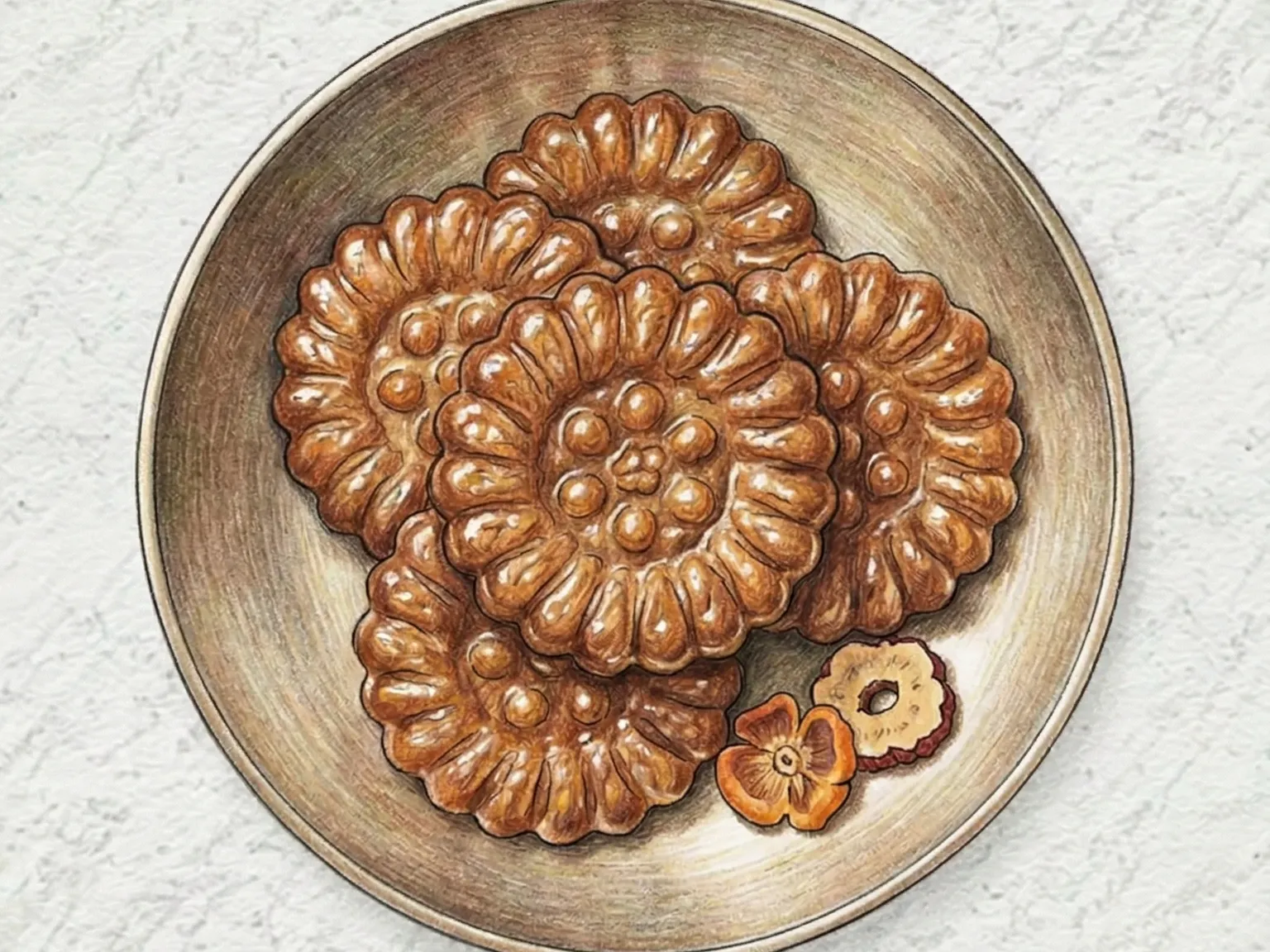
Yakgwa is a traditional Korean honey pastry made from wheat flour rubbed with sesame oil, then mixed with rice wine, ginger juice, and rice syrup, folded and rolled repea...

What makes this special

  • Yakgwa honey ginger pastry uses repeated folding with sesame oil to build flaky, laminated wheat layers.
  • Sesame oil worked into flour then folded twice creates the layered flaky grain
  • 140C first fry then 170C second fry develops inner layers and outer crunch together
Total time
65 min
Level
Hard
Servings
4 servings
Ingredients
9
Calories
420 kcal
Protein
4 g

Key ingredients

all-purpose floursesame oilrice wineginger juicerice syrup

Core cooking flow

  1. 1 Add 3 tablespoons sesame oil to 250 g all-purpose flour and rub it in with y...
  2. 2 Pour in 3 tablespoons rice wine, 1 tablespoon ginger juice, and 2 tablespoons rice syrup.
  3. 3 Roll the dough to 1 cm thick, fold it, and roll it out again twice to build visible layers.

Yakgwa is a traditional Korean honey pastry made from wheat flour rubbed with sesame oil, then mixed with rice wine, ginger juice, and rice syrup, folded and rolled repeatedly to build up laminated layers before frying. A two-stage frying method is essential to the texture: first at 140 degrees Celsius to cook the dough through slowly without coloring, then briefly at 170 degrees to develop a golden, crisp exterior over a layered, flaking interior. Soaking the fried pastries in a warm syrup of honey, water, and ground cinnamon for at least two hours allows the sweetness to penetrate deep between the laminated layers, saturating each piece with moist, fragrant honey flavor from edge to center. Ginger juice surfaces gently in the finish, providing just enough warmth to temper the concentrated sweetness and keep the flavor from feeling cloying. The sesame oil rubbed into the dough from the start adds a persistent nutty backbone that ties together the honey, spice, and wheat flavors into the complex, layered profile that defines well-made yakgwa. Pine nuts or jujubes placed as garnish add visual elegance, and the pastry pairs particularly well with Korean teas, where its sweetness finds proper balance.

Prep 35min Cook 30min 4 servings

Instructions

Read the steps as a cooking flow: prep, heat, seasoning, doneness control, and finish.

6 steps
  1. 1
    Step

    Add 3 tablespoons sesame oil to 250 g all-purpose flour and rub it in with your fingertips for about 3 minutes.

    Stop when the flour looks evenly coated and slightly sandy, then break up any oily clumps.

  2. 2
    Prep

    Pour in 3 tablespoons rice wine, 1 tablespoon ginger juice, and 2 tablespoons rice syrup.

    Mix lightly with a spatula just until the dough gathers into one mass, then press it together without kneading so the layers stay tender.

  3. 3
    Heat

    Roll the dough to 1 cm thick, fold it, and roll it out again twice to build visible layers.

    Cut with a Yakgwa cutter or into 4x4 cm squares, then prick several holes with a toothpick for even frying.

  4. 4
    Heat

    Heat 600 ml frying oil to 140 C and add the pieces without crowding the pan.

    Fry slowly for 10 to 12 minutes; if they color too quickly, lower the heat so the centers cook before the crust darkens.

  5. 5
    Heat

    When the pieces feel firmer, raise the oil to 170 C and fry for 1 to 2 more minutes.

    Remove them when the surface is evenly golden and the edges look crisp, then drain briefly.

  6. 6
    Control

    Warm 120 ml honey, 80 ml water, and 0.5 teaspoon ground cinnamon over low heat until fluid, not boiling.

    Add the fried Yakgwa while the syrup is warm and soak for at least 2 hours before serving.

After the steps

Pick a recipe that fits this dish.

Continue with shared ingredients, meal pairings, or a similar method.

Recipes That Go Well With This

More Desserts →

Based on shared ingredients and meal pairing

Honey Ginger Ribbon Cookies
Shared ingredient: ginger juice Desserts

Honey Ginger Ribbon Cookies

Maejakgwa are traditional Korean ribbon cookies made from a firm dough of wheat flour, sesame oil, and ginger juice, rolled to 2 mm thickness, slit lengthwise through the center, and twisted through the opening into a knot shape before frying. Slow-frying at 160 degrees Celsius turns them light golden and crisp all the way through without darkening the surface unevenly. A warm coating of honey blended with rice syrup is applied while the cookies are still hot, adding a glossy, sweet shell that sets as it cools. The ginger lends a subtle warm bite that sits behind the nuttiness of sesame oil rather than announcing itself upfront, and a final dusting of pine nut powder contributes a soft, buttery fragrance that completes the layering of flavor. Each piece shatters lightly when bitten, yet the syrup-soaked sections at the twisted edges carry a slight chewiness that gives the cookie a layered texture unusual for a fried dough confection. Maejakgwa appear regularly on ritual food tables at memorial ceremonies and are commonly prepared for Lunar New Year and Chuseok.

Dasik (Korean Honey-Pressed Roasted Grain Confection)
Shared ingredient: honey Baking

Dasik (Korean Honey-Pressed Roasted Grain Confection)

Dasik is a traditional Korean pressed confection made by kneading roasted grain or nut powders with honey and pressing the mixture into carved wooden molds. Unlike baked goods, dasik holds its shape entirely through the binding power of honey, with no heat applied during preparation. This technique produces a texture that is slightly resistant at first contact, then dissolves gently at body temperature in a way that releases the full aroma of the main ingredient. Roasted soybean powder yields a nutty version, black sesame produces a deeply aromatic one, and additions of pine nut powder or cinnamon develop the flavor in different directions. The wooden molds carve decorative patterns into the surface of each piece, giving dasik a visual refinement that matches its restrained sweetness. For centuries, dasik has been a standard offering at Korean tea gatherings, and its subtle flavor remains a natural match for the gentle bitterness of green tea.

Black Rice Cream Cheese Tart
Serve together Baking

Black Rice Cream Cheese Tart

Black rice cream cheese tart is a Korean-style baked tart that combines a crisp, buttery shell with a cream cheese filling tinted and flavored with black rice flour. The filling is made by blending cream cheese, sugar, egg, and heavy cream until smooth, then folding in black rice powder, which gives the mixture a pale purple color and a subtle roasted grain character. Baked at a moderate temperature, the filling puffs gently in the oven before settling back into a dense, silky layer as it cools - the texture sits between a cheesecake and a custard tart, smooth and rich but not heavy. The pre-baked tart shell provides a firm, buttery crunch that contrasts the soft filling above. Vanilla extract ties the tangy cream cheese to the earthy black rice notes, rounding out the flavor so neither element dominates.

Honey Rice Puff Cookies (Korean Double-Fried Puffed Glutinous Rice)
Similar recipe Desserts

Honey Rice Puff Cookies (Korean Double-Fried Puffed Glutinous Rice)

Yugwa is a traditional Korean rice puff cookie that is prepared using a base of glutinous rice flour mixed with makgeolli, which is a type of fermented Korean rice wine. This dough is shaped into individual pieces and then left to dry for a duration of at least two hours. This drying period is a mandatory step in the process because any residual moisture within the dough will lead to dangerous oil splattering when the pieces are placed into the frying fat. The cooking process requires a specific two-stage frying technique involving both low and high oil temperatures to facilitate a dramatic expansion of the dough. Tiny air pockets are created within the mixture by the yeast present in the makgeolli during the initial preparation stages. These pockets expand rapidly during the second frying stage at a higher heat, which results in the hollow internal structure that is the defining characteristic of the cookie. Once the frying is complete, the pieces are tossed in a warm glaze consisting of honey and rice syrup. This sticky coating serves to anchor a final layer of puffed rice to the exterior of the cookie. Ground cinnamon is incorporated into the recipe to provide a subtle warm spice that complements the nutty and fermented flavors of the glutinous rice. When consumed, the finished cookie shatters into light, airy shards, offering a texture that is nearly weightless compared to other varieties of Korean confections. Traditionally, yugwa is featured on tables during ancestral rites for the Chuseok and Seollal holidays and remains a common choice for gift-giving during these festive seasons.

Serve with this

Korean Sweet Chili Cheese Balls
Street food Medium

Korean Sweet Chili Cheese Balls

Sweet chili cheese balls are a fried snack made from glutinous rice flour dough mixed with milk, wrapped around mozzarella cubes, shaped into spheres, and deep-fried at 160 degrees Celsius. Adding a small amount of baking powder to the dough causes it to puff evenly during frying, creating a thin, crisp crust on the outside while the mozzarella inside melts into a soft, stretchy core. Keeping the oil at a moderate 160 degrees is the critical step, because a higher temperature browns and sets the shell before the cheese inside has had enough time to melt fully. Dipping in sweet chili sauce brings a layer of fruity sweetness and gentle heat over the creamy mozzarella, and the sauce's slight tanginess cuts the fried richness to leave the palate feeling clean. Sealing the seam of each ball tightly when wrapping is important, as any gap will let the melting cheese escape into the oil during frying.

🎉 Special Occasion 🧒 Kid-Friendly
Prep 15min Cook 15min 4 servings
Clear Korean Rice Wine (Traditional Fermented Yakju)
Drinks Hard

Clear Korean Rice Wine (Traditional Fermented Yakju)

Yakju is a traditional Korean clear rice wine produced by steaming soaked glutinous rice for 35 minutes, then fermenting it with crushed nuruk starter, dry yeast, and water for seven to ten days at room temperature. Daily stirring distributes the yeast culture evenly, and sliced ginger and jujube are added during fermentation to suppress off-flavors and contribute subtle aromatics. After fermentation, the solids are allowed to settle completely so only the clear upper liquid is carefully decanted, giving yakju its transparent appearance and refined taste distinct from cloudy makgeolli. Two days of cold aging in the refrigerator rounds off the sharp alcohol edge, bringing forward a smooth, grain-forward character.

🍺 Bar Snacks 🎉 Special Occasion
Prep 25min Cook 35min 4 servings
Baked Ziti
Western Medium

Baked Ziti

Baked ziti is an Italian-American oven pasta that delivers a lasagna-style flavor structure with far less assembly work. Tubular ziti noodles are boiled to al dente, tossed in a beef-and-tomato meat sauce, then layered in a baking dish with generous amounts of ricotta and shredded mozzarella. The tube shape traps sauce inside each piece, distributing flavor more evenly than flat pasta can. Parmesan spread across the top browns into a thin, crisp crust during the thirty-five-minute bake, while the interior melds into a cohesive mass of sauce-soaked pasta and melted cheese. Because no individual pasta sheets need to be layered, total hands-on preparation time is considerably shorter than classic lasagna. The dish scales easily to four or more servings in a single pan, making it well suited for family dinners and gatherings. Adding a small amount of water or sauce before reheating keeps leftovers from drying out.

🎉 Special Occasion 🧒 Kid-Friendly
Prep 20min Cook 35min 4 servings

Similar recipes

Saenggang Jeonggwa (Candied Ginger)
Desserts Medium

Saenggang Jeonggwa (Candied Ginger)

Saenggang jeonggwa is a traditional Korean candied ginger prepared by slicing fresh ginger thin, blanching it twice to reduce the raw heat, then simmering the pieces slowly in a glaze of sugar and grain syrup. A ten-minute soak in cold water draws out the sharpest bite first, and two rounds of boiling soften the pungency further while leaving the clean, aromatic core intact. The slices are cooked on low heat until the syrup reduces to a thick, glossy coat on the surface, at which point lemon juice is added to introduce an acidity that keeps the sweetness from becoming cloying. Once dried on a rack and rolled in granulated sugar, the finished pieces carry a crisp, crystalline shell on the outside. On the first bite, the sugar crust shatters, and the chewy, syrup-saturated ginger beneath releases a slow, building warmth that lingers well after the piece is finished.

🎉 Special Occasion 🧒 Kid-Friendly
Prep 15min Cook 45min 4 servings
Korean Rice Puff Confection
Baking Medium

Korean Rice Puff Confection

Gangjeong is a traditional Korean confection made from puffed glutinous rice bound together with warm grain syrup and pressed into molds to set. The production begins with glutinous rice that is soaked, steamed, dried thoroughly, and then deep-fried until each grain expands into a white, airy puff. The timing of the next step matters: the puffs must be turned through the hot grain syrup quickly, before the syrup cools, so that the coating bonds everything together evenly without sogginess. As the syrup cools, it hardens into a structure that feels solid when pressed but shatters cleanly under the teeth, then dissolves into a gentle sweetness on the tongue. The grain syrup is mild and naturally caramel-like, not aggressively sweet, so the toasted, nutty character of the puffed rice remains the dominant flavor. Black sesame seeds, pine nuts, or peanuts folded in before pressing add layers of nuttiness and a pleasant variation in texture. Brightly colored versions dyed with food coloring are a traditional fixture on Korean holiday tables. An oven-drying method that skips the deep frying step exists for those who want to reduce oil use, though the texture differs slightly. Stored in an airtight container away from humidity, gangjeong keeps its crunch for several days.

🎉 Special Occasion 🧒 Kid-Friendly
Prep 20min Cook 15min 4 servings
Black Sesame Tea Cookies (No-Bake Korean Pressed Cookies)
Desserts Easy

Black Sesame Tea Cookies (No-Bake Korean Pressed Cookies)

Heukimja dasik is a traditional Korean pressed tea cookie made by binding roasted black sesame powder and almond flour with honey and rice syrup, then pressing the mixture into a decorative wooden mold. No heat is applied at any point: the rich, toasty depth of the sesame and the fatty body of the almond combine within the sticky honey base to produce a crumbly, melt-in-the-mouth texture. A small measure of sesame oil improves binding, and dusting the mold with pine nut powder before pressing yields a sharply defined surface pattern. Resting the shaped cookies in an airtight container for thirty minutes allows them to firm up, resulting in bite-sized confections traditionally served alongside tea at a Korean tea table.

🧒 Kid-Friendly ⚡ Quick
Prep 20min 4 servings

Tips

Two-stage frying is key for crisp texture and layered bite.
Soak long enough for moisture and flavor to penetrate fully.

Nutrition (per serving)

Calories
420
kcal
Protein
4
g
Carbs
48
g
Fat
24
g