Korean Five-Grain Sweet Rice Punch
Drinks Medium

Korean Five-Grain Sweet Rice Punch

Quick answer

Ogok-sikhye is a traditional Korean grain punch made by saccharifying a mix of cooked sweet rice, barley, millet, and foxtail millet in barley malt extract at 60 to 65 de...

What makes this special

  • Five different cooked grains undergo saccharification at 65°C for this Ogok-sikhye punch.
  • Holding 60 to 65°C precisely is what activates the malt enzymes
  • Four grains together produce a layered natural sweetness single-grain lacks
Total time
90 min
Level
Medium
Servings
2 servings
Ingredients
8
Calories
220 kcal
Protein
4 g

Key ingredients

barley malt powdercooked sweet ricesteamed barleysteamed milletsteamed foxtail millet

Core cooking flow

  1. 1 Pour 600 ml lukewarm water over 80 g barley malt powder and soak for 20 minutes.
  2. 2 Put 150 g cooked sweet rice, 50 g steamed barley, 40 g steamed millet, and 4...
  3. 3 Hold the rice cooker at 60 to 65C for 1 hour to saccharify the grains.

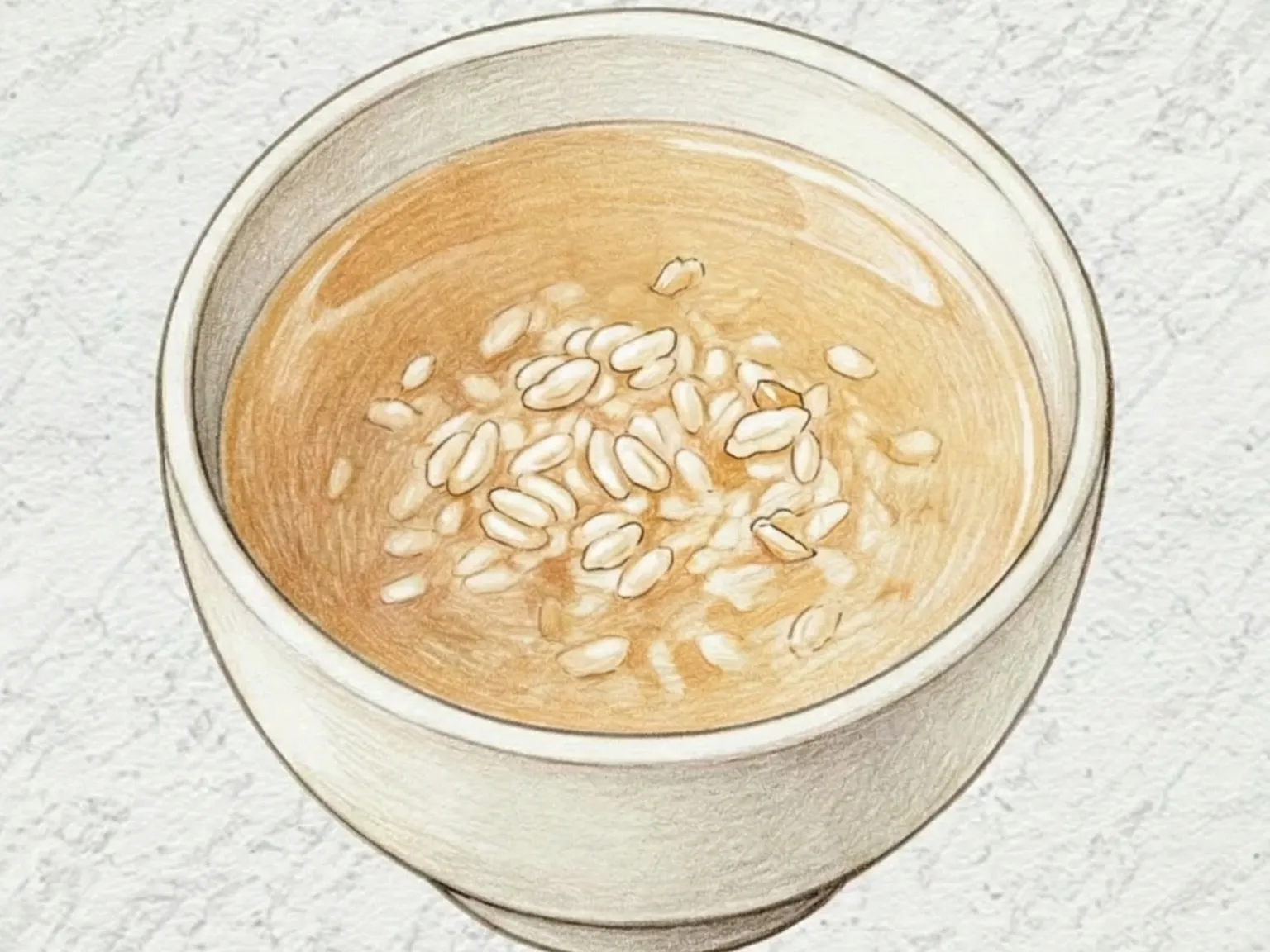
Ogok-sikhye is a traditional Korean grain punch made by saccharifying a mix of cooked sweet rice, barley, millet, and foxtail millet in barley malt extract at 60 to 65 degrees Celsius for one hour. The malt powder is soaked in lukewarm water for 20 minutes, kneaded by hand, and strained through a cloth to yield a clear, enzyme-rich liquid -- this is the working ingredient that converts the grain starches into natural sugars during the slow saccharification. Temperature control is central to the process: below 60 degrees the enzymes slow down, and above 70 degrees they denature and die, so maintaining the right range throughout the hour-long rest determines whether the conversion succeeds. As saccharification progresses, the rice grains hollow out and float to the surface; these are skimmed off, rinsed separately, and later floated back into the finished punch to add a soft, chewable element to each cup. After sweetening with sugar and chilling completely in the refrigerator, the drink is served cold with pine nuts floating on top. The combination of multiple grains produces a more layered, complex sweetness than single-grain sikhye, and the overnight rest in the refrigerator smooths the flavor into something more cohesive.

Prep 20min Cook 70min 2 servings

Instructions

Read the steps as a cooking flow: prep, heat, seasoning, doneness control, and finish.

6 steps
  1. 1
    Step

    Pour 600 ml lukewarm water over 80 g barley malt powder and soak for 20 minutes.

    Knead it well by hand until the water turns cloudy, then strain through cloth and keep only the clear upper liquid.

  2. 2
    Heat

    Put 150 g cooked sweet rice, 50 g steamed barley, 40 g steamed millet, and 40 g steamed foxtail millet in the rice cooker.

    Add the clear malt liquid and loosen the grains evenly so no dense clumps remain.

  3. 3
    Heat

    Hold the rice cooker at 60 to 65C for 1 hour to saccharify the grains.

    Do not let it exceed 70C, and check every 15 minutes for temperature stability and floating rice grains.

  4. 4
    Step

    When at least 10 rice grains float and look light and hollow, lift them out with a strainer.

    Rinse briefly in cold water to remove stickiness, then keep them chilled separately for serving.

  5. 5
    Finish

    Add the remaining 1000 ml water and 45 g sugar to the sikhye liquid.

    Simmer over medium-low heat for 10 minutes, skimming foam so the finish stays clean and the sweetness dissolves evenly.

  6. 6
    Finish

    Cool the finished punch completely, then chill it in the refrigerator until cold.

    Pour into cups and finish with the reserved grains and 1 tablespoon pine nuts floating on top before serving.

After the steps

Pick a recipe that fits this dish.

Continue with shared ingredients, meal pairings, or a similar method.

Recipes That Go Well With This

More Drinks →

Based on shared ingredients and meal pairing

Sweet Rice Punch (Traditional Korean Malted Barley Grain Drink)
Shared ingredient: malted barley powder Desserts

Sweet Rice Punch (Traditional Korean Malted Barley Grain Drink)

Sikhye is a traditional Korean sweet rice punch made by steeping malted barley powder in lukewarm water, straining the liquid, adding cooked rice, and holding the mixture at around 60 degrees Celsius for one hour until the rice grains float to the surface. The amylase enzymes in the malt break down the rice starch, producing a distinctly malty, clear sweetness with grain depth that no sugar alone can replicate. Only the clear top liquid is used after settling -- discarding the sediment keeps the punch from turning cloudy. Simmering with sugar and sliced ginger for 20 minutes rounds the sweetness and adds a gentle, spiced warmth to the finish. Served well chilled with the reserved floating rice grains and pine nuts on top, the cold temperature sharpens the malty aroma and makes each sip crisp. Temperature control during the steeping stage is critical: if the mixture exceeds 70 degrees Celsius, the amylase denatures and the grains will not float, so keeping a steady 60-degree hold determines whether the preparation succeeds.

Korean Cinnamon Persimmon Punch
Shared ingredient: pine nuts Drinks

Korean Cinnamon Persimmon Punch

Sujeonggwa is a Korean cinnamon-ginger punch made by simmering cinnamon sticks and sliced ginger in water for 25 minutes, then straining and sweetening the clear liquid with dark brown sugar. The warm, slightly sweet spice of cinnamon and the sharp rising heat of ginger meet the molasses-toned depth of the sugar, building a flavor that is spicy, sweet, and aromatic in equal measure. Quartered dried persimmon slices are added to the chilled punch, where they slowly absorb the liquid and soften into a jam-like texture over time, while floating pine nuts contribute a gentle nuttiness to each sip. Overnight refrigeration in a sealed container melds the individual flavors into something more unified, making the punch cleaner and more rounded when served cold. Sujeonggwa has long been served at Korean holiday tables during Lunar New Year and ancestral rite ceremonies, and its spiced warmth is also considered a natural digestive aid after heavy meals.

Gotgam Cream Cheese Roll (Dried Persimmon Rolls)
Serve together Desserts

Gotgam Cream Cheese Roll (Dried Persimmon Rolls)

Gotgam cream cheese roll is a no-cook Korean dessert that requires nothing more than a knife, a bowl, and a refrigerator. Dried persimmons are slit open and flattened into thin sheets, each one acting as the outer wrapper. The filling is cream cheese mixed with honey and fresh lemon juice to balance its natural richness with acidity, and finely chopped walnuts are folded in throughout to add a crunchy, nutty element to every bite. The filling is spread across the opened persimmon, which is then rolled tightly and wrapped in plastic wrap. Twenty minutes in the refrigerator firms the roll enough to slice cleanly. Dipping the knife in warm water and wiping it dry before each cut produces the smoothest cross-sections. The finished slices reveal clearly defined layers: the chewy, caramel-sweet dried persimmon on the outside, the tangy cream cheese in the middle, and flecks of walnut distributed throughout. The combination makes it a natural pairing with wine or a polished addition to a traditional holiday table.

Sweet Pumpkin Rice Punch (Korean Kabocha Malt Drink)
Similar recipe Desserts

Sweet Pumpkin Rice Punch (Korean Kabocha Malt Drink)

Danhobak sikhye is a Korean malt rice punch with steamed kabocha pumpkin puree stirred in to thicken the body and deepen the color beyond what plain sikhye offers. The base follows traditional method: cooked rice steeps in malt-strained water held at around 60 degrees Celsius, where the malt enzymes convert starches to maltose over several hours, creating a sweetness that needs no added sugar. Kabocha puree blended into the fermented liquid adds a dense, velvety weight and a warm golden-orange color. Sliced fresh ginger added during the fermentation hold leaves a faint spicy note in the finish, which prevents the pumpkin's natural sweetness from turning cloying as the drink warms. After the steeping is done, the liquid is brought to a full boil to stop the enzyme activity before cooling. Served cold with a few floating rice grains, it occupies the space between a refreshing beverage and a light dessert.

Serve with this

Crispy Seaweed Chips
Side dishes Hard

Crispy Seaweed Chips

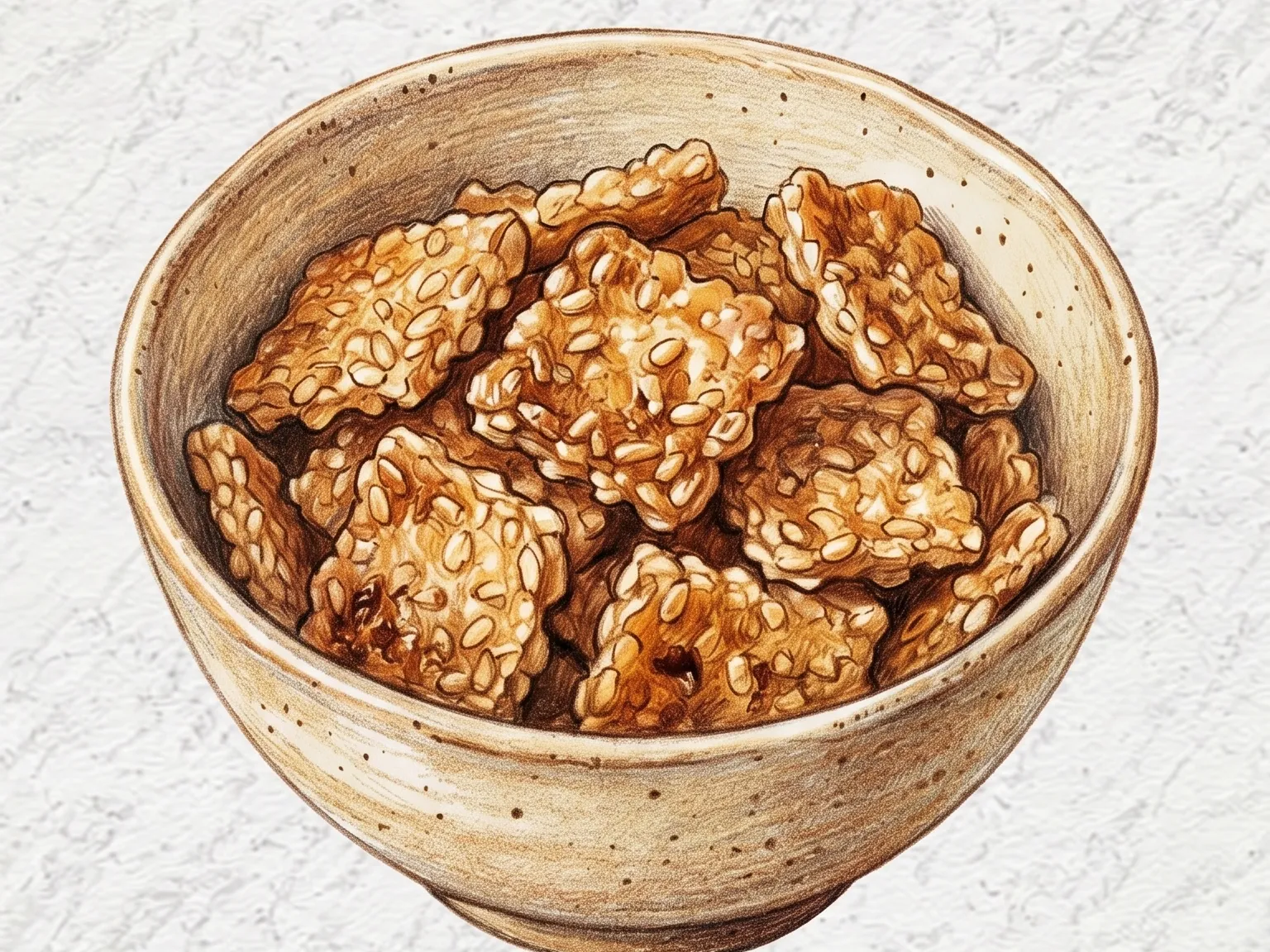
Basak gim-bugak is a traditional Korean snack made of seaweed sheets coated with glutinous rice paste and fried until crispy. The process begins by cooking a thick mixture of water, glutinous rice flour, and salt. After cooling the paste, it is spread thinly onto half of a seaweed sheet. The sheet is folded in half and coated with another thin layer of paste to build a double-layer structure. Sesame seeds are scattered on top before drying. The sheets are dried in a dehydrator or an air fryer at 80 degrees Celsius until stiff and hard. Ensuring the seaweed is completely dry, especially at the edges, is crucial for a crisp outcome. The dried pieces are flash-fried in hot oil at 180 degrees Celsius for just two to three seconds. They puff up instantly and must be removed quickly to prevent burning.

🔥 Trending Now 🍺 Bar Snacks
Prep 40min Cook 10min 4 servings
Goguma Streusel Loaf Bread (Sweet Potato Streusel Loaf)
Baking Medium

Goguma Streusel Loaf Bread (Sweet Potato Streusel Loaf)

Sweet potato puree is whisked into a batter enriched with brown sugar, eggs, and neutral oil, then baked in a loaf pan with a generous layer of butter streusel on top. The puree keeps the crumb remarkably moist and dense, while the streusel bakes into crunchy, crumbly clusters that shatter against the soft interior. Cinnamon reinforces the sweet potato's warmth, and brown sugar deepens the flavor with a faint molasses note. The streusel must be prepared with cold butter rubbed by hand into flour and sugar - the coarse, irregular texture is what creates the satisfying crunch after baking. If the puree is particularly wet, reducing the milk by ten milliliters prevents a batter that is too loose. Should the top brown too quickly during the long bake, a loose tent of foil protects the streusel without trapping steam. The loaf slices most neatly after cooling completely on a rack.

🧒 Kid-Friendly 🎉 Special Occasion
Prep 25min Cook 50min 4 servings
Korean Grilled Chicken Heart Skewers
Street food Medium

Korean Grilled Chicken Heart Skewers

Dak-yeomtong-kkochi starts by soaking trimmed chicken hearts in milk for fifteen minutes to remove any off-flavors, then threading them onto skewers for direct grilling. A glaze of soy sauce, gochujang, sugar, garlic, and cooking wine is applied in stages during grilling, building up a salty-sweet coating with gentle heat. Unlike regular chicken meat, hearts have a firm, springy chew that deepens in nuttiness the more you bite into them. The milk soak combined with garlic and cooking wine in the glaze cleanly removes any organ taste, so the finished skewers carry only the char from the grill and the layered seasoning. A common sight at street stalls and pojangmacha tents, these skewers work equally well as a quick snack eaten on the spot or as drinking food alongside a cold beer.

🍺 Bar Snacks 🏠 Everyday
Prep 30min Cook 15min 2 servings

Similar recipes

Korean Scorched Rice Tea (Toasted Rice Grain Brew)
Drinks Easy

Korean Scorched Rice Tea (Toasted Rice Grain Brew)

Sungnyung is a traditional Korean grain beverage made by toasting the cooked rice left on the bottom of a pot until it forms a golden crust called nurungji, then pouring in water and simmering the crust with small additions of brown rice and glutinous rice for about fifteen minutes. The toasting step is where the character of the drink is established: enough scorching produces a deep, roasted, almost tea-like aroma, but any actual burning spreads bitterness through the entire liquid, so keeping the heat low and watching carefully is essential. A small pinch of salt sharpens the perception of the grain flavor without making the drink taste seasoned in any obvious way, and two or three pine nuts floated on the surface add a mild, oily richness that gives the otherwise lean liquid some body. Sungnyung has long been served at the end of meals in Korean households, rooted in the practical experience that a cup of the hot, gentle drink settles the stomach and eases the discomfort of having eaten heavily. There was also a household efficiency dimension: the same pot used to cook the rice would be used to make sungnyung, and the process cleaned the stuck rice off the bottom without scrubbing. With electric rice cookers now standard in most Korean homes, nurungji does not form naturally, but commercially produced nurungji can be purchased and simmered in the same way to achieve a close approximation.

🍺 Bar Snacks ⚡ Quick
Prep 5min Cook 25min 2 servings
Korean Misutgaru Latte (Roasted Multigrain Milk Drink)
Drinks Easy

Korean Misutgaru Latte (Roasted Multigrain Milk Drink)

Misutgaru latte is a Korean multigrain drink made by whisking roasted grain powder into cold milk and sweetening with honey. The misutgaru powder -- roasted barley, rice, and other grains ground together -- brings a deep, toasty nuttiness that milk carries into a smooth, substantial beverage. A tiny pinch of salt sharpens the grain flavors, and a dusting of roasted soybean powder on top adds another aromatic layer. Substituting part of the milk with soy milk intensifies the nutty profile for a richer, more complex grain latte, and serving it over ice makes it a satisfying cool drink through summer.

🍺 Bar Snacks ⚡ Quick
Prep 5min 2 servings
Korean Sweet Pumpkin Latte
Drinks Easy

Korean Sweet Pumpkin Latte

Danhobak latte begins with seeded kabocha pumpkin steamed skin-on, then blended with water into a smooth puree. Milk is whisked in gradually over low heat until the drink reaches a rich, velvety consistency. The pumpkin contributes natural sweetness that anchors the flavor, supported by honey, a half teaspoon of ground cinnamon, and a pinch of salt that defines the sweetness without adding noticeable saltiness. Keeping the milk below a boil -- around 80 degrees Celsius -- preserves its creamy character, and a spoonful of lightly whipped cream on top adds a soft, layered texture to each sip.

🍺 Bar Snacks ⚡ Quick
Prep 10min Cook 15min 2 servings

Tips

If saccharification goes above 70°C, sweetness will drop.
An overnight chill makes the flavor smoother.

Nutrition (per serving)

Calories
220
kcal
Protein
4
g
Carbs
49
g
Fat
2
g