Charim

2686 Korean & World Recipes

2686+ Korean recipes, clean and organized. Ingredients to instructions, all at a glance.

Korean Chilled Cucumber Soup

Korean Chilled Cucumber Soup

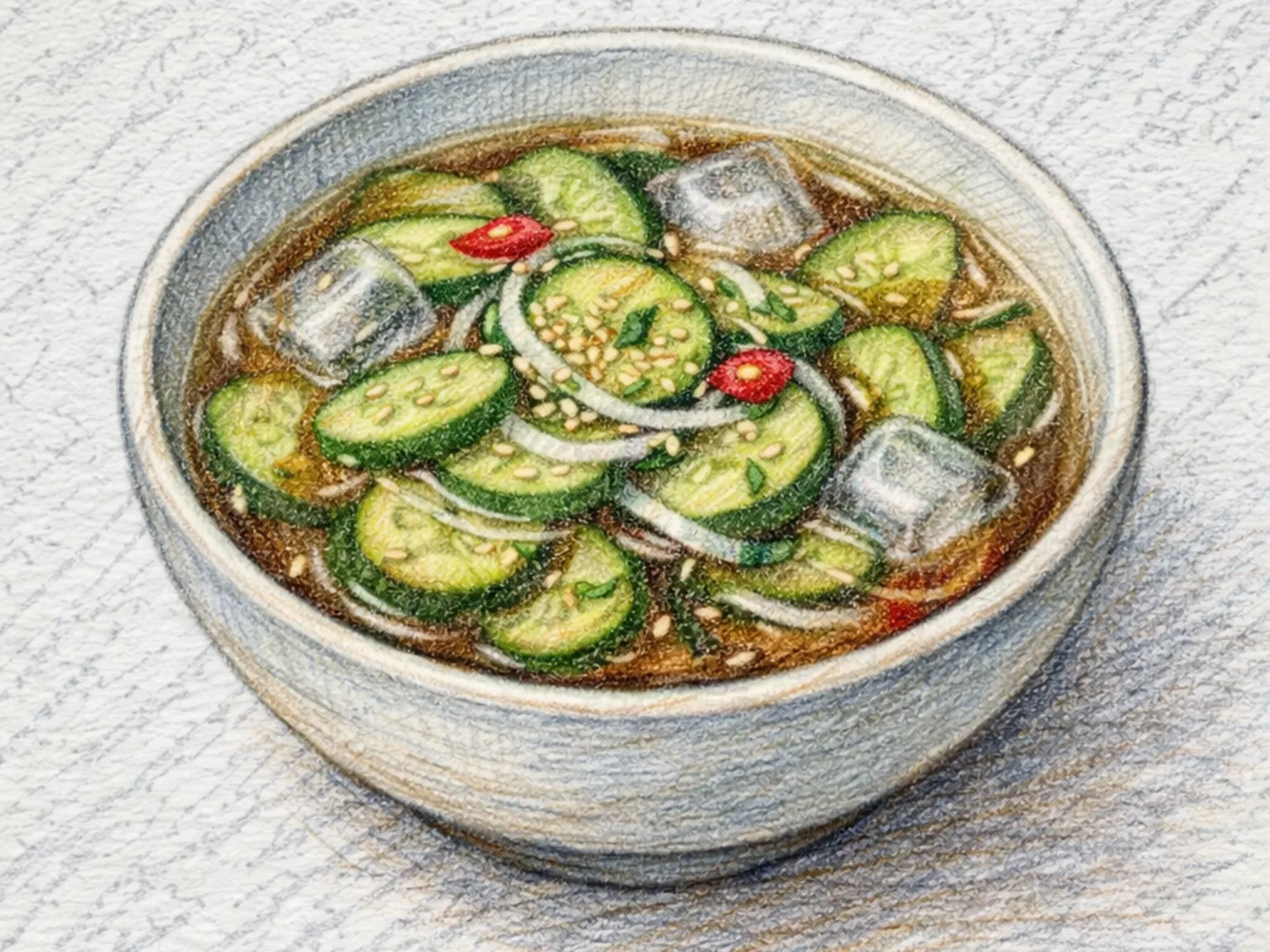
Oi-naengguk is a Korean chilled cucumber soup served in summer as a cold alternative to the hot soups (guk) that normally accompany Korean meals. When midsummer heat makes a steaming bowl of doenjang-guk unappealing, this icy broth takes its place at the table. Cucumber is sliced paper-thin and submerged in a broth of water seasoned with rice vinegar, soup soy sauce, salt, and sugar - a higher vinegar ratio intensifies the refreshing, palate-clearing sharpness. Ice cubes floated on top or at least thirty minutes of refrigeration are essential to achieve the chilling effect that defines the dish. Thinly sliced garlic infuses a mild pungency into the broth, and sesame seeds sprinkled on top add a nutty accent. Some versions include rehydrated dried seaweed, whose slippery texture contrasts with the cucumber's crisp snap. Alongside bibimbap or spicy banchan, oi-naengguk serves as a cooling counterbalance that tempers chili heat between bites.

Prep 10minCook 2min4 servings

Adjust Servings

2servings
servings

Instructions

  1. 1

    Julienne cucumber, lightly salt for 5 minutes, then squeeze moisture.

  2. 2

    Combine water, vinegar, soup soy sauce, sugar, and garlic.

  3. 3

    Taste and adjust with salt.

  4. 4

    Add cucumber and chill for at least 10 minutes.

  5. 5

    Add ice just before serving.

🛒Shop Ingredients on Amazon

As an Amazon Associate, we may earn from qualifying purchases.

Tips

Pre-salting cucumber helps keep the broth flavorful.

Nutrition (per serving)

Calories
34
kcal
Protein
1
g
Carbs
7
g
Fat
0
g

More Recipes

Korean Chilled Seaweed Soup
SoupsEasy

Korean Chilled Seaweed Soup

Miyeok-naengguk is a Korean chilled seaweed soup designed for the hottest days of summer, when the idea of a boiling pot feels intolerable. Rehydrated sea mustard and thinly sliced cucumber are bathed in a cold broth made from soy sauce, rice vinegar, sugar, and iced water, producing a tangy, lightly sweet liquid that hits the palate with immediate refreshment. The seaweed contributes a slippery, marine texture while the cucumber provides a sharp crunch, and together they give the soup a satisfying range of mouthfeel in each spoonful. Preparation requires no cooking at all - the ingredients are simply mixed, seasoned, and chilled - making it one of the fastest dishes in the Korean repertoire. A generous sprinkle of toasted sesame seeds adds nuttiness on top, and an optional pinch of gochugaru turns the broth a vivid red while contributing gentle heat. The soup pairs naturally with cold noodle dishes like naengmyeon or bibim-guksu, and it improves after an hour in the refrigerator as the seasoning penetrates the seaweed. In many Korean homes, a bowl of miyeok-naengguk is the unofficial signal that summer has arrived.

🏠 Everyday
Prep 15minCook 10min4 servings
Korean Stuffed Cucumber Kimchi
KimchiMedium

Korean Stuffed Cucumber Kimchi

Oi sobagi is a Korean stuffed cucumber kimchi where salted cucumbers are slit crosswise - base left intact - and packed with a filling of chopped garlic chives, onion, gochugaru, anchovy fish sauce, and plum syrup. Each bite releases the cucumber's cool juice together with the spicy, fragrant stuffing, and the firm flesh contrasts with the softer chive filling inside. Salting for exactly thirty minutes is critical - any longer softens the cucumber past the point where it can hold its shape and crunch. Four hours of room-temperature fermentation followed by refrigeration allows lactic acid to develop overnight, bringing a tangy depth that peaks by the second day. Cutting into three-centimeter pieces just before serving minimizes juice loss from the stuffed interior.

🍱 Lunchbox
Prep 35min4 servings
Korean Cucumber Doenjang Salad
Side dishesEasy

Korean Cucumber Doenjang Salad

Oi-doenjang-muchim dresses cucumber in a doenjang-based seasoning - a milder alternative to the gochugaru-forward oi-muchim, foregrounding the fermented soybean paste's savory depth over spicy heat. Cucumber is sliced into half-moons or diagonal cuts and salted for five minutes to draw out moisture; skipping this step dilutes the dressing into a watery puddle. The seasoning blends doenjang, soup soy sauce, minced garlic, sesame oil, and sesame seeds, with the doenjang quantity being the critical ratio - too much and the dish is aggressively salty, too little and the cucumber's blandness dominates. Roughly one tablespoon of doenjang to two cucumbers is the working proportion. The cucumber's cool moisture meets doenjang's deep umami to produce a combination that is refreshing yet substantial enough to anchor a rice meal, especially in summer. This banchan must be eaten promptly after assembly - over time, osmotic pressure draws water from the cucumber and collapses its crunch. Served alongside grilled meat, the doenjang's savoriness complements the char while cleansing the palate.

🏠 Everyday🍱 Lunchbox
Prep 10min2 servings
Korean Buckwheat Jelly Cold Broth Bowl
SoupsEasy

Korean Buckwheat Jelly Cold Broth Bowl

Memil-muksabal is a chilled Korean dish in which firm blocks of buckwheat jelly sit submerged in cold, seasoned broth. The broth is typically made from anchovy or beef stock, cooled to refrigerator temperature, and sharpened with soy sauce, rice vinegar, and a touch of sugar that balances the acidity. Buckwheat jelly has a neutral, slightly earthy flavor and a slippery, springy texture that absorbs the surrounding seasonings with each bite. Julienned cucumber adds crunch, crushed roasted sesame seeds contribute nuttiness, and shredded dried seaweed brings a gentle oceanic accent. The dish is almost calorie-free compared to noodle soups and digests easily, which is why it appears on Korean tables most frequently during the hottest weeks of summer. Making the jelly from scratch involves boiling buckwheat starch until thick and letting it set, but store-bought blocks simplify the process to little more than slicing and assembling. The cold broth hits the palate first, followed by the yielding texture of the jelly - a sequence that feels instantly cooling.

🥗 Light & Healthy🏠 Everyday
Prep 20minCook 10min2 servings
Korean Soybean Sprout Cold Salad
Side dishesEasy

Korean Soybean Sprout Cold Salad

Kongnamul-naengchae is a chilled Korean salad of boiled soybean sprouts and vegetables tossed in mustard dressing - conceptually distinct from regular kongnamul-muchim because it is designed to be served cold. The mustard sauce defines the dish: mustard powder (or tube mustard) mixed with vinegar, sugar, and salt creates a sharp, nose-tingling heat alongside a sweet-sour brightness. Prepared mustard needs five to ten minutes of resting after hydration for the allyl isothiocyanate compound to fully develop its pungency. Julienned cucumber and carrot release moisture, so they should be briefly salted or patted dry to prevent diluting the sauce. Chilling for at least ten minutes before serving maximizes the refreshing effect, and cold temperatures actually sharpen the mustard's bite. This banchan excels as a palate cleanser alongside fatty main dishes like samgyeopsal or bulgogi.

🏠 Everyday🍱 Lunchbox
Prep 15minCook 6min4 servings
Chogye Guksu (Korean Cold Chicken Noodles)
NoodlesMedium

Chogye Guksu (Korean Cold Chicken Noodles)

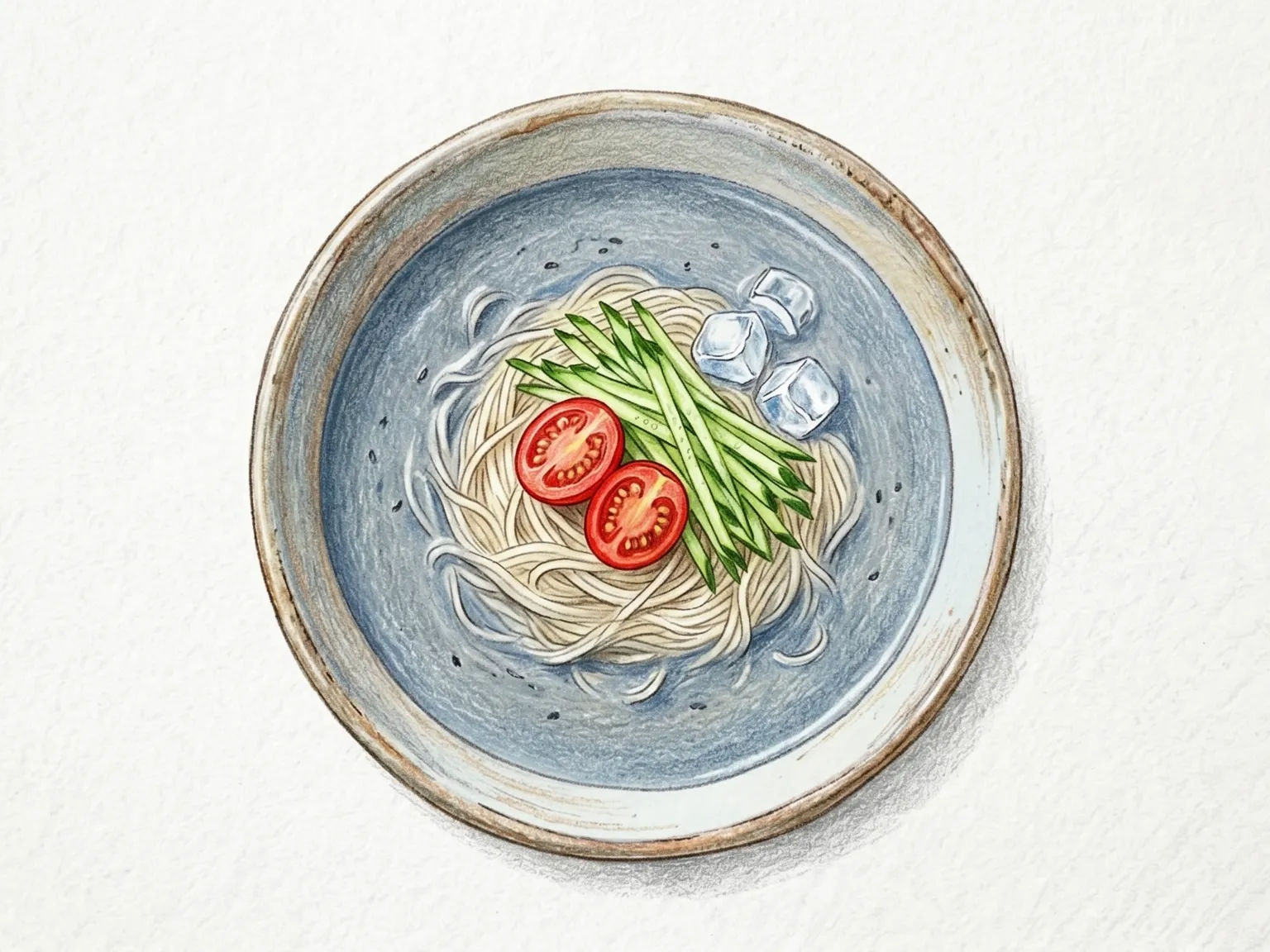
Shredded poached chicken and julienned cucumber top thin wheat noodles served in an icy mustard-vinegar chicken broth. The broth starts as a clear chicken stock, then gains its signature punch from dissolved mustard powder and rice vinegar, delivering a sharp nasal tingle followed by bright acidity that revives the appetite on sweltering days. The chicken, torn along the grain into thin strips, provides lean protein without heaviness, while sliced Korean pear adds a crisp, subtly sweet counterpoint. Mustard heat flares briefly and fades, leaving behind the clean savory finish of well-made stock. Keeping the broth thoroughly chilled is essential: it prevents the noodles from going soft and preserves the refreshing temperature contrast. Floating a few ice cubes in the bowl ensures the dish stays cold through the last bite.

🎉 Special Occasion
Prep 20minCook 25min2 servings
More Side dishes