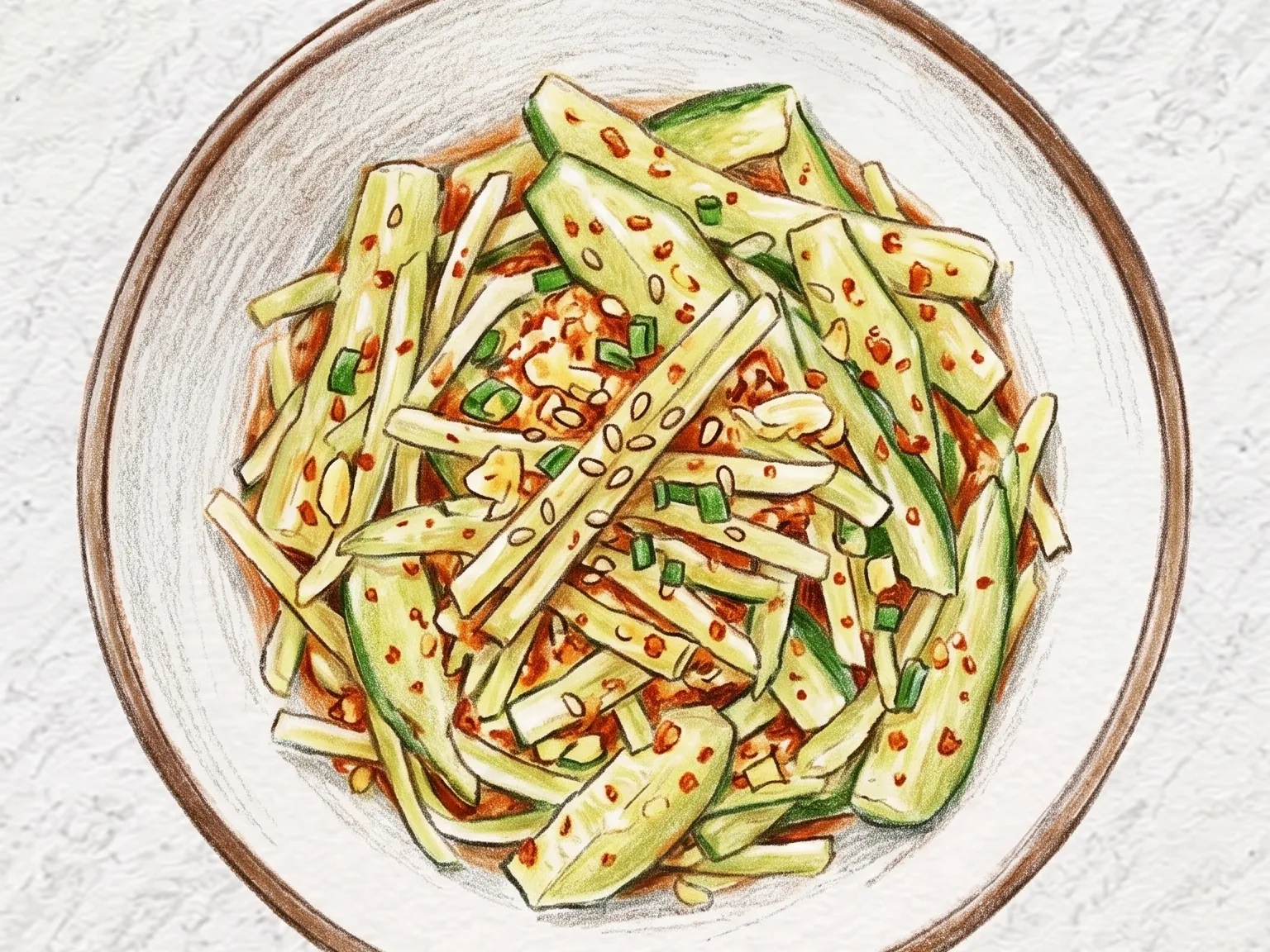
Korean Seasoned Cucumber Pickle Salad
Oiji-muchim takes oiji - cucumber that has been salt-brined for a month or longer - rinses out the excess salinity, and dresses it in a sweet-sour-spicy sauce. Oiji is a traditional Korean preserved food: summer cucumbers are submerged in a concentrated salt brine and aged until their moisture migrates out, transforming the texture from fresh and crisp into something firm, almost crunchy-chewy - a chew fundamentally different from raw cucumber. If the pickle is too salty, soaking in cold water for thirty minutes to an hour draws the brine down to a palatable level. After thorough squeezing, the cucumber pieces are tossed with gochugaru, vinegar, sugar, sesame oil, minced garlic, and scallion. Vinegar and sugar layer a bright sweet-sour dimension over the pickle's inherent saltiness, balancing it for pairing with rice. Julienned oiji absorbs more dressing and delivers a different eating experience than diagonal-cut slices - each approach has its advocates. Made during the summer cucumber glut, oiji keeps refrigerated for over a month.
Adjust Servings
Instructions
- 1
Slice the pickles thinly and soak in cold water for 5 minutes.
- 2
Squeeze out moisture thoroughly and place in a bowl.
- 3
Toss with red pepper flakes, garlic, sugar, and vinegar first.
- 4
Add sesame oil and chopped green onion; mix gently.
- 5
Sprinkle sesame seeds and rest 5 minutes before serving.
As an Amazon Associate, we may earn from qualifying purchases.
Tips
Nutrition (per serving)
More Recipes

Korean Cucumber Doenjang Salad
Oi-doenjang-muchim dresses cucumber in a doenjang-based seasoning - a milder alternative to the gochugaru-forward oi-muchim, foregrounding the fermented soybean paste's savory depth over spicy heat. Cucumber is sliced into half-moons or diagonal cuts and salted for five minutes to draw out moisture; skipping this step dilutes the dressing into a watery puddle. The seasoning blends doenjang, soup soy sauce, minced garlic, sesame oil, and sesame seeds, with the doenjang quantity being the critical ratio - too much and the dish is aggressively salty, too little and the cucumber's blandness dominates. Roughly one tablespoon of doenjang to two cucumbers is the working proportion. The cucumber's cool moisture meets doenjang's deep umami to produce a combination that is refreshing yet substantial enough to anchor a rice meal, especially in summer. This banchan must be eaten promptly after assembly - over time, osmotic pressure draws water from the cucumber and collapses its crunch. Served alongside grilled meat, the doenjang's savoriness complements the char while cleansing the palate.

Korean Spicy Seasoned Deodeok
Deodeok - Codonopsis lanceolata - is a mountain root used in Korean cooking and folk medicine for centuries. Its flesh is fibrous and sticky, with a ginseng-like bitterness. Peeled and pounded with a mallet to split fibers into ribbon-like shreds, then soaked in cold water to draw out bitterness. A gochujang-vinegar dressing with garlic, sugar, and gochugaru clings to each strand's rough surface. The finished dish is chewy and resinous, with a sweet-sour-spicy glaze.

Korean Seasoned Garlic Chives
Unlike buchu kimchi, this raw chive muchim uses soy sauce and vinegar rather than fish sauce, producing a brighter, acidic result. The chives stay raw, tossed by hand under twenty seconds - longer and they bruise, releasing liquid. Gochugaru adds color and heat, while vinegar and sugar create a sweet-tart dressing contrasting with natural pungency. Must be eaten the same day before the chives wilt. A sharp, punchy side that cuts through oily main dishes.

Korean Seasoned Green Seaweed
Cheonggak is a branching green seaweed from Korea's southern coast, prized for its oceanic perfume and cartilage-like crunch. A 10-second blanch brightens the color without destroying its snap. Squeezed and cut to finger lengths, it is dressed in a vinegar-forward sauce with soy, gochugaru, garlic, and sugar that cuts through the brininess. The seaweed must be served immediately - its texture collapses within hours. A specialty of Jeollanam-do coastal markets in winter and early spring.

Salt-Brined Korean Cucumber Pickles
Oiji is a traditional Korean long-fermented cucumber pickle made by submerging whole cucumbers in a boiled brine of water, coarse salt, sugar, and a touch of vinegar, then weighting them down so they stay fully immersed during at least five days of cold storage. Whole garlic cloves added to the jar release their aroma gradually into the brine. As the days pass, osmotic pressure draws moisture from the cucumbers while salt penetrates inward, producing a uniformly salty, firm pickle that retains its crunch far longer than quick-pickled varieties. Before serving, the oiji is sliced thin and soaked briefly in cold water to temper its saltiness, then dressed with sesame oil and gochugaru as a side dish, or dropped into a chilled broth for a refreshing summer soup.

Korean Stuffed Cucumber Kimchi
Oi sobagi is a Korean stuffed cucumber kimchi where salted cucumbers are slit crosswise - base left intact - and packed with a filling of chopped garlic chives, onion, gochugaru, anchovy fish sauce, and plum syrup. Each bite releases the cucumber's cool juice together with the spicy, fragrant stuffing, and the firm flesh contrasts with the softer chive filling inside. Salting for exactly thirty minutes is critical - any longer softens the cucumber past the point where it can hold its shape and crunch. Four hours of room-temperature fermentation followed by refrigeration allows lactic acid to develop overnight, bringing a tangy depth that peaks by the second day. Cutting into three-centimeter pieces just before serving minimizes juice loss from the stuffed interior.