Korean Spicy Stir-fried Squid
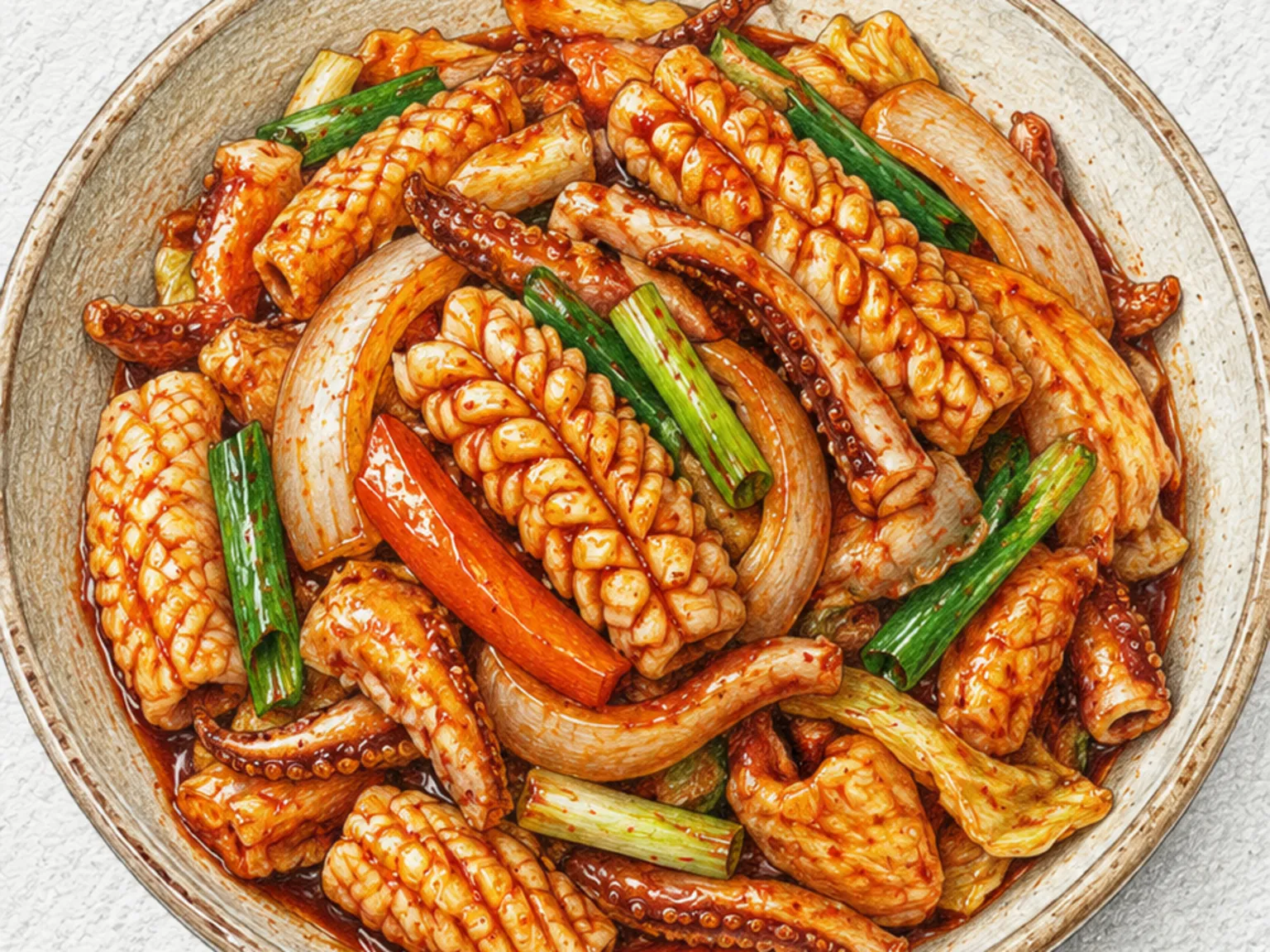
Ojingeo-bokkeum is one of Korea's most popular spicy stir-fries, featuring scored squid bodies and tentacles tossed over high heat with onion, carrot, cabbage, and scallion in a gochujang-gochugaru-soy-sugar sauce. Crosshatch scoring on the squid allows the thick, spicy sauce to penetrate deeply, ensuring consistent flavor in every bite. The entire stir-fry takes only a few minutes on maximum heat - essential for keeping the squid springy rather than rubbery. Cabbage and carrot go in near the end to retain their crunch, and a final sesame oil drizzle ties the smoky wok char to the bold red seasoning.
Adjust Servings
Instructions
- 1
Clean 2 squid, score the body in a crosshatch pattern, and cut into bite-size. Cut tentacles too.
- 2
Mix 2 tbsp gochujang, 1 tbsp gochugaru, 1 tbsp soy sauce, 1 tbsp sugar, and 1 tbsp garlic for the sauce.
- 3
Thickly slice onion, thinly slice carrot, and tear cabbage into bite-size pieces.
- 4
Heat a pan on high with oil, stir-fry onion and carrot for 1 minute.
- 5
Add squid, stir-fry 1 minute, then pour in sauce and stir-fry on high for 2 minutes.
- 6
Add cabbage and green onion, stir-fry 1 more minute, then drizzle sesame oil to finish.
As an Amazon Associate, we may earn from qualifying purchases.
Tips
Nutrition (per serving)
More Recipes

Korean Spicy Stir-fried Octopus
Nakji-bokkeum is a fiery Korean stir-fry of small octopus (nakji) coated in a sauce of gochujang, gochugaru, soy sauce, sugar, and garlic, tossed with bean sprouts, onion, carrot, and scallion. Bean sprouts line the bottom of the pan, releasing moisture to prevent sticking while adding crunch. The vegetables and half the sauce go on next, then the octopus on top, covered and steamed on medium heat for three minutes before a final high-heat stir-fry sears everything for two minutes. Speed is critical - octopus toughens with prolonged cooking - and the dish is often mixed with boiled thin wheat noodles for a heartier meal.

Korean Stir-fried Anchovies
Myeolchi-bokkeum is a foundational Korean banchan of small dried anchovies glazed in a sweet-salty coating of soy sauce and oligosaccharide syrup. The anchovies are first dry-roasted in a clean pan on low heat for three minutes to remove fishiness and build crunch. A sauce of garlic, soy sauce, and syrup is bubbled separately, and the anchovies are tossed back in for a quick, even coating. Sesame oil and toasted sesame seeds finish the dish; once fully cooled, the glaze sets firm, giving the anchovies a snappy texture that keeps well in an airtight container for over a week.

Korean Stir-fried Squid and Bean Sprouts
Ojingeo-sukju-bokkeum stir-fries bite-size squid pieces and bean sprouts in a gochujang-gochugaru sauce over very high heat, capturing smoky wok flavor. Garlic and the chili paste cook first to bloom their heat, then squid and onion go in for a fast sear. Bean sprouts are added only in the final minute or two, keeping them crisp and preventing the dish from becoming watery. Scallion joins at the same time for a sharp finish. The contrast between the squid's firm, chewy body and the sprouts' light crunch defines the texture, while the bold seasoning makes this a natural match for steamed rice.

Korean Pork & Wild Chive Stir-fry
Dallae-dwaejigogi-bokkeum is a Korean springtime stir-fry of pork shoulder tossed in a gochujang and chili flake sauce, then topped generously with raw wild chives. The wild chives release a sharp, garlicky bite that cuts through the rich, spicy pork. Onions caramelize lightly during cooking, adding natural sweetness that rounds out the heat. The dish is cooked quickly over high heat to preserve the fresh aroma of the chives.

Korean Stir-Fried Eggplant Banchan
Gaji bokkeum transforms eggplant - a vegetable Koreans have cultivated since the Goryeo period - into a quick, oil-glazed banchan where the cooking speed matters as much as the seasoning. The eggplant is sliced into half-moons, and the pan must be scorching hot before the pieces enter; any hesitation and the eggplant will steam rather than sear, turning it into a soggy mass. High heat with minimal oil produces lightly charred edges while the interior turns silky and almost custardy. Soy sauce, garlic, and sesame oil go in during the final thirty seconds, sizzling against the hot surface and coating each piece in a thin, caramelized layer. The dish has a concentrated, clean umami taste without the heaviness of a braised preparation. Korean home cooks make this as a weeknight banchan precisely because it takes under ten minutes from cutting board to table.

Korean Spicy Stir-Fried Squid Rice Bowl
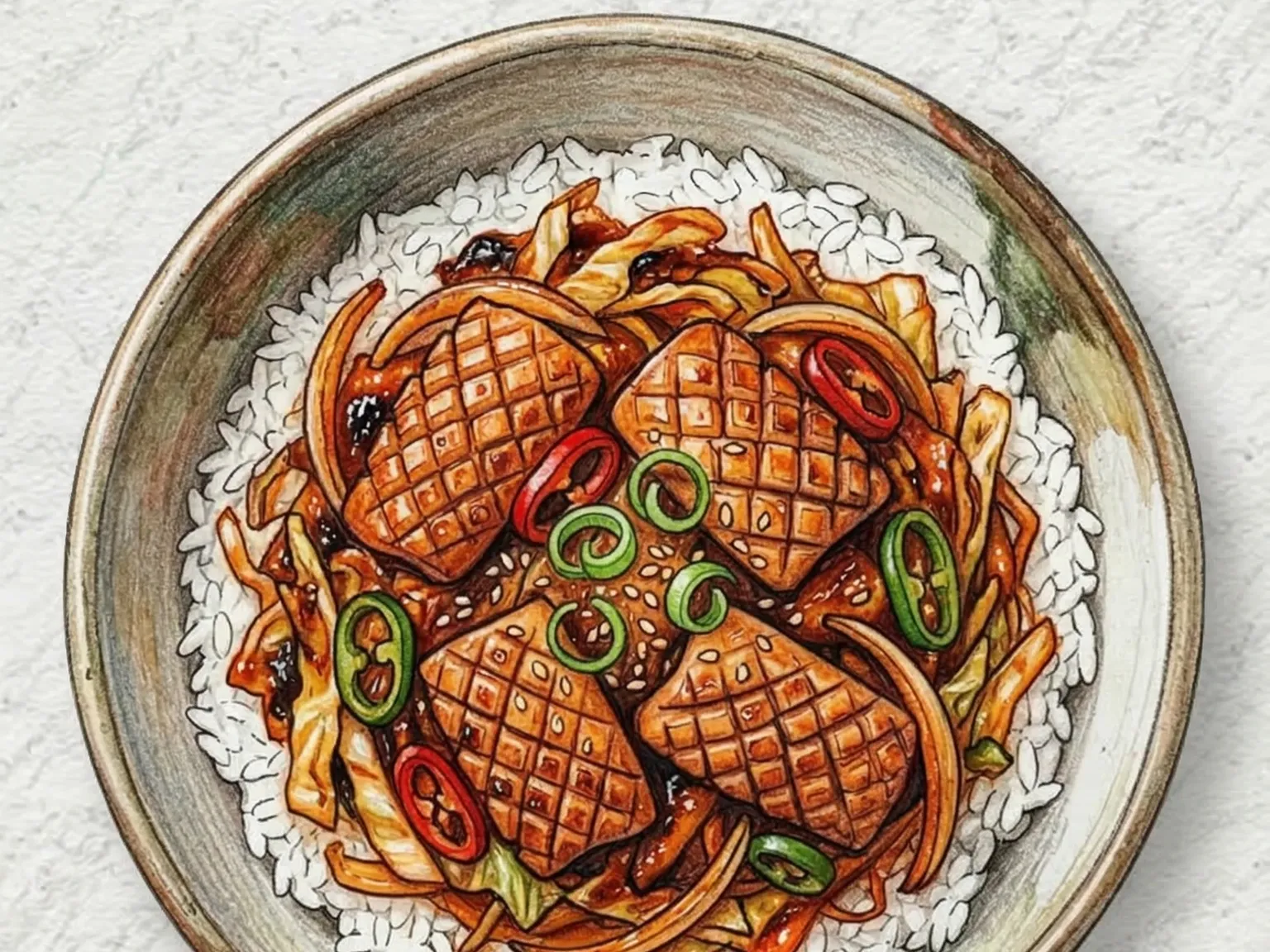
Scored squid is stir-fried with onion, cabbage, and scallion in a gochujang-based sauce over high heat, then served on steamed rice. The squid's chewy texture and smoky wok char pair with the sweet-salty-spicy glaze, while the vegetables bring natural sweetness that tempers the heat. Vegetables go into the pan first to drive off moisture, then the squid cooks quickly for just 3 to 4 minutes to stay tender. Leaving a little sauce in the pan lets it soak into the rice when mixed, coating every grain.