Korean Squid Stew
Quick answer
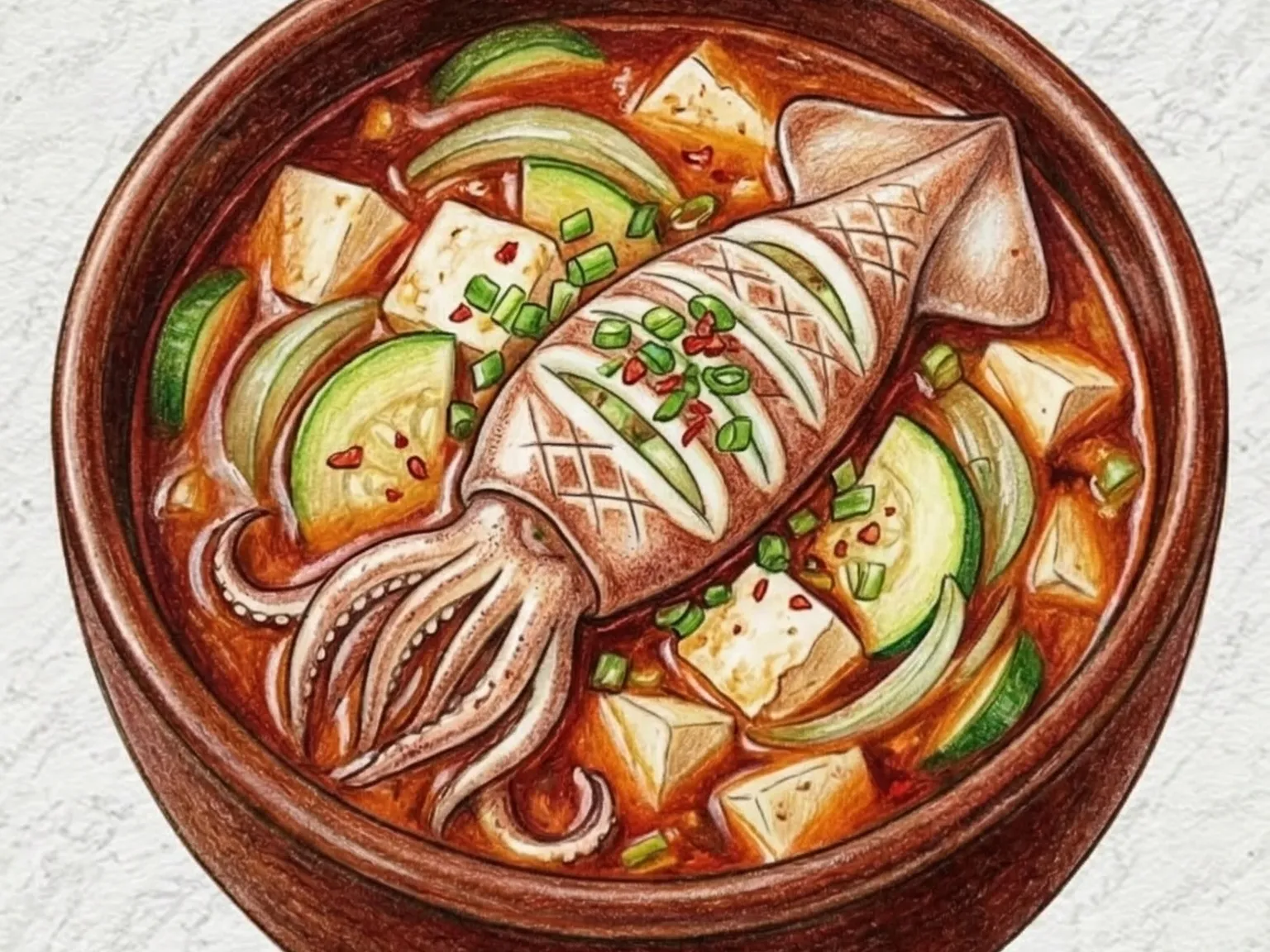
Ojingeo jjigae simmers a whole cleaned squid in an anchovy broth enriched with gochujang and chili flakes, producing a sweet-spicy stew that pairs directly with steamed rice.
What makes this special
- Scored squid absorbs a sweet and spicy gochujang broth in this classic ojingeo jjigae.
- Scored squid body lets gochujang broth penetrate to the center
- Gochujang's subtle sweetness balances the squid's mild umami
Key ingredients
Core cooking flow
- 1 Clean 1 whole squid by removing the innards and peeling off the skin, then r...
- 2 Slice the scored squid body into 1 cm rings and cut the legs into 4 cm pieces.
- 3 Pour 400 ml anchovy broth into a pot and whisk in 2 tablespoons gochujang until no large clumps remain.
Ojingeo jjigae simmers a whole cleaned squid in an anchovy broth enriched with gochujang and chili flakes, producing a sweet-spicy stew that pairs directly with steamed rice. The squid body is scored with diagonal cuts before going into the pot, which lets the bold red pepper paste seasoning penetrate the flesh so that each bite carries the full flavor of the broth. Tofu and zucchini cook alongside, absorbing the spicy liquid while softening enough to contrast with the firm, chewy squid. The natural sweetness of gochujang is well matched to the mild, clean flavor of squid, keeping the stew from tasting one-dimensional despite its deep red color. Timing matters: squid added too early toughens quickly, so it goes in during the final five minutes and cooks just until opaque. Cheongyang chili peppers can be added for extra heat, and a handful of sliced green onion stirred in at the end provides a fresh aromatic note. The braising liquid, spiced and slightly thickened from the vegetables, is rich enough to spoon over rice and eat on its own.
Instructions
Read the steps as a cooking flow: prep, heat, seasoning, doneness control, and finish.
- 1Season
Clean 1 whole squid by removing the innards and peeling off the skin, then rinse it under running water and drain well.
Score the inside of the body with shallow diagonal cuts so the seasoning can reach the flesh.
- 2Heat
Slice the scored squid body into 1 cm rings and cut the legs into 4 cm pieces.
Slice half a zucchini into even pieces and cut 150 g tofu into bite-size cubes so everything cooks at the same pace.
- 3Control
Pour 400 ml anchovy broth into a pot and whisk in 2 tablespoons gochujang until no large clumps remain.
Bring it to a boil over high heat, checking that the broth turns evenly red before adding solids.
- 4Control
When the broth boils, add the zucchini and tofu, then reduce to medium heat.
Simmer for about 5 minutes, until the zucchini edges look slightly translucent and the tofu has absorbed some of the red broth.
- 5Control
Once the broth returns to a steady simmer, add the squid and cook for only 2 to 3 minutes.
It is done as soon as the flesh turns opaque and the rings curl, so avoid extending the simmer.
- 6Finish
Taste the broth before turning off the heat, and adjust with salt only if needed.
Serve immediately in bowls while hot, keeping the squid from sitting in the boiling broth long enough to become rubbery.
After the steps
Pick a recipe that fits this dish.
Continue with shared ingredients, meal pairings, or a similar method.
Recipes That Go Well With This
More Stews →Based on shared ingredients and meal pairing
Korean Tofu Stew (Spicy Kimchi & Firm Tofu Pot)
Dubu jjigae is a spicy Korean stew built on firm tofu and fermented kimchi simmered together in anchovy stock. Gochugaru goes into the broth first to establish a vivid red, peppery base; from that point, the kimchi releases its fermented tang with each additional minute over heat, steadily deepening the broth. Green onion adds fragrance, and the tofu absorbs the surrounding liquid the longer it cooks. With only five or so main ingredients, this is an efficient dish - the fermented kimchi handles the complexity, producing layered acidity and depth that reads far richer than the short ingredient list would suggest.
Korean Spicy Fish Stew (Mackerel in Chili-Radish Broth)
This spicy Korean fish stew is prepared with mackerel or beltfish pieces and simmered with daikon radish and zucchini. The base is an anchovy stock mixed with gochujang, gochugaru, soy sauce, and minced garlic to create a savory broth. Slices of daikon radish are boiled first to release their sweetness and absorb fishy odors. The fish chunks are then laid flat in the pot and cooked with the lid slightly ajar to let steam escape. Zucchini and green onions are added during the final minutes to soften and enrich the soup. Cooking the fish for under fifteen minutes keeps the flesh firm and prevents it from breaking apart in the boiling liquid. Once the fish separates easily from the bone, the stew is adjusted with salt if needed and served hot with steamed rice. It offers a balanced combination of chili heat and tender, flaky fish.
Korean Black Sesame Porridge
Black sesame seeds are blended smooth with water to form a dark, fragrant paste, which is stirred into softened soaked rice over low heat until the porridge turns a deep charcoal color. Pre-toasting the sesame seeds before blending amplifies their nutty intensity, producing a layered flavor that sits between toasted grain and roasted nut. Adding the sesame liquid after the rice has already softened makes it easier to dial in the final consistency, and a measured amount of sugar introduces a quiet sweetness beneath the nuttiness without masking it. Black sesame is naturally dense in anthocyanins and unsaturated fats, which is why this porridge has long served as a restorative meal during recovery or as a nourishing breakfast. Among Korean rice porridges, it stands apart for its dark color and particularly pronounced aroma.
Korean Mushroom Doenjang Stew
Three types of mushrooms - shiitake, oyster, and enoki - are simmered together in doenjang-seasoned anchovy broth. The anchovy stock lays the foundational depth of umami, and each mushroom type adds its own compounds to the broth as they cook, building flavor in distinct layers. Shiitake holds its meaty chew, oyster mushroom separates into silky strands along its grain, and enoki stays crisp, so the bowl delivers varied textures from a single pot. Soft tofu absorbs the broth all the way through, carrying the fermented soybean flavor to the center of each cube. The stew is satisfying as a full meal without any meat. A sliced cheongyang chili sharpens the finish if extra heat is wanted.
Serve with this
Korean Young Radish Kimchi
Young radish greens and their slender stems are salted briefly, dressed in a gochugaru-based paste, and fermented into a kimchi that defines Korean summer eating. The greens are more delicate than mature radish, absorbing the seasoning quickly while retaining a refreshing crunch that lasts well into fermentation. Gochugaru and anchovy fish sauce form the backbone of the paste, delivering heat and deep umami in equal measure, while garlic lends a pungent undercurrent that mellows as the fermentation progresses. Once dressed, the radish greens release their own moisture, creating a naturally occurring brine that becomes the hallmark of yeolmu kimchi: a tangy, chili-flecked liquid that can be spooned over cold noodles or rice. Even half a day at room temperature kicks off the fermentation, introducing a sharp, fizzy acidity that signals the kimchi is alive. Transferring it to the refrigerator slows the process and stabilizes the flavor at a bright, appetizing sourness. Draped over bibim-guksu or naengmyeon, it brings a cooling, spicy bite that defines the Korean summer table.
Korean Pickled Taro Stems
Torandae jangajji is a Korean pickled side dish made from taro stems. The outer fibrous skin is peeled away first, and the stems are salted and then blanched. Raw taro stems contain calcium oxalate crystals that cause an unpleasant prickling sensation in the throat, and blanching effectively neutralizes this before the stems are packed into the pickling liquid. The brine is made by bringing soy sauce, vinegar, and sugar to a boil, and it is poured over the stems while still hot so the seasoning penetrates quickly and evenly. Sliced garlic and ginger are simmered in the brine before it is poured, which infuses the liquid with deep aromatic warmth without any of the sharp pungency those ingredients carry raw. After two to three days of refrigerating, each piece develops a layered depth of salty, savory flavor with a clean vinegar brightness underneath. The defining characteristic of this pickle is its distinctive fibrous crunch, which stays satisfying even after the stems have fully absorbed the brine. It works as a rice accompaniment throughout the week and doubles as a drinking snack alongside soju.
Korean Chive Clam Jeon (Garlic Chive and Clam Seafood Pancake)
Buchu-bajirak-jeon is a seafood pancake of garlic chives and clam meat, pan-fried in a batter made with a mix of all-purpose pancake flour and rice flour. The rice flour addition increases the chew and gives the finished jeon a slightly more resilient texture than plain flour batters. Clam meat releases a briny, oceanic liquid as it cooks that seeps into the batter and flavors it throughout, while the chives add a sharp, grassy counterpoint. Minced garlic and diagonally sliced cheongyang chili worked into the batter suppress any fishiness and build a layered fragrance. A generous amount of oil in the pan over medium heat produces edges that crisp and brown like the outside of a fritter. Waiting until the bottom is fully set before flipping prevents the pancake from tearing. Served with soy dipping sauce or a seasoned soy mixture, the clean salinity of the clams comes through clearly.
Similar recipes
Korean Potato Stew (Pork & Potato Spicy Gochujang Pot)
Gamja-jjigae is a straightforward Korean stew of potatoes and pork seasoned with gochujang and gochugaru. The potatoes are added in large pieces and cooked until completely soft, releasing starch into the broth as they break down and giving the liquid a naturally thick, hearty consistency without any thickening agent. Pork provides a mild, clean meatiness that anchors the stew without overwhelming it, while the gochujang contributes a fermented depth and slight sweetness and the gochugaru adds a sharper, drier heat. The seasoning builds gradually as the ingredients cook together, and by the time the potatoes are done the broth has absorbed the flavors from both the meat and the chili paste. With a short ingredient list and no complex steps, this is a reliable home-style stew that comes together quickly.
Korean Spicy Braised Chicken
Dak-bokkeum-tang starts with chicken pieces stir-fried in a gochujang and soy sauce mixture, then water is added and the whole pot simmers down until the liquid reduces to a thick, clinging sauce. Potato chunks absorb the braising liquid as it concentrates, becoming fully flavored throughout rather than just on the surface, while onion softens and dissolves over the long cooking time, lending the broth a natural sweetness. Gochujang supplies the heat backbone and soy sauce contributes the umami depth, producing a flavor profile that layers rather than reads as a single note. The longer the simmer, the deeper the seasoning drives into the meat and bones, and the sauce itself thickens to a glossy consistency. Spooning the reduced sauce over a bowl of rice turns the meal into a quick, satisfying seasoned rice dish.
Korean Spicy Chicken Soup
Dakgaejang is a spicy Korean chicken soup modeled directly on beef yukgaejang, using a whole chicken simmered, then shredded as the protein base with the same cooking liquid reserved as stock. The shredded meat, rehydrated bracken fern, and bean sprouts are tossed together in a seasoning of gochugaru, soy sauce, and sesame oil before being returned to the broth and simmered until the chili flakes dissolve fully into the fat. The result is a broth that is fiery and layered rather than flat-hot, with the depth that comes from cooking raw chili through an oil base. Bracken adds a chewy, almost meaty resistance to the texture, contrasting clearly with the snappy bean sprouts, and preparing a separate chili oil beforehand and stirring it into the pot deepens the heat with a roasted undertone that gochugaru alone cannot produce.