Korean Spicy Steamed Squid
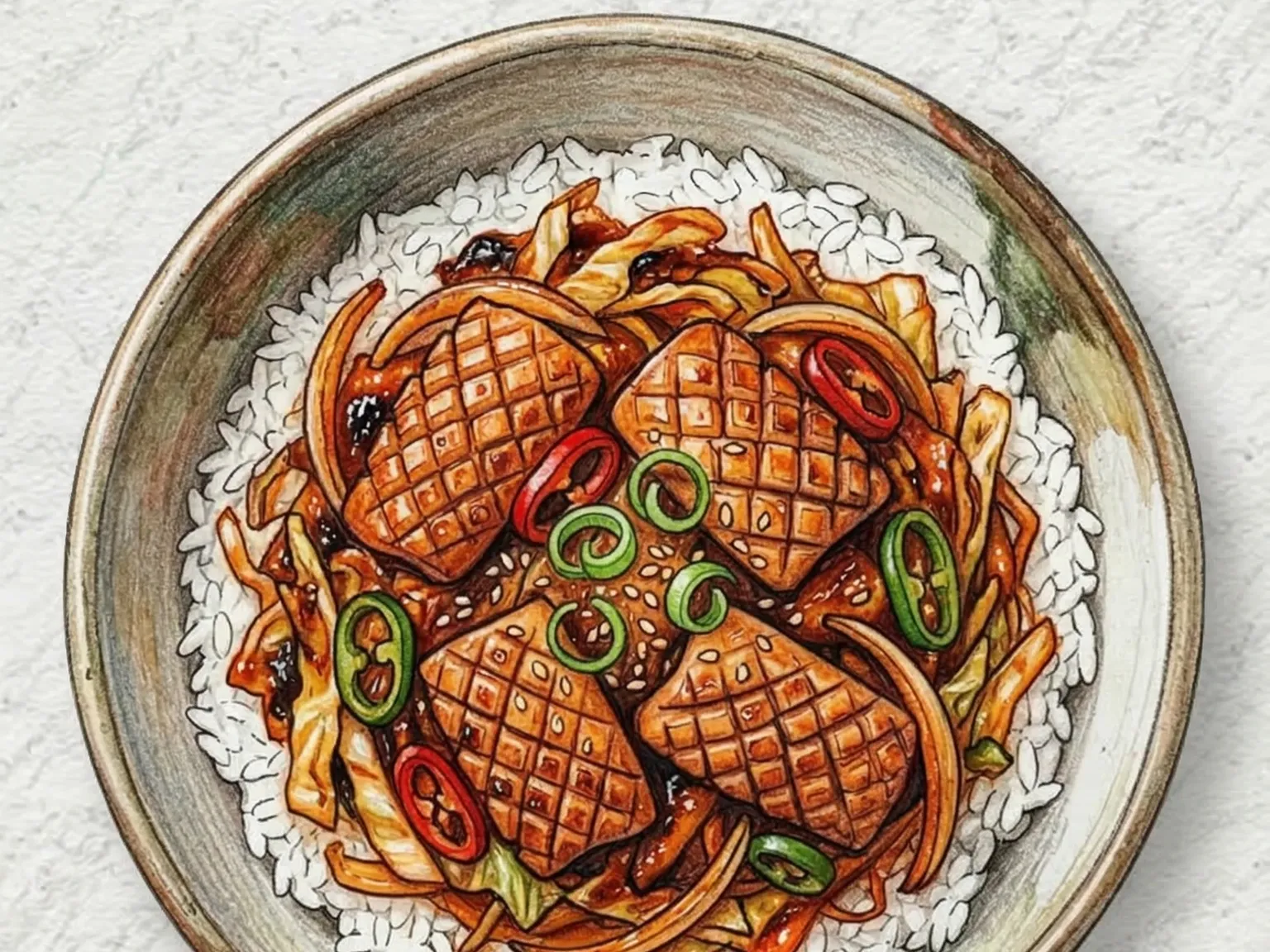
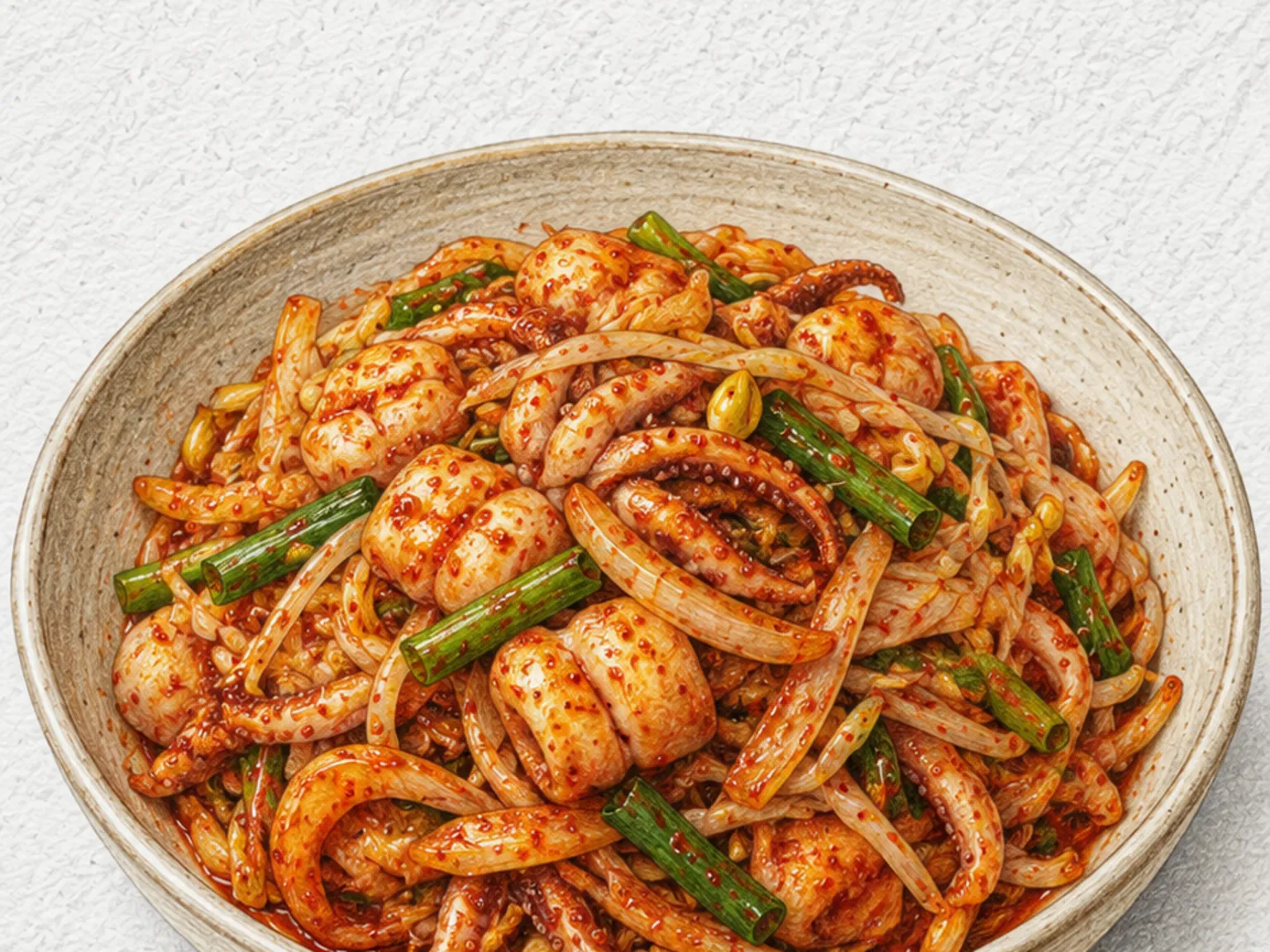
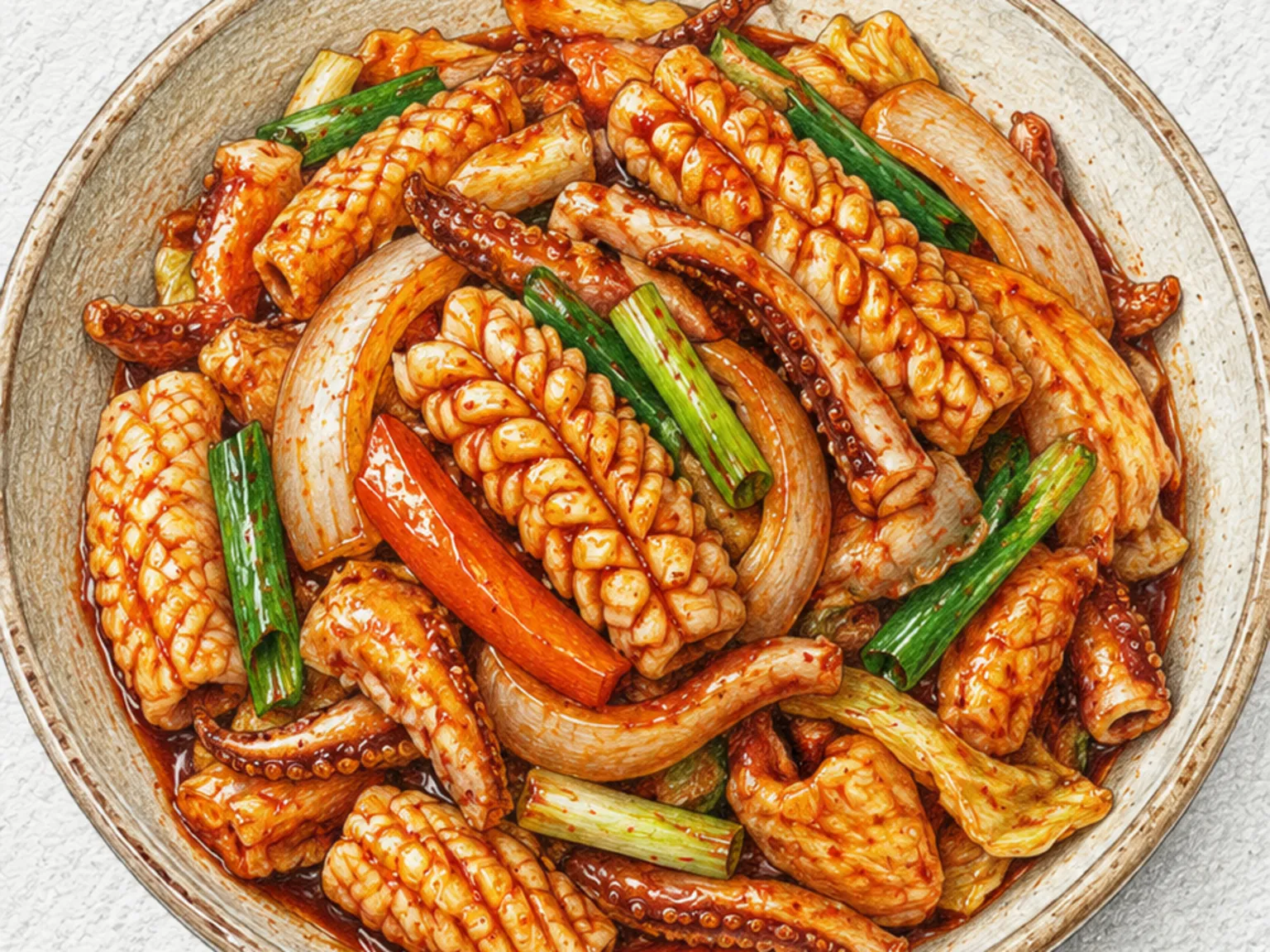
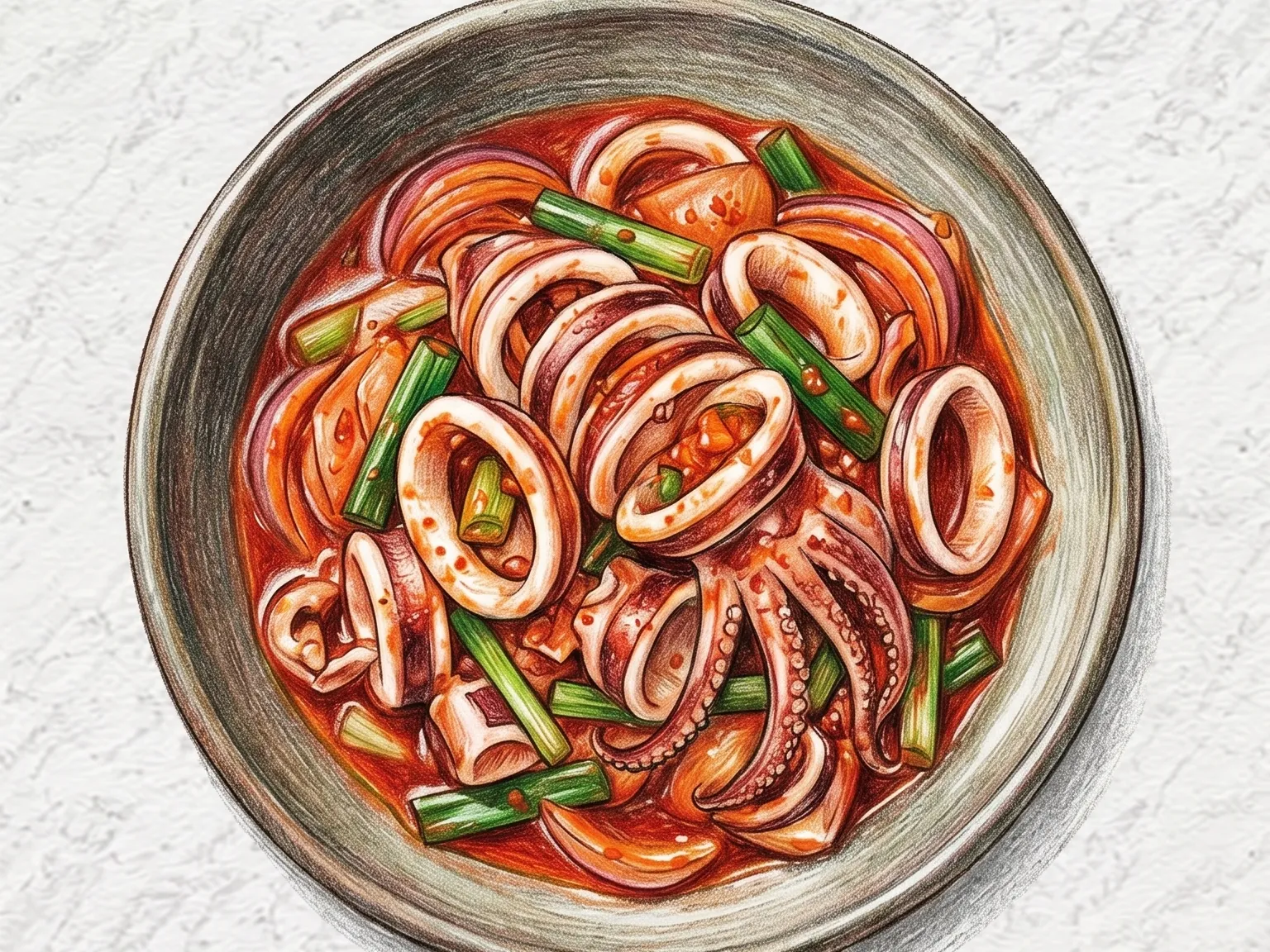
Ojingeo-jjim is a Korean spicy steamed squid dish cooked with onion and green onion in a sauce of gochugaru, gochujang, and soy sauce. The key is keeping the total cooking time to around ten minutes, starting on high heat and finishing on medium, so the squid stays chewy rather than turning rubbery. Gochujang provides a thick, coating heat while the chili flakes add a sharper spiciness on top. One final toss at the end ensures every piece is evenly glazed with the red sauce. This quick-cooking dish works equally well as a banchan alongside rice or as an accompaniment to drinks.
Adjust Servings
Instructions
- 1
Clean squid and cut into bite-size pieces.
- 2
Slice onion and green onion into thick pieces.
- 3
Mix chili flakes, gochujang, soy sauce, garlic, and water for the sauce.
- 4
Add vegetables and squid to a pot and coat with sauce.
- 5
Cook 3 minutes on high and 6 minutes on medium, then toss once at the end.
As an Amazon Associate, we may earn from qualifying purchases.
Tips
Nutrition (per serving)
More Recipes

Korean Braised Cod with Vegetables
Daegu-jjim is braised cod fillet cooked with Korean radish, onion, and green onion in a sauce of gochugaru, soy sauce, and garlic. The thick cod flesh absorbs the spiced broth while keeping its firm, flaky texture intact. Radish pieces soak up the cooking liquid and turn sweet against the chili heat, while cooking wine and garlic neutralize any fishiness. The dish finishes with just enough sauce clinging to the bottom of the pot to spoon over a bowl of rice.

Korean Steamed Monkfish Stomach
Baegoppae jjim is a Korean steamed dish featuring monkfish stomach, valued for its uniquely chewy and springy texture that differs markedly from regular fish flesh. The monkfish stomach is scrubbed with salt and flour to remove any fishy odor, then cut into bite-sized pieces. A seasoning paste of gochugaru, soy sauce, minced garlic, and ginger juice coats the pieces, which marinate for ten minutes to absorb the flavors. The seasoned stomach is placed in a pot with a small amount of water, covered, and steamed at medium heat for fifteen minutes until the sauce reduces and forms a thick glaze on each piece. Water dropwort (minari) is added in the final minute for its herbal fragrance and crisp contrast against the chewy stomach. The texture is the defining feature: each piece requires several deliberate chews, during which the concentrated spicy-savory glaze releases its flavor gradually.

Korean Braised Pollock (Frozen Pollock with Radish in Spicy Sauce)
Dongtae-jjim is frozen pollock braised with Korean radish and bean sprouts in a sauce of gochugaru, soy sauce, garlic, and ginger. Using frozen rather than fresh pollock is traditional - the freezing-and-thawing process gives the flesh a firm, slightly spongy texture that holds up well in the spicy broth. Radish soaks up the chili-laced liquid and turns sweet against the heat, while bean sprouts contribute crunch and a clean, refreshing aftertaste. The sauce reduces to a shallow pool at the bottom, meant to be spooned over rice as a wintertime staple.

Korean Spicy Braised Pufferfish
Cleaned pufferfish fillets are steamed with bean sprouts and water dropwort in a spicy gochugaru and gochujang sauce. The pufferfish meat is lean with a firm, bouncy texture that holds up well under the bold chili seasoning. Bean sprouts add crunch and a refreshing counterpoint, while water dropwort contributes its distinctive herbal fragrance. Seasoned with soy sauce and garlic, this is a coastal Korean fish dish with considerable heat.

Korean Spicy Fermented Squid Jeotgal
Ojingeo jeotgal is a Korean fermented squid preserve made by salting cleaned, finely chopped squid for one hour to firm the flesh and extract moisture, then dressing it in a paste of gochugaru, minced garlic, ginger, fish sauce, and corn syrup. The salt cure intensifies the squid's natural chewiness, and cutting the pieces small accelerates seasoning absorption during the two-to-three-day cold fermentation. Chili flakes coat every surface in a vibrant red layer that delivers steady heat, while corn syrup adds gloss and a mild sweetness that prevents the salt from dominating. Spooned over steamed rice, each piece offers a firm, springy chew followed by a wave of fermented umami. Mixing in a touch of sesame oil before serving softens the saltiness.

Korean Ojingeo Ssamjang Bibim Myeon (Squid Ssamjang Mixed Noodles)
Ojingeo ssamjang bibim myeon is a Korean mixed noodle dish combining blanched squid rings with medium wheat noodles in a ssamjang-based sauce spiked with chili flakes, vinegar, and syrup. The squid is blanched for only forty seconds to keep it springy rather than chewy, and the noodles are rinsed under cold water while gently rubbing to remove surface starch. The dressing merges the fermented depth of ssamjang with the heat of gochugaru and the brightness of vinegar, creating a layered flavor that is salty, spicy, and tangy at once. Resting the sauce for about ten minutes before tossing softens the heavy note of ssamjang. Julienned perilla leaves on top add an herbal fragrance, and sesame seeds finish the dish with nuttiness. The recipe yields four generous servings.