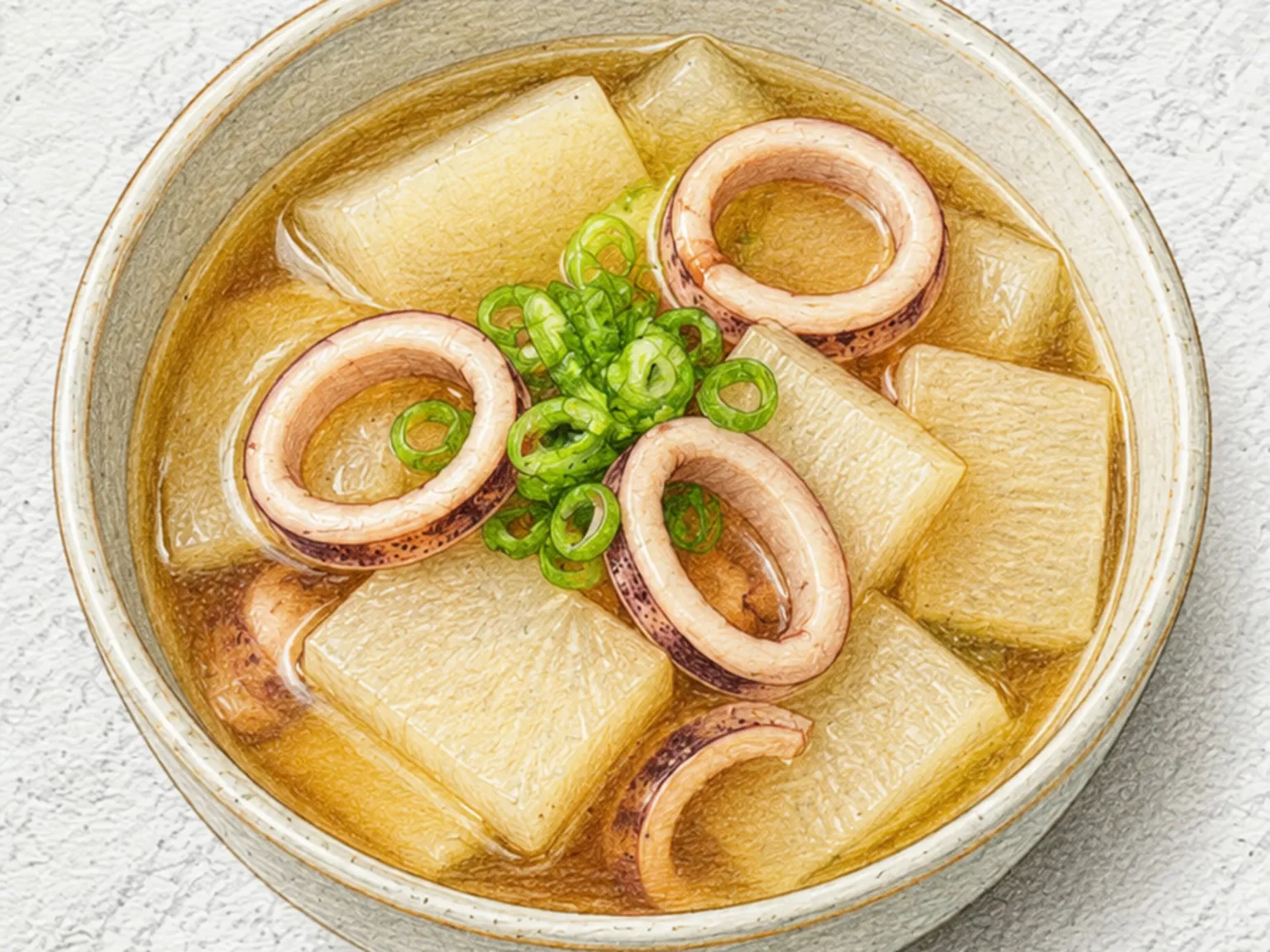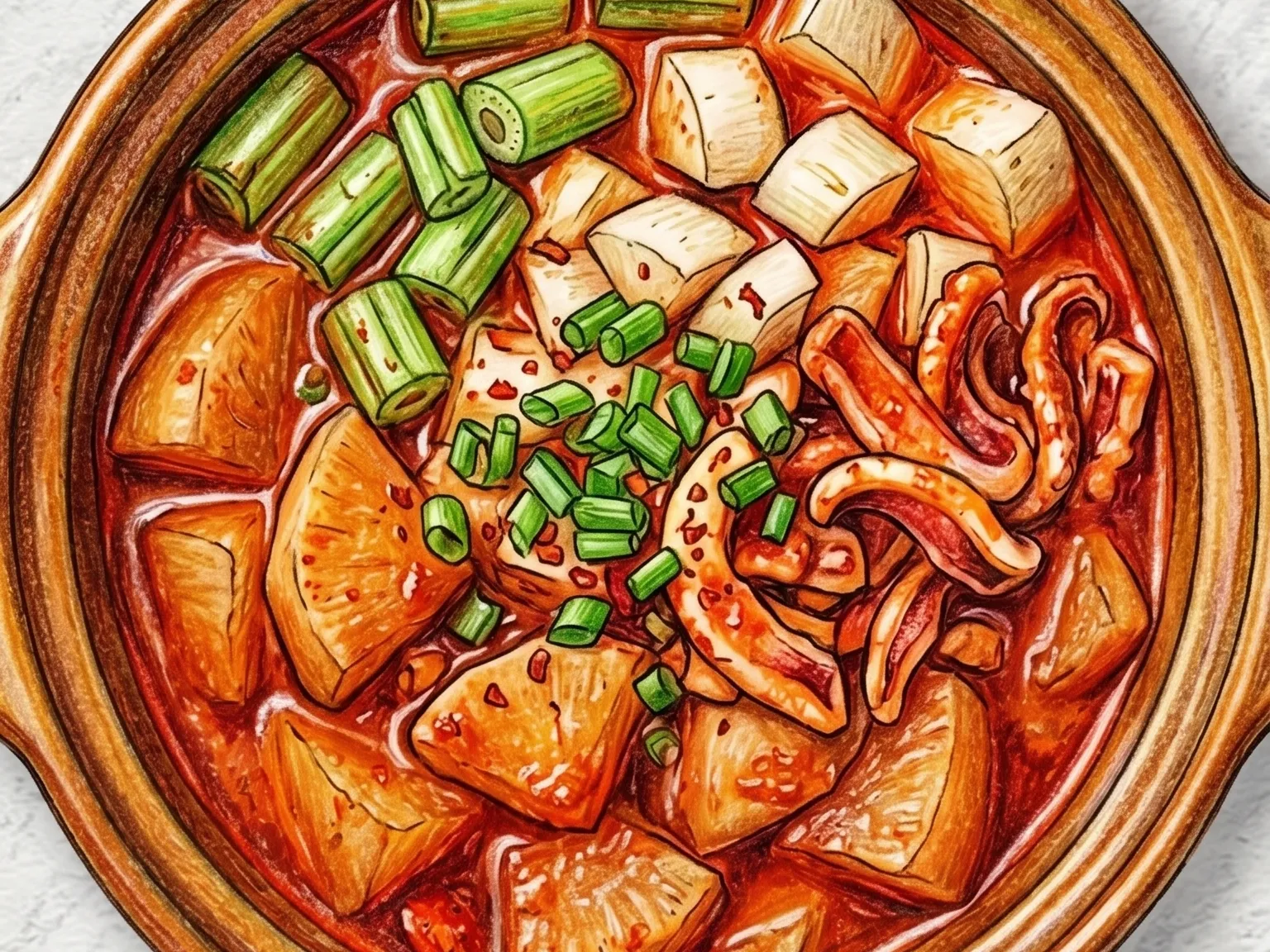
Korean Braised Squid with Radish
Quick answer
Ojingeo mu jorim is a Korean braised dish where radish is cooked first in a soy-based liquid until fully softened, then squid is added and the whole pot is reduced in a s...
What makes this special
- Ojingeo mu jorim allows radish to soften and release natural sugars before adding squid to the spicy soy braising liquid.
- Radish cooks first to release its natural sweetness into the braising liquid
- Sequential cooking balances soy saltiness and radish sweetness in the broth
Key ingredients
Core cooking flow
- 1 Clean 500 g squid well, removing any slippery membrane or remaining innards, then slice it into rings.
- 2 Put the radish, 350 ml water, and 1 tablespoon soy sauce in a pot and bring it to a boil over high heat.
- 3 Meanwhile, mix the remaining 2 tablespoons soy sauce with 2 tablespoons goch...
Ojingeo mu jorim is a Korean braised dish where radish is cooked first in a soy-based liquid until fully softened, then squid is added and the whole pot is reduced in a spiced sauce of gochugaru and gochujang. Giving the radish time to cook alone is the structural key to this dish: as it slowly absorbs the liquid and breaks down, it releases its natural sweetness into the broth, which merges with the salt and gentle umami of soy sauce to build the braising liquid into something more complex than its ingredients suggest. When the spice paste goes in, the resulting flavor sits at the intersection of heat and coolness - the particular sensation of Korean chili that stings without overwhelming. The single most important technique in this recipe is the timing of the squid. Squid turns rubbery when overcooked, and the window between tender and tough is narrow, so it is added only in the last five minutes of cooking. That brief time is enough for the squid to absorb the surrounding flavors while holding the springy, snapping bite that makes the dish texturally rewarding. Green onion stirred in at the finish adds a sharp herbal lift. The reduced sauce left in the pan is deliberately left shallow rather than thick, concentrated with the flavors of both the squid and the radish, and it is best used by spooning it over rice and eating everything together.
Instructions
Read the steps as a cooking flow: prep, heat, seasoning, doneness control, and finish.
- 1Prep
Clean 500 g squid well, removing any slippery membrane or remaining innards, then slice it into rings.
Cut 450 g Korean radish into 1 cm half-moons, and prepare the onion and green onion in easy-to-eat pieces.
- 2Control
Put the radish, 350 ml water, and 1 tablespoon soy sauce in a pot and bring it to a boil over high heat.
Once boiling, lower to medium heat and cook 8 minutes, until the radish edges look slightly translucent.
- 3Season
Meanwhile, mix the remaining 2 tablespoons soy sauce with 2 tablespoons gochugaru, 1 tablespoon gochujang, garlic, cooking wine, and sugar. Stir until smooth so the paste disperses evenly instead of clumping in the pot.
- 4Control
When a chopstick goes halfway into the radish, add the onion and seasoning paste.
Simmer over medium heat for 7 minutes, turning gently once or twice so the bottom does not scorch and the radish stays intact.
- 5Control
When the liquid is shallow and the radish is tender, add the squid.
Braise quickly over medium-high heat for only 5 minutes, stopping as soon as the squid curls and turns opaque so it does not become tough.
- 6Finish
Add the green onion and cook 2 more minutes to release its aroma.
Turn off the heat, rest covered for 3 minutes, check the saltiness, then serve the squid, radish, and shallow sauce together with rice.
After the steps
Pick a recipe that fits this dish.
Continue with shared ingredients, meal pairings, or a similar method.
Recipes That Go Well With This
More Steamed →Based on shared ingredients and meal pairing
Korean Spicy Steamed Squid
Ojingeo-jjim is a Korean spicy steamed squid dish cooked with onion and green onion in a sauce of gochugaru, gochujang, and soy sauce. The key is keeping the total cooking time to around ten minutes, starting on high heat and finishing on medium, so the squid stays chewy rather than turning rubbery. Gochujang provides a thick, coating heat while the chili flakes add a sharper spiciness on top. One final toss at the end ensures every piece is evenly glazed with the red sauce. This quick-cooking dish works equally well as a banchan alongside rice or as an accompaniment to drinks.
Ojingeo-muguk (Korean Squid Radish Soup)
Ojingeo-muguk is a clear Korean soup that pairs squid and radish in a gently sweet, clean-tasting broth built without any chili or strong seasoning. Radish is added to cold water from the start and simmered for at least eight minutes, during which the vegetable slowly releases a natural sweetness that forms the flavor foundation of the soup. Squid is cleaned, sliced into rings, and added only after the radish has softened, and the timing here is critical: five minutes in the hot broth is enough for the flesh to turn fully opaque and pleasantly firm, but even a minute or two beyond that causes the proteins to tighten and the rings to turn rubbery and tough. Soup soy sauce seasons the broth without darkening it, and minced garlic provides depth without heat. Sliced green onion stirred in at the end neutralizes any residual seafood aroma and leaves the broth tasting bright and clean. The simplicity of the combination is the point: the radish's sweetness and the squid's umami reinforce each other in a broth that is light in body but surprisingly satisfying.
Korean Seafood Hot Pot Soup
Haemul-tang is a Korean seafood hot pot that throws together crab, shrimp, clams, and squid in a fiery, brick-red broth. The liquid starts with gochugaru and plenty of garlic, building a spicy base that the seafood then amplifies with its own briny juices. Radish chunks soften as the pot bubbles, thickening the broth slightly and adding a cool sweetness behind the heat. Green onions and cheongyang peppers go in toward the end for a sharp, vegetal bite. The magic of haemul-tang lies in the convergence of flavors: crab shells release a sweet, crustacean stock; clams open to spill their liquor; shrimp and squid contribute distinct textures from snappy to chewy. The pot is brought to the table still at a rolling boil, and diners pick through the shells and tentacles while the broth continues to concentrate.
Korean Braised Flounder with Radish
Gajami mu jorim is a Korean braised flounder dish in which flounder pieces and thick slices of Korean radish are cooked down together in a soy sauce and gochugaru broth until the liquid reduces to a concentrated, savory glaze. The radish absorbs the fat and juices released from the fish as it braises, soaking up the spicy seasoning until each slice becomes as flavorful and satisfying as the fish itself. Gochugaru and fresh Cheongyang chili provide a clean, penetrating heat, while soy sauce contributes deep umami and minced garlic adds a sharp aromatic backbone to the broth. Allowing the liquid to reduce until only a small amount remains thickens the sauce significantly, and spooning that concentrated braising liquid over plain steamed rice is one of the most common ways to finish the meal, with the sauce soaking into the grains and making it nearly impossible to stop eating. Flounder's naturally lean, delicate flesh, which pulls apart easily along the grain, pairs well with the extended braising method, which keeps the fish moist while infusing it with the bold seasonings. This combination of practical cooking technique and deep, satisfying flavor has made gajami mu jorim one of the most enduring everyday fish side dishes in Korean home cooking.
Serve with this
Korean Grilled Eel Rice Bowl
Jangeeo deopbap is a bowl of grilled freshwater eel over steamed rice, where the key technique is building up a thick, lacquered glaze through multiple applications of a sweet-salty sauce reduced from soy sauce, mirin, sugar, and ginger juice. The eel starts skin-side down on the grill over medium heat for around five minutes to crisp the skin, then is flipped and basted repeatedly with the sauce as it finishes cooking. A single coat of sauce produces a pale, thin color, so at least two applications and ideally three or more are needed to build the characteristic glossy surface. With each additional coat, the sugars in the sauce react with heat through both Maillard browning and caramelization, layering flavor with every pass. Because freshwater eel is naturally fatty, fat drips during grilling can cause flare-ups, so heat control is important throughout the process. Sansho pepper dusted on at the end cuts through the eel's inherent richness with a sharp, numbing fragrance that balances the sweet glaze and keeps the dish from feeling heavy.
Korean Beef & Shiitake Japchae
Japchae originated as a Joseon royal court dish of stir-fried vegetables before sweet potato glass noodles were added to create the form recognized today. This version pairs glass noodles with soy-marinated beef and sliced shiitake mushrooms. Each component cooks separately: beef and mushrooms stir-fried with garlic, spinach blanched and squeezed dry, carrots and onions sauteed until just tender. A final toss with sesame oil brings everything together. The noodles should be translucent and springy, carrying a sweet-salty soy glaze into each forkful. A standard presence on every Korean holiday table at Chuseok, Seollal, and birthday celebrations alike.
Chicken Mu (Korean Fried Chicken Radish Pickle)
The crunchy, sweet-sour radish pickle served with every order of Korean fried chicken - now easy to make at home in under 15 minutes. Cubed radish is submerged in a cooled brine of vinegar, sugar, salt, and whole black peppercorns. Using fully cooled brine rather than hot is critical for maintaining the radish's firm, snapping crunch. Ready to eat after one day of refrigeration, its bright acidity cleanses the palate between bites of crispy chicken. Stored in a glass jar, this pickle keeps for over a week.
Similar recipes
Korean Braised Beef and Radish
Sogogi mu jorim is a Korean braised beef and radish dish where brisket and thick-cut Korean radish are slowly simmered in soy sauce with garlic, ginger, and a touch of sugar. Boiling the beef first and skimming the foam produces a clean broth base for braising. The radish goes in later so it cooks until semi-translucent, absorbing the beef-enriched liquid and developing a natural sweetness that balances the soy. Green onion added at the end contributes a fresh note. Cutting the radish thick is important so it holds its shape through the braise, and resting the dish overnight before reheating deepens the flavor noticeably.
Korean Braised Squid with Shishito Peppers
Kkwari-ojingeo-jorim is a Korean braise of squid and shishito peppers simmered in a gochujang and soy sauce seasoning. The squid retains its chewy bounce while soaking in the bold sauce, and the peppers absorb enough flavor to stand on their own while keeping a slight crunch. Gochujang brings a warm spiciness that combines with soy sauce's depth into a multilayered seasoning, and garlic with ginger neutralizes any seafood odor. As the liquid reduces, it coats each piece in a concentrated glaze that makes this banchan work especially well spooned over a bowl of steamed rice.
Korean Braised Spanish Mackerel with Radish
Samchi mu-jorim layers sliced Korean radish on the bottom of a pot, topped with Spanish mackerel steaks and onion, then braised in a sauce of gochujang, soy sauce, gochugaru, and garlic. The radish prevents the fish from sticking, absorbs the braising liquid, and turns translucent-soft as it cooks. Rather than flipping the fish, the sauce is spooned over the top repeatedly so the flesh stays intact. After about fifteen minutes of simmering on medium heat, the liquid reduces to a concentrated, mildly spicy broth with the radish's subtle sweetness woven through it.