Korean Stir-fried Squid and Bean Sprouts
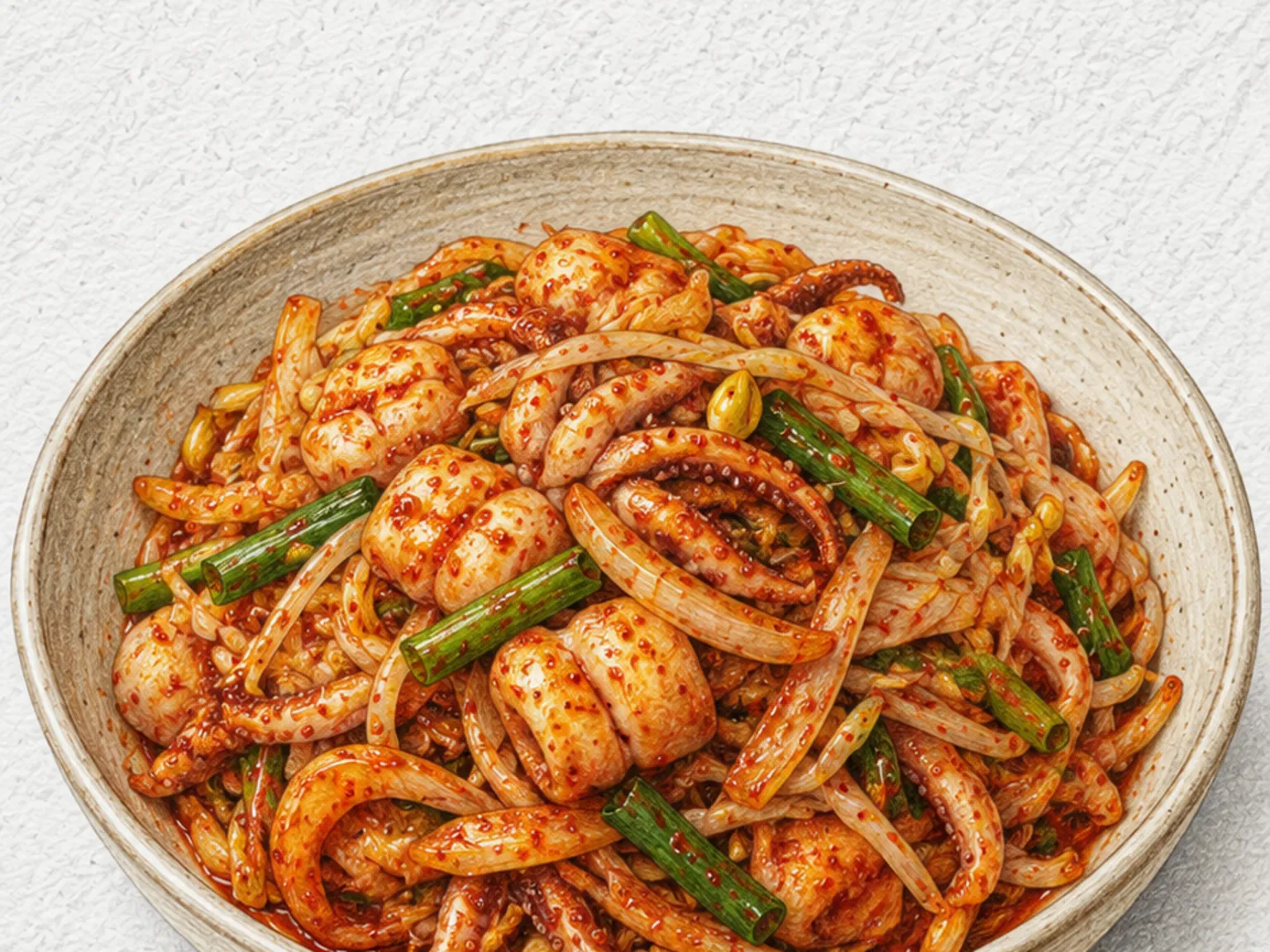
Ojingeo-sukju-bokkeum stir-fries bite-size squid pieces and bean sprouts in a gochujang-gochugaru sauce over very high heat, capturing smoky wok flavor. Garlic and the chili paste cook first to bloom their heat, then squid and onion go in for a fast sear. Bean sprouts are added only in the final minute or two, keeping them crisp and preventing the dish from becoming watery. Scallion joins at the same time for a sharp finish. The contrast between the squid's firm, chewy body and the sprouts' light crunch defines the texture, while the bold seasoning makes this a natural match for steamed rice.
Adjust Servings
Instructions
- 1
Clean squid and cut into bite-size pieces.
- 2
Rinse bean sprouts and slice onion and green onion.
- 3
Heat oil and fry garlic, gochujang, and chili flakes briefly.
- 4
Add squid and onion and stir-fry quickly on high heat.
- 5
Add bean sprouts and green onion and cook 1–2 more minutes.
As an Amazon Associate, we may earn from qualifying purchases.
Tips
Nutrition (per serving)
More Recipes

Korean Beef and Bean Sprout Stir-fry
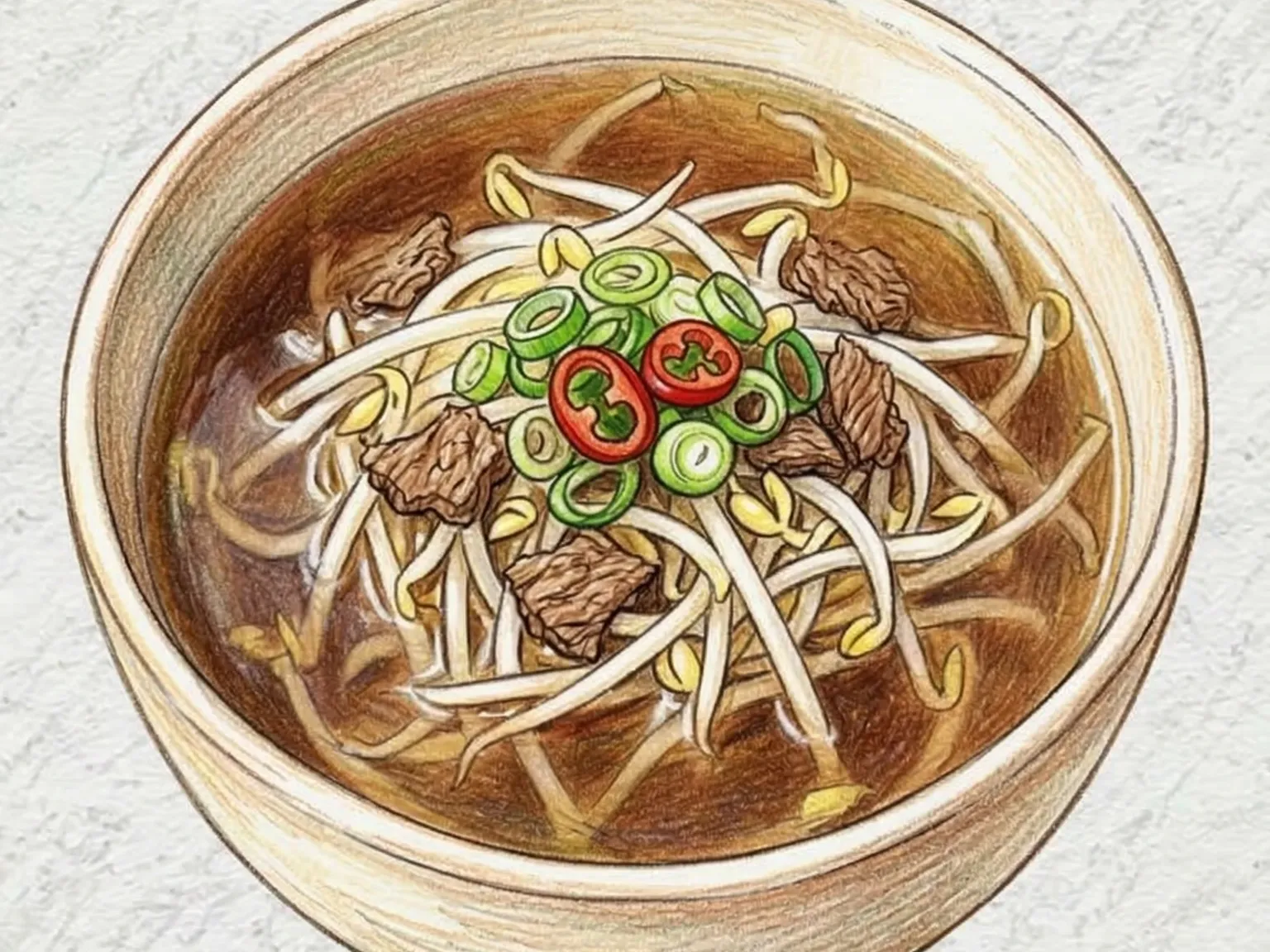
Sukju-sogogi-bokkeum stir-fries thinly sliced lean beef and mung bean sprouts in soy sauce over high heat. The beef goes into a well-heated pan first to develop wok hei, then the sprouts are added for just one to two minutes to keep their crunch and moisture. Seasoning stays minimal with soy sauce, black pepper, and a finish of sesame oil, letting the ingredients speak for themselves. The result is a light stir-fry where the smoky sear of the beef meets the cool, watery snap of the sprouts.

Korean Spicy Stir-Fried Squid Rice Bowl
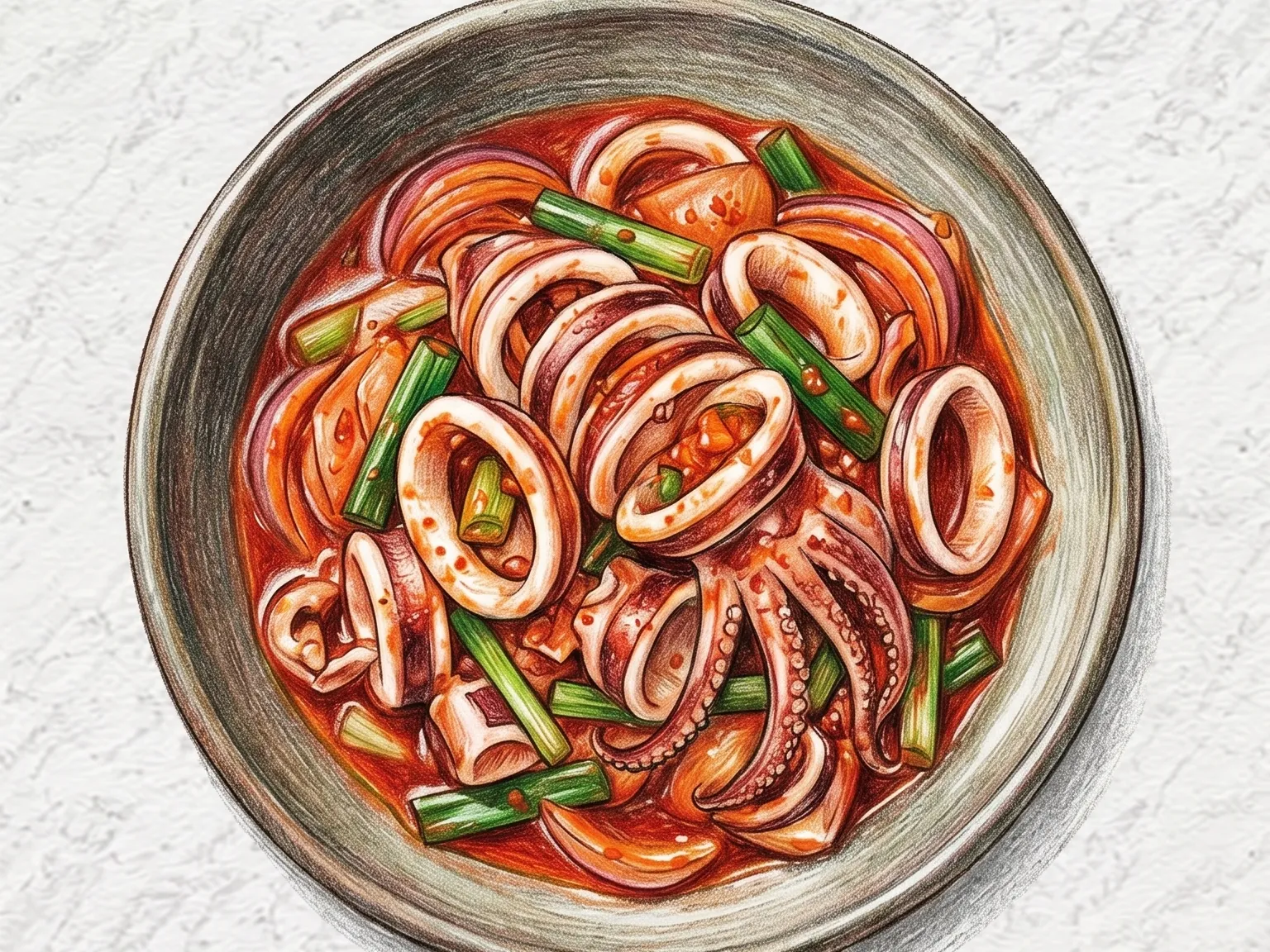
Scored squid is stir-fried with onion, cabbage, and scallion in a gochujang-based sauce over high heat, then served on steamed rice. The squid's chewy texture and smoky wok char pair with the sweet-salty-spicy glaze, while the vegetables bring natural sweetness that tempers the heat. Vegetables go into the pan first to drive off moisture, then the squid cooks quickly for just 3 to 4 minutes to stay tender. Leaving a little sauce in the pan lets it soak into the rice when mixed, coating every grain.

Korean Spicy Stir-fried Squid
Ojingeo-bokkeum is one of Korea's most popular spicy stir-fries, featuring scored squid bodies and tentacles tossed over high heat with onion, carrot, cabbage, and scallion in a gochujang-gochugaru-soy-sugar sauce. Crosshatch scoring on the squid allows the thick, spicy sauce to penetrate deeply, ensuring consistent flavor in every bite. The entire stir-fry takes only a few minutes on maximum heat - essential for keeping the squid springy rather than rubbery. Cabbage and carrot go in near the end to retain their crunch, and a final sesame oil drizzle ties the smoky wok char to the bold red seasoning.

Korean Spicy Octopus Stir-fry
Muneo-bokkeum is a Korean stir-fry of pre-boiled octopus tossed with onion, carrot, and scallion in a gochujang-soy sauce blend. The octopus is cut into bite-size pieces and needs only 2-3 minutes of high-heat cooking to warm through and absorb the spicy-salty seasoning without turning chewy. Vegetables are kept slightly underdone to provide a crisp counterpoint to the octopus's springy, dense chew. The sauce is mixed from gochujang, soy sauce, and garlic before hitting the pan, so the stir-fry proceeds quickly with a final drizzle of sesame oil.

Korean Stir-Fried Mung Bean Sprouts and Mushrooms
Mung bean sprouts and oyster mushrooms are tossed together in a hot pan for a stir-fry that contrasts the sprouts' crisp snap with the mushrooms' tender chew. Speed is critical: the sprouts lose their crunch within seconds of overcooking, so the entire process finishes in under a minute once the ingredients hit the oil. Tearing the oyster mushrooms along their natural grain rather than chopping them exposes more surface area, allowing the seasoning to penetrate each strand. Soup soy sauce seasons the dish with depth while keeping the color clean and light, and minced garlic and sliced green onion provide an aromatic backbone that fills the kitchen as the pan sizzles. Sesame oil is added just before removing from heat so its fragrance survives intact, and a scattering of toasted sesame seeds supplies a nutty accent. Both ingredients release significant moisture, so either salting them briefly beforehand or ensuring the pan is blazing hot prevents the stir-fry from turning soggy.

Korean Spicy Whelk Stir-fry
Golbaengi bokkeum is a Korean spicy whelk stir-fry that combines canned whelk with a sauce of gochujang, gochugaru, vinegar, and sugar. The whelk's firm, chewy texture is central to the dish, so cooking time is kept to just 2 to 3 minutes to prevent toughness. Vinegar adds a tangy brightness that balances the chili heat. Julienned cucumber, onion, and scallion are tossed in off the heat to maintain their crunch and freshness. Served alongside thin wheat noodles or glass noodles, it transitions easily from a banchan into a popular drinking snack.