Korean Steamed Stuffed Squid
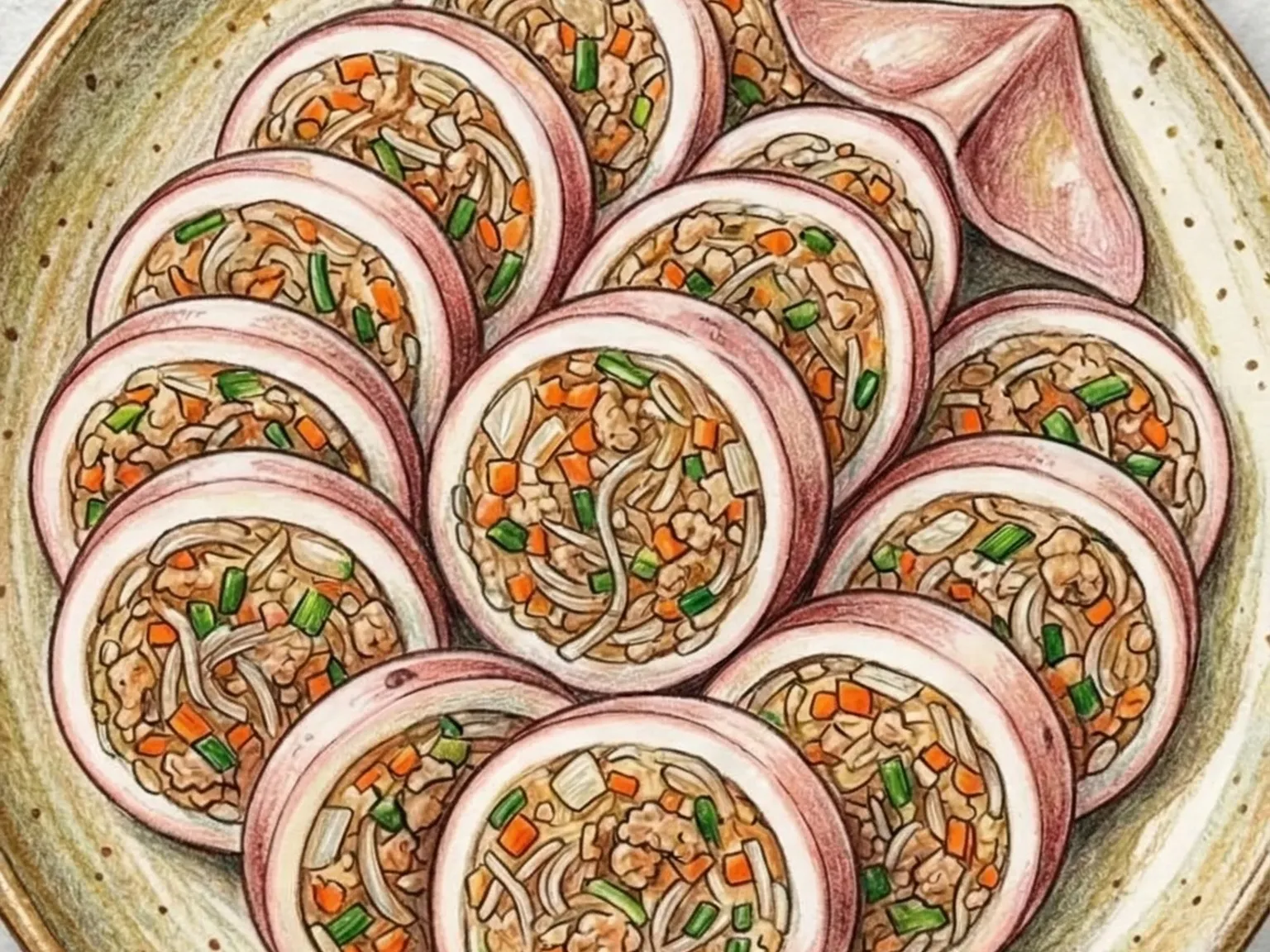
Ojingeo sundae jjim is a Korean stuffed squid dish from the Gangwon-do region, where whole squid bodies are filled with a mixture of glass noodles, ground pork, onion, carrot, and garlic chives, then steamed. The chewy squid exterior encases a moist, savory stuffing that melds together during cooking. Soy sauce and sesame oil in the filling season it from within, and the squid's own moisture keeps everything from drying out. Slicing the squid after a brief rest reveals clean, attractive cross-sections with the noodles and vegetables visible inside. This dish is a common choice for home gatherings where a visually striking centerpiece is wanted.
Adjust Servings
Instructions
- 1
Separate squid bodies and tentacles, then clean thoroughly.
- 2
Boil glass noodles and chop finely; mince squid tentacles.
- 3
Mix pork, noodles, vegetables, minced tentacles, soy sauce, garlic, and sesame oil.
- 4
Stuff squid bodies about 80% full and secure openings with toothpicks.
- 5
Steam on medium-high for 15 minutes, then rest 3 minutes.
- 6
Cool slightly, slice, and serve.
As an Amazon Associate, we may earn from qualifying purchases.
Tips
Nutrition (per serving)
More Recipes

Korean Spicy Steamed Squid
Ojingeo-jjim is a Korean spicy steamed squid dish cooked with onion and green onion in a sauce of gochugaru, gochujang, and soy sauce. The key is keeping the total cooking time to around ten minutes, starting on high heat and finishing on medium, so the squid stays chewy rather than turning rubbery. Gochujang provides a thick, coating heat while the chili flakes add a sharper spiciness on top. One final toss at the end ensures every piece is evenly glazed with the red sauce. This quick-cooking dish works equally well as a banchan alongside rice or as an accompaniment to drinks.

Korean Squid Glass Noodle Stir-Fry
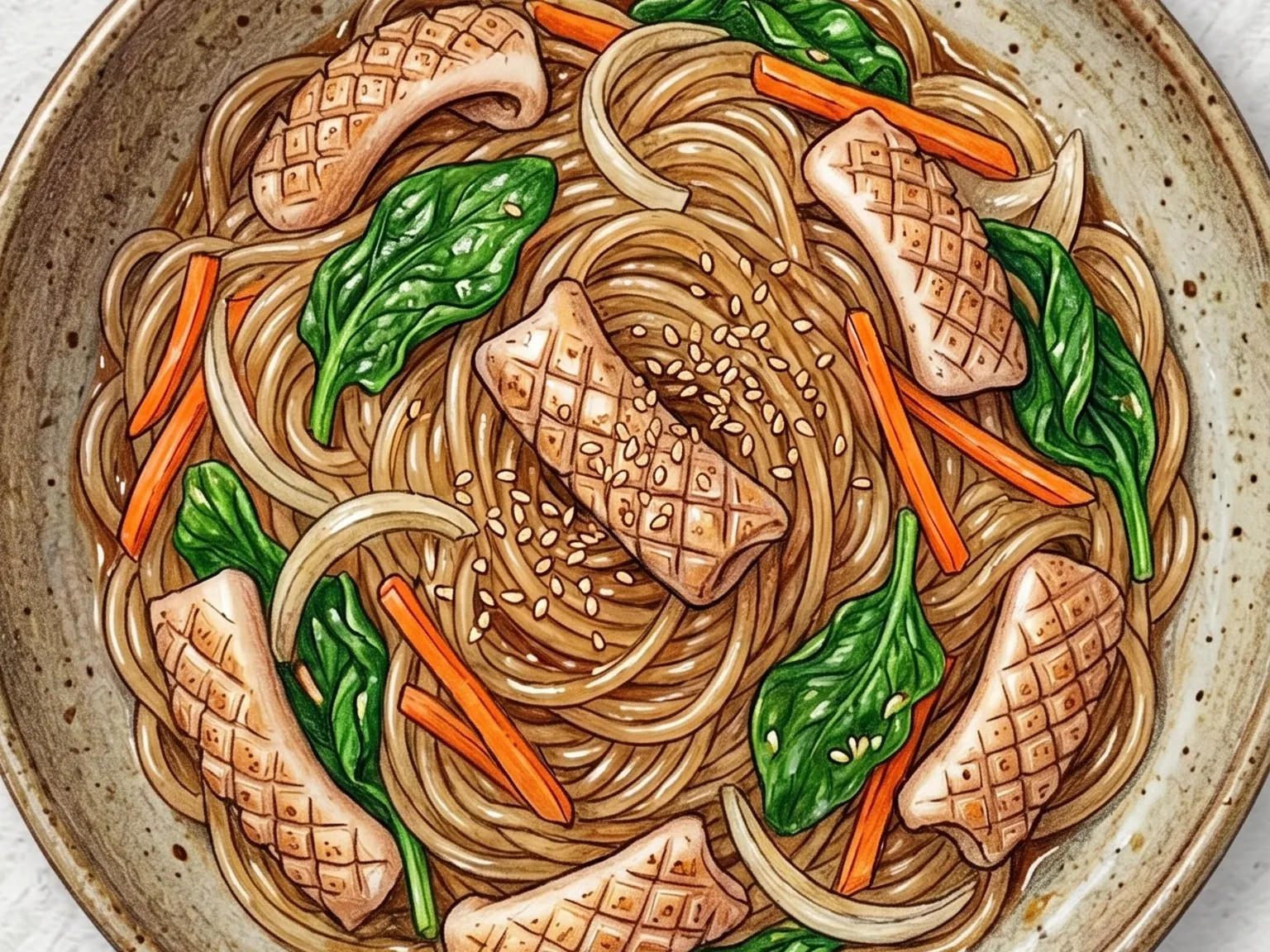
Ojingeo japchae is a Korean glass noodle stir-fry that substitutes squid for the traditional beef, combining chewy dangmyeon with spinach, carrot, and onion in a soy-sugar sauce. Scoring the inner surface of the squid before cutting it into bite-sized pieces allows the seasoning to penetrate and softens the texture. Stir-frying the squid briefly with garlic prevents it from turning rubbery. The glass noodles are boiled for no more than six minutes to maintain their elastic chew, and the spinach is blanched and squeezed dry separately so it does not release moisture into the stir-fry. Soy sauce and sugar form a sweet-salty base, and a final drizzle of sesame oil with sesame seeds brings nuttiness that ties the seafood umami and vegetables together.

Korean Stuffed Fish Steam
Eoseon-jjim is a traditional Korean court-style steamed fish dish featuring sea bream fillet topped with julienned oyster mushrooms, cucumber, and carrot, then wrapped in thin egg crepe before steaming. The gentle cooking method keeps the fish flesh moist while the vegetables retain a slight bite. A light dressing of soy sauce and vinegar provides subtle acidity that complements the mild sea bream. Finished with a touch of sesame oil, this dish is both visually striking and refined in flavor.

Korean Stuffed Squid Grill
Ojingeo-sun-gui is grilled stuffed squid-a Korean dish where cleaned squid tubes are filled with a mixture of soaked glutinous rice, crumbled tofu, diced carrot, soy sauce, and sesame oil, sealed with toothpicks, and grilled over medium heat with frequent turning. The glutinous rice needs at least three hours of soaking to cook through inside the squid's body cavity, and the tofu must be pressed dry in cheesecloth to prevent the filling from becoming waterlogged. Filling only seventy to eighty percent of each tube is essential because the rice expands as it cooks; overstuffed squid will burst on the grill. When sliced into 1.5-centimeter rounds, each piece reveals concentric layers-the chewy squid exterior, a sticky ring of glutinous rice, and a soft tofu core at the center.

Korean Steamed Stuffed Chili Peppers
Gochu-jjim is a Korean stuffed pepper dish where mild green chili peppers are filled with a mixture of ground pork, crumbled tofu, garlic, and green onion, then steamed. A light dusting of flour on the inside of each pepper helps the filling stay in place during cooking. The soy sauce and sesame oil seasoning permeates the filling, and the pepper's thin skin provides a gentle crunch around the soft, savory stuffing. This dish appears regularly as a banchan and is also a common feature on Korean holiday tables.

Korean Stuffed Steamed Cucumber
Oiseon is a traditional Korean court-style dish where cucumber sections are hollowed out, stuffed with a filling of ground chicken, crumbled tofu, and carrot, and then steamed. The crisp cucumber shell contrasts with the soft, moist filling inside, creating two distinct textures in each bite. The stuffing is seasoned simply with soy sauce, garlic, and sesame oil, keeping it savory without heaviness. Steaming preserves the cucumber's fresh, green aroma while gently cooking the filling through. This dish can be served warm or chilled, and its refined presentation makes it appropriate for formal Korean table settings and guest entertaining.