Korean Fried Squid
Quick answer
Cleaned squid is cut into 1 cm rings, dipped in a light batter of frying mix, cold water, and egg, then deep-fried at 170 degrees Celsius for three to four minutes until...
What makes this special
- Ojingeo-twigim dips scored squid rings in a light batter for a crisp, golden-brown snack.
- Scored or tenderized squid reduces shrinkage and holds batter better
- Leaving lumps in batter creates rough texture for extra crunch
Key ingredients
Core cooking flow
- 1 Clean 200 g squid, cut it into 1 cm rings, and pat every surface dry.
- 2 Beat 1 egg with 120 ml cold water first, then add 100 g frying mix.
- 3 Pour 500 ml cooking oil into a pot and heat it over medium heat to 170°C.
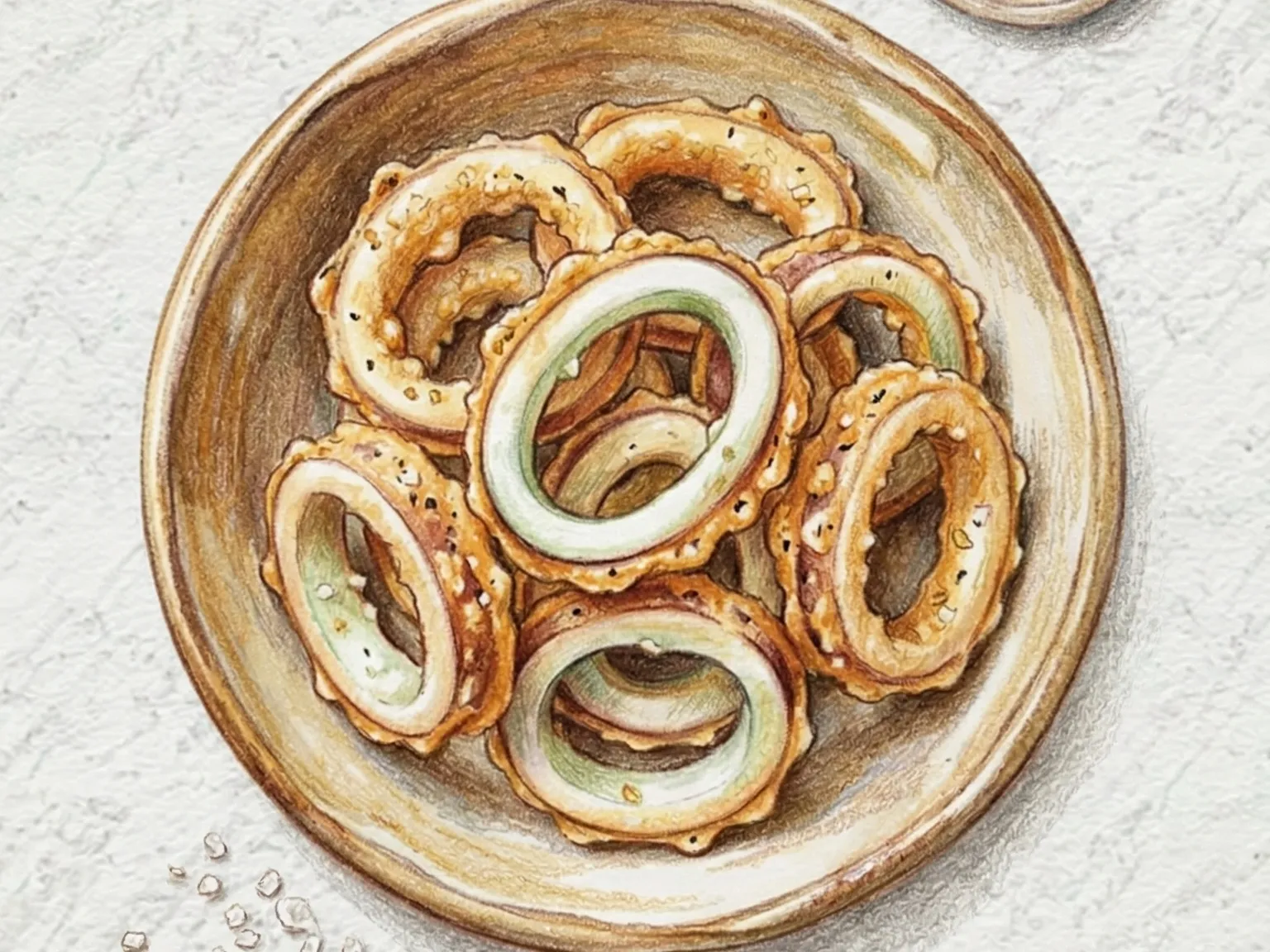
Cleaned squid is cut into 1 cm rings, dipped in a light batter of frying mix, cold water, and egg, then deep-fried at 170 degrees Celsius for three to four minutes until golden and crisp. Cold water is essential for the batter -- warm water activates the gluten in the flour and produces a thick, doughy coating instead of the thin, shatter-crisp shell this dish depends on. The batter should be mixed just enough to combine, leaving a few lumps intact, because those uneven patches fry up with irregular texture that adds to the crunch. Scoring the squid rings lightly with a knife or pounding them briefly helps them stay flat and allows the batter to adhere without sliding off. Frying in small batches matters, since crowding the pan drops the oil temperature and causes the rings to absorb fat rather than fry. The defining quality of this dish is the contrast between the springy, chewy squid and the airy, crisp coating that surrounds it, a contrast that only exists in the first few minutes after frying. Served with a pinch of salt or a soy-vinegar dipping sauce, these rings are a fixture at street food stalls and snack shops across Korea.
Instructions
Read the steps as a cooking flow: prep, heat, seasoning, doneness control, and finish.
- 1Prep
Clean 200 g squid, cut it into 1 cm rings, and pat every surface dry.
Lightly score the rings or tap them with the back of a knife so they shrink less and hold the batter better.
- 2Heat
Beat 1 egg with 120 ml cold water first, then add 100 g frying mix.
Stir briefly with chopsticks or a fork, stopping while small lumps remain, because overmixing makes the coating heavy.
- 3Control
Pour 500 ml cooking oil into a pot and heat it over medium heat to 170°C.
If a drop of batter sinks briefly, then rises with fine bubbles, the oil is ready for frying.
- 4Step
Dip the squid rings in a thin layer of batter and let the excess drip off.
Add only a small batch to the oil at a time, keeping the rings separated so the temperature does not fall.
- 5Heat
Fry at 170°C for 3 to 4 minutes, adjusting the heat to keep the oil steady.
Remove the rings when the coating turns pale golden, feels crisp, and the bubbling slows.
- 6Finish
Drain the fried squid on a rack so steam does not soften the crust.
Sprinkle lightly with 0.5 teaspoon salt and serve immediately with soy sauce or a soy-vinegar dip while still crisp.
After the steps
Pick a recipe that fits this dish.
Continue with shared ingredients, meal pairings, or a similar method.
Recipes That Go Well With This
More Street food →Based on shared ingredients and meal pairing
Korean Kimchi Tempura (Crispy Battered Deep-Fried Fermented Kimchi)
Kimchi twigim is made by cutting well-fermented napa kimchi into large pieces, lightly squeezing out moisture, dipping in a batter of frying mix and cold water, and deep-frying at 170C until crispy. Cold water in the batter creates a sharper temperature differential in the hot oil, producing a crunchier coating. The kimchi's fermented acidity and spice layer against the batter's mild savoriness, and using deeply aged kimchi intensifies the tang that counterbalances the frying oil. Squeezing the kimchi too dry removes its umami-rich juices, so moderate draining is the key.
Korean Crispy Fried Sundae
Soondae-twigim is deep-fried Korean blood sausage, sliced thick and coated in a batter of frying mix blended with potato starch for extra crunch. A double-frying method is used: the first round at 170 degrees Celsius cooks the inside through, followed by a brief second fry at 185 degrees that hardens the crust to a shattering crispness while the interior stays chewy and moist. Patting the sundae surface dry before battering is essential so the coating adheres evenly and does not peel off in the oil. A light dusting of chili powder and a side of mustard add heat and a sharp tang that cuts through the richness.
Korean Sweet Corn Latte (Butter Sauteed Corn Milk Drink)
Sweet corn latte begins by sauteing cooked corn kernels in butter until fragrant, then simmering them in milk to draw out the corn's natural sugars before blending everything smooth. The butter amplifies the starchy, roasted aroma during the initial saute, coating each kernel so that the fat-soluble flavor compounds dissolve fully into the milk during the five-minute simmer. Blending the mixture until completely smooth and then straining it through a fine sieve removes any remaining hull pieces, producing a texture as silky as a custard sauce. This straining step makes a noticeable difference in the final quality. Condensed milk adds a rounded sweetness, and a small amount of white pepper introduces a faint spiced warmth that gives the drink depth beneath the sweetness. It works equally well served hot in a ceramic mug or chilled and poured over ice; the corn aroma remains vivid in both versions.
Korean Sausage Skewers
Sosiji kkochi are Korean sausage skewers made by scoring Vienna sausages deeply along their length and threading two or three onto wooden sticks, then pan-frying them until golden brown all over. The score marks serve a functional purpose: as the sausages heat, the cuts open up, allowing heat to penetrate to the center more evenly and creating edges that caramelize slightly and turn crisp. A thin film of oil in a medium-heat pan and steady rotation ensures even color across the entire surface, producing a skin that snaps on the outside while the inside stays juicy and springy. Ketchup and mustard are the classic accompaniments, with the tomato sweetness and the sharp, pungent bite of the mustard complementing the salt and fat of the sausage. Threading rice cakes between the sausage pieces transforms the skewer into a sotteok-sotteok style, a widely popular Korean street food variation. The dish comes together in under fifteen minutes and requires no special equipment beyond a pan and wooden skewers, making it a practical choice for a quick snack, a children's side dish, or a lunchbox item that holds up well at room temperature.
Serve with this
Gotgam Cream Cheese Roll (Dried Persimmon Rolls)
Gotgam cream cheese roll is a no-cook Korean dessert that requires nothing more than a knife, a bowl, and a refrigerator. Dried persimmons are slit open and flattened into thin sheets, each one acting as the outer wrapper. The filling is cream cheese mixed with honey and fresh lemon juice to balance its natural richness with acidity, and finely chopped walnuts are folded in throughout to add a crunchy, nutty element to every bite. The filling is spread across the opened persimmon, which is then rolled tightly and wrapped in plastic wrap. Twenty minutes in the refrigerator firms the roll enough to slice cleanly. Dipping the knife in warm water and wiping it dry before each cut produces the smoothest cross-sections. The finished slices reveal clearly defined layers: the chewy, caramel-sweet dried persimmon on the outside, the tangy cream cheese in the middle, and flecks of walnut distributed throughout. The combination makes it a natural pairing with wine or a polished addition to a traditional holiday table.
Korean Crispy Glazed Tofu Bites
Dubu gangjeong applies the double-coating logic of Korean fried chicken to tofu, pressing each cube dry before dredging in potato starch, frying until the shell turns shattering crisp, then tossing in a concentrated sticky glaze. The dish originated in temple cuisine as a meatless adaptation of gangjeong and has since become a staple anju in Korean bars. Pressing the tofu is non-negotiable: at least twenty minutes under a heavy weight wrapped in paper towels removes enough moisture to prevent oil from splattering and allows the starch coating to adhere evenly. Potato starch produces a noticeably thinner and more translucent crust than wheat flour, which cracks cleanly rather than bending when bitten. The glaze is made by boiling gochujang, soy sauce, sugar, and rice syrup together until large bubbles break on the surface, signaling that the mixture has concentrated and will cling rather than pool. Pouring the hot glaze over the fried tofu and tossing quickly coats every surface in an even, lacquer-like finish. The defining quality of a well-made dubu gangjeong is the contrast between the caramelized shell with its slight chew and the soft, almost custard-like interior. Once made, it must be eaten within ten minutes before the coating absorbs moisture and goes soft.
Korean Mussel Soup Noodles
Honghap tangmyeon is a mussel noodle soup where a generous quantity of mussels is simmered to produce a deeply briny, clear broth that serves as the foundation of the entire dish without the use of prepared stock. The mussels release their concentrated sea flavor directly into the pot, and this self-made broth is what distinguishes the dish from simpler seafood noodle soups. Korean radish is cooked alongside from the start, lending a natural sweetness and a refreshing clarity to the liquid as it breaks down gently. Soup soy sauce and cooking wine adjust the seasoning and temper the salt that the mussels contribute, pulling the flavor into balance. Minced garlic and green onion build an aromatic layer that keeps any fishiness in check, leaving only a clean, deep savoriness in its place. A generous crack of black pepper over the steaming bowl sharpens the marine character of the broth and warms the palate. The noodles should not be overcooked; they need enough bite to hold up against the rich, hot liquid. A few slices of cheongyang chili on top add a brisk heat that makes the broth feel simultaneously cool and fiery, the defining sensation of good Korean seafood soup.
Similar recipes
Korean Crispy Fried Chicken Skin
Dak-kkopjil-twigim starts with chicken skin seasoned with salt and black pepper, coated in starch, and fried twice in hot oil. The first fry drives out moisture from the skin, and the second at higher temperature traps air inside, puffing the surface into a cracker-like texture with visible bubbles locked throughout. The rendered fat from the skin produces a deep, concentrated savoriness that salt alone can bring to full expression. Black pepper and garlic powder sprinkled over the top cut through the richness and keep each piece from feeling heavy. Straightforward to prepare and endlessly snackable, this is a dependable bar food and everyday appetizer in Korean households.
Korean Spicy Stir-fried Squid
Ojingeo-bokkeum is one of Korea's most popular spicy stir-fries, featuring scored squid bodies and tentacles tossed over high heat with onion, carrot, cabbage, and scallion in a gochujang-gochugaru-soy-sugar sauce. Crosshatch scoring on the squid allows the thick, spicy sauce to penetrate deeply, ensuring consistent flavor in every bite. The entire stir-fry takes only a few minutes on maximum heat - essential for keeping the squid springy rather than rubbery. Cabbage and carrot go in near the end to retain their crunch, and a final sesame oil drizzle ties the smoky wok char to the bold red seasoning.
Korean Stir-fried Sundae with Vegetables
Sundae yachae bokkeum stir-fries Korean blood sausage with cabbage, onion, and scallion in a sauce of gochujang, soy sauce, and gochugaru. The vegetables go into the pan first to drive off excess water so the sauce clings better, while the sundae is added later to keep its casing intact and its filling dense and chewy. The combined seasoning creates a spicy-salty glaze that coats the sundae slices evenly. Compared to sundae-gopchang-bokkeum, this version skips the tripe and leans heavier on vegetables, making it a lighter take on the same street food flavor.