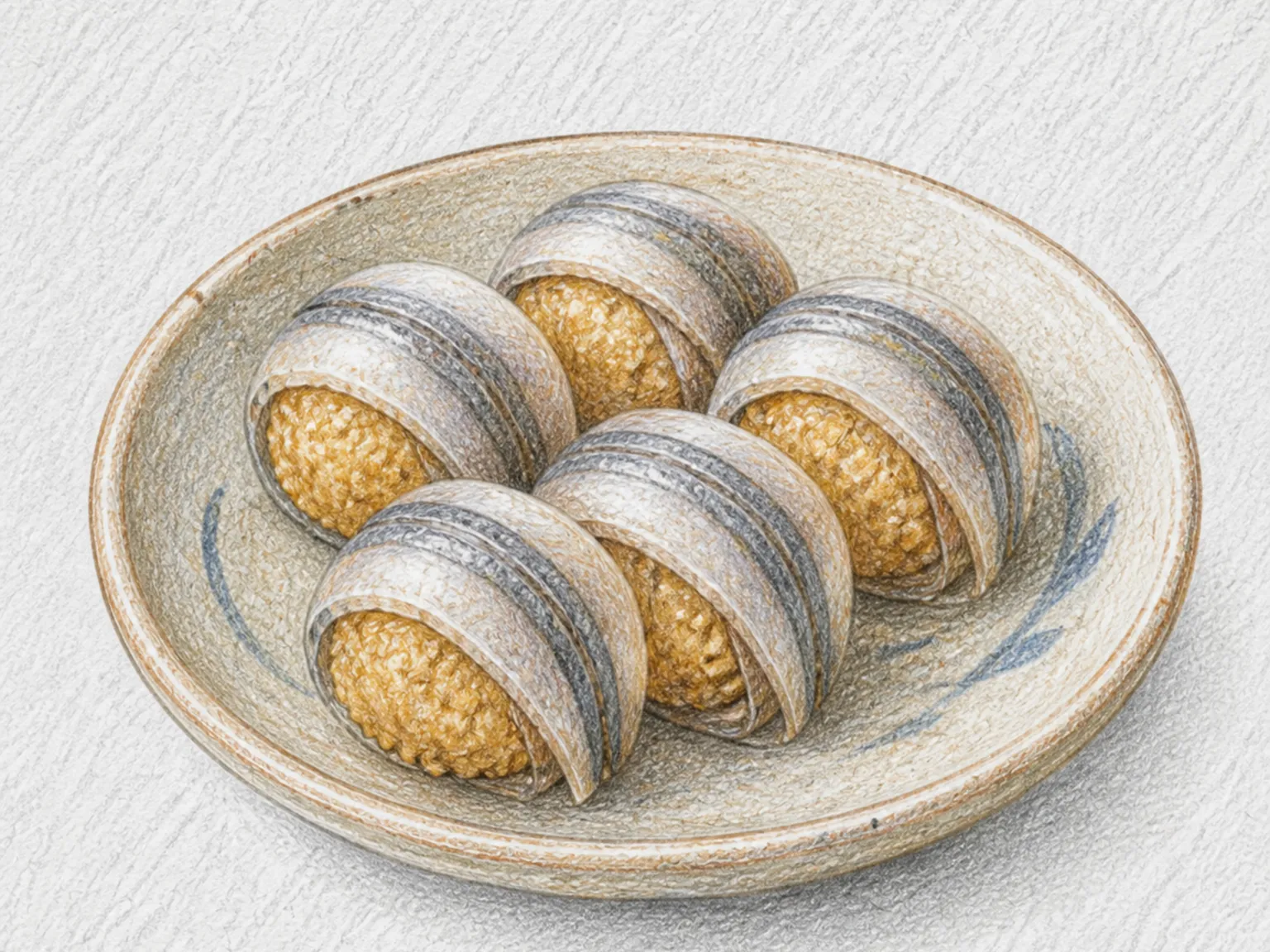
Kibinago no Hokaburi (Vinegar-Cured Fish and Okara Sushi)
Quick answer
- Total time
- 55 min
- Level
- Hard
- Servings
- 4 servings
- Ingredients
- 11
About this dish
Okara, the soybean pulp left from making tofu, stands in for rice in this sushi from Kochi, cooked with ginger, sugar, soy sauce, and vinegar until sweet and tart.
Read more
Under a small vinegar-cured kibinago draped over each ball, the filling crumbles softly while the fish adds salt and a firm bite. The name hokaburi compares the fish to a cloth pulled over someone's head and cheeks. It belongs to the tamazushi family of rice-saving sushi and is tied especially to Sukumo, where Sukumo Bay once yielded large kibinago catches.
Ingredients
Instructions
- 1
Keep the raw-consumption-grade kibinago cold.
Remove the heads and innards, open each fish along the belly with your fingers, flatten it, and remove the bone. Sprinkle evenly with 1 teaspoon fish salt and refrigerate for about 10 minutes.
- 2
Dissolve the fish-curing sugar and salt in the curing vinegar.
Rinse the salted kibinago quickly in cold water and pat dry, then submerge it in the sweetened vinegar. Cover and refrigerate while the okara is cooked and cooled, turning the fish once.
- 3
Finely mince the ginger.
Combine the fresh okara, ginger, okara sugar, soy sauce, vinegar, and salt in a wide pan until even. Cook over low heat for 8 to 10 minutes, turning from the bottom, until the vinegar is absorbed and all the okara steams while remaining moist and crumbly. Spread out and cool completely.
- 4
Firmly shape the cooled okara into oval balls about half the size of an egg.
Lightly blot the cured kibinago and wrap one over each ball with the skin facing outward. Divide evenly among four plates and serve chilled immediately.
References checked
These references were consulted when this page was prepared or corrected. A source check does not mean the recipe was independently kitchen-tested.
- 일본 농림수산성 うちの郷土料理
「土佐の食卓 伝えたい おふくろの味 ママの味」(土佐伝統食研究会) · Checked: 2026-08-11
Use-up ingredient planner
Turn these ingredients into two more meals
The overlap excludes basic seasonings. Open the next recipe and your selected dishes will stay with you.
Unohana Kizushi (Vinegared Sardines with Okara)
fresh okara, fresh ginger

Korean Ginger Honey Latte
fresh ginger
Korean Roasted Brown Rice Tea
fresh ginger