Okinawa Soba (Thick Wheat Noodles with Braised Pork Belly)
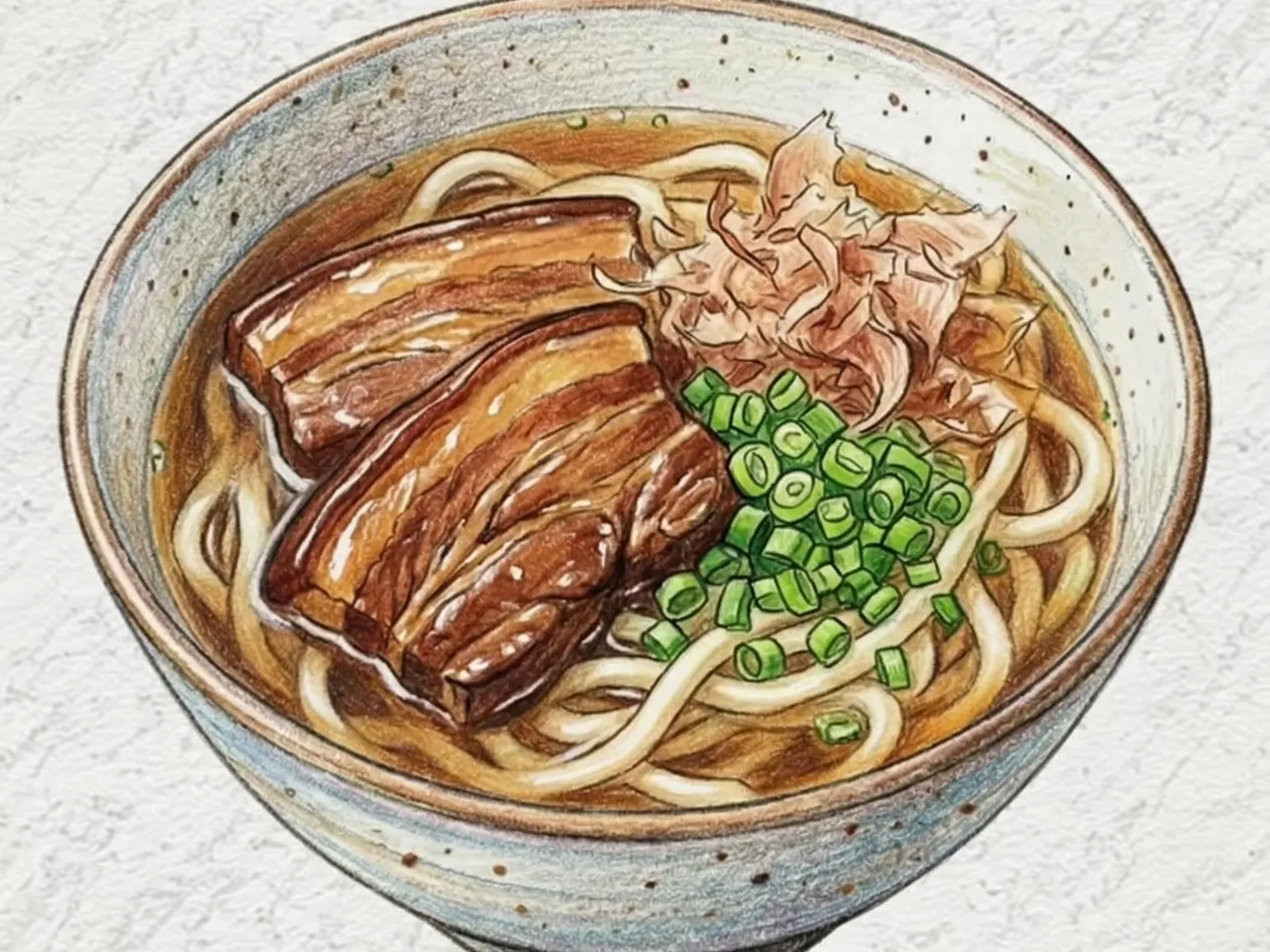
Okinawa soba is a regional Japanese noodle dish from Okinawa featuring thick wheat noodles in bonito-based broth, topped with braised pork belly. The pork belly is blanched for three minutes to remove impurities, then slowly simmered in soy sauce, mirin, and sugar until the fibers turn soft and the meat absorbs a sweet-salty glaze. The bonito dashi broth is clear and subtly savory, seasoned lightly with soy sauce to complement rather than compete with the rich pork. Rinsing the cooked noodles briefly in warm water removes excess starch so the broth stays clean when poured over them. Bonito flakes placed on top just before serving release a smoky, oceanic fragrance, and sliced scallion adds a fresh green accent to the warm, meaty bowl.
Adjust Servings
Instructions
- 1
Cut pork belly into chunks, blanch 3 minutes, and drain.
- 2
Simmer pork with soy sauce, mirin, sugar, and a little water until tender.
- 3
Warm bonito dashi and season with soy sauce.
- 4
Cook noodles and rinse briefly in warm water.
- 5
Place noodles in bowls and pour over hot broth.
- 6
Top with braised pork, bonito flakes, and scallion.
As an Amazon Associate, we may earn from qualifying purchases.
Tips
Nutrition (per serving)
More Recipes

Udon with Seasoned Fried Tofu
Kitsune udon is a classic Japanese noodle soup topped with sweet-simmered fried tofu pouches. The aburaage is first blanched to remove excess oil, then braised in a mixture of water, soy sauce, mirin, and sugar for about six minutes until the seasoning penetrates through. The broth is made separately from dashi stock, seasoned with soy sauce, mirin, and a small amount of salt to keep it clean and transparent. Frozen udon noodles are warmed briefly in boiling water - just long enough to loosen them without overcooking - then placed in the bowl with hot broth ladled over. The simmered tofu sits on top, releasing its sweet-savory liquid into the surrounding broth as you eat. Chopped scallion and a pinch of shichimi pepper add brightness and mild heat to finish.

Abura Soba (Soupless Noodles in Rich Soy Sesame Oil Sauce)
Abura soba emerged in Tokyo's student districts during the 1950s as a cheaper, faster alternative to ramen - no slow-simmered broth needed. The name translates to 'oil noodle,' and the dish lives or dies on its sauce: soy sauce, sesame oil, oyster sauce, and a splash of vinegar pooled at the bottom of the bowl. Chewy ramen noodles land on top, and the eater mixes everything from below, coating each strand in the concentrated glaze. Toppings - chashu pork, a runny soft-boiled egg, nori, bonito flakes, and sliced scallion - add layers of salt, fat, and umami. The lack of broth means every flavor hits at full intensity, making this a late-night favorite across Japan's izakaya scene.

Mushroom Memil Soba (Warm Buckwheat Noodles in Mushroom Dashi)
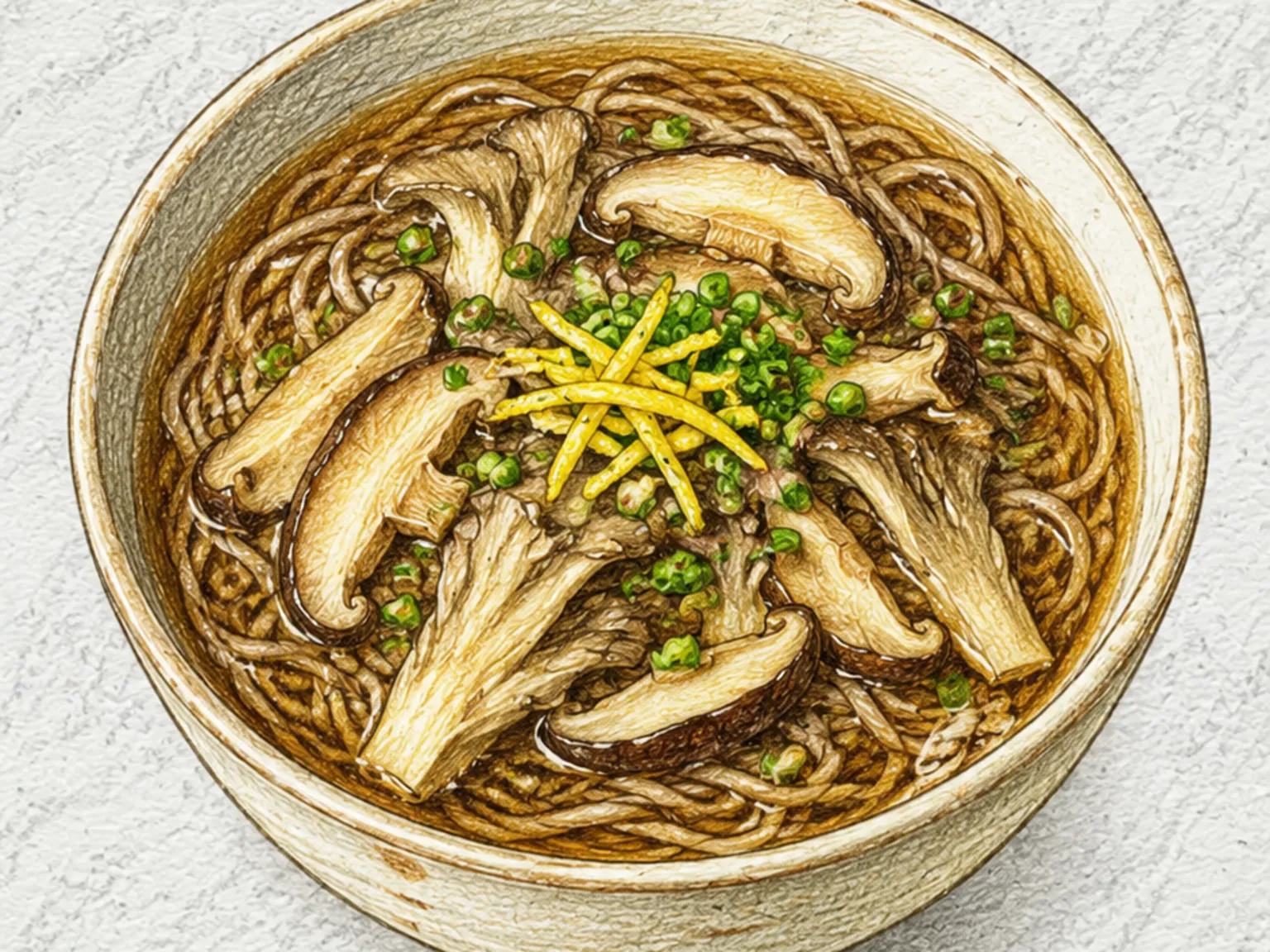
Beoseot memil soba is a warm buckwheat noodle soup that draws deep umami from shiitake and oyster mushrooms simmered in dashi stock seasoned with soy sauce and mirin. Five minutes of gentle cooking lets the mushrooms release their concentrated woodsy flavor into the broth. The soba noodles are boiled separately and rinsed in cold water to wash away surface starch, keeping the broth clear and the noodles springy. A small amount of yuzu zest added just before serving introduces a bright citrus lift that contrasts with the broth's earthy weight. Green onion scattered on top rounds out the aroma.

Yuzu Cold Soba (Chilled Buckwheat Noodles with Citrus Dipping Sauce)
Yuzu memil soba is a cold buckwheat noodle dish served with a citrus-infused dipping sauce made from tsuyu, cold water, and yuzu marmalade. The soba must be rinsed at least three times in cold water after boiling to strip off surface starch, which prevents clumping and gives each strand a clean bite. A brief dip in ice water firms the texture further. The yuzu marmalade lifts the salty-savory tsuyu with bright citrus fragrance, while freshly grated daikon radish adds a peppery, cooling sharpness. Shredded seaweed contributes a subtle ocean note, and wasabi provides a nasal heat that cuts through the nuttiness of the buckwheat.

Tokyo-Style Shoyu Ramen (Classic Japanese Soy Sauce Chicken Broth Ramen)
Tokyo-style shoyu ramen is considered the closest descendant of the original ramen that appeared in Japan over a century ago. The broth starts with chicken carcasses simmered until the liquid turns a warm amber, then seasoned with kaeshi - a concentrated blend of soy sauce, mirin, and sugar that has been cooked and rested. A thin film of chicken fat floats on the surface, trapping heat and delivering a gentle richness with each spoonful. The noodles are thin and straight, designed to be slurped quickly before they soften, and their wheat flavor stands distinct against the soy-tinged broth. Classic toppings include narutomaki fish cake with its pink spiral, strips of menma, a halved soft-boiled egg, and a sheet of nori. The bowl is intentionally restrained - no heavy pork fat, no thick miso - letting the clarity of the soy-chicken combination speak for itself.

Japanese Braised Pork Belly
Kakuni is a Japanese braised pork belly dish where thick-cut slabs are simmered for hours in soy sauce, mirin, sake, and ginger until the fat renders completely and the meat yields to the lightest pressure of chopsticks. The mirin builds a gentle sweetness that rounds out the soy sauce's salinity, while ginger keeps the pork tasting clean throughout the long braise. The reduced cooking liquid glazes each piece in a dark, glossy coat that concentrates the flavor on the surface. Served over steamed rice or with a dab of hot mustard, the contrast between the rich pork and the sharp condiment defines this dish.