Osaka-Style Okonomiyaki (Japanese Savory Cabbage Pancake)
Asian Easy

Osaka-Style Okonomiyaki (Japanese Savory Cabbage Pancake)

Quick answer

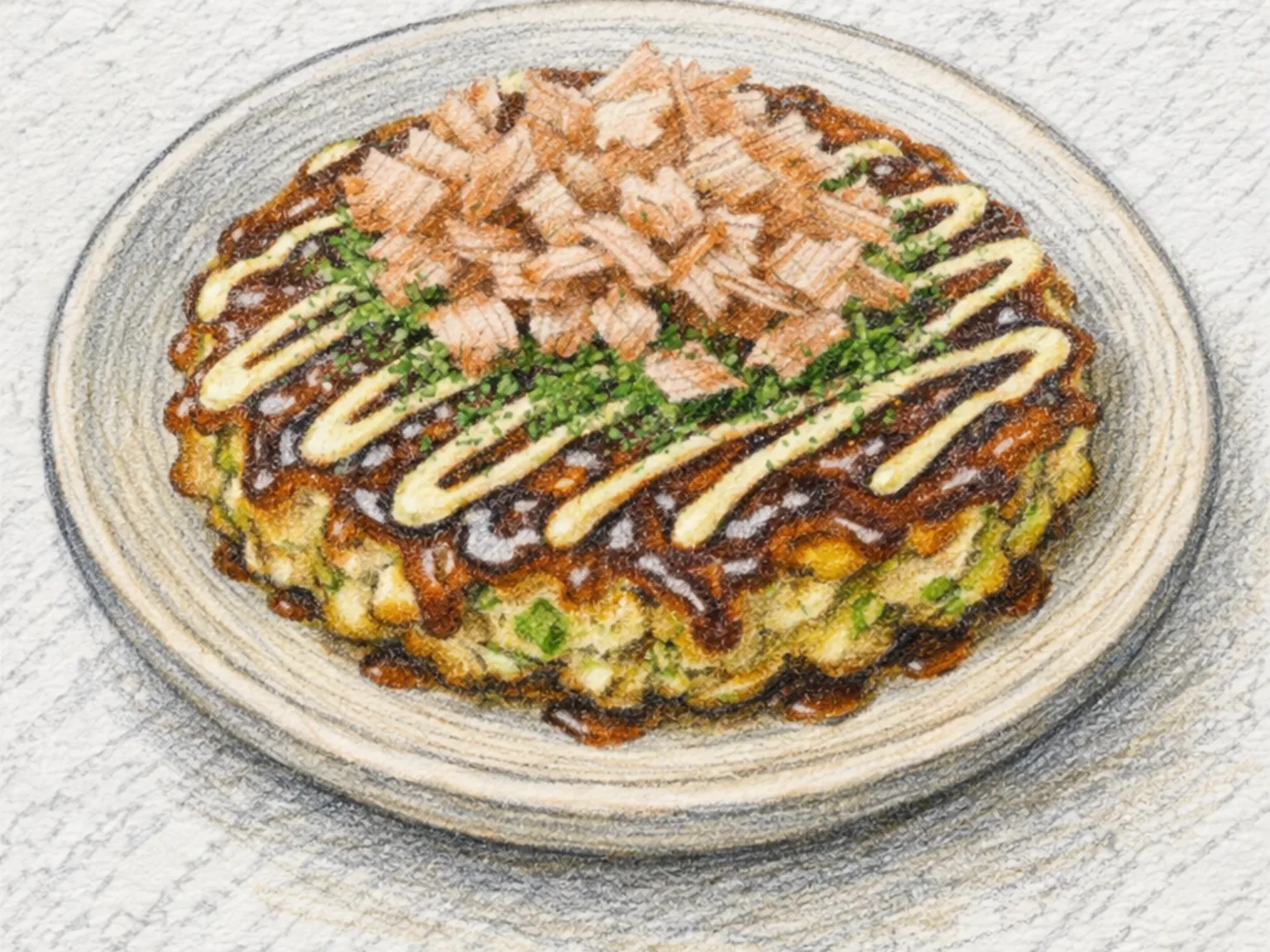
Osaka-style okonomiyaki is the signature griddle dish of Japan's Kansai region - a thick, cabbage-loaded savory pancake whose name means 'grilled as you like it.' Finely...

What makes this special

  • Osaka-style Okonomiyaki is a thick savory pancake made with shredded cabbage and dashi batter.
  • Near equal ratio of cabbage to batter defines Osaka style
  • Tenkasu absorbs moisture inside, keeping the center soft
Total time
30 min
Level
Easy
Servings
2 servings
Ingredients
10
Calories
480 kcal
Protein
20 g

Key ingredients

cabbageall-purpose floureggsdashi stockpork belly slices

Core cooking flow

  1. 1 Shred 300 g cabbage finely, avoiding the tough core, then shake off excess moisture.
  2. 2 In a bowl, combine 100 g flour, 2 eggs, and 100 ml dashi stock.
  3. 3 Add the cabbage and 30 g tenkasu to the batter, then fold from the bottom upward.

Osaka-style okonomiyaki is the signature griddle dish of Japan's Kansai region - a thick, cabbage-loaded savory pancake whose name means 'grilled as you like it.' Finely shredded cabbage is folded into a batter of flour, eggs, and dashi stock, then poured onto a hot griddle with strips of pork belly laid across the top. The pancake cooks slowly on medium heat, developing a golden crust on each side while the interior stays moist from the cabbage. Once done, it receives thick okonomiyaki sauce, zigzags of Japanese mayonnaise, a shower of bonito flakes that dance in the rising heat, and a dusting of aonori seaweed powder.

Prep 15min Cook 15min 2 servings

Instructions

Read the steps as a cooking flow: prep, heat, seasoning, doneness control, and finish.

6 steps
  1. 1
    Prep

    Shred 300 g cabbage finely, avoiding the tough core, then shake off excess moisture.

    If the strands are very long, cut them into 3 to 4 cm pieces so the pancake holds together when flipped.

  2. 2
    Finish

    In a bowl, combine 100 g flour, 2 eggs, and 100 ml dashi stock.

    Mix only until most lumps disappear, keeping the batter loose instead of beating it hard, which can make the finished pancake heavy.

  3. 3
    Prep

    Add the cabbage and 30 g tenkasu to the batter, then fold from the bottom upward.

    Stop as soon as the cabbage is lightly coated, because overmixing crushes the cabbage and removes its crisp texture.

  4. 4
    Control

    Heat a lightly oiled pan over medium heat and mound the batter into a thick round pancake.

    Do not press the top flat; lay 100 g pork belly slices across the surface so they render as it cooks.

  5. 5
    Finish

    Cook for about 5 minutes over medium heat, until the edges set and the bottom is golden.

    Flip in one motion with a wide spatula or plate, lower to medium-low heat, and cook 5 minutes more so the center cooks through.

  6. 6
    Finish

    Turn off the heat when the center feels set and no wet batter sticks when pressed lightly.

    Brush with 3 tbsp okonomiyaki sauce, drizzle 2 tbsp Japanese mayonnaise, then finish with bonito flakes and aonori and serve hot.

After the steps

Pick a recipe that fits this dish.

Continue with shared ingredients, meal pairings, or a similar method.

Recipes That Go Well With This

More Asian →

Based on shared ingredients and meal pairing

Osaka-Style Takoyaki (Japanese Octopus Ball Street Snack)
Shared ingredient: cake flour Asian

Osaka-Style Takoyaki (Japanese Octopus Ball Street Snack)

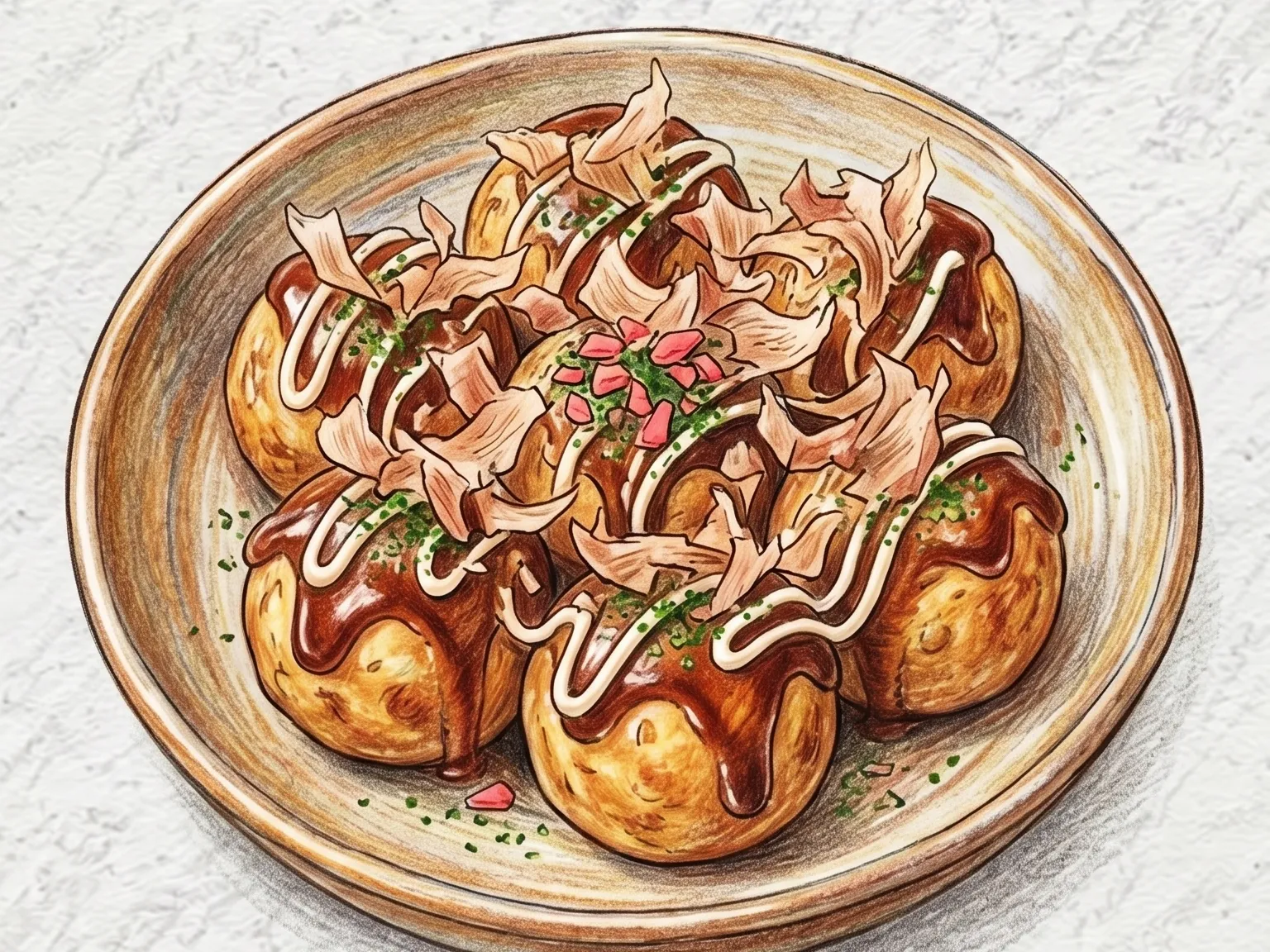
Osaka-style takoyaki are spherical batter balls filled with diced octopus, a street snack so closely tied to Osaka that it serves as an unofficial symbol of the city. The batter is deliberately thin and watery-flour, eggs, and dashi stock whisked together-which is what creates the signature contrast between a lightly crisp shell and a molten, custardy interior. Each well of the specialized cast-iron pan receives a pour of batter, a chunk of boiled octopus, sliced green onion, tenkasu tempura flakes, and pickled red ginger. As the edges set, each ball is rotated ninety degrees at a time with a pointed pick until it forms a perfect sphere. The finished takoyaki are lined up and drizzled with a thick, tangy-sweet takoyaki sauce and Japanese mayonnaise, then crowned with a flurry of bonito flakes that wave in the rising heat. The octopus delivers a chewy, briny bite at the center of each molten ball.

Pork Cutlet Sandwich
Shared ingredient: cabbage Street food

Pork Cutlet Sandwich

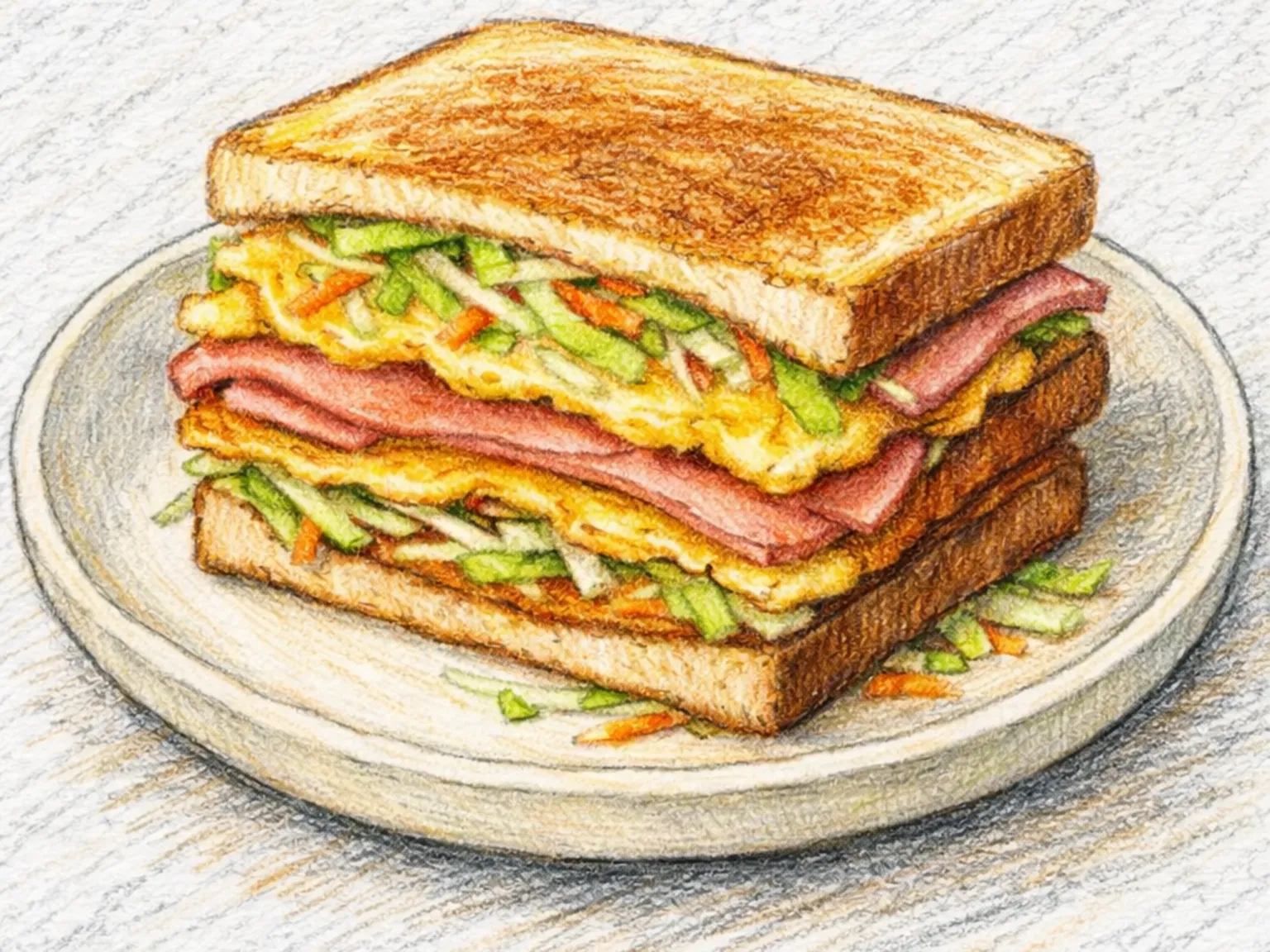
Katsu sando is a Japanese sandwich built around a thick pork loin cutlet breaded in flour, egg, and panko, then deep-fried at 170C until the exterior turns a deep, even gold. The cutlet rests on soft milk bread generously spread with tonkatsu sauce, and a layer of shredded cabbage dressed in mayonnaise goes in between. The contrast between the cutlet's rigid panko crust and the yielding bread is what defines the sandwich, while the mayo-dressed cabbage absorbs some of the richness and keeps the whole thing from feeling heavy. Wrapping the assembled sandwich firmly in plastic wrap and resting it for three minutes gives the sauce time to soak into the bread, producing a clean cross-section when cut. Draining the cutlet upright for a minute after frying removes surface oil and prevents the bread from going soggy. Using fine-ground fresh panko rather than dried gives the crust a slightly denser, more refined texture.

Udon with Seasoned Fried Tofu
Serve together Noodles

Udon with Seasoned Fried Tofu

Kitsune udon is a Japanese noodle soup defined by its topping of sweet-simmered fried tofu pouches floating on a clear, deeply savory dashi broth. The aburaage is blanched first in boiling water to remove the excess oil that would otherwise cloud the broth and repel the seasoning, then braised in a mixture of water, soy sauce, mirin, and sugar for about six minutes until the liquid has been absorbed and the sweetness has penetrated to the center of each pouch. The broth is built separately from a stock of katsuobushi and kombu, seasoned with soy sauce, mirin, and just enough salt to round out the flavor without making it salty. The quality of this broth is the single most important factor in the finished bowl. Frozen udon noodles are warmed in boiling water for about two minutes, just long enough to loosen and heat through without losing their elastic, springy texture, then transferred to the bowl with the broth ladled over. The simmered tofu pouch sits on top, and as you eat, it releases its sweetened liquid gradually into the surrounding broth, shifting the flavor of the soup with each bite. Sliced scallion and a pinch of shichimi togarashi finish the bowl with fresh aroma and gentle heat. The tofu benefits from being prepared a day in advance, as resting overnight deepens the braising flavor throughout.

Osaka Kitsune Udon (Thick Noodles with Sweet Fried Tofu in Dashi)
Similar recipe Asian

Osaka Kitsune Udon (Thick Noodles with Sweet Fried Tofu in Dashi)

Kitsune udon is Osaka's signature noodle bowl, defined by sweet simmered fried tofu draped over thick wheat noodles in a clear dashi broth. The broth is drawn from kombu and bonito flakes, then seasoned with light soy sauce in the Kansai tradition, pale in color but layered with umami. The aburaage tofu is simmered separately in a mixture of dashi, soy sauce, mirin, and sugar until it swells with sweet braising liquid, and each bite releases a burst of that concentrated sweetness into the bowl. Thick, chewy udon noodles sit in the steaming broth, their mild wheat flavor providing a neutral base for the delicate soup. Sliced green onion scattered on top adds freshness and a gentle bite. In Osaka, kitsune udon is eaten at all hours, as a quick breakfast before work, a light lunch, or a late-night bowl after drinks, and every neighborhood udon shop holds its own variation on the sweet tofu recipe passed down through the years.

Serve with this

Steak Rice Bowl (Seared Beef with Soy-Garlic Glaze over Rice)
Rice Medium

Steak Rice Bowl (Seared Beef with Soy-Garlic Glaze over Rice)

A thick-cut beef steak is seared at high heat until a deep brown crust forms, then sliced and fanned over a bowl of hot rice. A glaze of soy sauce, garlic, and mirin is spooned over the slices, coating them in a glossy, caramelized finish. As the warm rice absorbs the pan juices, each spoonful carries the full weight of the beef's seared flavor. A runny fried egg or a small dab of wasabi on the side balances the richness with creaminess or heat. Controlling resting time and grain texture helps the ingredients cook evenly while keeping the final seasoning balanced.

🎉 Special Occasion 🍺 Bar Snacks
Prep 15min Cook 15min 2 servings
Grapefruit Shiso Shrimp Salad
Salads Medium

Grapefruit Shiso Shrimp Salad

Grapefruit shiso shrimp salad brings together ice-chilled blanched shrimp, membrane-free grapefruit segments, shredded shiso leaves, and thinly sliced cucumber and radish, all tossed in a yuja marmalade dressing. Blanching the shrimp for exactly two minutes and transferring them immediately to ice water locks in a firm, springy texture by contracting the protein rapidly while preventing the rubbery toughness that comes from overcooking. Removing all of the white pith from the grapefruit eliminates bitterness and leaves only the clean, tart juice of the flesh. Cutting the segments free from the membrane also makes the pieces easier to eat in a single bite. The dressing is built from yuja marmalade, rice vinegar, olive oil, and pepper, and the yuzu's floral acidity layers on top of the grapefruit to create a pronounced citrus profile that is bright but not harsh. The mint-like herbal quality of shiso leaves neutralizes any trace of fishiness from the shrimp and ties the Japanese-influenced flavor framework together. The crisp bite of cucumber and radish contrasts with the softness of the shrimp and grapefruit segments. Serving the salad well chilled is necessary to keep every texture and fragrance sharp and distinct rather than muted.

🥗 Light & Healthy 🎉 Special Occasion
Prep 20min Cook 5min 2 servings
Korean Crispy Potato Pancake
Drinks Easy

Korean Crispy Potato Pancake

Gamja-jeon is a Korean potato pancake made by finely grating raw potatoes, letting the starch settle out of the liquid for at least ten minutes, discarding the water, and folding the settled starch back into the pulp to improve binding. Waiting long enough for full starch separation is what gives the batter enough cohesion to hold together when the pancake hits the hot pan. Spreading the batter as thinly as possible produces glass-crisp edges while the center retains a chewy, starchy bite characteristic of potato starch. The first side must cook all the way through and the underside must firm up completely before any attempt to flip, and using two spatulas simultaneously makes the turn fast enough to keep the pancake intact. Frying both sides over medium heat until evenly golden delivers a crust that is crisp on the outside while the center stays moist. A dipping sauce of soy sauce, vinegar, and minced cheongyang green chili cuts through the oily richness with sharpness and heat.

🍺 Bar Snacks ⚡ Quick
Prep 15min Cook 12min 2 servings

Similar recipes

Nikujaga (Japanese Beef Potato Onion Soy-Sweet Stew)
Asian Easy

Nikujaga (Japanese Beef Potato Onion Soy-Sweet Stew)

Nikujaga is a Japanese home-cooked stew often described as the dish that defines a mother's cooking in Japan. Thinly sliced beef, potatoes, onion, carrot, and shirataki noodles are simmered in a broth of dashi, soy sauce, mirin, and sugar. The dish traces its origins to the Meiji era, when a Japanese naval officer attempted to recreate British beef stew using local ingredients -- resulting in a clear, soy-based braise rather than a thick, flour-bound stew. The potatoes absorb the seasoned liquid until soft at the edges but still holding shape, while shirataki noodles soak up flavor and add a springy contrast.

🏠 Everyday 🍱 Lunchbox
Prep 15min Cook 30min 4 servings
Edo-Style Tendon (Japanese Tempura Rice Bowl with Sweet Soy Tare)
Asian Medium

Edo-Style Tendon (Japanese Tempura Rice Bowl with Sweet Soy Tare)

Edo-style tendon is a Japanese rice bowl that crowns steamed rice with freshly fried tempura-typically shrimp, sweet potato, and eggplant-glazed in a warm, sweet-salty tare sauce. The shrimp are scored along the belly to prevent curling, then dipped in a lightly mixed batter and fried at 170 degrees Celsius until the coating turns golden and crisp. The tare is a simple reduction of tsuyu, soy sauce, and sugar, simmered for just two minutes to concentrate its flavor into a glossy, mahogany liquid. The sauce is drizzled over the tempura the moment it lands on the rice, so the batter absorbs just enough to glisten without losing its crunch entirely. This tension between the crisp tempura coating and the sticky-sweet tare is the defining characteristic of the Edo style, which favors bold, direct flavors over subtlety. The rice beneath soaks up any sauce that runs off, becoming deeply seasoned and intensely satisfying in its own right.

🎉 Special Occasion 🍱 Lunchbox
Prep 18min Cook 16min 2 servings
Kimchi Octopus Balls (Korean-Style Takoyaki with Fermented Kimchi)
Street food Medium

Kimchi Octopus Balls (Korean-Style Takoyaki with Fermented Kimchi)

Kimchi takoyaki fills a takoyaki pan with a thin batter of takoyaki flour, water, and egg, then drops boiled octopus, drained kimchi, and chopped scallion into each well before rotating the rounds with a skewer as they set. The exterior crisps into a thin, golden shell while the inside stays loose and creamy, and the octopus's springy resistance meets the kimchi's tangy heat within the mild, savory batter. Squeezing the kimchi thoroughly dry before adding it is essential - residual liquid thins the batter and prevents clean browning. Leaving the balls untouched for a full minute allows the bottom to set before any turning begins. Finished with takoyaki sauce, mayonnaise, and a flutter of bonito flakes on top, each piece delivers a layered combination of salty, rich, and umami.

🧒 Kid-Friendly 🏠 Everyday
Prep 18min Cook 15min 2 servings

Tips

Don't overmix - fold gently to keep the cabbage crunchy.
If flipping is tricky, use a plate to help turn it over.

Nutrition (per serving)

Calories
480
kcal
Protein
20
g
Carbs
48
g
Fat
22
g