Korean Corn Silk Tea (Roasted Corn Jujube Grain Brew)

Korean Corn Silk Tea (Roasted Corn Jujube Grain Brew)

Quick answer

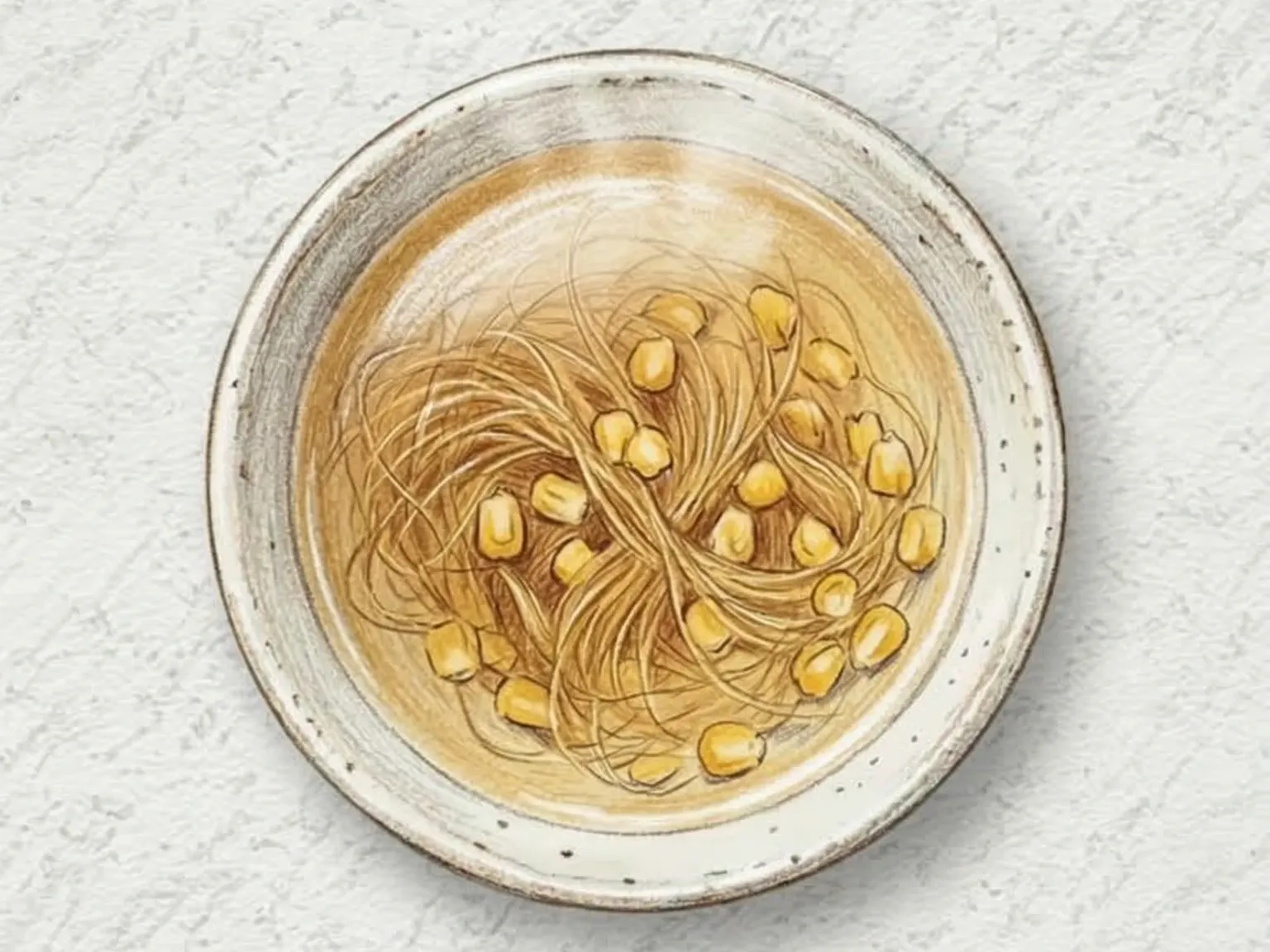
Oksusu-suyeom-cha is a Korean tea brewed by simmering dried corn silk and corn kernels in water on low heat for 25 minutes.

What makes this special

  • Oksusu-suyeom-cha combines roasted corn kernels with silk for a toasty grain tea with subtle sweetness.
  • Corn silk adds delicate sweetness while corn kernels contribute toasty grain depth
  • Exceeding 25 minutes of simmering turns the tea astringent; timing is critical
Total time
35 min
Level
Easy
Servings
4 servings
Ingredients
6
Calories
28 kcal
Protein
1 g

Key ingredients

dried corn silkcorn kernelswaterjujubehoney

Core cooking flow

  1. 1 Rinse 12 g of dried corn silk briefly in cold water, just enough to remove dust.
  2. 2 Pour 1500 ml of water into a pot and add the corn silk, kernels, and 2 pitted jujubes.
  3. 3 When small bubbles rise around the edge and the water just begins to boil, lower the heat immediately.

Oksusu-suyeom-cha is a Korean tea brewed by simmering dried corn silk and corn kernels in water on low heat for 25 minutes. The corn silk is rinsed briefly in cold water to remove dust, then combined with kernels and jujubes in a pot where the silk releases a subtle, naturally sweet flavor and the kernels contribute a toasted grain-like nuttiness. Keeping the simmer time under control is important because over-boiling draws out an unpleasant astringency, so the tea is strained promptly at the 25-minute mark. A spoonful of honey adjusts the sweetness and a tiny pinch of salt sharpens the flavor profile; the tea works well served warm, but chilling it overnight makes the natural sweetness more pronounced and refreshing.

Prep 5min Cook 30min 4 servings
Recipes by ingredient → honey

Instructions

Read the steps as a cooking flow: prep, heat, seasoning, doneness control, and finish.

6 steps
  1. 1
    Step

    Rinse 12 g of dried corn silk briefly in cold water, just enough to remove dust.

    Do not soak or rub it hard, then drain it with 80 g of corn kernels in a fine strainer.

  2. 2
    Control

    Pour 1500 ml of water into a pot and add the corn silk, kernels, and 2 pitted jujubes.

    Press the ingredients lightly so they sit under the water, then set the pot over medium heat.

  3. 3
    Heat

    When small bubbles rise around the edge and the water just begins to boil, lower the heat immediately.

    Keeping it at a hard boil can pull astringency from the corn silk too quickly.

  4. 4
    Control

    Simmer gently on low heat for exactly 25 minutes.

    The tea is ready when the liquid turns clear golden and smells like toasted grain, so avoid extending the time past that point.

  5. 5
    Step

    Turn off the heat and pour the tea through a fine sieve right away.

    Do not press or squeeze the corn silk, because that can make the tea cloudy and sharper in taste.

  6. 6
    Finish

    While the tea is still warm, stir in 1 tablespoon of honey and 0.2 teaspoon of salt until fully dissolved.

    Serve it warm, or cool and refrigerate it so the natural sweetness tastes clearer.

After the steps

Pick a recipe that fits this dish.

Continue with shared ingredients, meal pairings, or a similar method.

Recipes That Go Well With This

More Drinks →

Based on shared ingredients and meal pairing

Korean Chrysanthemum Tea (Floral Jujube Goji Berry Brew)
Shared ingredient: jujube Drinks

Korean Chrysanthemum Tea (Floral Jujube Goji Berry Brew)

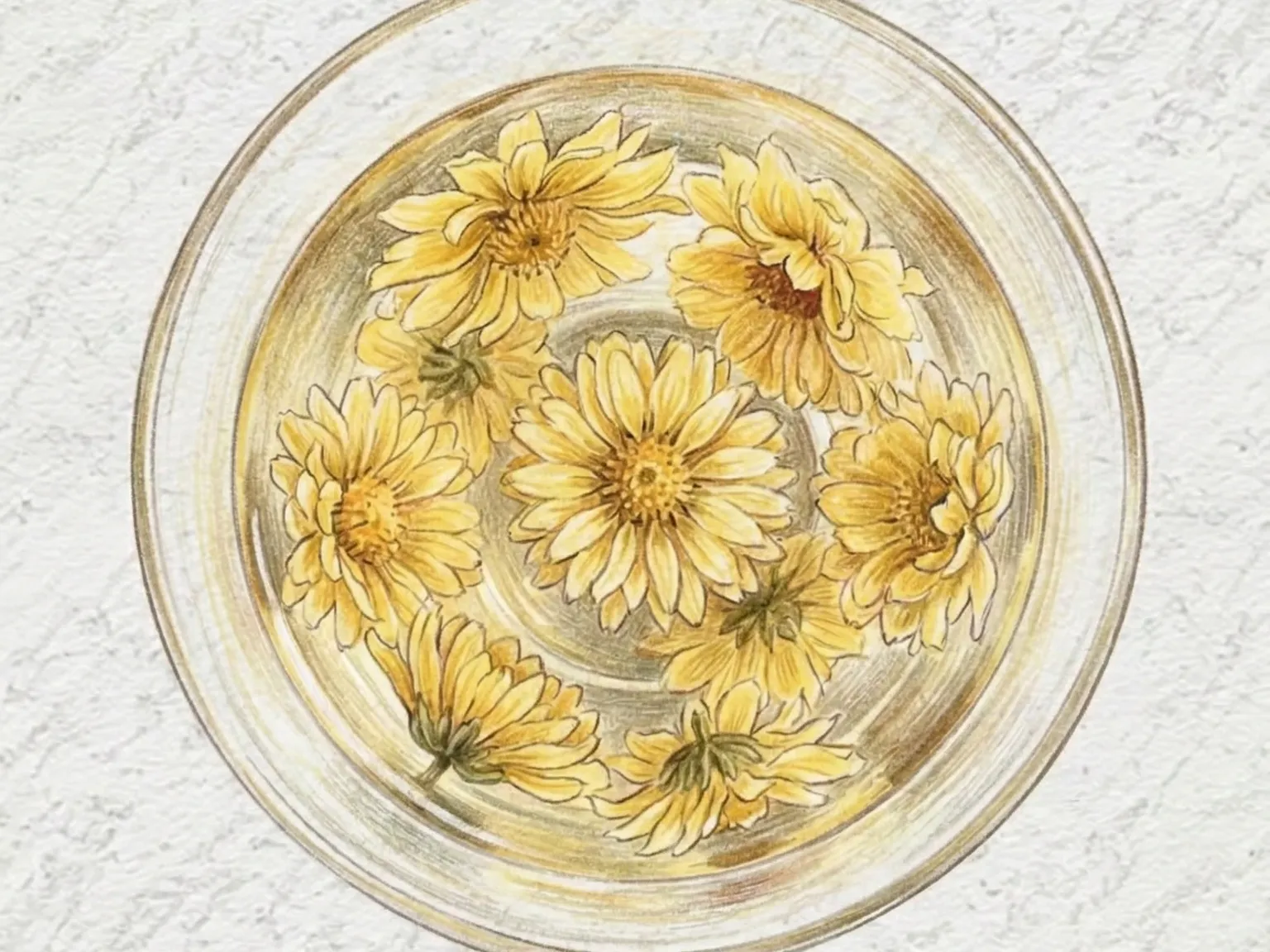
Gukhwa-cha is a traditional Korean flower tea brewed from dried chrysanthemum buds steeped in water at 80 to 85 degrees Celsius for three to four minutes. That temperature range draws out the gentle floral fragrance without releasing the bitter compounds that come out at a full boil. Jujubes and goji berries added to the pot contribute a mild natural sweetness from the jujubes and a faintly tart, herbal note from the goji berries, both of which round out the chrysanthemum's aroma and add visual warmth to the pale liquid. A spoonful of honey and a squeeze of lemon juice are stirred in at the end to brighten the finish without masking the floral base. The resulting tea is pale golden, lightly sweet, and carries a lingering scent that makes it a common after-meal drink in Korean households. Caffeine-free and mild, it is drunk in the evening without disruption to sleep, and in traditional Korean medicine the dried flower has long been associated with relieving headaches and eye fatigue.

Korean Persimmon Leaf Tea
Shared ingredient: honey Drinks

Korean Persimmon Leaf Tea

Gamnip-cha is a Korean caffeine-free tea made by simmering dried persimmon leaves and dried tangerine peel together - no rolling boil, just a low steady heat held for twelve minutes. That slow extraction pulls out the soft, grassy character of the leaves while keeping astringency in check. Thinly sliced Korean pear, skin on, goes into the pot for natural sweetness and a clean brightness, and the tangerine peel stays at a small quantity so it supports rather than overtakes the leaf aroma. Once strained, honey goes in and a trace of ground cinnamon finishes the cup. With no caffeine, it works equally well in the morning or late at night.

Crispy Seaweed Chips
Serve together Side dishes

Crispy Seaweed Chips

Basak gim-bugak is a traditional Korean snack made of seaweed sheets coated with glutinous rice paste and fried until crispy. The process begins by cooking a thick mixture of water, glutinous rice flour, and salt. After cooling the paste, it is spread thinly onto half of a seaweed sheet. The sheet is folded in half and coated with another thin layer of paste to build a double-layer structure. Sesame seeds are scattered on top before drying. The sheets are dried in a dehydrator or an air fryer at 80 degrees Celsius until stiff and hard. Ensuring the seaweed is completely dry, especially at the edges, is crucial for a crisp outcome. The dried pieces are flash-fried in hot oil at 180 degrees Celsius for just two to three seconds. They puff up instantly and must be removed quickly to prevent burning.

Korean Lotus Leaf Tea (Roasted Rice and Lotus Brew)
Similar recipe Drinks

Korean Lotus Leaf Tea (Roasted Rice and Lotus Brew)

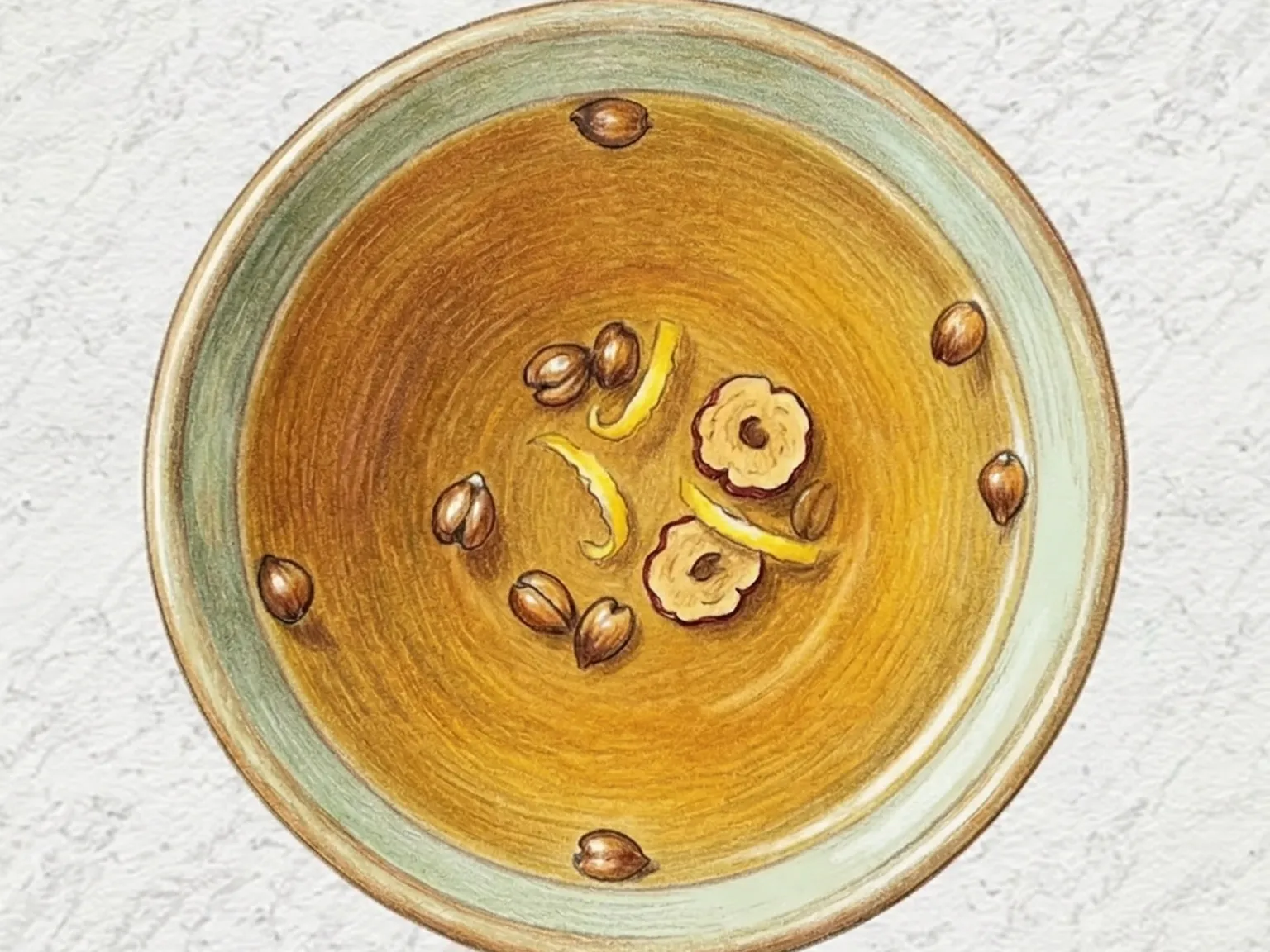
Yeonnip-cha is a Korean traditional tea brewed by simmering dried lotus leaf together with roasted brown rice, jujube, and ginger for fifteen minutes, then steeping covered for three more minutes to lock in the aroma. The fragrance of lotus leaf is understated and grassy, very different from the assertive herbal notes of Western tisanes, which makes it one of the more approachable traditional Korean teas for first-time drinkers. Roasted brown rice added to the pot contributes a toasty, nutty character that fills in the quiet gaps left by the lotus leaf and turns what might otherwise be a flat cup into something layered and satisfying. Jujube and ginger work together to sand down any rough vegetal edges and add a faint warmth and sweetness that carries through to the finish. Rice syrup can be stirred in to adjust sweetness, but only in small amounts, as too much drowns the delicate lotus fragrance that gives the tea its identity. Brewing time should be watched carefully; going beyond twenty minutes pulls out astringent tannins that make the tea bitter rather than clean. The tea contains no caffeine whatsoever, making it suitable before sleep or during pregnancy, and served cold over ice in summer it becomes a light, refreshing drink.

Serve with this

Gotgam Cream Cheese Roll (Dried Persimmon Rolls)
Desserts Easy

Gotgam Cream Cheese Roll (Dried Persimmon Rolls)

Gotgam cream cheese roll is a no-cook Korean dessert that requires nothing more than a knife, a bowl, and a refrigerator. Dried persimmons are slit open and flattened into thin sheets, each one acting as the outer wrapper. The filling is cream cheese mixed with honey and fresh lemon juice to balance its natural richness with acidity, and finely chopped walnuts are folded in throughout to add a crunchy, nutty element to every bite. The filling is spread across the opened persimmon, which is then rolled tightly and wrapped in plastic wrap. Twenty minutes in the refrigerator firms the roll enough to slice cleanly. Dipping the knife in warm water and wiping it dry before each cut produces the smoothest cross-sections. The finished slices reveal clearly defined layers: the chewy, caramel-sweet dried persimmon on the outside, the tangy cream cheese in the middle, and flecks of walnut distributed throughout. The combination makes it a natural pairing with wine or a polished addition to a traditional holiday table.

🍺 Bar Snacks 🎉 Special Occasion
Prep 20min 2 servings
Korean Galbi Tteokbokki (Soy-Braised Pork Rib Rice Cake Stir-Fry)
Street food Medium

Korean Galbi Tteokbokki (Soy-Braised Pork Rib Rice Cake Stir-Fry)

Galbi tteokbokki marinates boneless pork ribs in soy sauce, sugar, mirin, garlic, and sesame oil for fifteen minutes before the dish comes together in a single pan. The ribs go in first over high heat, searing until the surface caramelizes and the rendered fat begins to collect in the pan. Water and rice cakes are added next, and the mixture simmers on medium until the sauce reduces into a concentrated glaze that coats each tteok thoroughly. No gochujang enters the recipe at any point - the flavor profile is entirely soy-and-sugar sweet-salty, made deeper by the pork's own fat and juices as they cook down. The finished dish shows a visible sheen on both the rice cakes and the meat, with green onion and sesame seeds scattered over the top.

🍺 Bar Snacks 🧒 Kid-Friendly
Prep 20min Cook 30min 2 servings
Gyeongdan (Chewy Rice Balls with Sweet Coating)
Baking Easy

Gyeongdan (Chewy Rice Balls with Sweet Coating)

Gyeongdan are Korean glutinous rice balls, each one shaped by hand into a small sphere, boiled until it floats, then rolled in a dry coating while still warm. The dough is made by kneading glutinous rice flour with hot water rather than cold, a technique that partially gelatinizes the starch and gives the finished rice ball its characteristic chewy spring. Rinsing the cooked balls immediately in cold water stops them from sticking together and firms the surface enough for the coating to cling evenly. Traditional coatings include roasted soybean powder, which is mild and nutty, ground black sesame, which adds deep toasted bitterness, and sweetened red bean crumbles. Some versions are filled with sweet red bean paste before shaping, so the filling bursts as you bite through. Gyeongdan appear on ceremonial tables at seasonal holidays and as everyday snacks, often presented as a trio of colors arranged side by side on a single plate.

🧒 Kid-Friendly
Prep 20min Cook 8min 4 servings

Similar recipes

Korean Solomon's Seal Tea
Drinks Easy

Korean Solomon's Seal Tea

Dunggeulle-cha is a Korean caffeine-free tea brewed by simmering dried Solomon's seal root in water to draw out a toasty, mellow sweetness. Adding a small amount of licorice root alongside the root delivers a natural sweetness that rounds and softens the overall flavor without any added sugar. Sliced Korean pear goes into the pot once the water reaches a boil, and as the juice dissolves into the liquid it contributes a light, refreshing fruit layer. The broth is strained clear, finished with a pinch of salt to sharpen the taste, then sweetened with honey and served either warm in winter or chilled over ice in summer.

🍺 Bar Snacks 🥗 Light & Healthy
Prep 10min Cook 25min 4 servings
Korean Cream Cheese Hotdog
Street food Medium

Korean Cream Cheese Hotdog

Cream cheese hotdog is a Korean street corn dog made by threading sausage and a log of cream cheese together on a stick, coating in wheat batter, rolling in breadcrumbs, and deep-frying at 170 degrees Celsius. The breadcrumb crust fries to a golden, audibly crunchy shell, while the batter layer underneath stays soft and doughy, creating a distinct middle texture between crust and filling. Each bite delivers the salty snap of sausage alongside the smooth, tangy richness of melted cream cheese. Briefly freezing the cream cheese before assembly is the key step - without it, the cheese melts out through the batter before the crust has a chance to set.

🧒 Kid-Friendly 🏠 Everyday
Prep 15min Cook 10min 2 servings
Korean Grilled Corn with Soy Butter
Grilled Easy

Korean Grilled Corn with Soy Butter

Corn-gui is Korean grilled corn on the cob brushed with a glaze of soy sauce, melted butter, sugar, and minced garlic, then turned slowly over medium heat until the kernels develop a caramelized, salty-sweet crust. The corn is pre-cooked by boiling or microwaving before grilling, so time on the grill is dedicated entirely to building flavor through caramelization and char. Grilling over too-high heat burns the sugar before the corn colors evenly, so patience and repeated thin coats of glaze at every turn are essential. The result layers the corn natural starch sweetness with the richness of butter and the deep savoriness of fermented soy sauce, all in one bite.

🍺 Bar Snacks ⚡ Quick
Prep 5min Cook 20min 2 servings

Tips

Over-boiling can introduce bitterness, so keep simmer time controlled.
Chilling the tea enhances its natural sweetness.

Nutrition (per serving)

Calories
28
kcal
Protein
1
g
Carbs
7
g
Fat
0
g