Omija Berry Frangipane Tart
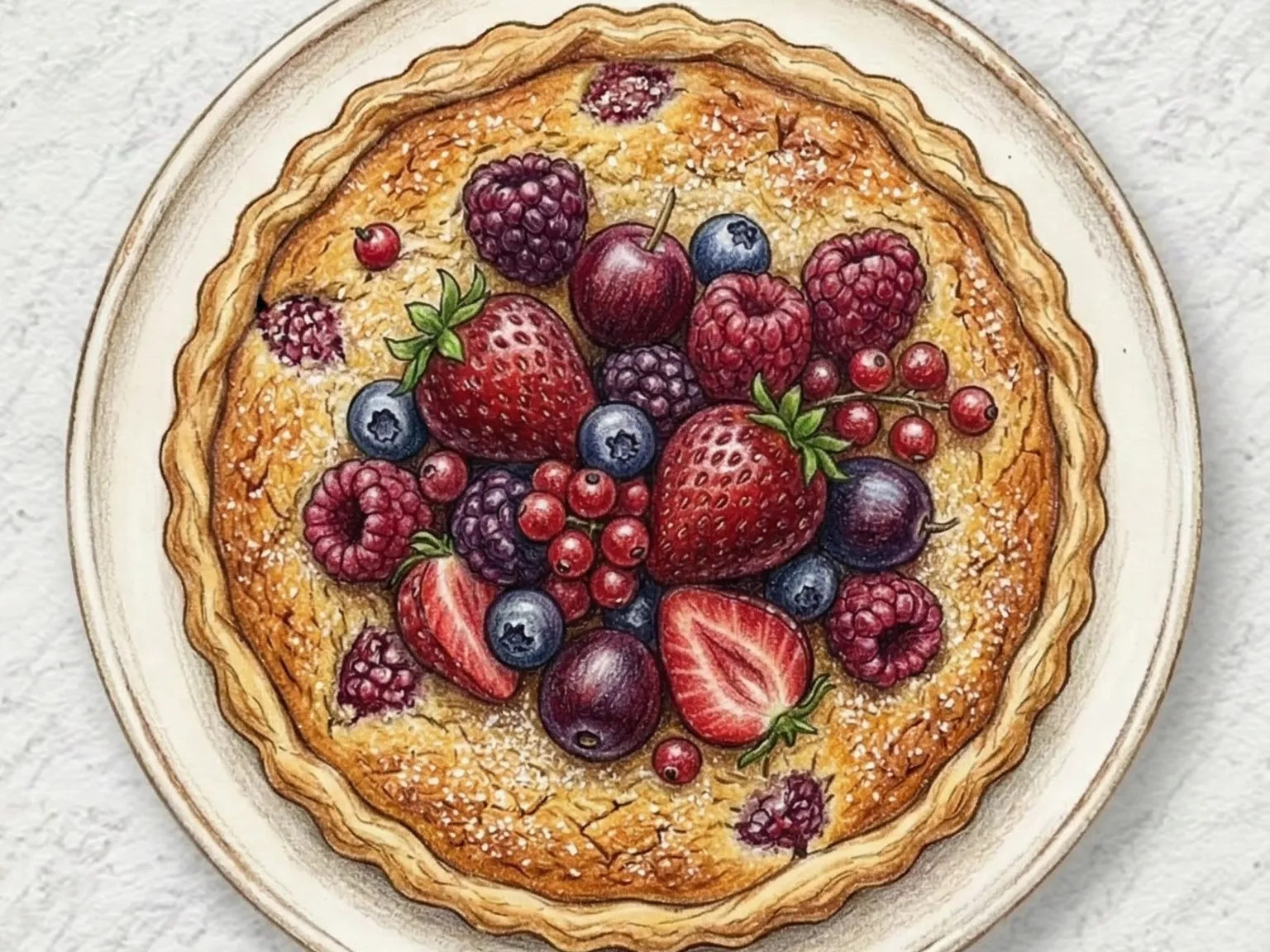
A crisp, buttery tart shell cradles a filling of frangipane - the classic almond cream made from ground almonds, butter, eggs, and sugar - baked until the surface sets into a thin golden crust while the interior stays moist and dense. Omija berries and mixed berries are pressed into the frangipane before baking, and as they heat they release tart juices that seep into the almond cream, creating pockets of bright acidity that cut through the richness. Omija contributes a complex sourness with faintly astringent and floral undertones that distinguish this tart from standard berry versions. The almond flavor intensifies as the tart cools, and a light dusting of powdered sugar before serving adds a clean finishing touch. Sliced thin, each piece offers the full progression: crunchy pastry, dense nutty cream, and bursts of fruit.
Adjust Servings
Instructions
- 1
Fit dough into tart pan, dock the base, and chill 15 minutes.
- 2
Cream butter and sugar, then add eggs one at a time.
- 3
Mix in almond flour, cornstarch, and omija syrup for frangipane.
- 4
Spread filling in shell and press berries evenly on top.
- 5
Bake at 180C for 35-38 minutes until edges are deep golden.
- 6
Cool completely before slicing for clean cuts.
As an Amazon Associate, we may earn from qualifying purchases.
Tips
Nutrition (per serving)
More Recipes

Omija Cream Cheese Muffins (Korean Schisandra Muffins)
Soft muffin batter is dotted with cubes of cream cheese and swirled with omija syrup, then baked until the tops dome and crack. The cream cheese melts partially in the oven, creating dense, tangy pockets that contrast with the airy crumb around them. Omija - the Korean five-flavor berry - adds a layered tartness that goes beyond simple fruit sourness, carrying faint bitter, peppery, and salty undertones that make each bite more complex than a typical fruit muffin. The cream cheese smooths out the omija's sharper edges, acting as a rich buffer between the berry's intensity and the sweet batter. A final brush of omija syrup over the warm muffin tops deepens the pink color and reinforces the berry flavor on the crust, where it concentrates into a thin, tacky glaze.

Injeolmi Croffles (Soybean Powder Croissant Waffles)
An injeolmi croffle presses laminated croissant dough in a waffle iron until the exterior caramelizes into a crisp grid, then tops it with roasted soybean powder, chewy tteok pieces, and a drizzle of honey. The waffle iron transforms the dough in a way an oven cannot: direct contact heat creates a shattering, deeply browned crust on both sides while the buttery layers inside remain flaky. Dusting the hot croffle with soybean powder adds a toasted, nutty coating that absorbs just enough surface oil to keep the bite clean rather than greasy. Small cubes of tteok scattered on top contribute a sticky chew that plays against the crisp shell. Because store-bought croissant dough works well, the recipe requires no advanced pastry skills, making it accessible for recreating the cafe experience at home.

Black Rice Cream Cheese Tart
Black rice cream cheese tart pairs a crisp, buttery tart shell with a baked cream cheese filling accented by black rice flour. The filling is built from cream cheese, sugar, egg, and heavy cream blended until smooth, then black rice powder is folded in, giving the mixture a pale purple hue and a subtle roasted grain undertone. Baked slowly, the filling puffs slightly in the oven before settling into a dense, silky layer as it cools - the texture sits between a cheesecake and a custard tart, smooth on the tongue and rich without being heavy. The pre-baked tart shell provides a firm, buttery crunch that contrasts with the soft filling above. A touch of vanilla extract ties the cream cheese tang and the earthy black rice notes together.

Injeolmi Scone (Soybean Powder & Rice Cake Scone)
This scone folds roasted soybean powder and small pieces of glutinous rice cake into a classic British scone dough, capturing the flavor of Korean injeolmi in a handheld baked form. The soybean powder lends the crumb a warm, toasted nuttiness that plain flour cannot achieve, while the tteok bits soften in the oven and create chewy pockets scattered throughout. Keeping the butter cold and cutting it into the dry ingredients in small pieces ensures the scone develops flaky layers that crack open at the surface and stay tender inside. A light glaze of honey or a side of sweetened condensed milk echoes the traditional way injeolmi is enjoyed, reinforcing the sweet-nutty pairing. Served alongside warm tea, these scones make an appealing afternoon treat. The key technique is minimal mixing: overworking the dough develops too much gluten and produces a tough, dense result instead of the desired crumbly softness.

Yuja Cheesecake Bars (Citron Cheesecake)
Yuja cheesecake bars start with a pressed base of cracker crumbs and melted butter, pre-baked for 8 minutes, then topped with a filling of cream cheese, eggs, sugar, and yuja citron marmalade baked at 170 degrees Celsius. Pre-baking the crust before adding the filling ensures the layers stay distinct, and bringing the cream cheese to room temperature beforehand lets it blend into a completely smooth batter. Seventy grams of yuja marmalade cuts through the dense cheese richness with a sharp citrus fragrance and clean acidity, keeping the aftertaste light. Chilling for two full hours before slicing produces neat, straight edges, and the texture lands between dense and silky, melting slowly on the palate.

Walnut Cakes (Korean Bite-Sized Red Bean Walnut Pastries)
Hodu-gwaja are bite-sized Korean walnut cakes made from a batter of cake flour, baking powder, eggs, milk, and melted butter, cooked in a dedicated walnut-shaped iron mold. Each cavity is half-filled with batter, topped with sweet red bean paste and a toasted walnut half, then sealed with more batter and cooked over medium-low heat for six to eight minutes per side. Toasting the walnut halves at 160 degrees Celsius for five minutes beforehand deepens their fragrance noticeably in the finished cake. Resting the batter for ten minutes before pouring relaxes the gluten, reducing air pockets and yielding a smoother exterior crust.