Korean Schisandra Berry Tea
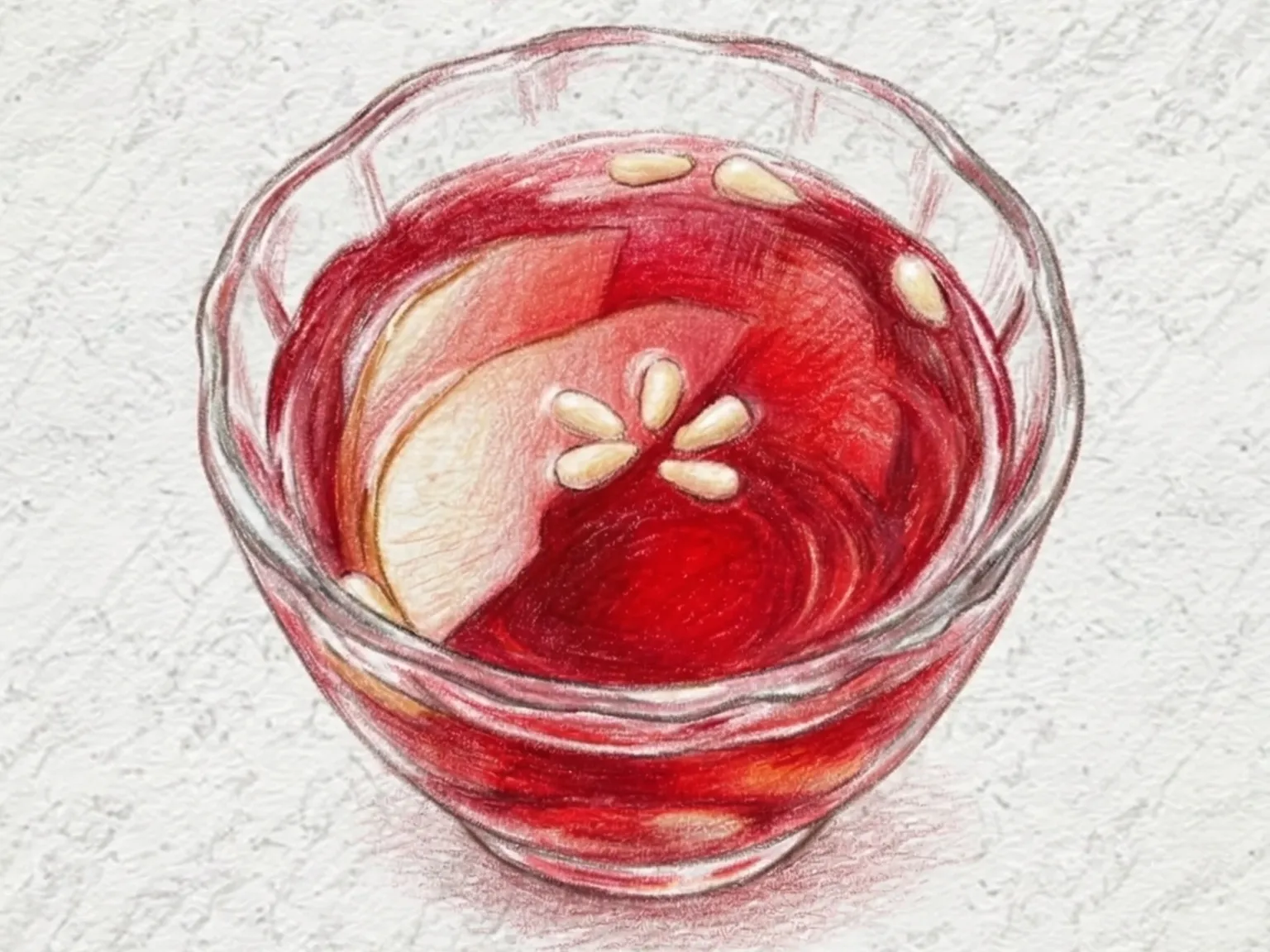
Omijacha is a traditional Korean cold-steeped tea made by soaking dried schisandra berries in cold water for at least eight hours to draw out their vivid crimson color and layered flavor. Hot water would amplify the astringent notes, so cold steeping in the refrigerator overnight is essential, yielding a tea where tartness, sweetness, and subtle bitterness interplay in the way that gives schisandra its name meaning five flavors. Once strained, honey and sugar are dissolved into the clear tea to cushion the acidity, and thin pear slices and pine nuts are floated in each cup to add crisp fruit aroma and a nutty counterpoint. The tea is at its best on the day it finishes steeping, when both color and fragrance are at peak intensity.
Adjust Servings
Instructions
- 1
Quickly rinse dried schisandra berries to remove surface dust.
- 2
Steep berries in cold water in the refrigerator for 8 hours.
- 3
When deep red, strain and keep only the clear tea.
- 4
Add honey and sugar, dissolving completely, then adjust sweetness.
- 5
Add pear slices and pine nuts to cups, then pour and serve chilled.
As an Amazon Associate, we may earn from qualifying purchases.
Tips
Nutrition (per serving)
More Recipes

Korean Traditional Spiced Honey Drink
Jehotang is a royal Korean summer drink that layers warm spice over sweet-tart fruit syrup. Cinnamon sticks, fresh ginger, and licorice root are simmered together, then strained and blended with plum syrup and honey once the liquid cools. The result is a chilled, aromatic beverage with lingering warmth from the spices and bright acidity from the plum. Floating pine nuts on top add a subtle richness that rounds out every sip.

Korean Green Plum Tea (Sweet-Tart Plum Honey Drink)
Maesilcha is a Korean plum tea made by dissolving green plum syrup in lukewarm water and rounding it with honey and a squeeze of lemon juice. The plum syrup carries a vivid tartness that honey softens into a balanced sweet-sour profile. A small amount of lemon juice defines the edges of the flavor, keeping each sip clean and distinct. Served over ice with mint leaves it becomes a refreshing cold tea, or with reduced water and no ice it works as a concentrated warm drink.

Korean Soybean Drink (Creamy Blended Soybean Milk)
Kongmul is a traditional Korean soybean drink made by soaking dried soybeans for at least eight hours, boiling them until tender, and blending them smooth with toasted sesame seeds and pine nuts. Straining through a fine cloth produces a silky, cream-colored liquid with deep nutty richness. A pinch of salt and a drizzle of honey sharpen the clean bean flavor without masking it. Served chilled over ice, it doubles as a protein-rich meal replacement during the hot months.

Korean Acanthopanax Herbal Tea
Ogapi-cha is a Korean herbal tea made by slow-decocting dried acanthopanax bark, astragalus root, jujubes, and fresh ginger in water for over 30 minutes on low heat. The bark and astragalus are briefly soaked in cold water to loosen surface dust, the jujubes are scored with a knife to release their sweetness more readily, and the ginger is thinly sliced to maximize surface area. After an initial boil, the heat drops to a gentle simmer that coaxes a woody, slightly earthy aroma from the bark while the astragalus contributes a mellow root-like depth and the jujubes round out the flavor with quiet sweetness. The strained tea receives a tiny pinch of salt to anchor the flavor, and honey stirred in just before drinking softens the herbal bitterness into a smooth, warming finish.

Schisandra Fruit Punch (Korean Cold-Brewed Berry Fruit Bowl)
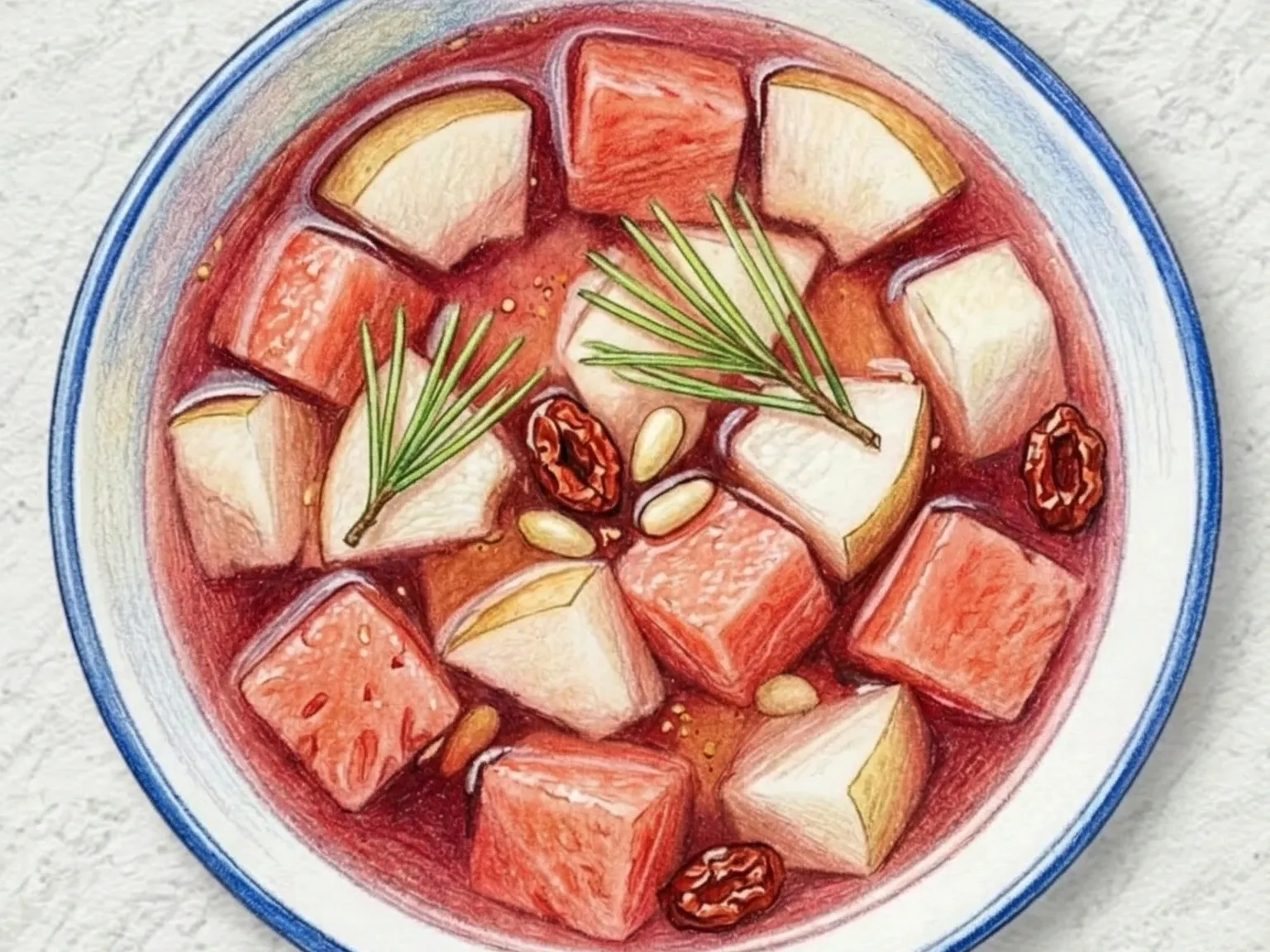
Omija hwachae is a traditional Korean fruit punch made by cold-infusing dried schisandra berries in water for at least two hours to extract a vivid red liquid, then sweetening it with honey. Cold extraction is essential because hot water draws out harsh astringency from the berries; only a small portion of the infusion is gently warmed to dissolve the honey before being recombined. Scooped balls of Korean pear and watermelon sit in the chilled omija broth, delivering a crisp, juicy bite against the tart-sweet liquid. Pine nuts floated on top add a mild fatty richness that tempers the acidity, and serving over ice sharpens every layer of flavor.

Sweet Rice Punch (Traditional Korean Malted Barley Grain Drink)
Sikhye is a traditional Korean sweet rice punch made by steeping malted barley powder in lukewarm water, straining the milky liquid, adding cooked rice, and holding the mixture at around 60 degrees Celsius for one hour until the rice grains float. The amylase enzymes in the malt break down the rice starch, producing a distinctly malty, clear sweetness with grain depth. Only the clear top liquid is used after settling to keep the punch from turning cloudy, and simmering it with sugar and sliced ginger for 20 minutes rounds the sweetness while adding a gentle spiced warmth to the finish. Served well chilled with the reserved floating rice grains and pine nuts on top, the cold temperature sharpens the malty aroma and makes each sip crisp and refreshing.