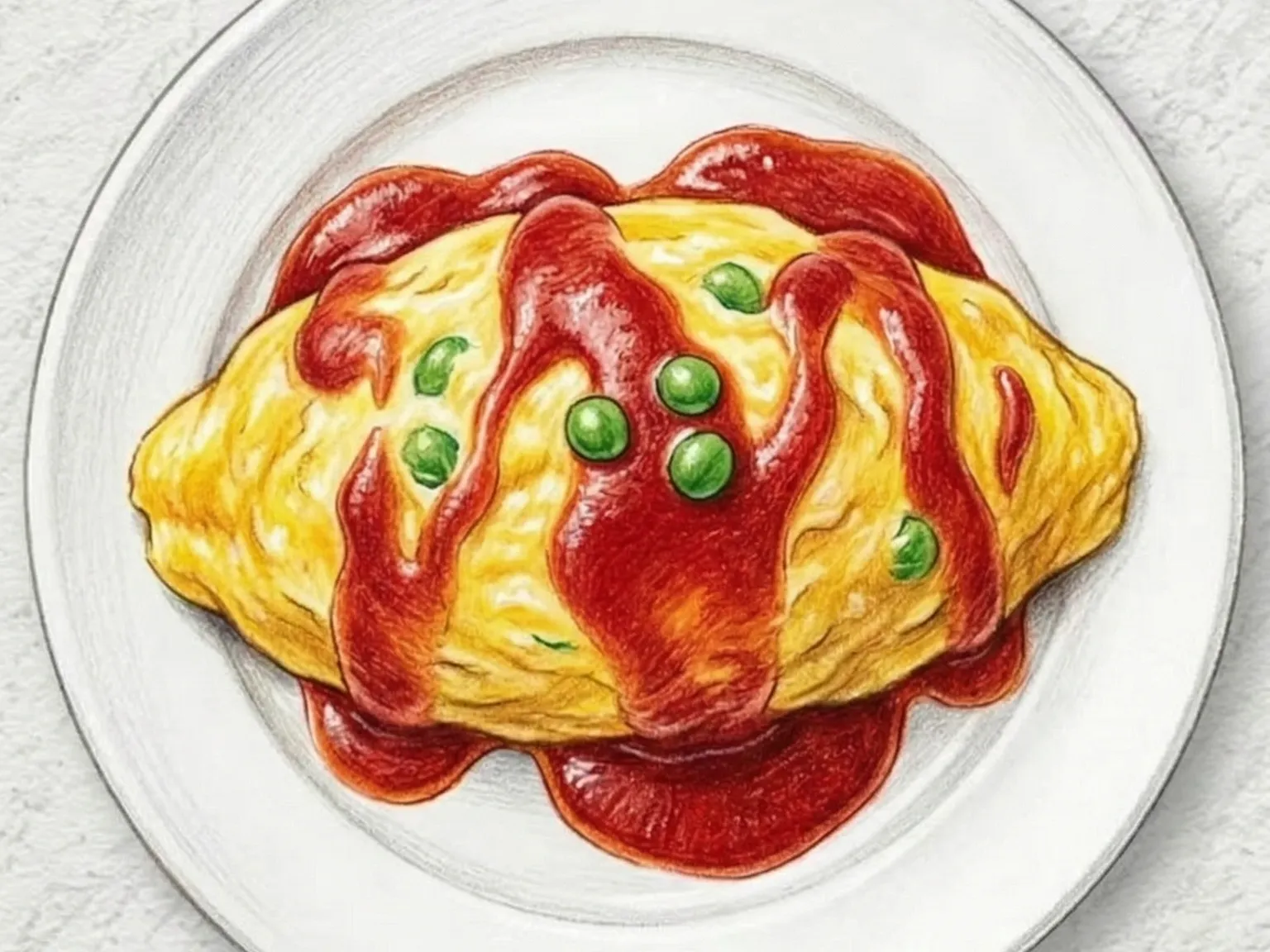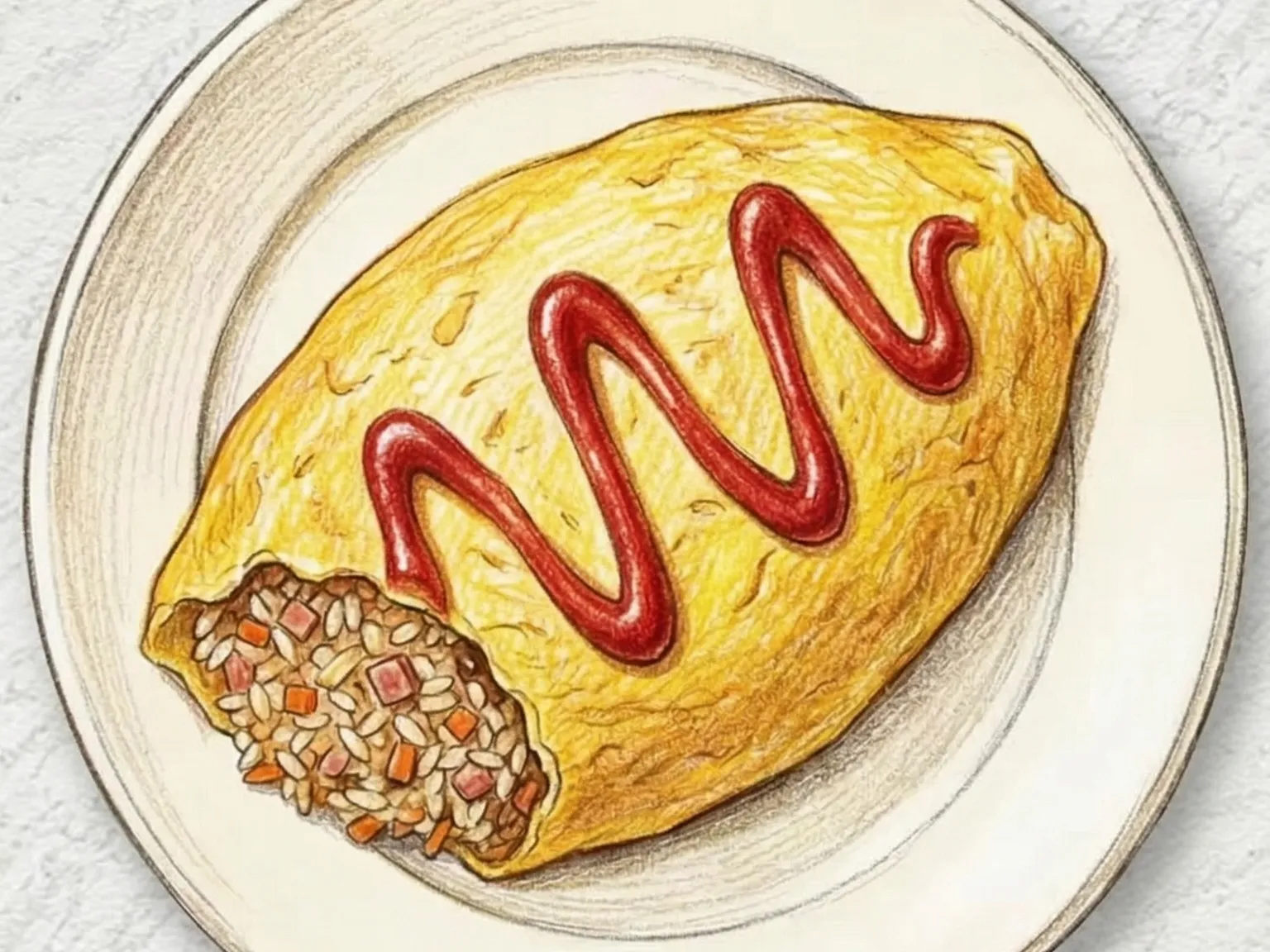
Korean Snack Bar Omelet Rice
Quick answer
Finely diced onion, carrot, and ham are stir-fried first to drive off moisture and draw out their natural sweetness, then cold leftover rice is added and tossed over high...
What makes this special
- Omurice-bunsik envelopes savory vegetable fried rice inside a thin, tender omelet with ketchup.
- Cold rice stir-fried on high heat achieves the distinct grainy texture
- Low heat keeps the thin egg sheet smooth without tearing
Key ingredients
Core cooking flow
- 1 Dice 80 g onion, 60 g carrot, and 100 g ham slightly larger than the rice grains so they stay visible.
- 2 Heat 1 tablespoon oil in a pan over medium heat.
- 3 Raise the heat to high and add the rice, spreading and pressing it with a spatula for about 2 minutes.
Finely diced onion, carrot, and ham are stir-fried first to drive off moisture and draw out their natural sweetness, then cold leftover rice is added and tossed over high heat until every grain separates cleanly. Ketchup and Worcestershire sauce season the fried rice with a sweet-tangy balance that defines the bunsik-style flavor. The egg, mixed with a pinch of salt, is poured into a lightly oiled pan over low heat and spread into a thin sheet, then the fried rice is placed at the center and the egg is folded around it while still soft and barely set. Low heat is the key to keeping the omelet smooth and unbroken. The roll is shaped into an oval on the plate and finished with a neat zigzag of ketchup across the top. The warm egg shell traps the heat of the rice inside, keeping the filling moist until the first cut.
Instructions
Read the steps as a cooking flow: prep, heat, seasoning, doneness control, and finish.
- 1Heat
Dice 80 g onion, 60 g carrot, and 100 g ham slightly larger than the rice grains so they stay visible.
Break up 420 g cold cooked rice before heating, removing hard clumps with your fingers or a spoon.
- 2Control
Heat 1 tablespoon oil in a pan over medium heat.
Add onion and carrot first and stir-fry for about 2 minutes until moisture reduces, then add the ham and cook until it smells savory and the edges look lightly glossy.
- 3Step
Raise the heat to high and add the rice, spreading and pressing it with a spatula for about 2 minutes.
Keep tossing until the grains separate and the bottom of the pan no longer looks wet.
- 4Season
Add 3 tablespoons ketchup and 1 tablespoon Worcestershire sauce to the edge of the pan and let them bubble briefly before mixing.
Toss through the rice, then season with salt and black pepper so it tastes balanced, not watery.
- 5Control
Beat 4 eggs with a pinch of salt until smooth.
Lightly oil the pan with the remaining oil, set it over low heat, pour in the egg, and tilt the pan so the omelet spreads wide and thin without browning.
- 6Finish
When the top is still slightly moist, place the fried rice in the center and fold the egg over it gently.
Turn it onto a plate into an oval shape, then drizzle the remaining 2 tablespoons ketchup over the top.
After the steps
Pick a recipe that fits this dish.
Continue with shared ingredients, meal pairings, or a similar method.
Recipes That Go Well With This
More Street food →Based on shared ingredients and meal pairing
Korean Street Egg Toast (Cabbage Egg Omelet Sandwich with Sweet Ketchup)
Gilgeori egg toast is a Korean street food sandwich built around a rectangular omelet of shredded cabbage, carrot, and beaten egg, layered between slices of bread that have been toasted in butter until golden. The defining touch is a sprinkle of white sugar over ketchup applied directly to the bread before the omelet goes in. That sugar-ketchup combination produces a sweet-tangy sauce that balances the savory egg and the mild crunch of the vegetables in a way that no other condiment quite replicates. The egg and vegetable batter is folded over itself on the pan to create a thick, layered patty, so each bite delivers alternating textures of soft egg and crunchy toasted bread. Street vendors began selling this sandwich in front of Korean schools during the 1990s, and it has remained a constant fixture of Korean street food culture ever since, available at food stalls and snack trucks across the country as both a breakfast option and an afternoon snack.
Korean Street Ham & Egg Toast
Gilgeori ham egg toast is the foundational version of Korean street toast, the style found at early-morning carts across Seoul and other cities where vendors cook to order on flat griddles. The core is a pan-fried patty of beaten egg mixed with finely shredded cabbage and carrot, cooked flat and golden on both sides. Ham slices are seared on each side for about thirty seconds so the edges caramelize slightly and the surface color deepens without drying out. The bread is pressed onto a buttered pan until the exterior crisps while the crumb stays soft. Ketchup and sugar together form the sauce, and this combination is what separates the Korean street toast from any generic egg sandwich. Sugar in the sauce creates a sweet-salty pull that plays against the savory ham and egg, and omitting it produces something noticeably different in character. Without cheese, this version is lighter and less rich than variations that add a slice, making it more approachable as an early meal. The contrast between the crunchy toasted bread and the soft, yielding egg layer is the defining textural quality.
Candied Sweet Potato
Goguma mattang is a Korean candied sweet potato snack made by cutting peeled sweet potatoes into large chunks and deep-frying them at 170 degrees Celsius until the interior turns floury and soft. A syrup of sugar, corn syrup, water, and a measured splash of soy sauce is cooked separately until large, foamy bubbles form - the visual cue for adding the fried sweet potatoes. Everything must be coated within thirty seconds to lock in a thin, glass-like caramel shell that crisps and turns translucent as it cools. The soy sauce shifts the flavor from purely sweet to a rounded, slightly savory depth. Pre-draining surface moisture from the cut sweet potatoes reduces oil splatter during frying and helps the syrup grip the pieces evenly. Black sesame seeds are scattered over the finished pieces for a toasted, nutty note, and each piece is spread individually on parchment paper while still warm so they cool without sticking together.
Korean Egg Fried Rice (Quick Wok-Tossed Grain Bowl)
Gyeran-bokkeumbap is the most fundamental Korean fried rice, built from two beaten eggs and one bowl of cooked rice and finished in under ten minutes. The eggs go into a smoking-hot oiled pan, and the rice is added the moment they are half-set, then tossed rapidly so every grain picks up an individual egg coating that makes the rice fluffy and lightly glossy rather than clumped. Cold leftover rice performs best because its lower moisture lets the grains separate cleanly during stir-frying, but freshly cooked rice spread out and briefly cooled reduces sticking enough to be workable. A thin line of soy sauce poured along the rim of the pan caramelizes on contact and carries a trace of smokiness through the rice. A finishing drizzle of sesame oil and a scattering of sliced green onion add a toasty fragrance that completes this simple but satisfying base. The ratio of egg to rice is sturdy enough that a handful of kimchi, diced ham, or refrigerator scraps can be stirred in without changing the essential character of the dish.
Serve with this
Korean Macaroni Salad (Sweet Mayo Pasta from Retro Diners)
Korean macaroni salad is a retro banchan that became a fixture of bunsikjip snack bars and gyeongyangsik Western-style restaurants during the 1970s and 80s, and it has remained a nostalgic staple ever since. The Korean version differs from its Western counterpart in two notable ways: sugar is added to the dressing, making the whole salad distinctly sweeter, and sweet corn kernels replace the mustard or herbs common in American recipes, contributing a pop of juicy sweetness with each bite. The pasta is boiled for eight minutes or longer, well past al dente, because softer noodles tangle more effectively with the mayonnaise and hold the dressing inside rather than letting it slide off. Cucumber must be salted and then squeezed firmly to extract moisture before it goes into the salad; skipping this step causes the dressing to thin and puddle at the bottom over time. Carrot is blanched for exactly one minute to preserve its crunch, and crushed hard-boiled egg stirred into the dressing gives the salad a richer, denser body. The finished salad needs at least twenty minutes in the refrigerator for the mayonnaise to firm up and adhere to the pasta so it holds its shape on the plate. This salad is a standard side at gyeongyangsik restaurants alongside donkatsu and hamburger steak, and it appears regularly as a complimentary banchan at gimbap shops. A dusting of paprika powder or chopped parsley adds color to the otherwise pale presentation.
Korean Knife-Cut Noodles and Dough Flake Soup
Kaljebi is a Korean home-style soup that cooks knife-cut noodles and hand-torn dough flakes together in a single pot of anchovy-kelp broth. Sliced potato goes in first, releasing starch that thickens the broth to a gentle, savory body without any additive. The dough flakes are pinched thin and dropped in well ahead of the knife-cut noodles - because they need more time to cook through - so both elements finish together. Every spoonful holds two distinct textures: the broad, pillowy sheets of sujebi alongside the chewy strands of kalguksu. Zucchini and green onion round out the flavor, and a light hand with soup soy sauce keeps the bowl clear and clean-tasting rather than heavy. This is weekday cooking at its most practical, requiring only a handful of pantry staples.
Korean Dalgona Coffee (Whipped Instant Coffee Foam Milk)
Dalgona coffee is made by whipping equal parts instant coffee, sugar, and hot water with a hand mixer for three to five minutes until stiff, caramel-colored peaks form, then spooning the foam over iced milk. The whipped layer carries a concentrated, bittersweet coffee flavor that gradually blends into the cold, neutral milk below as you stir. A light dusting of cocoa powder on top introduces a faint chocolate note, and increasing the sugar slightly helps the whipped cream hold its stiff structure longer.
Similar recipes
Korean Fried Rice (Simple Leftover Rice Stir-Fry)
Korean fried rice is the ultimate utility dish, built to turn leftover rice and whatever vegetables remain in the refrigerator into a satisfying meal in under ten minutes. Green onion hits the hot oil first to create a fragrant scallion-infused base, followed by diced carrot and beaten egg that gets scrambled into rough curds before the rice goes in. Cold rice is essential here - its lower moisture content prevents clumping and allows a thin film of oil to coat each grain, carrying seasoning evenly through the whole pan. Soy sauce poured along the rim sizzles on contact with the hot metal, developing a toasted depth that distinguishes a well-made fried rice from a mediocre one. A crack of black pepper and a final swirl of sesame oil complete the seasoning. The recipe is intentionally open-ended: ham, kimchi, shrimp, canned tuna, or any leftover protein slots in without altering the basic method, which is why this dish appears on Korean dinner tables more often than almost any other. The total active cooking time rarely exceeds five minutes, making it the default choice on busy weekdays and late nights alike.
Korean Oil Tteokbokki (Dry-Stir-Fried Rice Cakes in Chili Soy Glaze)
Gireum-tteokbokki is a dry-style tteokbokki where rice cakes are stir-fried in oil and coated with a concentrated paste of gochugaru, soy sauce, sugar, and garlic - no broth involved. Blooming the chili flakes briefly in oil draws out their nutty, toasted aroma rather than raw heat, and the soy sauce and sugar build layered sweetness and umami on top of that base. Without liquid, the seasoning clings tightly to each rice cake's surface. The key technique is restraint with stirring: letting each rice cake sit undisturbed long enough to develop a lightly crisped exterior while the inside stays chewy creates a dual texture that broth-based versions cannot replicate. Green onion and sesame seeds added at the end provide fresh fragrance and textural contrast against the rich coating. The seasoning should be applied generously so the flavors penetrate past the surface rather than sitting only on the outside. Believed to have originated in school-front snack shops in 1970s and 1980s Seoul, gireum-tteokbokki is milder than gochujang versions and accessible to those who find the spicier style too intense.
Korean Sweet Chili Cheese Balls
Sweet chili cheese balls are a fried snack made from glutinous rice flour dough mixed with milk, wrapped around mozzarella cubes, shaped into spheres, and deep-fried at 160 degrees Celsius. Adding a small amount of baking powder to the dough causes it to puff evenly during frying, creating a thin, crisp crust on the outside while the mozzarella inside melts into a soft, stretchy core. Keeping the oil at a moderate 160 degrees is the critical step, because a higher temperature browns and sets the shell before the cheese inside has had enough time to melt fully. Dipping in sweet chili sauce brings a layer of fruity sweetness and gentle heat over the creamy mozzarella, and the sauce's slight tanginess cuts the fried richness to leave the palate feeling clean. Sealing the seam of each ball tightly when wrapping is important, as any gap will let the melting cheese escape into the oil during frying.