Opera Cake

Opera Cake

Quick answer

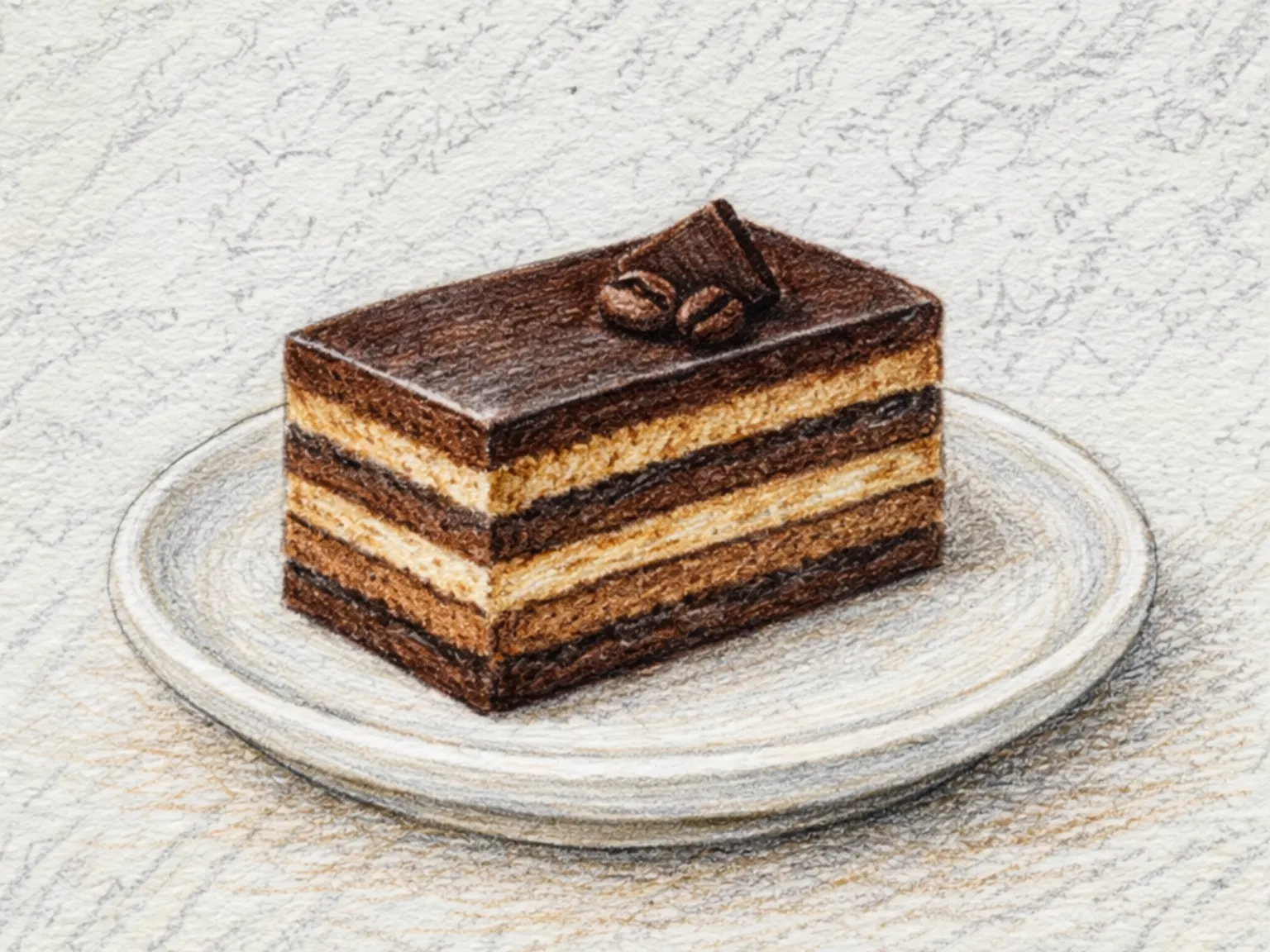
This French patisserie classic stacks paper-thin layers of almond joconde sponge with coffee-infused buttercream and dark chocolate ganache.

What makes this special

  • Opera Cake layers almond joconde sponge with coffee buttercream and dark chocolate ganache.
  • Each thin layer designed so coffee, chocolate, and almond hit simultaneously
  • Precise striped cross-section with a mirror-smooth chocolate glaze on top
Total time
110 min
Level
Hard
Servings
10 servings
Ingredients
6
Calories
380 kcal
Protein
7 g

Key ingredients

Almond flourEggsButterEspressoDark chocolate

Core cooking flow

  1. 1 Sift the 150 g almond flour with the powdered sugar to remove lumps.
  2. 2 Spread the batter into a very thin, even sheet and bake in a preheated oven.
  3. 3 Beat the 200 g butter until smooth and soft.

This French patisserie classic stacks paper-thin layers of almond joconde sponge with coffee-infused buttercream and dark chocolate ganache. Because each layer is kept deliberately slim, a single forkful captures all three elements at once: the sponge's moist almond grain, the buttercream's concentrated espresso bitterness, and the ganache's dense cocoa richness. When sliced, the cross-section reveals precise horizontal stripes that mark the craftsmanship behind the cake. A mirror-smooth chocolate glaze seals the top, adding one final texture. The cake benefits from at least four hours of refrigeration, which melds the layers and firms the ganache so that each slice holds its shape on the plate while still yielding easily to a fork.

Prep 90min Cook 20min 10 servings
Recipes by ingredient → egg butter

Instructions

Read the steps as a cooking flow: prep, heat, seasoning, doneness control, and finish.

6 steps
  1. 1
    Season

    Sift the 150 g almond flour with the powdered sugar to remove lumps.

    Add the 6 eggs and mix until the batter looks pale, thick, and even, scraping the bowl so no dry pockets remain.

  2. 2
    Heat

    Spread the batter into a very thin, even sheet and bake in a preheated oven.

    Remove it when the edges look dry and the surface springs back lightly, then cool it flat before cutting.

  3. 3
    Prep

    Beat the 200 g butter until smooth and soft.

    Add the 100 ml espresso gradually, mixing on medium speed after each addition so the buttercream stays creamy instead of separating.

  4. 4
    Control

    Chop the 150 g dark chocolate finely and melt it slowly over low heat.

    Stir until glossy and lump-free, then let it cool slightly so it spreads without running through the layers.

  5. 5
    Prep

    Cut the cooled sponge into equal pieces and spread the buttercream and ganache in very thin layers.

    Keep each layer level, because thick filling makes the cake heavy and hides the clean stripes.

  6. 6
    Prep

    Stack the sponge, buttercream, and ganache in repeated layers, then smooth the top with chocolate for a clean glaze.

    Refrigerate for at least 4 hours and slice while cold so the layers hold.

After the steps

Pick a recipe that fits this dish.

Continue with shared ingredients, meal pairings, or a similar method.

Recipes That Go Well With This

More Baking →

Based on shared ingredients and meal pairing

Chocolate Eclairs
Shared ingredient: egg Baking

Chocolate Eclairs

Eclairs are elongated French pastries built from choux dough, a cooked paste of water, butter, and flour into which eggs are incorporated one at a time until the mixture becomes smooth and glossy. When piped into finger-length strips and baked at high heat, the moisture locked in the dough converts to steam and expands, inflating each strip into a hollow shell with a crisp golden exterior. After cooling completely, vanilla custard cream is piped through a small hole in the base to fill the cavity. The top surface is dipped in a dark chocolate glaze that sets into a thin, shiny coating. Biting through delivers a layered experience: the slight bitterness of the chocolate, the crunch of the choux shell, and the cool smoothness of the custard in quick succession. Because the shell begins absorbing moisture from the cream as soon as it is filled, eclairs are best consumed within a few hours of assembly. Leaving them overnight compromises the texture significantly.

Chocolate Lava Cake
Shared ingredient: egg Western

Chocolate Lava Cake

Chocolate lava cake bakes a batter of melted dark chocolate, butter, whole eggs, egg yolks, sugar, and a small measure of flour in buttered ramekins at 220 degrees Celsius for ten to twelve minutes, producing a set crust and molten center from a single brief baking window. The high oven temperature firms the outside and top of the batter into cake while the core stays liquid, so breaking the surface with a spoon releases a slow pour of concentrated warm chocolate. High-cacao dark chocolate provides a complex, bittersweet depth that pairs with the richness of butter fat, and vanilla extract softens and rounds the overall aroma. Timing controls everything in this recipe: overbaking by even two minutes sets the center solid and destroys the signature flow. The edges of each ramekin should feel just firm when pressed lightly through a towel at the ten-minute mark. Ramekins can be filled ahead and refrigerated, but the baking time then needs an extra one to two minutes to account for the colder starting temperature. Serving with a scoop of vanilla ice cream or a spoonful of cold heavy cream creates a striking contrast between the hot, dense chocolate interior and the chilled, lighter dairy.

Sole Meunière (Butter-Fried Sole with Brown Butter Sauce)
Serve together Western

Sole Meunière (Butter-Fried Sole with Brown Butter Sauce)

Sole meuniere is a French classic where delicate sole fillets are seasoned with salt and pepper, dredged lightly in flour, and pan-fried in butter for two to three minutes per side until a thin golden crust forms. The flour coating must be minimal - just enough to create a crisp barrier that protects the tender fish without masking its flavor. The fish is flipped only once because the fillets are fragile and break apart with repeated handling. After the fish is removed, the butter remaining in the pan is cooked further until it turns brown and smells of toasted hazelnuts, then finished with a squeeze of lemon juice and chopped parsley. This brown butter sauce is the heart of the dish, its nutty richness elevating the mild, sweet flesh of the sole while the lemon's acidity keeps every bite clean and bright.

Crêpe Cake
Similar recipe Baking

Crêpe Cake

A crepe cake is constructed by alternating dozens of paper-thin cooked crepes with thin layers of cream, building a tall multi-layered dessert that requires no baking and no oven. A batter of flour, eggs, milk, and butter gets poured by the ladleful into a lightly buttered pan and swirled into rounds that cook for under a minute per side, then cool completely before assembly. Each crepe receives an even, thin spread of lightly sweetened whipped cream or pastry cream before the next crepe goes on top, repeating until the stack reaches twenty to thirty layers. The precision of each spread matters: uneven layers create an inconsistent cross-section when the cake is sliced, whereas layers of uniform thickness produce the clean, intricate striped pattern the cake is known for. Unlike conventional sponge cake, the dominant flavors are egg, butter, and dairy fat rather than sugar and flour, and the texture is distinctly its own: soft and yielding, with each layer sliding gently against the next under the lightest pressure. Pan temperature during crepe-making must stay slightly below medium heat, as excess heat chars edges and makes the crepes brittle. After assembly, refrigerating the cake for at least two hours stabilizes the cream and allows the structure to set so each slice cuts cleanly without collapsing.

Serve with this

Honey Ginger Pastry (Korean Deep-Fried Layered Wheat Honey Cookie)
Desserts Hard

Honey Ginger Pastry (Korean Deep-Fried Layered Wheat Honey Cookie)

Yakgwa is a traditional Korean honey pastry made from wheat flour rubbed with sesame oil, then mixed with rice wine, ginger juice, and rice syrup, folded and rolled repeatedly to build up laminated layers before frying. A two-stage frying method is essential to the texture: first at 140 degrees Celsius to cook the dough through slowly without coloring, then briefly at 170 degrees to develop a golden, crisp exterior over a layered, flaking interior. Soaking the fried pastries in a warm syrup of honey, water, and ground cinnamon for at least two hours allows the sweetness to penetrate deep between the laminated layers, saturating each piece with moist, fragrant honey flavor from edge to center. Ginger juice surfaces gently in the finish, providing just enough warmth to temper the concentrated sweetness and keep the flavor from feeling cloying. The sesame oil rubbed into the dough from the start adds a persistent nutty backbone that ties together the honey, spice, and wheat flavors into the complex, layered profile that defines well-made yakgwa. Pine nuts or jujubes placed as garnish add visual elegance, and the pastry pairs particularly well with Korean teas, where its sweetness finds proper balance.

🎉 Special Occasion 🧒 Kid-Friendly
Prep 35min Cook 30min 4 servings
Korean Bokbunja Wine (Black Raspberry Soju-Infused Fruit Wine)
Drinks Hard

Korean Bokbunja Wine (Black Raspberry Soju-Infused Fruit Wine)

Bokbunja-ju is a deep ruby Korean fruit wine made by layering fresh black raspberries and sugar in a sterilized jar, then covering them with soju along with a strip of lemon peel and a cinnamon stick. At 1.2 kg of fresh fruit per batch, the berry flavor comes through with real concentration. The jar rests in a cool place for at least thirty days and is shaken gently once a week to dissolve the sugar evenly throughout the liquid. After straining through fine cloth, additional bottle aging softens the acidity and rounds out the berry aroma, producing a wine where the warm spice undertones from the cinnamon balance the tartness of the raspberries.

🍺 Bar Snacks 🎉 Special Occasion
Prep 20min Cook 10min 10 servings
Abalone Seaweed Salad
Salads Medium

Abalone Seaweed Salad

This salad centers on abalone, the shellfish that haenyeo - Jeju Island's female free-divers - have harvested by hand for centuries, descending without oxygen tanks to pry the mollusks from the sea floor. The abalone is blanched for just 40 seconds, a precise window that preserves its springy texture and keeps the delicate sweetness and ocean flavor intact. Overcooked abalone turns tough quickly, so the short blanching time is more technique than convenience. Rehydrated sea mustard, thinly sliced cucumber, and red cabbage round out the bowl. The dressing - lemon juice, plum syrup, soup soy sauce, and a touch of vinegar - is calibrated to support the seafood's natural brininess rather than cover it. The combination of chewy abalone, slippery seaweed, and crunchy raw vegetables creates three distinct textures throughout, which sustains interest from first bite to last. Serve cold as a light appetizer before grilled dishes, or as a standalone side during summer. The quality of the abalone shows plainly with so few ingredients around it.

🥗 Light & Healthy 🎉 Special Occasion
Prep 18min Cook 7min 2 servings

Similar recipes

Baba au Rhum (French Rum-Soaked Yeast Cake)
Baking Hard

Baba au Rhum (French Rum-Soaked Yeast Cake)

Baba au rhum originates from 18th-century Poland, where King Stanislaw Leszczynski is said to have soaked a dry kugelhopf cake in rum, naming it after Ali Baba from One Thousand and One Nights. The dessert traveled from Poland to Naples and then to Paris, where French patissiers reshaped it into the small, cylindrical, individual-portion yeast cakes recognized today. The dough is heavily enriched with butter and eggs, which produces a tender, porous crumb riddled with open air pockets. After baking, the cakes are submerged in a hot syrup of sugar, water, and dark rum in substantial proportion until those air pockets drink up the liquid and the cakes swell to close to double their baked size. The syrup must penetrate all the way to the center - soaking time cannot be rushed - and the finished texture is dense, spongy, and completely saturated, releasing a burst of warm rum with each bite as the crumb is compressed. A rosette of creme chantilly sits on top, made from lightly sweetened whipped cream with a vanilla note, and its cold, airy quality sits in direct contrast to the dense, alcohol-soaked base beneath. The rum is not a background flavor here but the primary one, which makes baba au rhum an unambiguously adult dessert.

🎉 Special Occasion 🧒 Kid-Friendly
Prep 90min Cook 20min 8 servings
Kouign-Amann (Caramelized Butter Sugar Pastry)
Baking Hard

Kouign-Amann (Caramelized Butter Sugar Pastry)

This Breton pastry is constructed by folding generous amounts of butter and sugar into a simple yeasted bread dough, then baking until the sugar caramelizes into a glassy, deeply bronzed crust. The exterior shatters audibly at the first bite, giving way to an interior where dozens of buttery layers remain soft and slightly chewy. Three rounds of rolling and folding build the laminated structure, and keeping the butter cold throughout the process is what prevents the layers from merging into a dense mass. At 200 degrees Celsius, the sugar melts and pools at the bottom of each portion, so lining the pan with foil is a practical necessity to catch the drips. The aroma of caramelizing butter and sugar fills the kitchen long before the timer sounds. Despite containing only five ingredients, flour, butter, sugar, yeast, and salt, the technique demands precision: under-laminated dough bakes flat, and over-proofed dough loses its layered definition. The result, when executed well, is one of the richest pastries in the French repertoire.

🎉 Special Occasion 🧒 Kid-Friendly
Prep 120min Cook 40min 8 servings

Tips

Keep each layer thin to maintain the elegant balance of flavors.

Nutrition (per serving)

Calories
380
kcal
Protein
7
g
Carbs
32
g
Fat
26
g